The plan
The kettlebell swing looks simple until the clock starts. Then athletes turn it into a shoulder raise, a loose squat, or a lower back gamble. None of those survive a long CrossFit workout well.
The fix is not to yank the bell harder. Build a cleaner hinge, let the hips create the speed, and choose the swing height that matches the workout and your current control. That is the difference between smooth sets and a movement that steals your grip, breath, and back.
- A good CrossFit kettlebell swing starts with a hip hinge, not a squat or a front raise.
- Russian swings and American swings train a similar pattern, but the overhead finish demands more shoulder control.
- Scale the height, load, or rep scheme before fatigue turns the bell path sloppy.
What a kettlebell swing should feel like
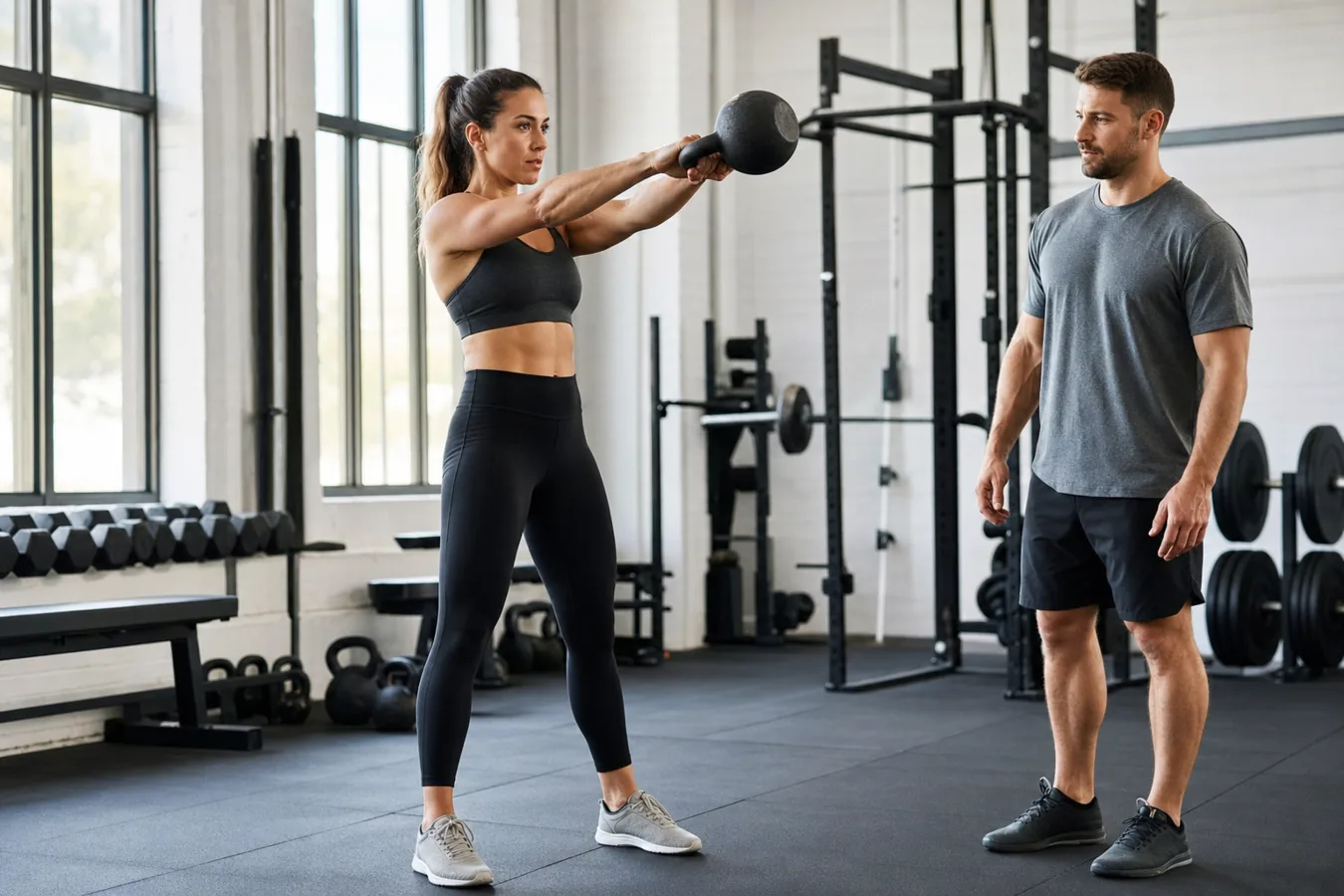
A strong swing feels like a loaded hinge that snaps tall. The bell hikes back high between the legs, the shins stay fairly vertical, and the hips drive forward before the arms guide the bell. If the arms are tired before the legs and glutes, something is probably off.
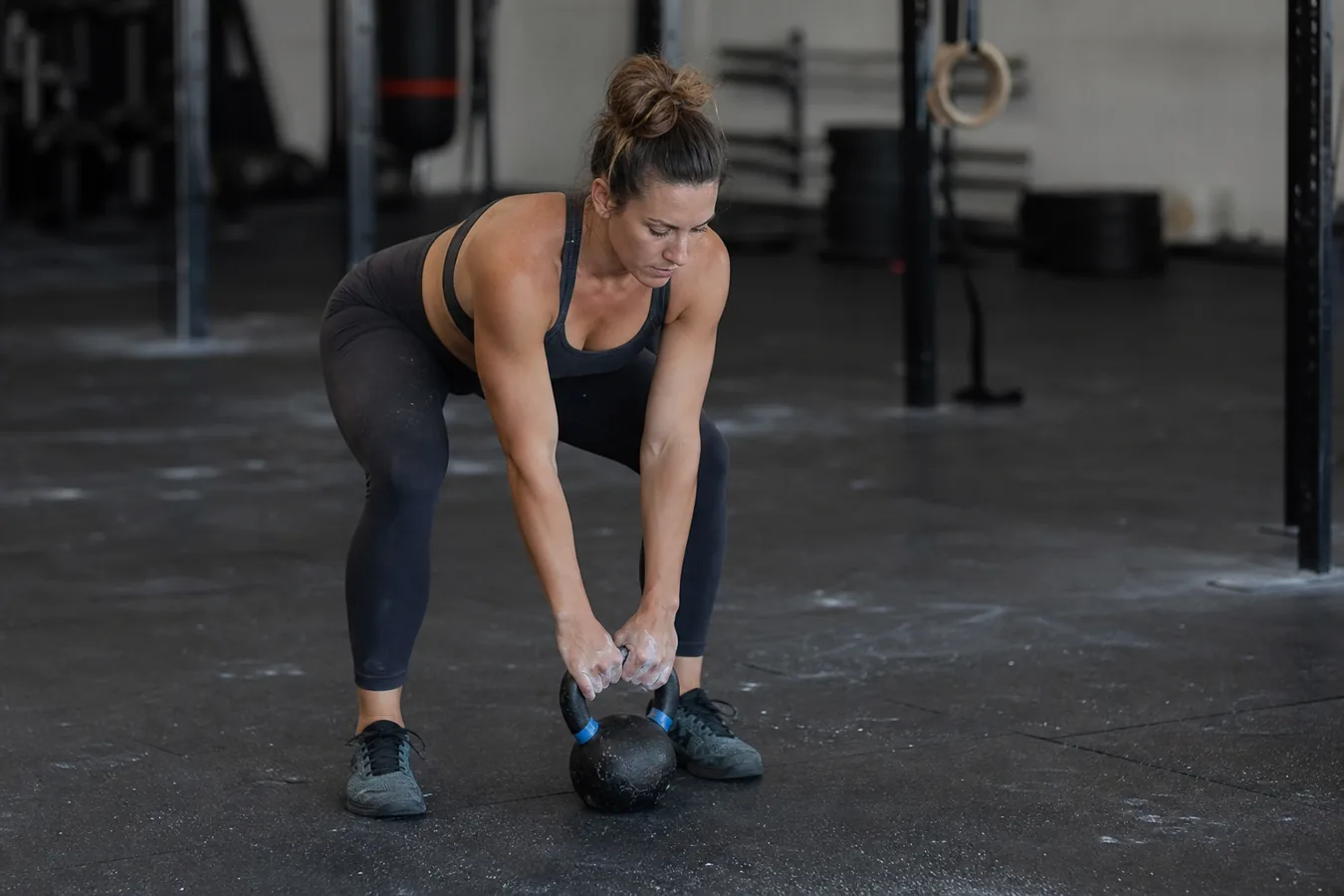
Think of the first rep like a hike pass in football. Pull the bell back, keep it close, then stand hard. The bell should float because the hips moved well. It should not climb because you curled it or muscled it up with the shoulders.
This is where the swing connects with other hinge-heavy pieces. If your setup leaks on a CrossFit deadlift, the kettlebell swing will usually expose the same problem faster because the bell keeps moving.
American swing or Russian swing?
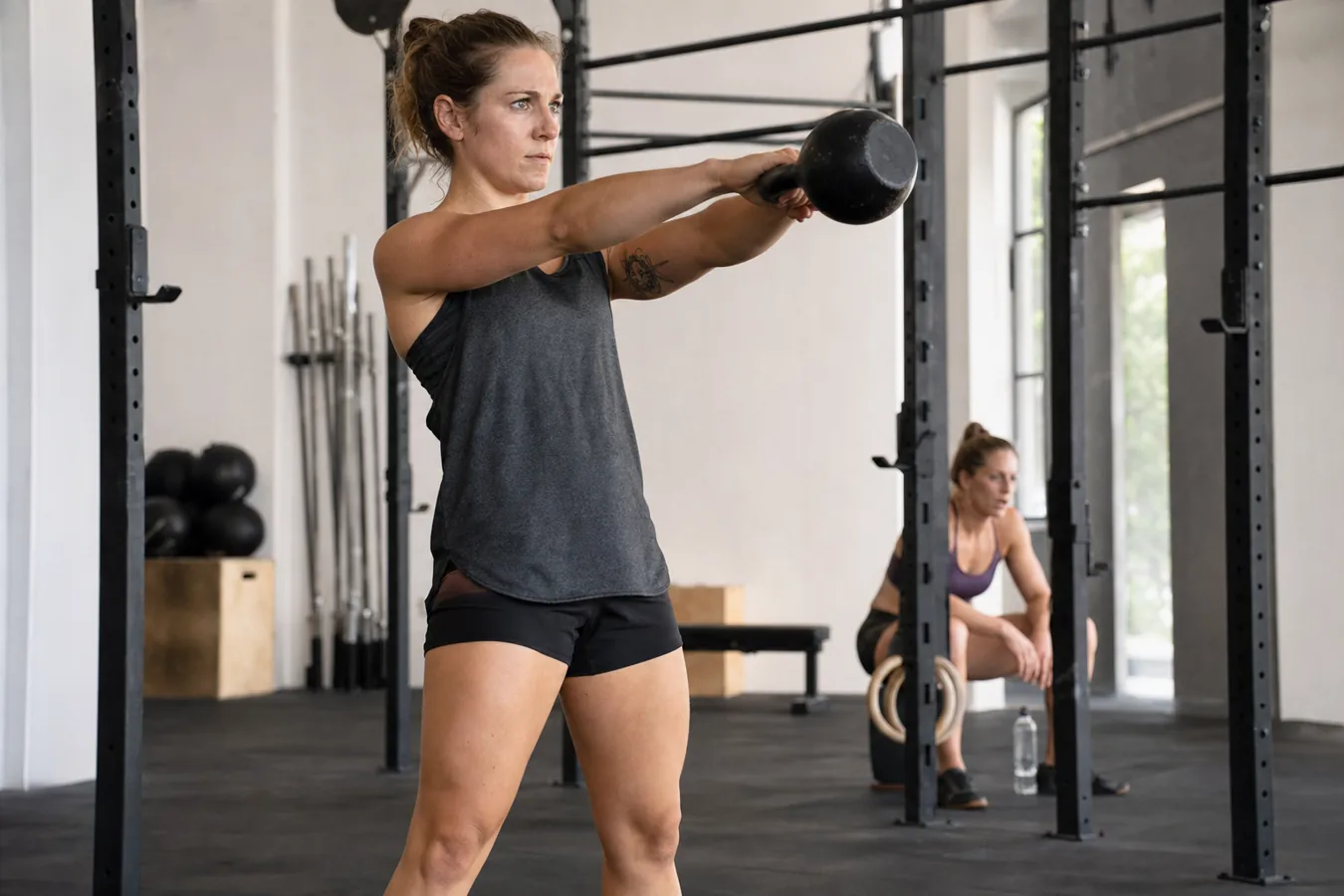
In many CrossFit gyms, the American swing finishes overhead. The Russian swing usually finishes around chest or eye level. Neither version is automatically better. They solve different problems.
The overhead version gives a bigger range of motion and often appears in workouts with a clear movement standard. It also asks more from the shoulders, ribs, and upper back. If an athlete cannot finish overhead without arching hard or losing the bell forward, forcing the American swing is just a bad trade.
| Version | Best use | Watch for |
|---|---|---|
| Russian swing | Teaching the hinge, pacing longer sets, reducing overhead fatigue | Do not cut the hip drive short just because the finish is lower |
| American swing | Workouts that require an overhead standard and athletes with solid mobility | Ribs flaring, bent elbows, or the bell drifting too far away |
| Lighter swing | Keeping the intended conditioning stimulus alive | The bell should still move with speed, not caution |
| Dead-stop swing | Learning setup and tension one rep at a time | Reset without turning each rep into a slow deadlift |
A short video to check the pattern
This short CrossFit demo is useful because it keeps the movement simple: hinge, stand, let the bell travel. Watch the timing of the hips before looking at the height of the bell.
The mistakes that show up under fatigue
The first mistake is squatting the swing. The knees bend too much, the hips drop, and the bell loses its snap. A swing is not a fast goblet squat. Keep the hips back and let the hamstrings load.
The second mistake is lifting with the arms. You can spot it when the elbows bend early or the athlete looks tense before the bell even reaches shoulder height. The arms should act like straps. They connect you to the bell, but they should not be the engine.
The third mistake is letting the bell pull the athlete out of position on the way down. Keep the lats on, guide the bell back close to the body, and wait for the hinge before the next snap. The same patience helps when you move from swings to a CrossFit dumbbell snatch, where a loose pull usually becomes a messy catch.
How to breathe and pace kettlebell swings
Breathing matters because swings punish panic. Try a small exhale as the hips snap and a quick breath as the bell comes back down. The goal is not a perfect breathing drill. The goal is a rhythm you can repeat when the set gets uncomfortable.
For high-rep sets, break before the swing gets ugly. Ten clean reps, a short reset, then ten more will often beat one ambitious set that ends with soft reps and a long stare at the floor. Athletes who already manage stroke rhythm on the CrossFit rower usually understand this quickly: pace is a skill, not a lack of effort.
When to scale the swing
Scale kettlebell swings when the athlete cannot keep a neutral spine, cannot finish overhead without a big rib flare, or loses the bell path after a few reps. Good options include a lighter bell, Russian swings, dead-stop swings, or a lower rep target.
The workout should still feel like the workout. If the goal is conditioning, a lighter bell moved cleanly is usually better than heavy swings that turn every round into survival. A smart CrossFit scaling plan protects the stimulus while keeping the weak link in training.
What to test in your next WOD
- Can you hike the bell back without dropping into a squat?
- Can you finish tall without leaning back?
- Can you keep the arms long until the hips have done their job?
- Can you lower the bell close to the body instead of chasing it forward?
- Can you stop one or two reps before your position falls apart?
If those answers hold up, add speed or load slowly. If they do not, the swing is already telling you what to fix. Start with the hinge. The shoulders should not have to rescue a movement the hips were supposed to own.


