The plan
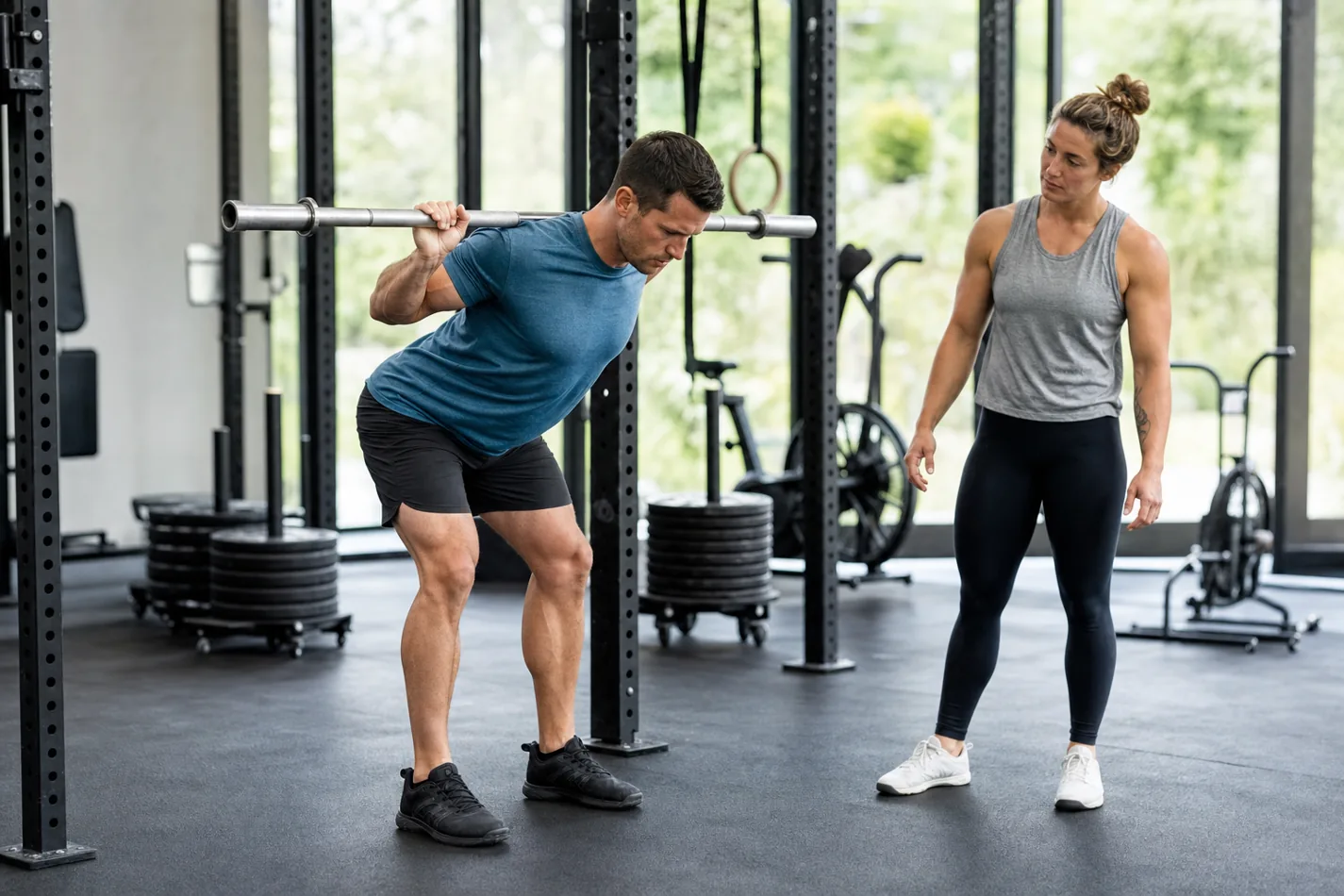
Good mornings are quiet until they are not. The rep starts as a simple hinge, then one rushed set turns it into a rounded-back bow with a barbell on the shoulders. That is where athletes miss the point.
In CrossFit, the good morning is usually a teaching tool, warm-up drill, accessory lift, or light posterior-chain piece. It can help athletes feel a better hinge for pulling and squatting, but only if the hips move first and the spine stays organized.
- Start the rep by sending the hips back, not by dropping the chest toward the floor.
- Use a light load until the athlete can keep the ribs down, feet planted, and spine neutral.
- Stop the range of motion where the hamstrings load without the lower back rounding.
What a good morning should train
A clean good morning teaches the athlete to hinge while the load sits on the back. The knees stay soft, the feet stay heavy, and the hips travel backward. The torso leans because the hips are doing their job. If the athlete simply folds forward, the lower back usually takes over.
The skill connects directly to deadlift bar path and the kettlebell swing hinge. In all three, the athlete needs pressure through the mid-foot, a brace that does not disappear, and enough patience to load the hamstrings before trying to stand up fast.
Set the bar and brace before you hinge
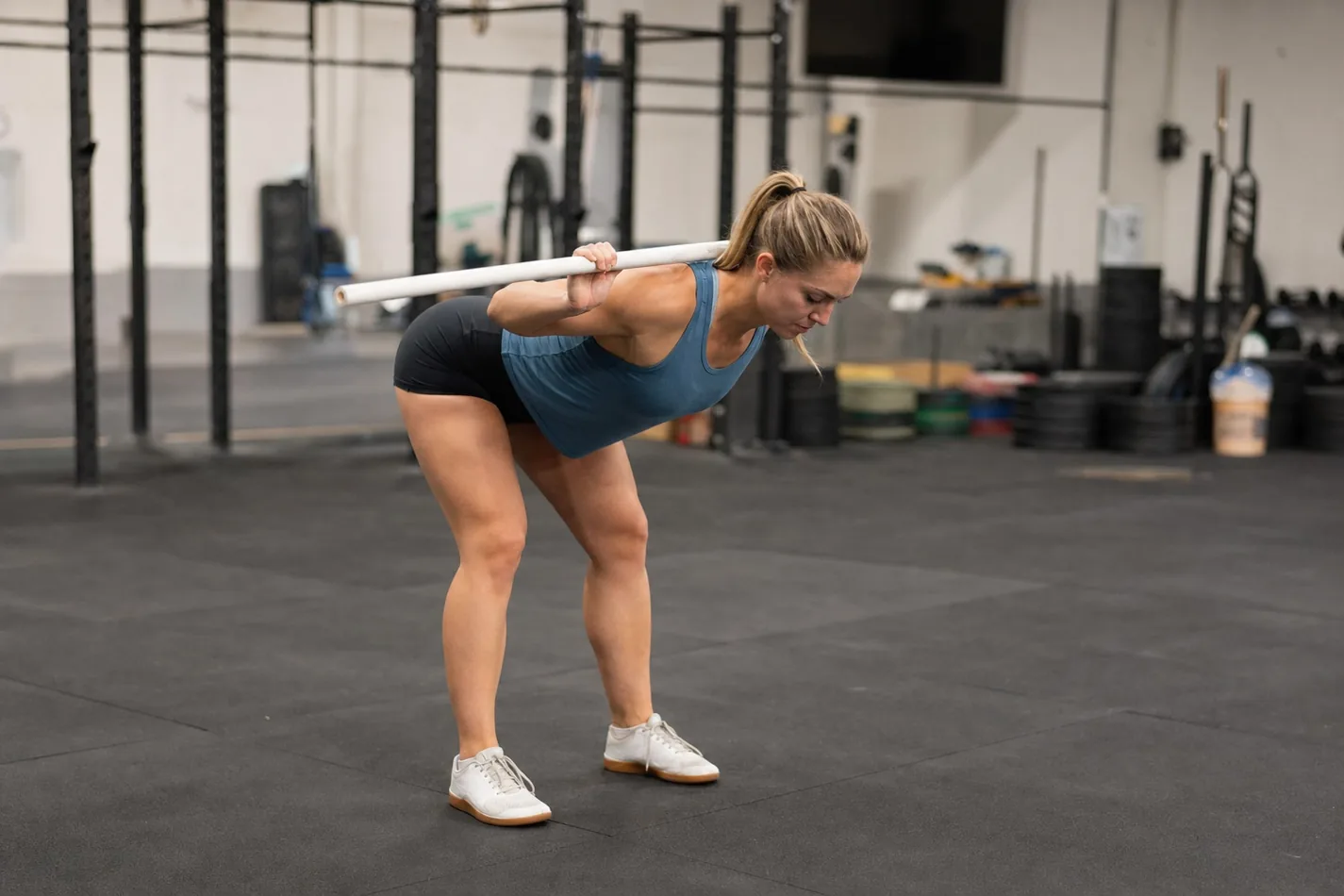
The bar should sit where the athlete can keep it calm. For most people, that means across the upper back, not on the neck. Grip the bar, pull the ribs down, take a breath, and keep the floor under the whole foot before the hips move.
The knee bend is small but not locked out. Locked knees turn the rep into a stiff, risky stretch. Too much knee bend turns it into a squat. A good rep sits between those two mistakes: knees soft, shins fairly quiet, hips moving back.
| Fault | What it looks like | Fix to try |
|---|---|---|
| Chest drops first | The athlete bows forward and loses the brace | Push the hips back before the torso angle changes |
| Lower back rounds | The bottom position looks soft or collapsed | Shorten the range and lower the load |
| Knees lock out | The rep becomes a hamstring stretch | Keep a small knee bend from start to finish |
| Bar rolls on the neck | The athlete looks uncomfortable before the hinge starts | Place the bar lower on the upper back and grip it firmly |
Use it as a hinge drill before heavier work
Good mornings fit well in a CrossFit warm-up before deadlifts, cleans, swings, or squats. A PVC pipe or empty bar is often enough. The point is not to prove strength before the workout. It is to remind the athlete what a clean hinge feels like while breathing and bracing.
That matters when the session later includes back squat setup, front squat bracing, or loaded carries. A better hinge usually makes the athlete less likely to dump the ribs forward or turn every hip movement into a low-back tug-of-war.
The demo below is short, but it shows the rep clearly. Watch the hips move back first. The torso angle changes because the hips hinge, not because the athlete rounds down toward the floor.
How heavy should good mornings be in CrossFit?
Most CrossFit athletes should treat good mornings as a light to moderate accessory unless a coach has programmed them with a clear strength purpose. The movement does not reward ego. If the athlete cannot pause at the bottom and stand without changing shape, the bar is too heavy or the range is too long.
For class training, sets of 8 to 12 controlled reps with a PVC pipe, empty bar, light barbell, or band usually do the job. Tempo helps. A slow three-count down and a smooth stand-up gives more feedback than rushing through reps just to finish the warm-up.
Scaling and substitutions that keep the hinge
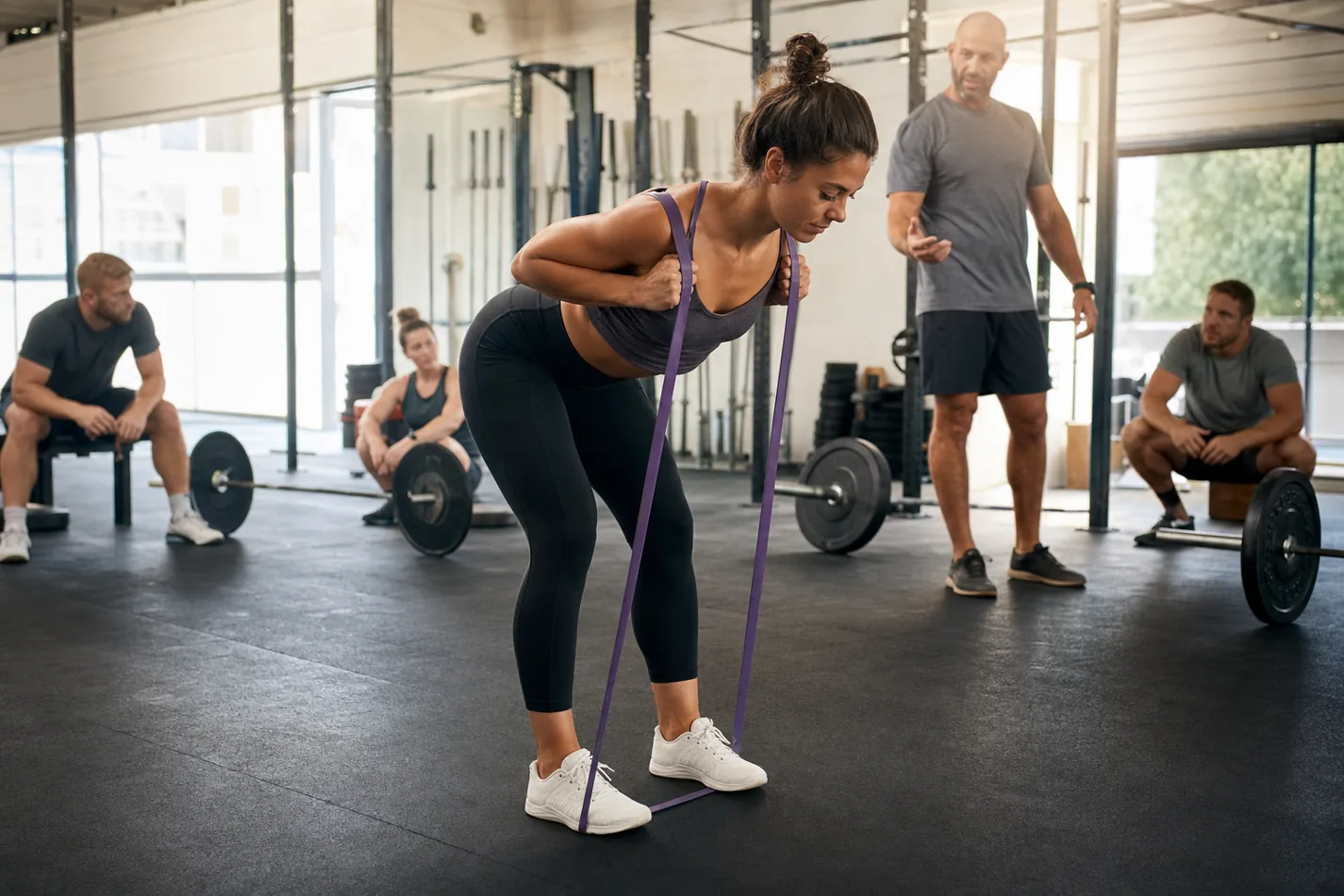
Good CrossFit scaling keeps the hinge pattern without forcing the back into a bad position. Use a PVC good morning, banded good morning, hands-on-hips hinge, wall tap drill, Romanian deadlift with light dumbbells, or a kettlebell deadlift from blocks.
If the athlete feels the movement only in the lower back, change something right away. Reduce load, limit depth, slow the descent, or switch to a drill where the hips can move back without fear. The right scale should feel teachable, not like a warning sign.
When to skip good mornings for the day
Skip or replace them if the athlete has back pain that worsens during warm-up, cannot hold a brace with an empty bar, or keeps turning the hinge into a rounded stretch. There are better choices on those days: hip bridges, bird dogs, light kettlebell deadlifts, or unloaded hinge practice.
Good mornings also need restraint when the workout already hammers the posterior chain. Pairing heavy versions with sled drag fatigue, yoke carry bracing, high-volume pulls, or sandbag carry posture can be too much for athletes who are still learning position. Use the movement to sharpen the hinge, not to make a tired back prove a point.
Before the next WOD, test five slow reps with a PVC pipe. If the hips move back, the feet stay heavy, and the back position looks the same on every rep, the drill is doing its job. If the shape changes by rep three, keep it light and fix the hinge before adding load.


