
The plan
The back squat is the lift that tells on you fast. If the brace is loose, the knees cave. If the hips shoot back, the bar starts drifting. If the depth is rushed, the rep may count in your head but not in the way you want to train.
In CrossFit, the back squat is not only a strength test. It is also a way to build positions that carry into wall balls, thrusters, cleans, box jumps, and heavy days under fatigue. The trick is keeping it simple enough to repeat when the clock or the barbell gets loud.
- A good back squat starts before the descent: feet set, ribs down, brace locked in, bar pulled tight to the body.
- Depth matters, but only if the athlete can stand up without folding, shifting, or losing the knees.
- In a WOD, the best squat is usually the one you can repeat cleanly, not the one that looks heroic for three reps.
What the back squat is training
A back squat trains leg strength, trunk pressure, hip control, and the ability to keep a heavy object stacked over the middle of the foot. That last piece matters. When the bar drifts forward, the athlete usually has to rescue the rep with the back instead of driving through the legs.
CrossFit athletes feel that same problem in other lifts. A lifter who loses the torso on a heavy back squat will often fight similar position leaks in the front squat rack position or during a tired CrossFit thruster.
Set the stance before you chase depth
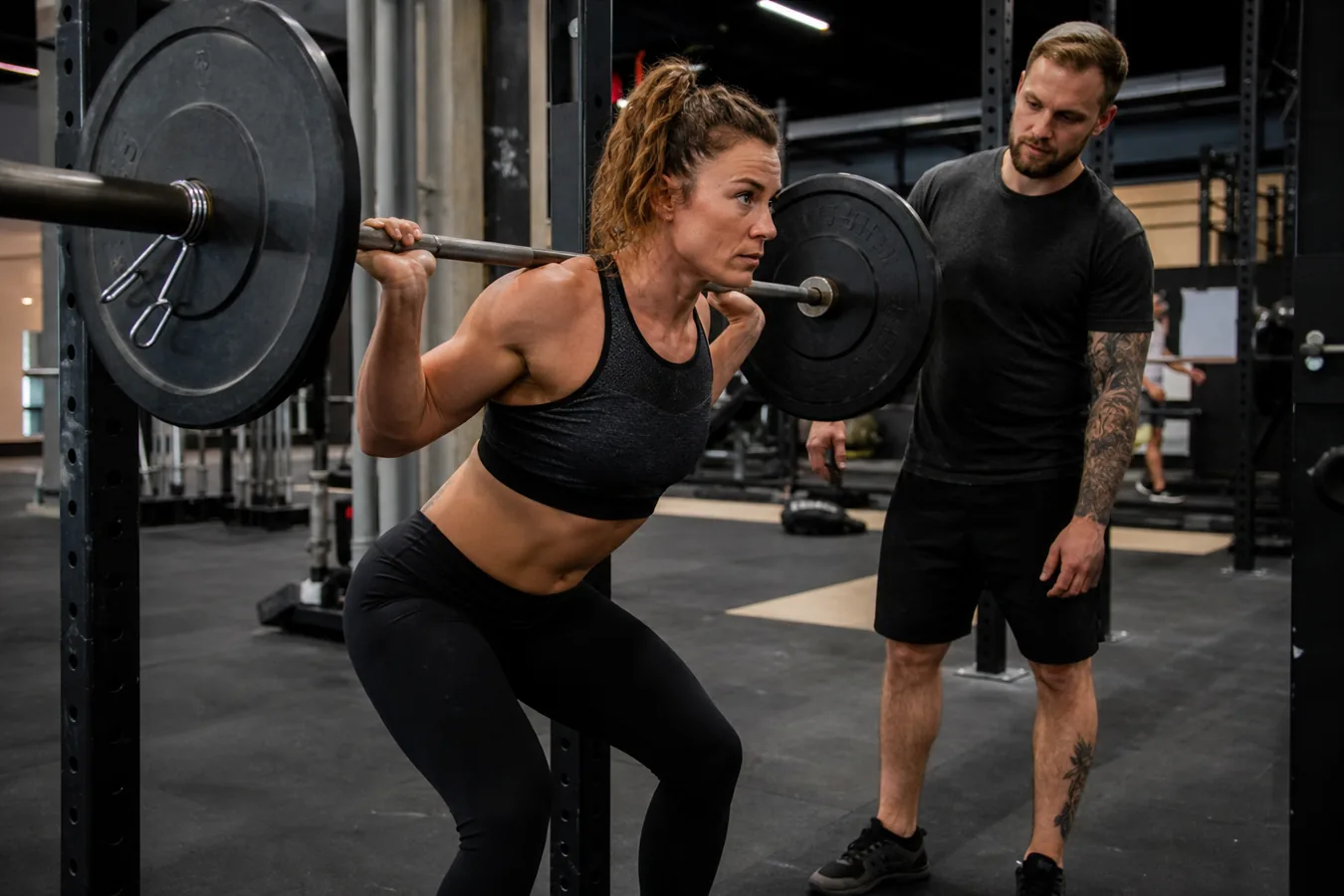
Most athletes need a stance around shoulder width, with the toes turned out just enough to let the knees track. That is a starting point, not a rule carved into the floor. The right stance lets the athlete descend without the heels lifting, the knees collapsing, or the hips searching for space at the bottom.
Before the first rep, pull the bar into the back, take a full breath, and brace like someone is about to bump you from the side. The descent should feel controlled, but not slow for the sake of being slow. A useful cue is: down with balance, up with intent.
Common faults and fixes
| Fault | What it looks like | Fix to try |
|---|---|---|
| Knees cave in | The knees drift toward each other on the way up | Reduce the load and drive the knees in line with the toes |
| Hips shoot back | The chest drops and the squat turns into a good morning | Brace harder, keep pressure through the whole foot, and slow the descent |
| Heels lift | The athlete rolls toward the toes at the bottom | Adjust stance, work ankle range, and use a controlled depth the athlete owns |
| Soft brace | The torso changes shape during the rep | Reset the breath before each heavy rep instead of bouncing into the next one |
Watch the bar path and depth
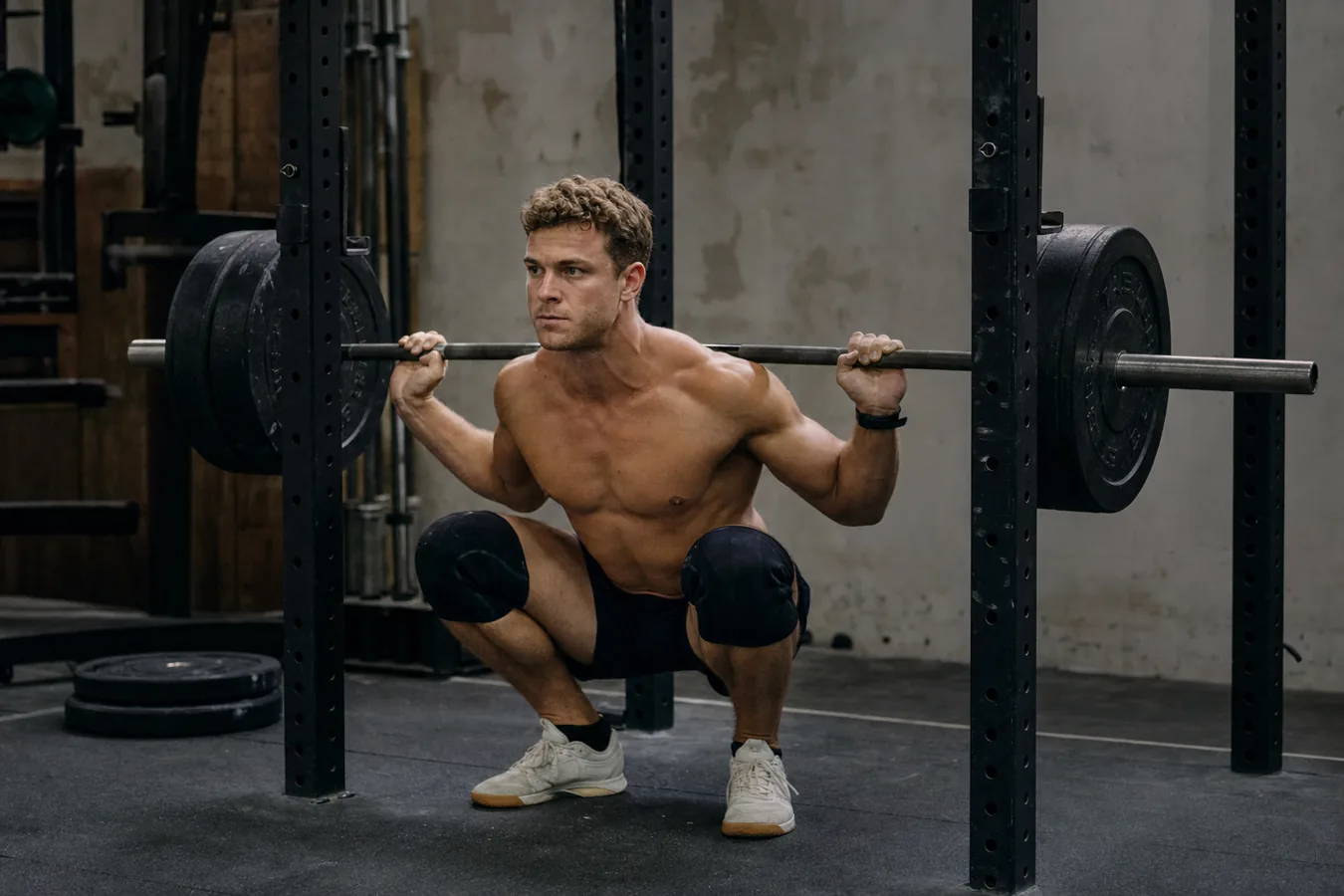
This CrossFit demo is useful because it keeps the back squat stripped down: stance, depth, knees tracking, and a bar path that stays over the foot. Watch the rep from the side if you can. The bar should not swing around the body like it is looking for a place to land.
How to use back squats in CrossFit workouts
Heavy back squats are usually best treated like strength work: clear sets, real rest, no sloppy grinders just to say the percentage was completed. In conditioning pieces, the lift needs a different filter. The weight should let the athlete keep depth, stand tall, and move into the next station without turning every rep into a survival attempt.
That is where smart CrossFit scaling matters. If the workout calls for heavy back squats mixed with running, burpees, or pulling, a small weight cut can preserve the intended stimulus and keep the squat from wrecking the rest of the session.
When to adjust the load
Load is too heavy when the athlete cannot keep a stable brace, consistent depth, and a clean stand-up. It is also too heavy when every rep needs a long negotiation before the next one starts. That does not mean the set should feel easy. It means the athlete should still be squatting, not inventing a new lift under pressure.
Useful scaling options include lighter weight, a tempo squat, a box target for consistent depth, goblet squats, or front squats if the coach wants a more upright position. For newer athletes, three clean sets at a moderate load often teach more than a single ugly max attempt.
What to check before your next heavy day
- Can you brace before moving instead of trying to tighten up halfway down?
- Do your knees track with your toes at the bottom and on the way up?
- Does the bar stay over the middle of the foot?
- Can you hit the same depth on rep one and rep five?
- Can you stand up without the hips shooting back first?
If one of those checks breaks, fix that piece before adding weight. The back squat rewards patience more than drama. Build the rep you can repeat, then let the load test it.


