The plan
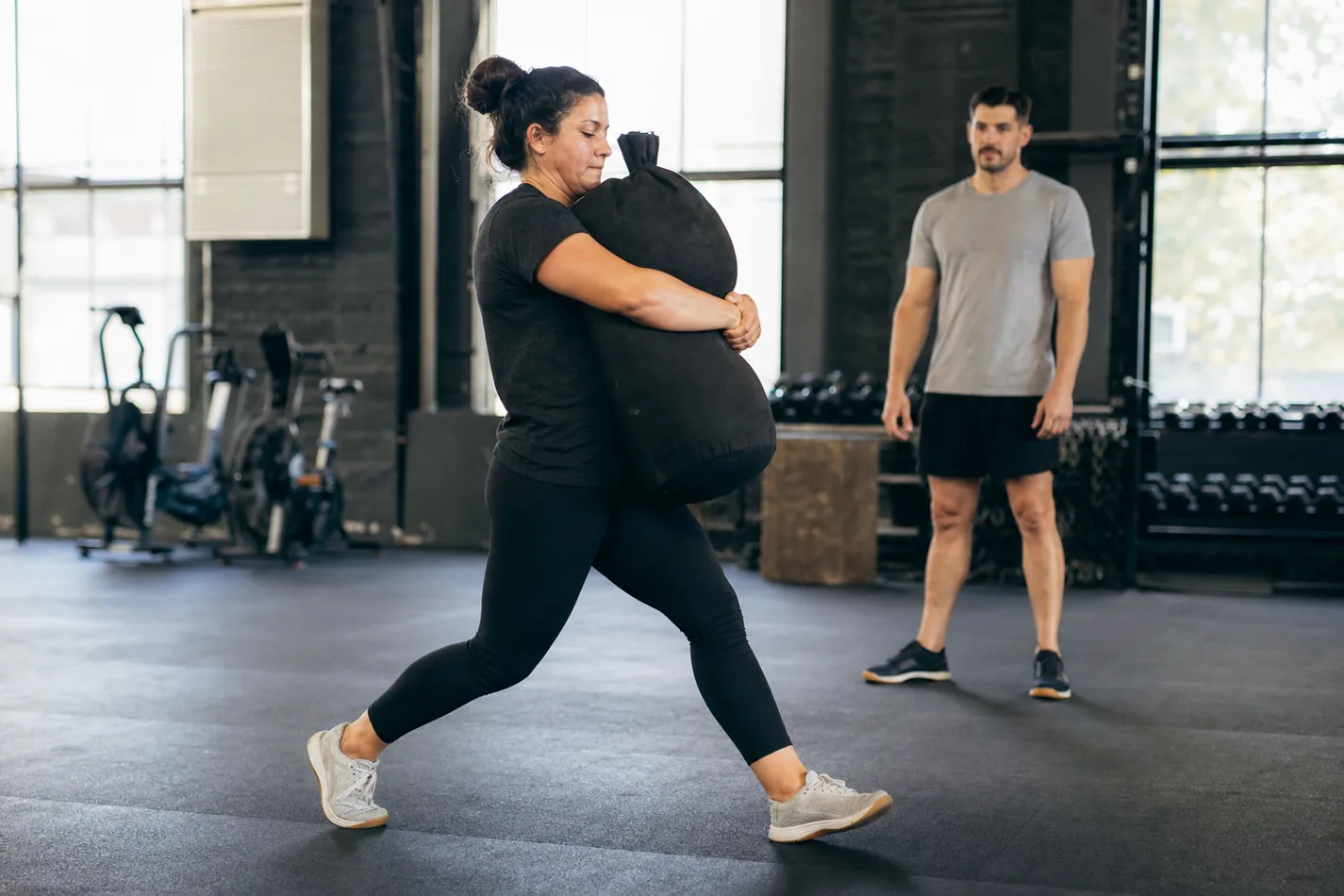
A sandbag carry looks simple until the bag starts sliding down your chest and your breathing turns rough. There is no handle to save you, no neat bar path, and no easy way to fake posture once fatigue hits.
In CrossFit, sandbag carries usually show up in short shuttle work, strongman-style conditioning, partner workouts, or odd-object days. The goal is not just to move the bag from one line to another. The goal is to keep your brace, keep walking, and avoid turning every step into a bent-back rescue mission.
- Carry the bag high enough that your torso can stay organized.
- Short, steady steps beat long lunging steps once the workout gets hot.
- Scale the load or distance before the bag forces your low back to do all the work.
What a good sandbag carry should feel like
A strong rep starts before the walk. Hug the bag tight, pull it into the chest, and set the ribs down before moving. If the bag hangs low from the first step, the athlete usually leans back, loses the brace, and starts waddling instead of walking.
The carry should feel closer to farmer carry posture and yoke carry bracing than to a random object haul. The legs are moving, but the trunk has to stay steady. If each step makes the bag bounce, the athlete is already wasting energy.
Pick up the bag without losing the first fight
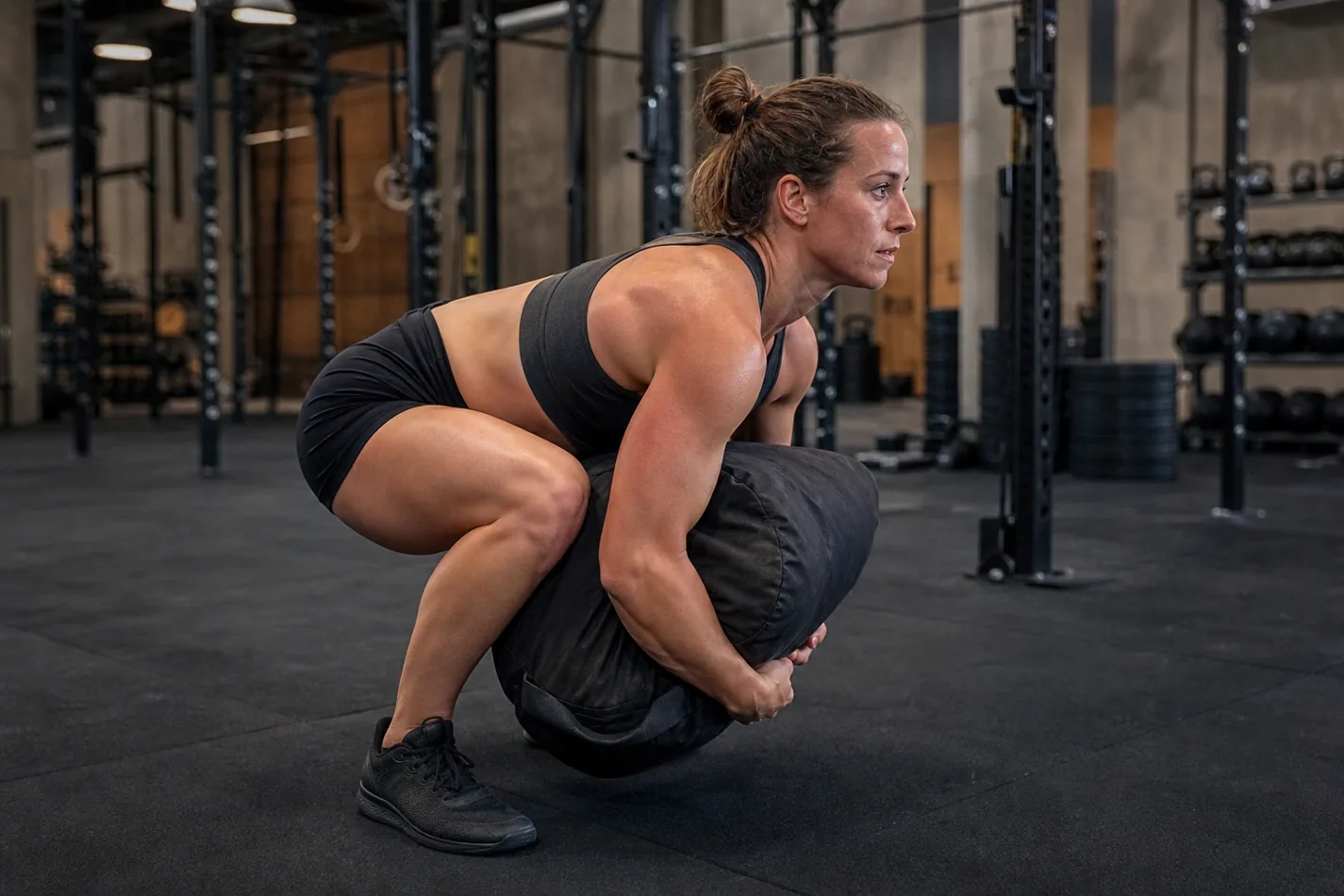
The pickup is where many bad carries start. Do not stand a loose bag up with rounded arms and hope to fix it on the walk. Get close, wrap the bag, pull it into the body, and use the legs to stand. If the bag is heavy, lapping it first can be the smarter move.
That same idea shows up in sandbag clean setup and atlas stone loading. Odd objects give you a chance to reset if you use the middle position well. Rush past it, and the rest of the rep becomes a fight with gravity.
| Fault | What happens in the workout | Fix to try |
|---|---|---|
| Bag sits too low | The athlete folds forward and loses breathing room | Rehug the bag higher before starting the walk |
| Steps are too long | The bag swings and the hips twist | Use short steps and keep the ribs stacked over the hips |
| Grip does all the work | Forearms burn before the legs are challenged | Squeeze with the whole upper body, not just the hands |
| Turns are rushed | The athlete drops posture at each line | Slow the turn, reset the feet, then accelerate again |
Breathing is part of the movement
A sandbag carry can feel like being squeezed from the outside. If the athlete panics and holds the breath for the entire length, the walk falls apart fast. Better carries use small breaths behind a firm brace. Breathe without letting the bag pull the chest down.
This is where strong deadlift bracing helps, but the carry adds a different problem. The load is not hanging from the hands or sitting on the back. It is crushing the front of the body. The athlete has to keep pressure without going stiff enough to stop moving.
The demo below is useful because it shows the carry as a full-body bracing drill, not a casual walk with a bag. Watch how the bag stays high enough to keep the athlete from folding forward.
How to pace sandbag carries in a WOD
For a short carry, one unbroken length may be right. For repeated carries, planned breaks often win. Drop the bag cleanly, step over it, breathe, and pick it back up before the next length turns ugly. Random drops usually cost more time than a planned reset.
If the workout also includes sled drag pacing, burpees, running, or box jumps, assume your legs and lungs will already be taxed. The mistake is trying to sprint the first carry because the bag feels manageable. The second and third carry tell the truth.
Scaling options that keep the stimulus
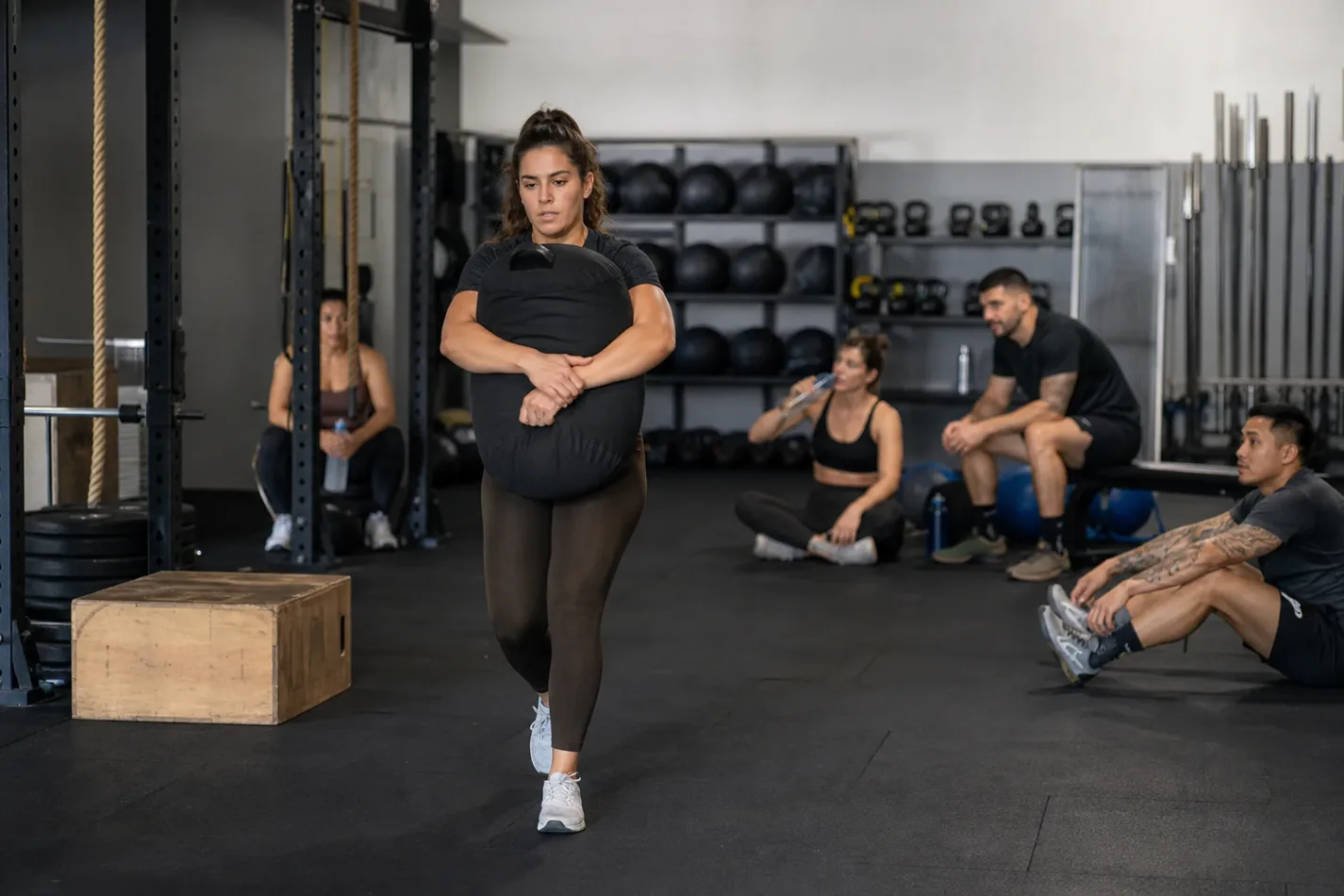
Good CrossFit scaling keeps the odd-object demand without forcing bad posture. Use a lighter sandbag, reduce the distance, switch to a D-ball bear hug, or carry to a shorter turnaround. If the athlete cannot pick up the bag safely, start with a higher object or practice controlled bear-hug holds first.
A lighter bag is not a downgrade if it lets the athlete walk well. For newer athletes, sets of 20 to 40 feet with clean pickups may teach more than one sloppy long carry. For stronger athletes, heavier carries can work, but only if the bag stays high and the steps stay repeatable.
When the sandbag is the wrong choice
Skip or change the carry if the athlete cannot keep the bag close, has a back issue that hates loaded flexion, or loses posture as soon as breathing spikes. Use D-ball over shoulder control, front-loaded plate carries, goblet squat depth, or lighter bear-hug holds instead.
The test before the next workout is simple. Can you pick up the bag, walk 40 feet, turn, and come back with the same posture you had at the start? If the answer is no, fix the pickup, the bag height, or the load before chasing speed.


