The plan
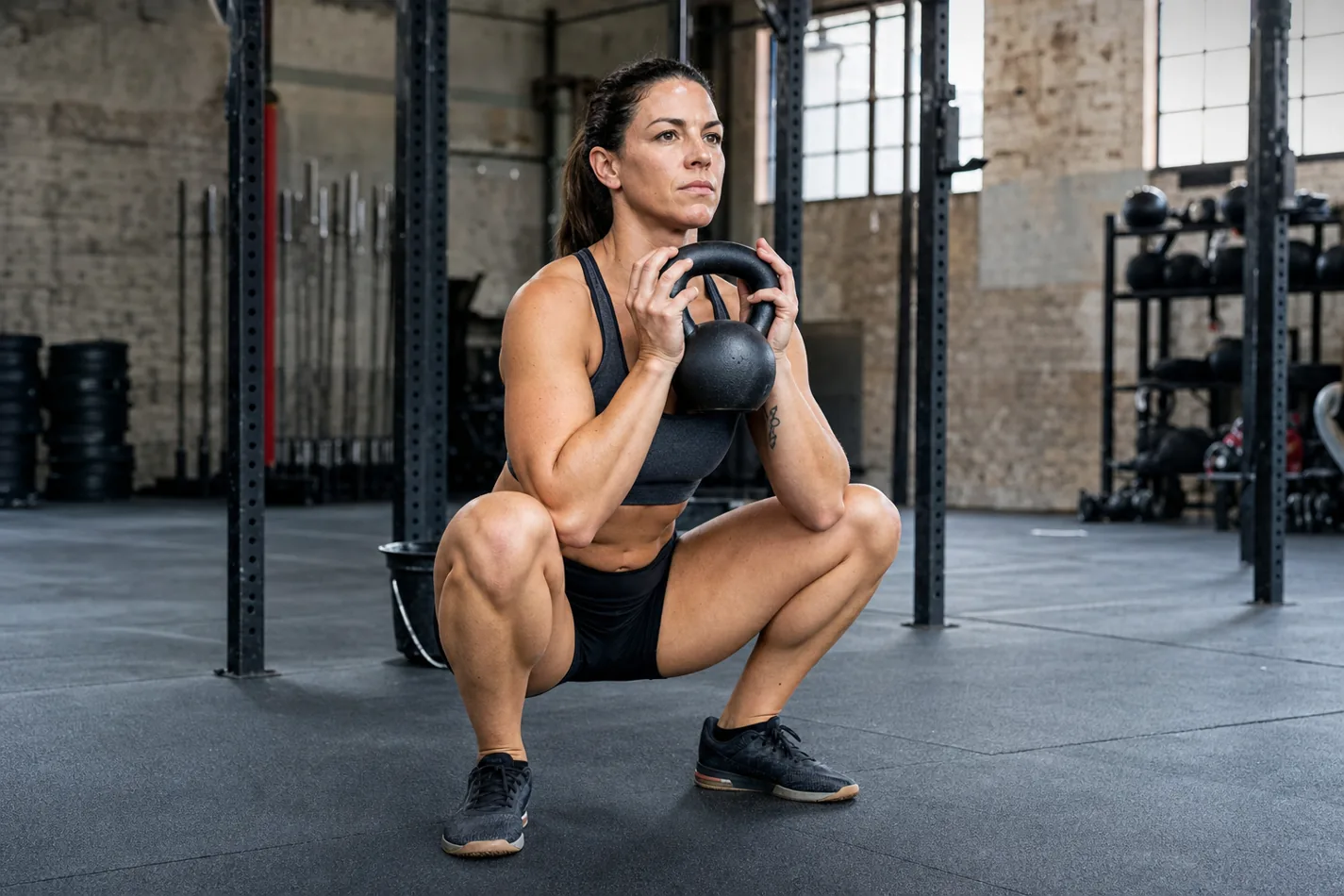
The goblet squat is one of the simplest loaded squat variations in CrossFit. That does not make it a throwaway movement. A kettlebell or dumbbell held at the chest gives quick feedback: if the torso folds, the weight pulls forward; if the knees cave, the bottom position feels stuck; if the athlete rushes, breathing disappears fast.
Used well, it is a clean way to teach depth, bracing, and steady pacing without putting a barbell on the back. Used poorly, it becomes a rounded-back squat with the elbows crashing into the thighs every rep.
- Hold the bell tight to the sternum instead of letting it drift away from the body.
- Use the goblet squat to build depth and torso position before chasing heavier barbell work.
- Scale load or reps when the chest drops, knees cave, or breathing turns every set into a grind.
Why the goblet squat works in CrossFit
The front-loaded position makes the athlete honest. The weight sits where the body can feel it, which helps many athletes find a better bottom position than they do in an unloaded air squat. It also builds habits that carry into front squat rack position, back squat depth, and high-rep conditioning pieces.
The goal is not to turn the goblet squat into a max-strength lift. It is better as a teaching tool, warm-up lift, accessory piece, or conditioning movement that keeps the squat pattern clean under fatigue.
Set the bell close before the first rep
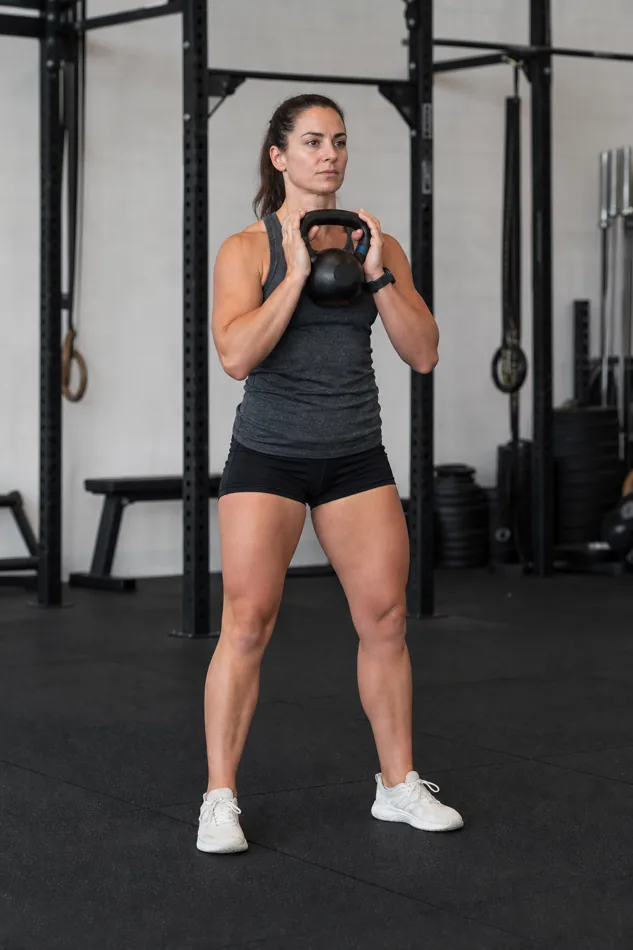
The bell should stay close to the chest, not hang from the arms. Think elbows down, ribs controlled, and hands secure around the horns of the kettlebell or the head of the dumbbell. If the load starts drifting forward, the low back and shoulders take over before the legs get much work.
This close-load habit also helps with kettlebell swing hip drive. The object is different, but the lesson is similar: keep the weight connected to the body before trying to move faster.
| Fault | What it usually means | Fix to try first |
|---|---|---|
| Bell drifts away from the chest | The athlete is holding with the arms instead of bracing | Pull the bell tight and reset the ribs before squatting |
| Chest drops in the bottom | Depth is being forced without position | Slow the descent and stop at the deepest clean position |
| Knees cave on the stand | Foot pressure is collapsing inward | Drive the knees in line with the toes |
| Breath disappears after a few reps | The set is too rushed or too heavy | Pause at the top for one controlled breath |
Depth matters, but position comes first
A good goblet squat should show usable depth. Still, forcing the last inch while the chest folds forward does not help much. The athlete should descend under control, keep the whole foot on the floor, and stand without bouncing out of a collapsed bottom position.
If depth is the problem, use the goblet squat as a diagnostic. Ankles, hips, and bracing all show up quickly. The same issues often appear later in overhead squat position, where poor depth and poor torso control become much harder to hide.
The demo below is useful because it keeps the movement simple: bell close, chest tall, knees tracking, then a controlled stand. That is the standard to chase before adding speed.
How to pace goblet squats in a workout
Light goblet squats can be cycled quickly, but the weight still needs a rhythm. Set the breath at the top, squat with control, then stand tall before the next rep. Athletes who let the bell bounce or twist usually waste energy fixing the position every few seconds.
When goblet squats sit next to wall ball pacing or thruster breathing, the legs and lungs are already under pressure. Breaking a set before the chest collapses is often faster than surviving one ugly unbroken set and staring at the bell afterward.
Scaling without losing the squat lesson
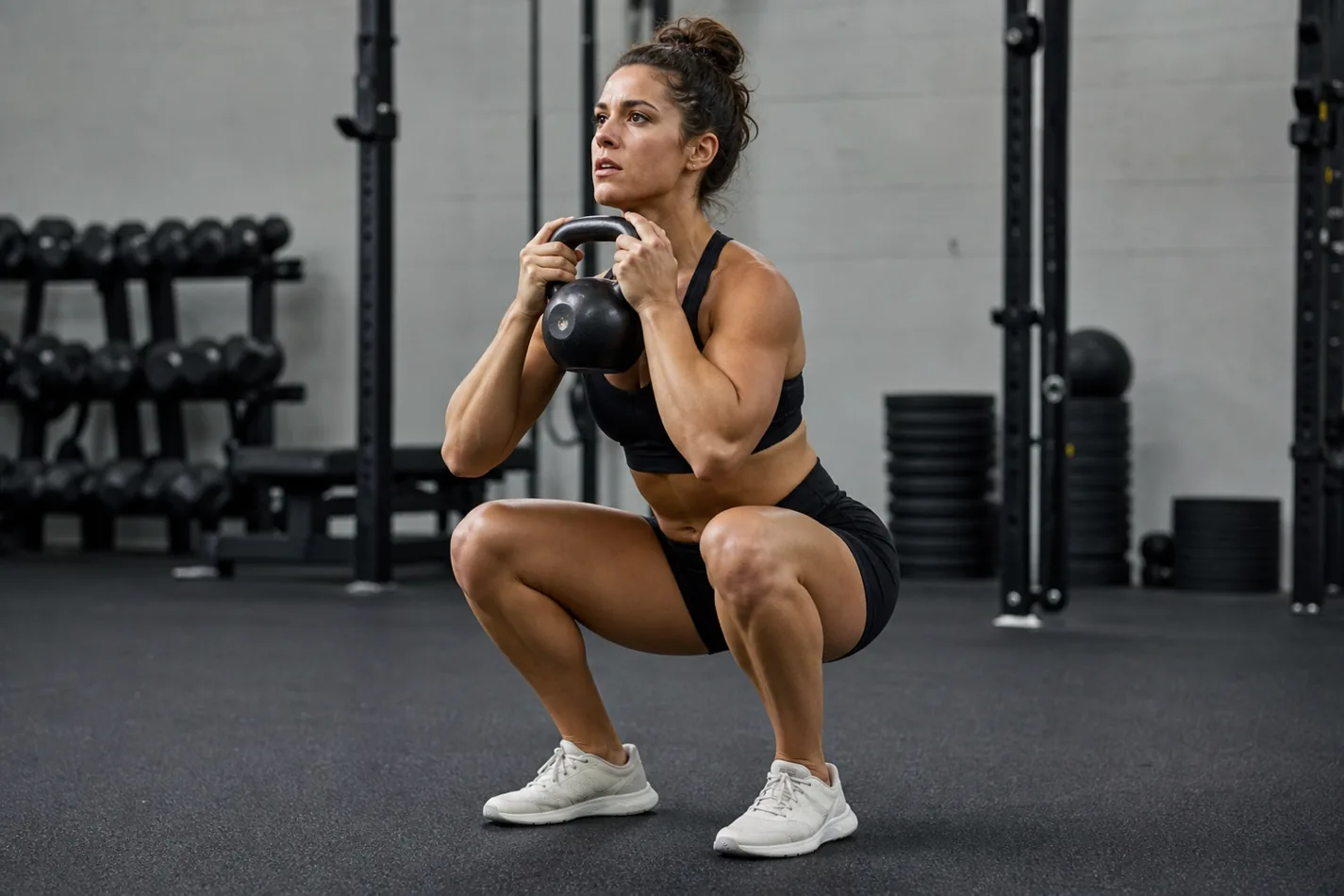
Good CrossFit scaling keeps the squat useful. Use a lighter bell, reduce reps, shorten the range to the deepest clean position, or elevate the heels slightly if mobility is the limiter. If the athlete cannot keep the bell close at any load, switch to a bodyweight squat drill before adding weight back.
For athletes who need more single-leg control, pair goblet squats with walking lunge balance. The squat builds bilateral depth and bracing. Lunges show whether each leg can hold its own line under fatigue.
What to check in the next warm-up
Before using goblet squats in a hard piece, run a quick test. Can the athlete hold the bell close for five slow reps? Can they hit depth without the heels lifting? Can they stand without the knees diving in? Can they breathe at the top without relaxing the trunk?
If those answers are clean, the goblet squat is ready for volume. If not, the warm-up just showed exactly what needs fixing.


