
The plan
The walking lunge looks simple until the workout gets loud. One bad step turns into a wobbly knee, then a shortened stride, then a set that burns the legs without teaching much.
In CrossFit, lunges show up with bodyweight, dumbbells, kettlebells, barbells, sandbags, and overhead loads. The goal is not to make every step pretty for a photo. The goal is to keep the step repeatable when your breathing is high and your legs are trying to bargain with you.
- A solid walking lunge starts with a controlled step, a stable front foot, and a knee that tracks with the toes.
- Longer is not always better. The right stride lets you touch the back knee without dumping the chest forward.
- In a WOD, scale the load or distance before your steps turn into random survival lunges.
What the walking lunge is really training
A walking lunge trains single leg strength, balance, hip control, trunk tension, and the patience to move one clean step at a time. That last part is where many athletes get exposed. They can squat with both feet planted, but a lunge asks each side to own the floor by itself.
The carryover is easy to feel. Athletes who lose their torso during lunges often see the same leak in a heavy CrossFit back squat. The position changes, but the problem is familiar: loose ribs, soft hips, and weight drifting where it should not go.
Set the step before you add weight
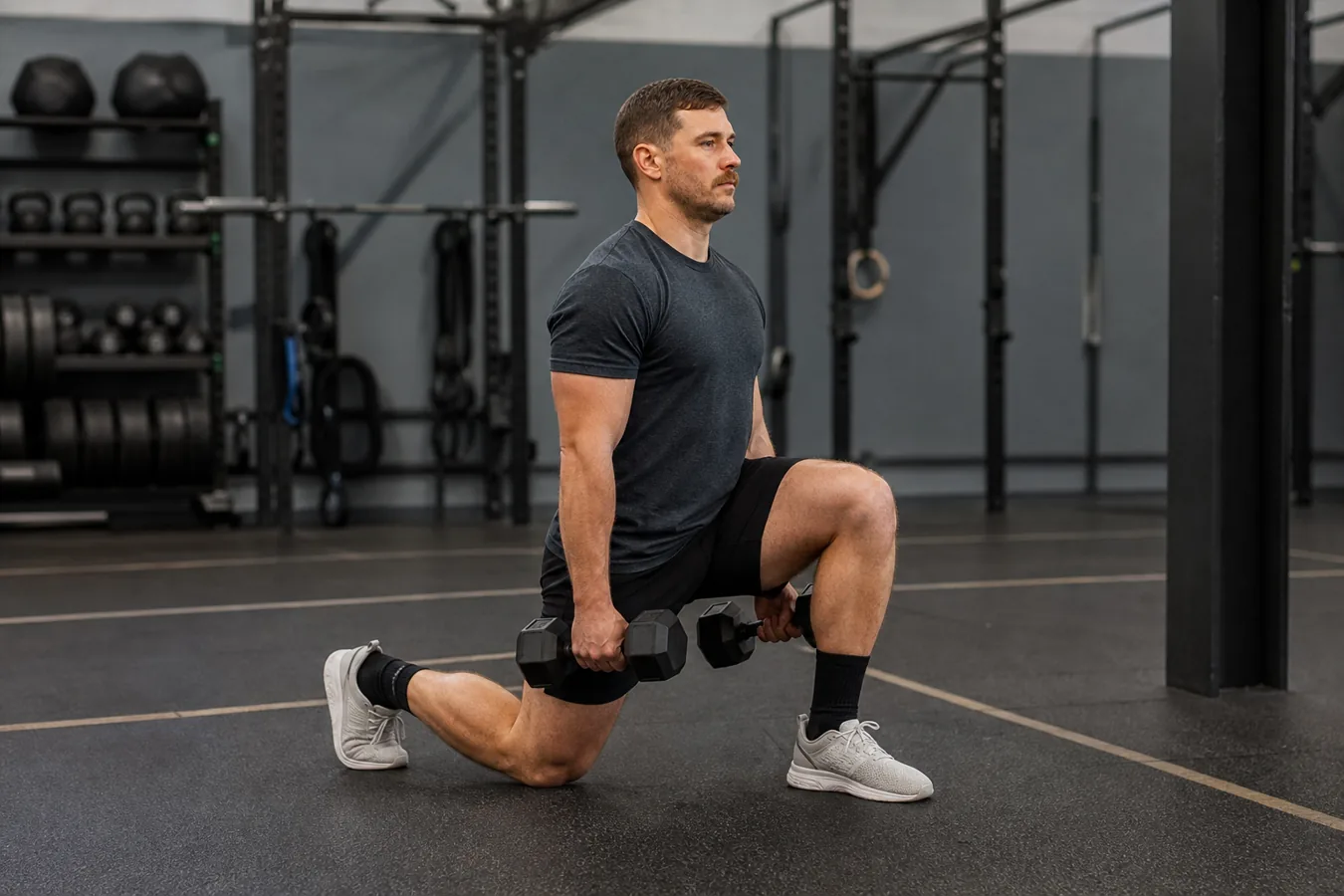
Start with a step that gives you room to lower the back knee under control. If the step is too short, the front knee may shoot forward and the heel may get light. If the step is too long, the athlete often pulls through the hip flexor and loses the ability to drive out of the bottom.
A useful rep feels boring from the outside: front foot flat, knee tracking over the toes, back knee touching or coming close to the floor, torso tall enough to breathe, then a strong push through the front foot into the next step. No bounce. No twist. No sideways rescue mission.
Common walking lunge faults and fixes
| Fault | What it looks like | Fix to try |
|---|---|---|
| Stride is too short | The front heel lifts or the knee jams forward | Step a little farther and keep the whole front foot on the floor |
| Stride is too long | The athlete stretches instead of driving up | Shorten the step and think about pushing the floor away |
| Knee caves in | The front knee drifts toward the midline | Reduce load and track the knee in line with the toes |
| Chest drops | The lunge turns into a reach toward the floor | Brace before stepping and keep the ribs stacked over the hips |
Watch the standard from the side
This CrossFit demo is short, but it shows the piece athletes miss when they rush: the back knee travels down, the front foot stays planted, and the athlete stands tall enough to own the next step. Watch the side view first. It is easier to see whether the stride is helping or stealing position.
How to pace lunges in a WOD
Walking lunges punish athletes who sprint the first length and then stagger through the rest. The better plan is usually a steady cadence you can repeat: step, touch, stand, breathe, step again. If the workout has a turn-around, use that moment to reset your grip and posture instead of rushing into sloppy steps.
This matters even more when lunges are paired with jumping or squatting. After high-rep CrossFit box jumps, the legs may feel springy but unstable. After heavy squats, they may feel strong but slow. Either way, the lunge tells you whether you can still control one side at a time.
When to load it and when to scale
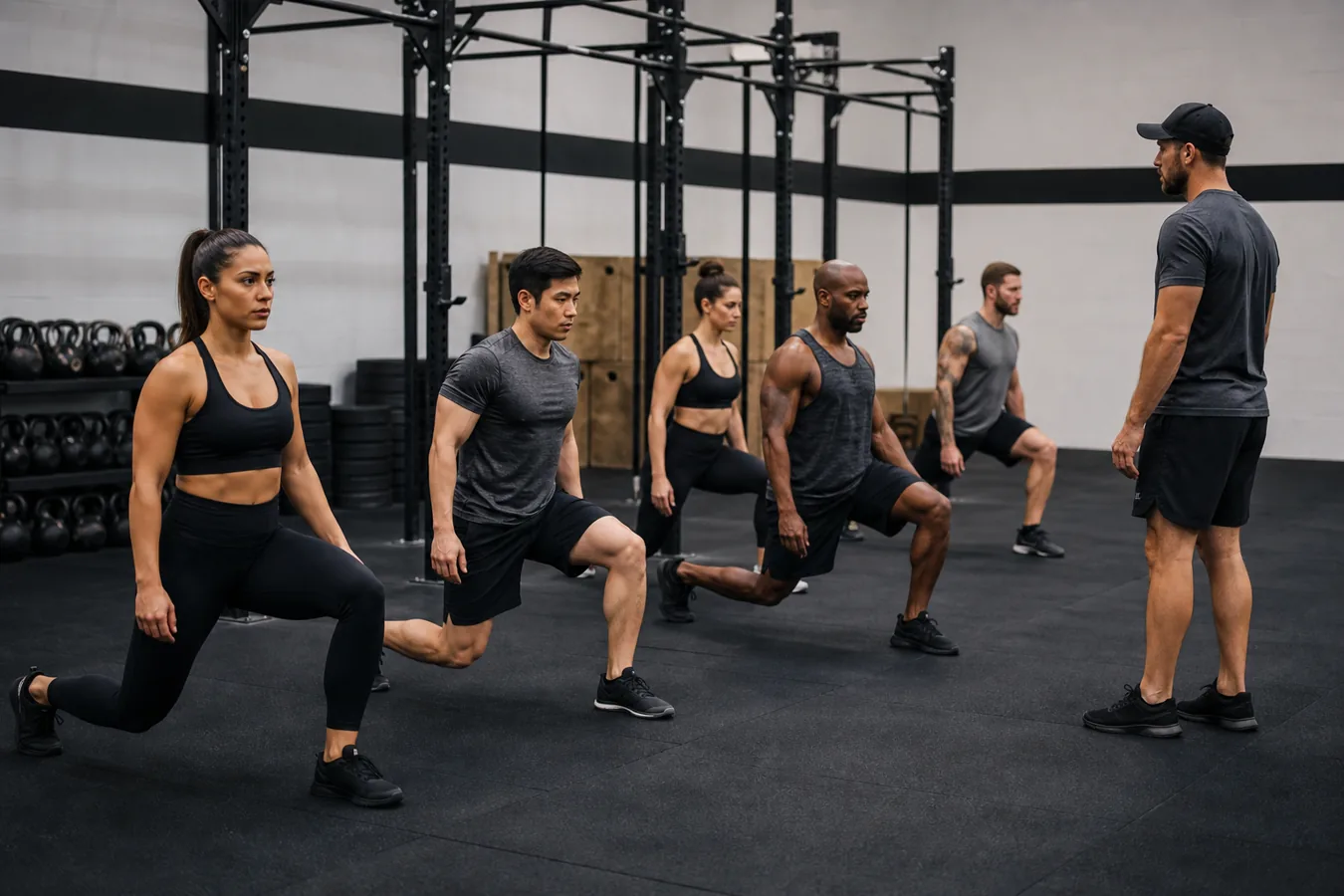
Bodyweight lunges should come first if the athlete cannot keep the knee honest or stand up without pushing off the thigh. Dumbbells by the sides are often the cleanest loaded option because they let the athlete focus on the step. Front rack or overhead lunges ask more from the midline and shoulders, so they should be earned, not guessed.
Good scaling options include shorter distance, bodyweight lunges, reverse lunges in place, step-ups, or a lighter load. The right version depends on what the workout is trying to train. A practical CrossFit scaling plan keeps the single leg stimulus without turning every rep into a balance test nobody asked for.
What to check before your next lunge workout
- Can you keep the whole front foot down on each step?
- Does your front knee track with the toes instead of diving inward?
- Can you touch the back knee without bouncing off the floor?
- Does your torso stay stacked, or do you fold as soon as you get tired?
- Can you hold the same step length in the final round?
If two of those checks fail, the load is probably ahead of the movement. Fix the step first. Then add weight, distance, or speed once the lunge still looks like a lunge at the end of the workout.


