The plan
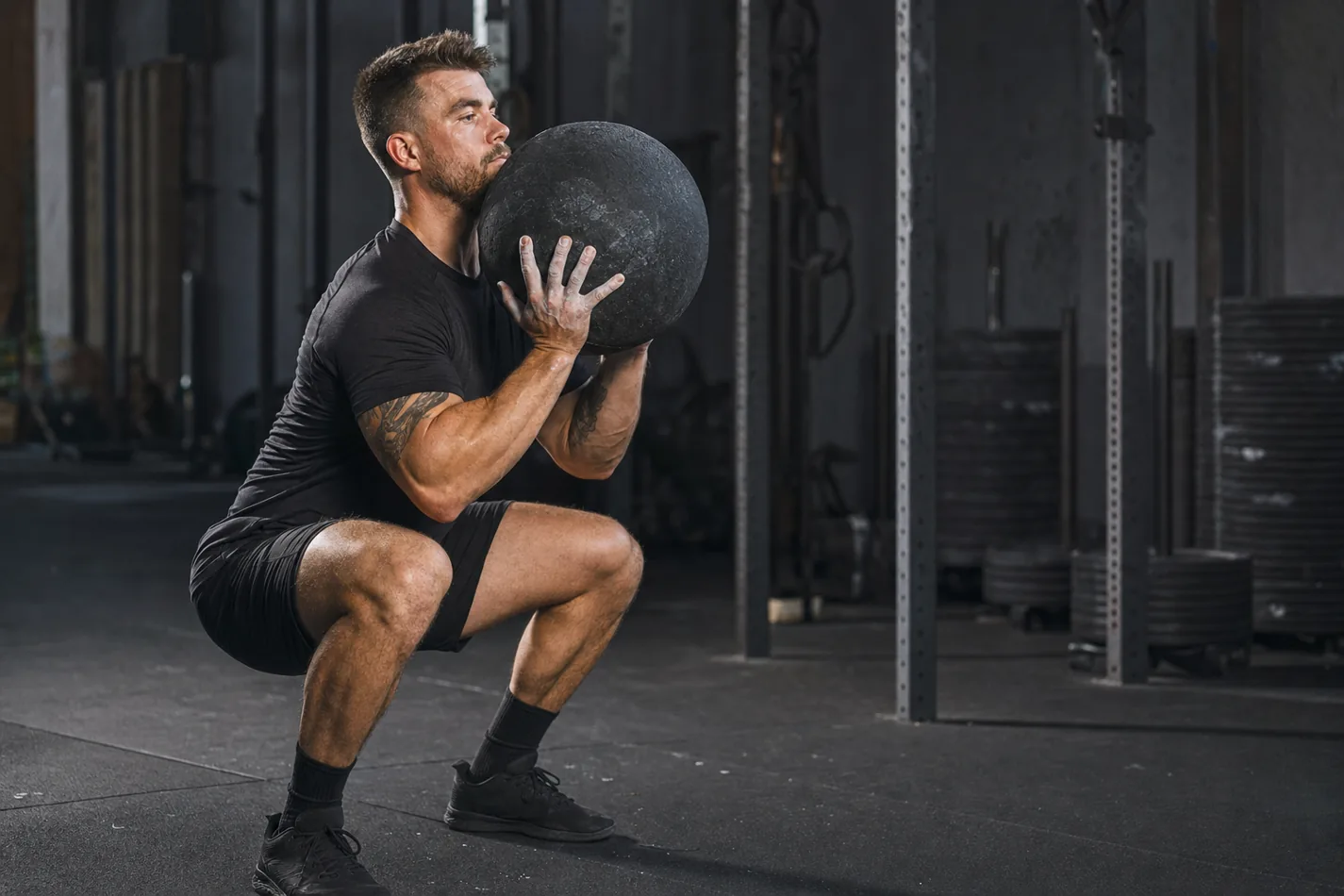
The D-ball over shoulder looks simple until the workout gets heavy. Pick the ball up, get it over the shoulder, repeat. Then the rounds stack up, the ball starts rolling away, and every sloppy rep feels like a small argument with the floor.
In CrossFit, this is an odd-object lift more than a neat barbell skill. The ball does not give you a handle. It shifts, it sticks to your shirt, and it punishes athletes who try to curl it instead of driving through the legs.
- Set the ball close, wrap the hands low, and build pressure before you pull.
- Use a lap or thigh contact when the ball is heavy enough to break your rhythm.
- Scale weight before the back rounds, the ball drifts forward, or every rep turns into a biceps curl.
What the D-ball over shoulder should train
A good rep trains leg drive, trunk tension, patience from the floor, and the ability to move a load that refuses to behave like a barbell. It sits near sandbag clean control, tire flip leg drive, and loaded carries because the body has to stay organized while the object fights back.
The goal is not to make the rep pretty. The goal is to make it repeatable. If the athlete can bring the ball close, brace, extend, and clear the shoulder without chasing it across the room, the movement starts to become useful conditioning instead of a back fatigue contest.
Start close or pay for it later
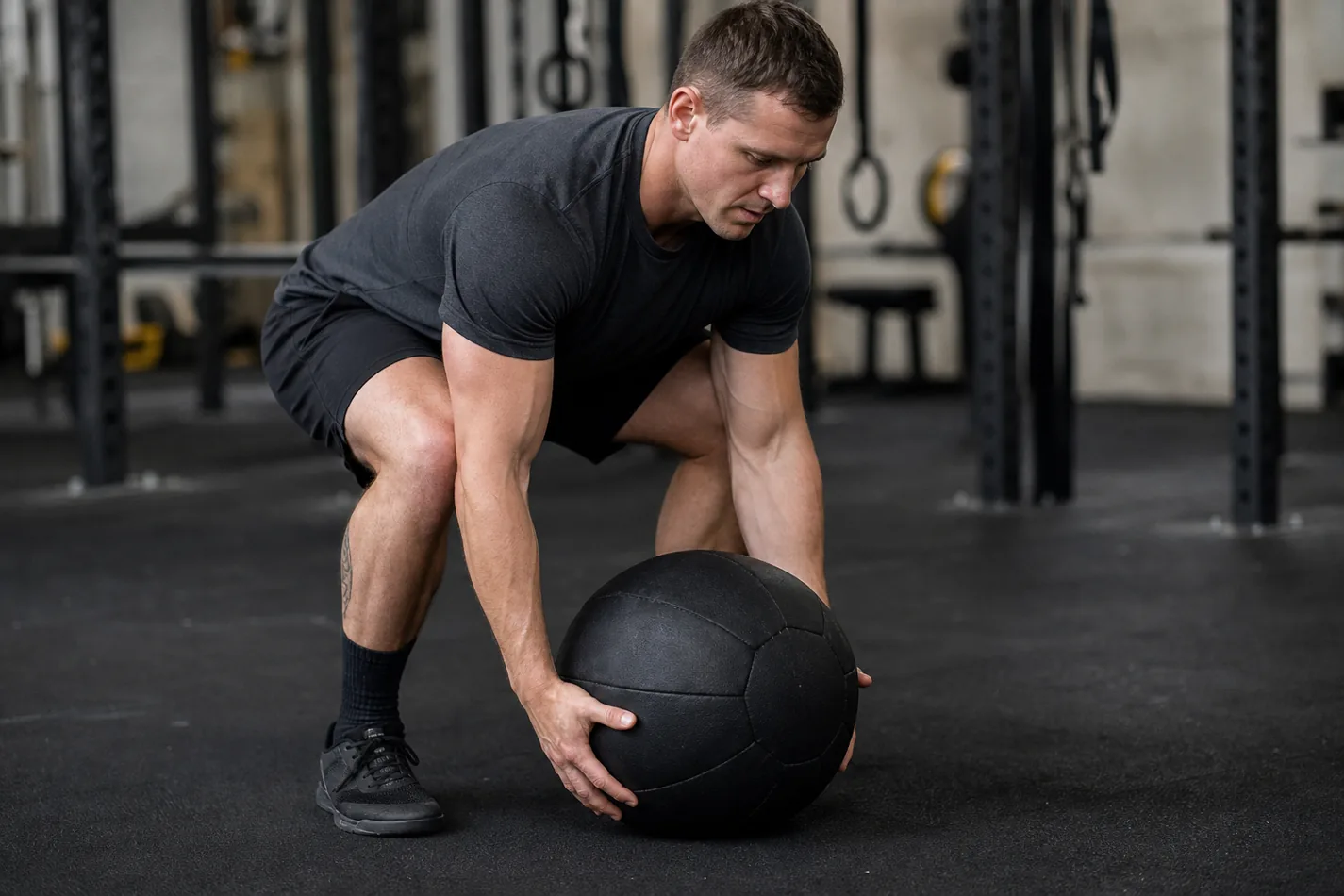
The first mistake is distance. When the ball starts too far away, the athlete has to reach, round, and drag before the lift even begins. Bring the feet close enough that the hands can wrap around the ball without the chest collapsing toward the floor.
Think about pulling the ball into the body, not lifting it away from the body. That same idea shows up in deadlift bracing and power clean timing: the farther the load drifts, the heavier it feels. With a D-ball, the penalty is worse because there is no bar path to save you.
| Fault | What it usually means | Fix to try first |
|---|---|---|
| Ball starts far from the toes | The athlete is reaching before bracing | Step closer and wrap the hands before pulling |
| Back rounds early | The load is too far forward or too heavy for the set | Reduce weight or use a lap position |
| Arms curl the ball | The hips are not finishing the rep | Stand hard before guiding the ball over the shoulder |
| Ball drops into the feet | The athlete is not clearing space after the toss | Step back or turn slightly after each rep |
Use the lap position when the ball gets heavy
For lighter balls, some athletes can move straight from floor to shoulder. With heavier D-balls, a quick lap position is often cleaner. Pull the ball to the thighs, sit it high enough that it does not slide down, then re-grip and drive it over the shoulder.
The lap is not a rest break unless the workout calls for singles. It is a checkpoint. It lets the athlete reset the back, pull the ball tighter, and use the hips instead of trying to muscle the whole rep from the floor.
The demo below is useful because it shows the rep as a clean sequence: set the hands, bring the ball close, extend hard, then let the shoulder finish the job. Watch the hips before you watch the arms.
Hip drive beats arm strength
The finish should feel like a violent stand, not a slow curl. Once the ball is close, squeeze it in, push through the floor, and extend the hips. The arms guide the ball. They do not have to win the lift alone.
This is where D-ball work connects to sled push drive and yoke carry bracing. The athlete needs pressure through the floor and a stiff trunk before speed matters. If the hips never open, the shoulders and low back end up doing work they were not meant to do for twenty or thirty reps.
How to pace D-ball reps in a workout
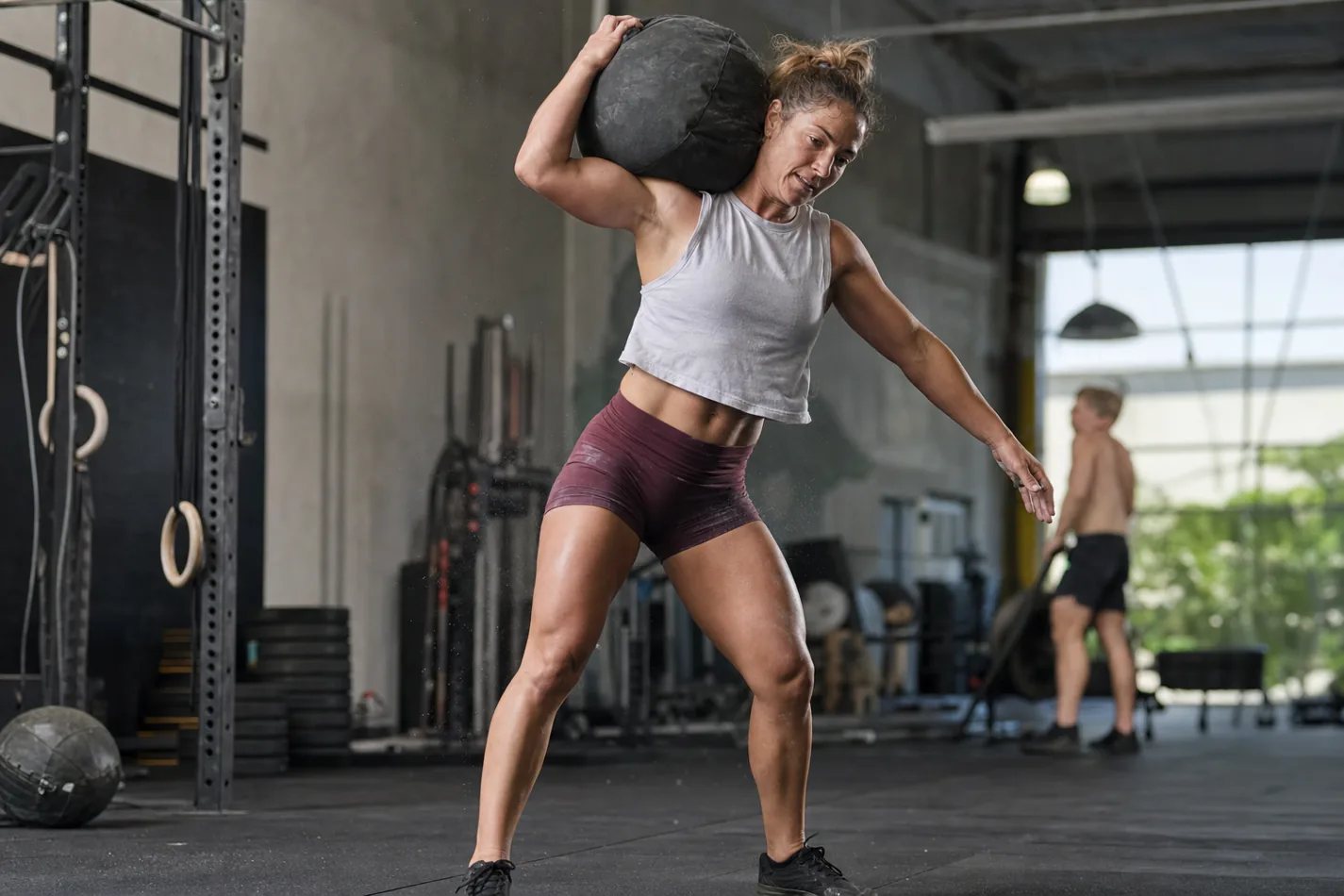
D-ball over shoulder reps get messy when athletes sprint the first ten and negotiate with the ball for the next twenty. If the load is moderate, use a steady drop, step in, set, and lift rhythm. If the load is heavy, quick singles can be smarter than pretending touch-and-go reps will stay clean.
Keep the drop predictable. Letting the ball bounce or roll turns every rep into extra work. In a crowded class, it can also become a safety issue. Drop the ball where you can step back to it without chasing it into another lane.
Scaling without losing the point
Good CrossFit scaling keeps the odd-object problem in the movement. A lighter D-ball, a sandbag, or a lower rep target can all work. Replacing it with a neat dumbbell curl to press usually misses the reason the movement was programmed.
If the athlete cannot keep the ball close, lower the weight. If the issue is conditioning, keep the weight honest and cut the set into small chunks. If the issue is fear of the object, practice singles with a clear reset after each rep. The best scale is the one that lets the athlete keep the legs involved.
What to check before adding weight
Before going heavier, check a few honest signs. Can you set every rep without reaching? Can you keep the ball close through the lap? Can you finish with the hips instead of throwing your back into extension?
If those answers are not clear, stay with the current load and clean up the rhythm. Heavy odd objects are useful because they tell the truth. They are also unforgiving when you ignore what they are saying.


