
The plan
A tire flip looks like a test of brute strength until the first bad rep. The hips shoot up, the chest drifts away, the athlete starts curling the tire with bent arms, and suddenly the lower back is doing work it never signed up for.
In CrossFit, tire flips usually show up as odd object work, strongman style conditioning, or a station inside a gritty partner workout. The tire does not need to be huge to teach the lesson. Good reps come from getting close, driving with the legs, and staying patient during the hand change.
- Set the chest close to the tire and drive with the legs before trying to lift with the arms.
- Change the hands after the tire passes the hard part, not while it is still pinned to the floor.
- Scale the tire early if athletes start curling, twisting, or losing their back position.
What the tire flip actually trains
The tire flip trains leg drive, trunk stiffness, hip extension, upper body turnover, and the ability to stay organized under an awkward object. It borrows pieces from deadlift bracing and power clean timing, but it does not feel like a barbell. The tire is wide, dirty, uneven, and slow to move at the start.
That awkwardness is the value. Athletes learn to create force from a poor looking object without turning the rep into a rounded back pull. The movement also carries over to sandbag clean control, heavy carries, and other tools that do not line up neatly in the hands.
Set up closer than feels comfortable
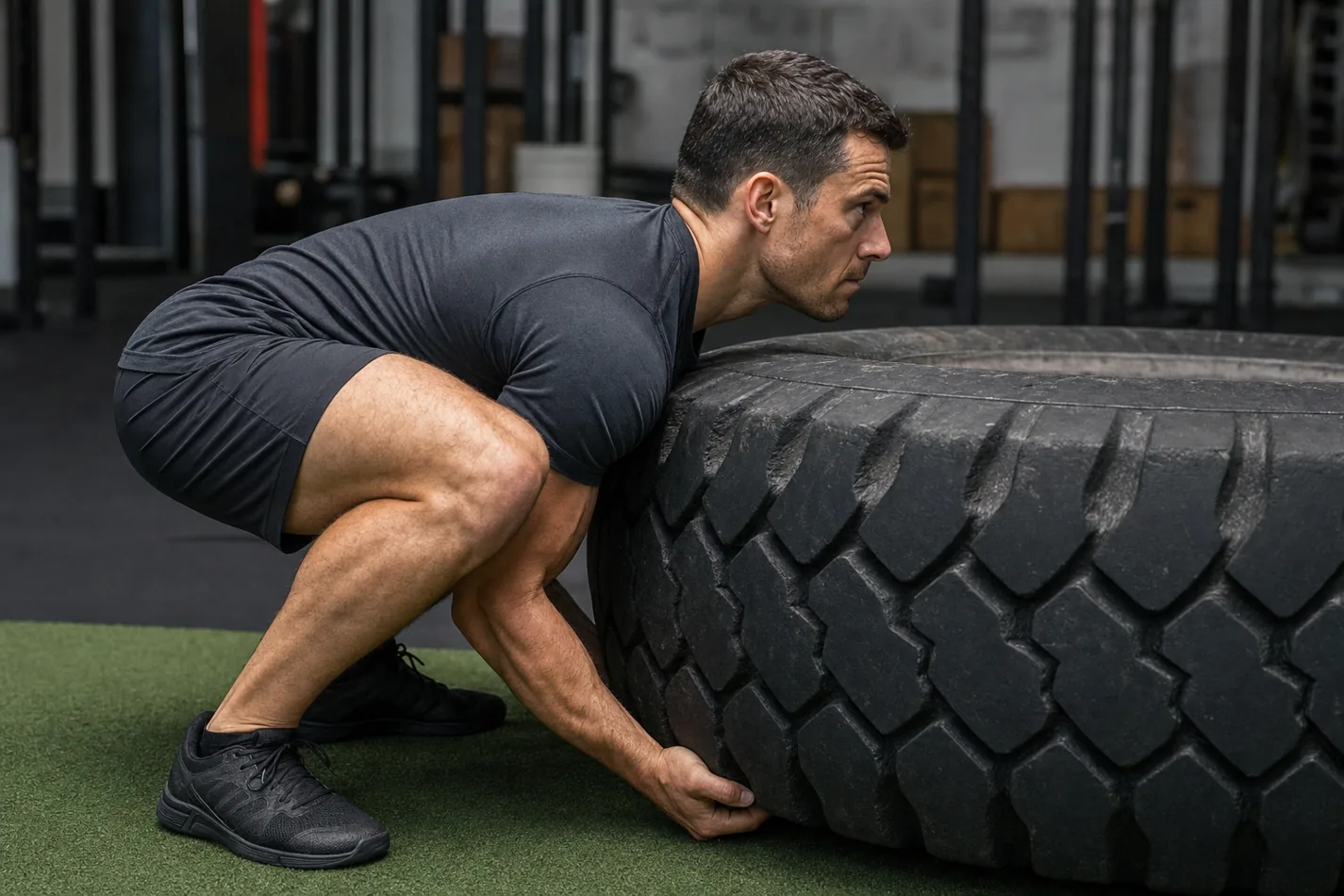
The tire should not sit a foot away from the body. If the athlete reaches for it, the hips usually rise first and the back has to fight the whole load. Step in close. Put the chest against the tire or just above it. Get the feet wide enough to drive, then wedge the hands under the edge.
The first goal is not to rip the tire off the floor. It is to make the tire start rolling. Think of pushing the ground away while the chest stays connected. If the arms bend hard before the tire moves, the athlete is probably trying to curl a tire. That plan ends quickly.
| Fault | What it usually means | Fix before adding speed |
|---|---|---|
| Hips shoot up first | The athlete is too far from the tire or too heavy | Step in, lower the chest, and drive through the legs |
| Arms curl the tire | The hand change starts too early | Keep the arms long until the tire has momentum |
| Tire twists sideways | The feet or hands are uneven | Reset square before the next rep |
| Back rounds hard | The load is no longer training the right pattern | Scale the tire or switch to a simpler odd object |
The hand change is where reps get messy
Once the tire rises past the sticky point, the athlete has to move from lifting to pushing. This is where rushed reps fall apart. Some athletes try to regrip too soon and lose the tire. Others keep pulling for too long and end up with the tire on the thigh, stuck in no man's land.
A cleaner rep has two clear pieces: drive it up, then punch it through. The hands slide or switch only when the tire is high enough to finish. That same patience matters in sled push drive, where early panic wastes the legs before the work really begins.
The demo below is worth watching because it shows the tire as a leg drive problem first. Notice how the athlete gets close, drives through the floor, then changes the hands only after the tire has momentum.
How to pace tire flips in a WOD
Tire flips can trick athletes because the first few reps feel powerful. Then the breathing catches up. If the workout also has burpee pacing, carries, or short runs, a wild opening set can make the next station ugly.
For most workouts, steady singles beat sloppy touch and go reps. Step in, flip, clear the tire, breathe once, then reset. Partner workouts need even more discipline. If one athlete starts twisting the tire, the other athlete usually inherits a bad setup on the next rep.

Scaling options that keep the stimulus
Good CrossFit scaling keeps the point of the tire flip: drive an awkward load while staying braced. Use a smaller tire before letting the athlete round, curl, or twist through every rep. If no lighter tire exists, reduce the reps, make it a partner flip, or replace the station with a sandbag load, heavy deadlift, or sled push depending on the workout goal.
The tire is not magic. It is a tool. If it teaches leg drive and body position, keep it. If it turns the workout into repeated failed max attempts, change the tool and protect the stimulus.
Safety checks before the clock starts
Use a tire that athletes can move without losing their back position. Check the surface, clear the landing area, and make sure nobody is standing where the tire will fall. Wet rubber, loose turf, and crowded lanes make a simple station much more chaotic.
Hands matter too. Athletes should know where they are placing their fingers before the tire tips over. Do not catch the tire under the edge as it falls. Push it through and get the hands out.
What to test in your next tire workout
Before chasing speed, test three quiet details: can you start with the chest close, can you move the tire without curling it, and can you finish the hand change without twisting sideways? If those are clean, add pace. If not, the tire already gave you the work for today.
The best tire flip reps look almost boring at first. Close setup, hard leg drive, clean push through. That is the part worth keeping when the workout gets loud, especially if the same day also asks for yoke carry bracing or another heavy odd object.


