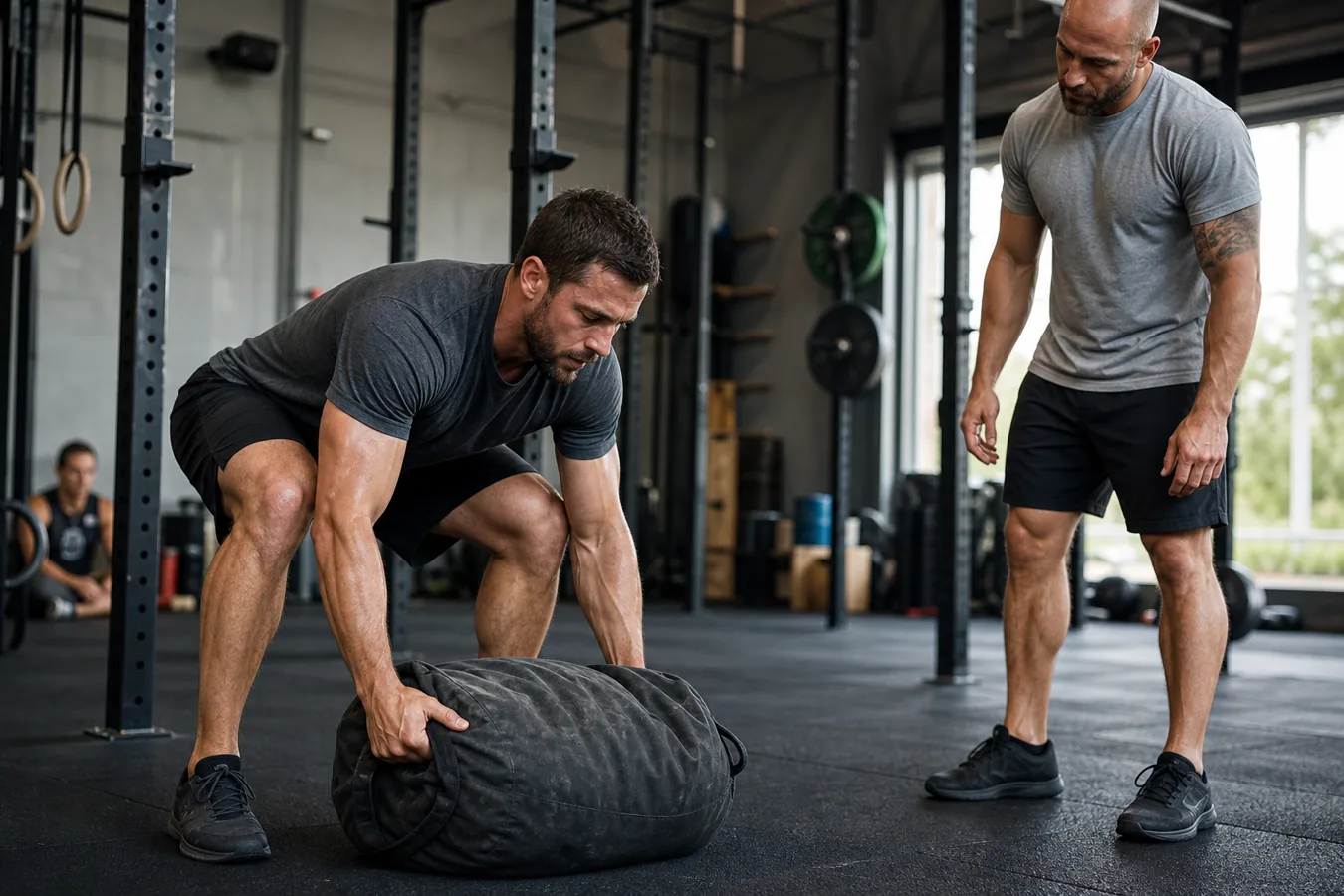
The plan
The sandbag clean looks simple until the bag starts folding around your hands. A barbell gives you a straight line and a clean catch. A sandbag moves, sags, rolls, and punishes any athlete who tries to curl it up with tired arms.
In CrossFit, the sandbag clean is a test of patience under pressure. The fastest reps usually come from athletes who stay close to the bag, use their hips, and accept that the movement is supposed to feel awkward. Fighting the bag wastes energy. Organizing the rep saves it.
- Start close, grip hard, and pull the sandbag into the body before standing.
- Use a lap or high pull position when the bag is too heavy to move in one clean motion.
- Scale by load, rep count, or range of motion before the back starts rounding under fatigue.
Why the sandbag clean feels different from a barbell clean
A barbell clean rewards speed through a fixed path. The sandbag clean rewards contact. If the bag drifts away from the legs, the athlete ends up pulling with the lower back and biceps instead of driving through the floor.
That is why the sandbag clean pairs well with other odd-object skills. Athletes who already understand staying tight on a farmer carry in CrossFit usually feel the lesson quickly: grip matters, but posture decides whether the rep stays efficient.
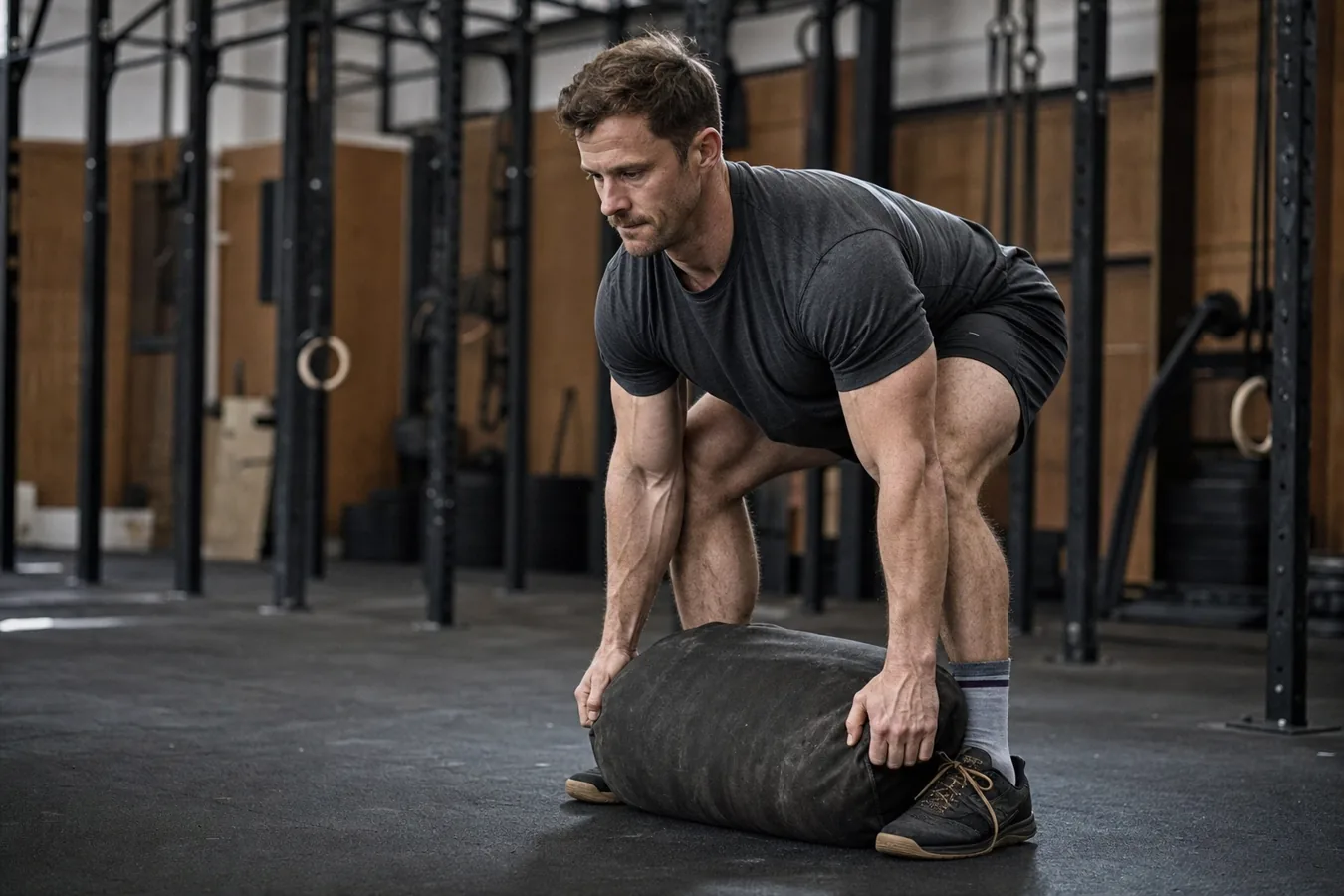
Set up close enough that the bag has nowhere to escape
Stand with the feet around hip width and the bag tight to the shins. Hinge down, take a strong grip, and brace before the first pull. The goal is not to yank the bag off the floor. The goal is to break it loose while keeping it connected to the body.
On lighter loads, some athletes can move from floor to shoulder in one smooth motion. On heavier bags, the smarter option is often a two-part clean: pull to the lap, regrip, then drive the hips and roll the bag to the shoulder. That pause is not weakness. It is control.
| Checkpoint | Good rep | Fix when it breaks |
|---|---|---|
| Start position | Bag close to the feet with the spine braced | Step closer and reset before pulling |
| Grip | Hands squeeze into the fabric without the elbows bending early | Regrip lower on the bag or use the lap position |
| Hips | Legs and hips start the rep, not a slow arm curl | Push the floor away before trying to shoulder the bag |
| Contact | Bag stays close through the pull | Slow down and keep the bag against the body |
| Finish | Athlete stands tall before dropping or cycling the next rep | Reduce the load if every rep ends folded forward |
Use the video to watch the bag path
This movement demo is worth watching for the small details: where the feet start, how close the bag stays, and how the athlete finishes tall instead of chasing the bag with the shoulders. Do not just watch the final shoulder position. Watch the first two seconds of the pull.
How to use sandbag cleans in a WOD
Sandbag cleans fit well in short intervals, grinder-style conditioning, and partner workouts. They also expose pacing mistakes quickly. An athlete who sprints the first ten reps with no plan often spends the rest of the workout staring at the bag.
For mixed-modal workouts, pair the bag with movements that do not demand the exact same grip pattern every round. If the session already includes high-rep rope climbs in CrossFit, the grip tax can climb fast. That does not mean the pairing is wrong, but the intended stimulus should be clear.
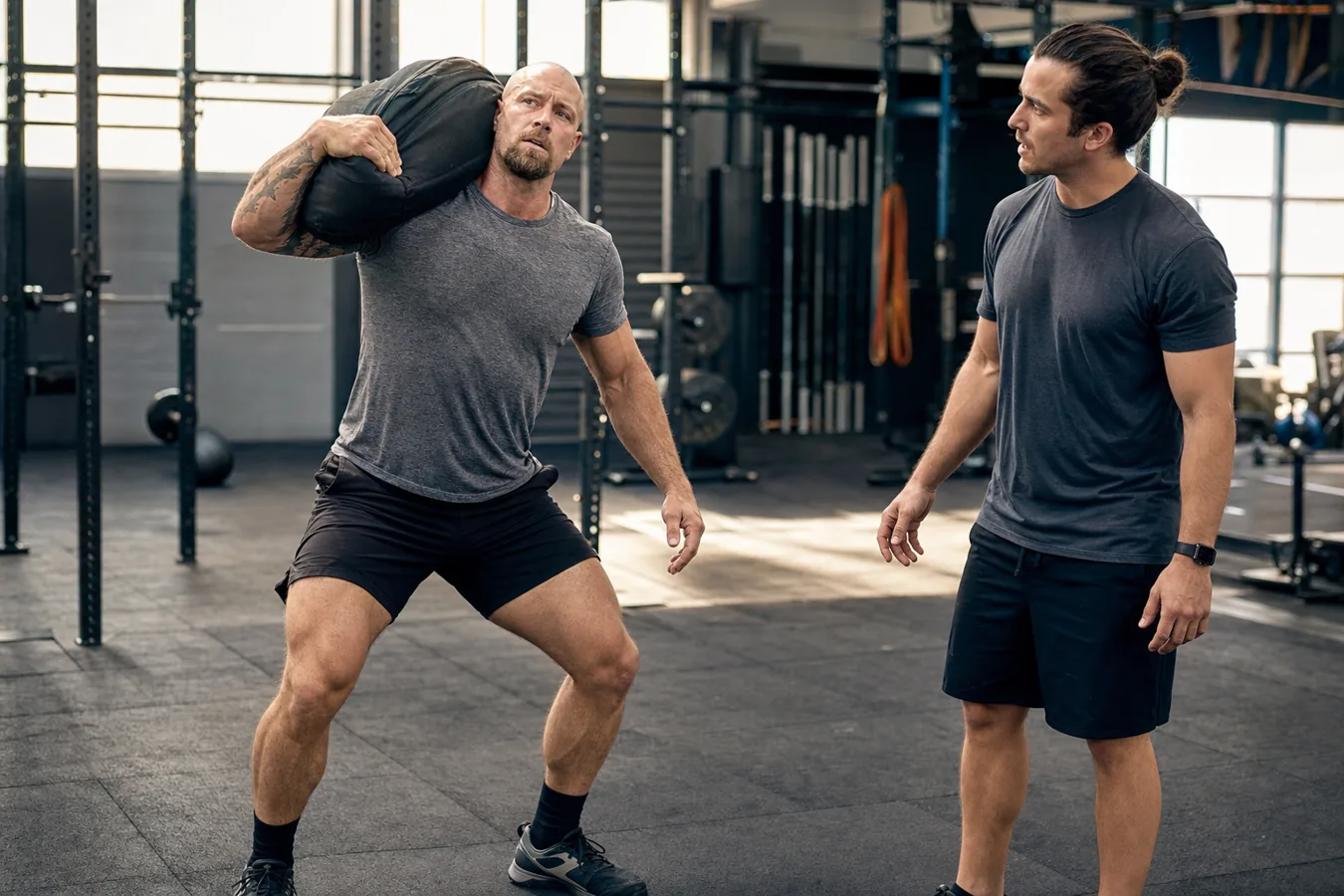
Mistakes that make sandbag cleans ugly fast
The common error is treating the sandbag like a dead barbell. Athletes stand too far away, grab high on the fabric, round over the bag, and try to drag it upward with the arms. The rep might count once. It will not hold up for a workout.
- Starting with the bag too far from the feet.
- Pulling with bent arms before the hips extend.
- Skipping the lap position when the load clearly needs it.
- Letting the bag swing away from the body between reps.
- Dropping every rep from the shoulder with no plan for the next setup.
When to scale the sandbag clean
Scale when the athlete cannot keep the bag close, when the back rounds early, or when every rep turns into a long wrestling match. Useful options include a lighter sandbag, fewer reps, clean to lap instead of shoulder, or a dumbbell clean when the class does not have enough bags.
The best scale keeps the odd-object lesson without letting the movement fall apart. If the athlete needs more pulling power first, the same idea shows up in the power clean catch: stay close, finish the drive, and receive the load with control.


