The plan
Renegade rows are not just rows with a push-up position attached. In a CrossFit workout, they test whether you can pull a dumbbell while the rest of the body refuses to spin, sag, or panic.
That is why the movement feels so different once the clock starts. The dumbbell may be light enough to row, but the plank has to survive every rep. If the hips twist, the feet shuffle, or the shoulders collapse, the row becomes noise instead of training.
- Set the feet wide enough to keep the hips square before the first pull.
- Row toward the ribs without yanking the shoulder behind the body.
- Scale the load or the plank before the movement turns into a twisting dumbbell drag.
Start with the plank, not the dumbbell
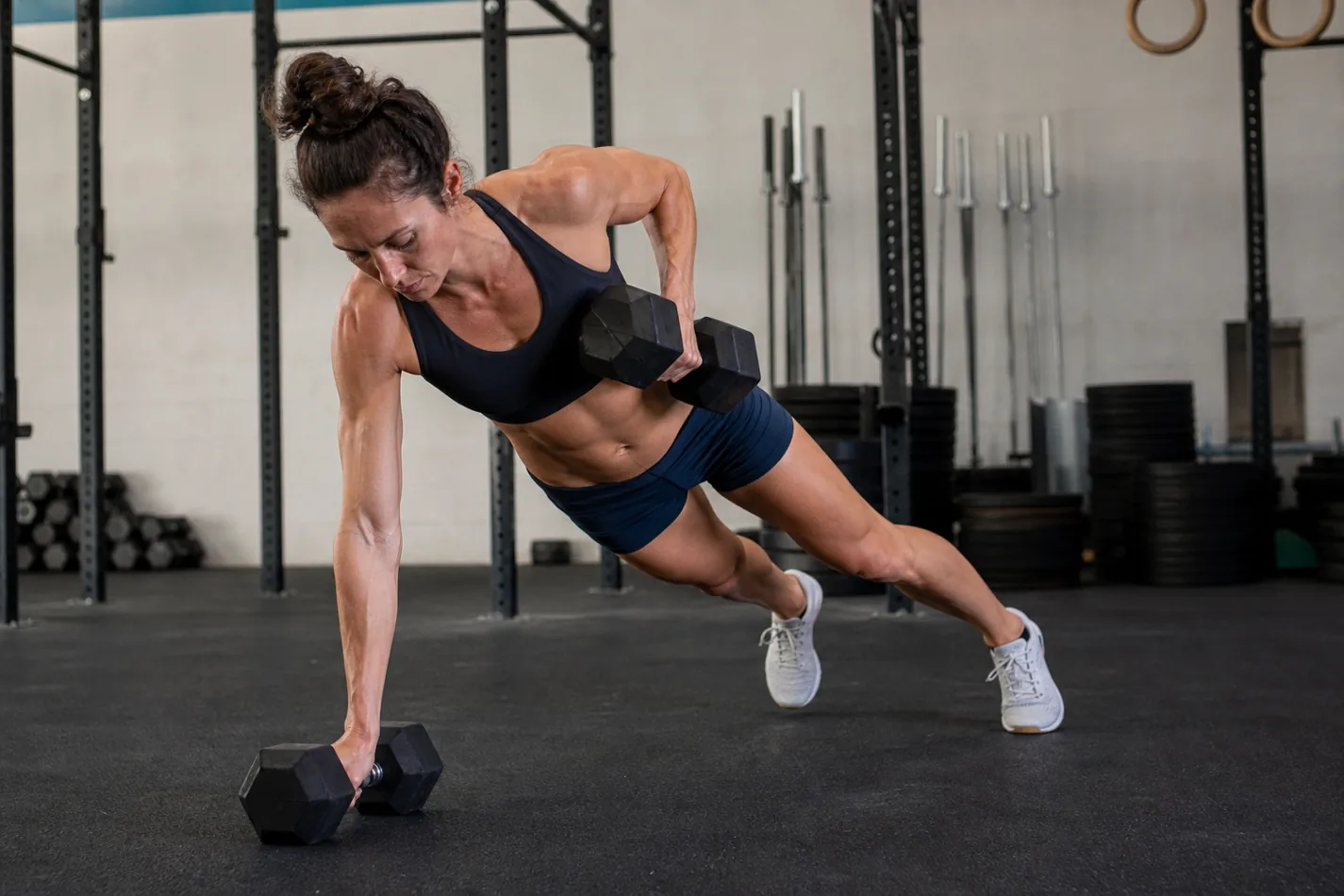
The row only works if the plank is honest. Hands on the dumbbells, feet wider than a normal push-up, ribs down, glutes lightly squeezed. Before pulling, the athlete should be able to hold still for two full breaths. If that position already shakes apart, adding a row will not fix it.
Think of the dumbbells as handles, not toys to swing around. The setup should feel organized in the same way a good dumbbell deadlift setup does: the back is set, the hands are under control, and the body knows where the load is before the rep starts.

How the row should move
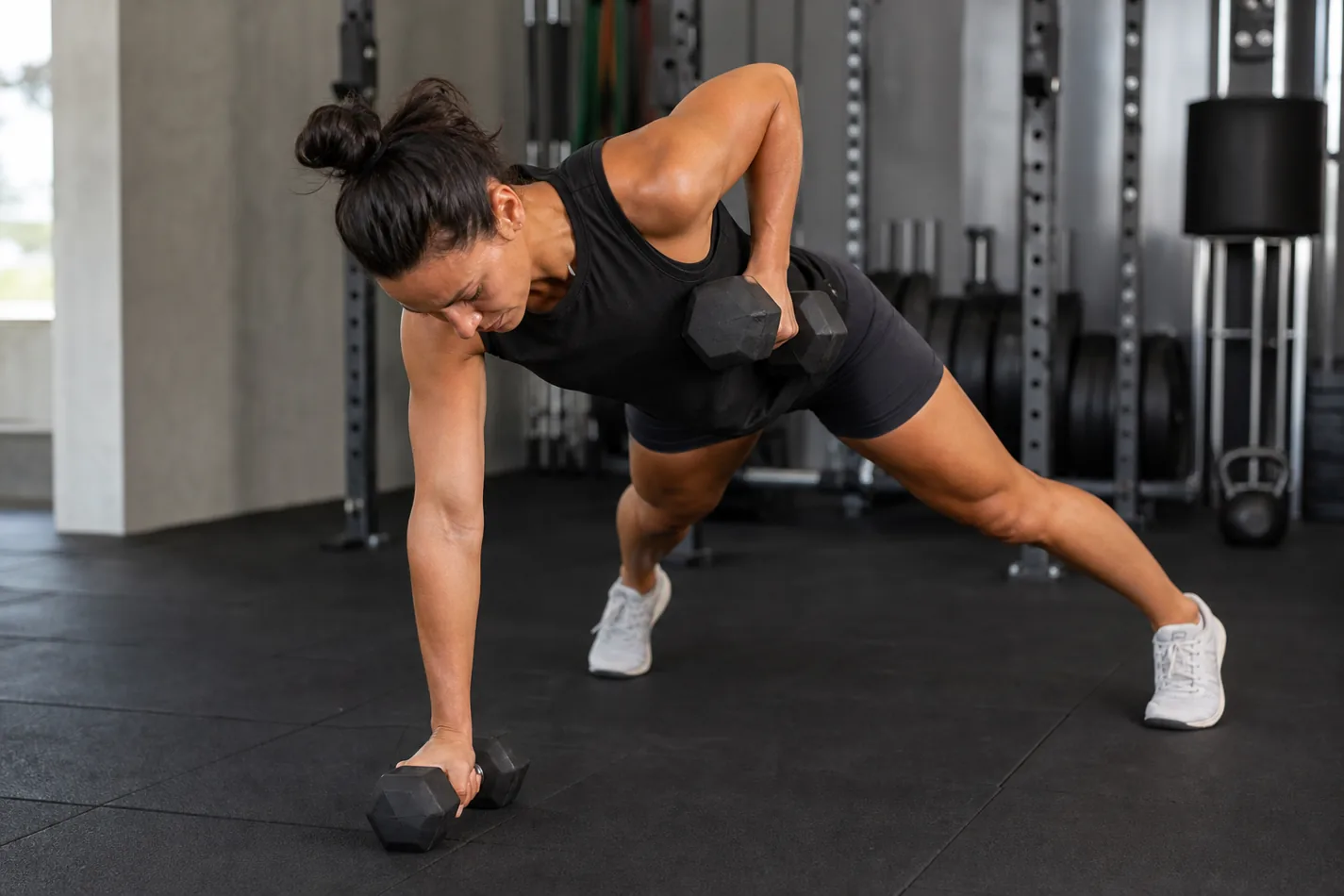
A clean renegade row is quiet. The dumbbell leaves the floor, travels toward the lower ribs, pauses just long enough to show control, then returns without a drop or bounce. The hips stay almost level. The support arm pushes the floor away instead of sinking into the shoulder.
Athletes who already understand ring row tension and strict pull-up strength usually learn the pull quickly. The harder part is resisting rotation. That is where hollow body control matters more than most people expect. A loose midline turns the row into a side bend with a dumbbell in the hand.
| Fault | What it usually shows | Fix to try |
|---|---|---|
| Hips twist open | The stance is too narrow or the load is too heavy | Widen the feet and slow the pull |
| Dumbbell swings out | The athlete is rowing with momentum | Pull toward the ribs and lower under control |
| Support shoulder sinks | The plank is not strong enough yet | Push the floor away and reduce the load |
| Feet keep stepping | The athlete is chasing balance after every rep | Reset the stance before the next pull |
Where renegade rows fit in CrossFit workouts
Renegade rows make sense in dumbbell conditioning, accessory work, and workouts that ask for trunk control under fatigue. They pair well with burpees, box work, carries, running, and moderate dumbbell cycling. They also show up near man maker cycling, where the row is only one part of a longer rep.
The mistake is treating them like a max-effort back exercise. In a metcon, the goal is repeatable tension. If the athlete has to twist hard to move the bell, the load is too heavy for the workout. Save the heavier pulling for strict rows or strength work. Use renegade rows to train the plank, the pull, and the transition between the two.
The demo below is useful because it shows the renegade row inside the same family as man makers. Watch the feet and hips before you watch the rowing arm. That is where the rep usually breaks.
Choosing the right dumbbells
For most athletes, the right dumbbells feel too light for the first few reps and exactly right by the second round. That is a good sign. A load that looks impressive in warm-up can become sloppy once breathing gets high.
The dumbbell shape matters too. Hex dumbbells are more stable than round bells. If the handles roll, use a different tool or switch the movement. The same caution applies when the workout already includes dumbbell snatch pull, dumbbell clean timing, or pressing work like bench press setup. Tired shoulders make the support arm fail faster.
Scaling without losing the point
Good CrossFit scaling keeps the anti-rotation demand without letting the rep fall apart. Use lighter dumbbells, widen the feet, row from a high plank with hands on boxes, or remove the push-up if it is paired with the row. Some athletes should practice a dumbbell plank shoulder tap first, then add the row once they can stay square.
If wrists or shoulders do not tolerate the dumbbell plank, change the movement. A bent-over dumbbell row can train the pull. A plank hold can train the trunk. Forcing the full renegade row when the setup hurts is not toughness. It is just a poor choice for the day.
What to check in warm-up
Ask for three slow reps per side before the workout. The feet should stay planted, the hips should stay mostly level, and the dumbbell should return softly to the floor. If the athlete cannot show that at warm-up speed, the workout version needs to be lighter or simpler.
This is also a good time to connect the movement to hand-release push-up standards and the CrossFit warm-up. The athlete who can brace, press the floor away, and breathe in a plank will row better. The athlete who rushes the setup will spend the workout fighting the dumbbells instead of training the movement.


