The plan
Man makers look like a simple full-body dumbbell exercise until the first round gets heavy. Then the weak points show up in order: loose plank, rushed rows, sloppy footwork, a soft clean, and an overhead press that turns into survival.
In CrossFit, the man maker is not just a burpee with dumbbells. It is a sequence. If one piece gets lazy, the next one gets more expensive. The goal is to keep the dumbbells under control long enough to keep moving without turning every rep into a wrestling match.
- Set the dumbbells under the shoulders before the first push-up or row.
- Keep the plank quiet. Twisting through the hips makes the row slower and rougher.
- Scale load early if the clean or press stops looking like a real dumbbell rep.
What a man maker actually includes
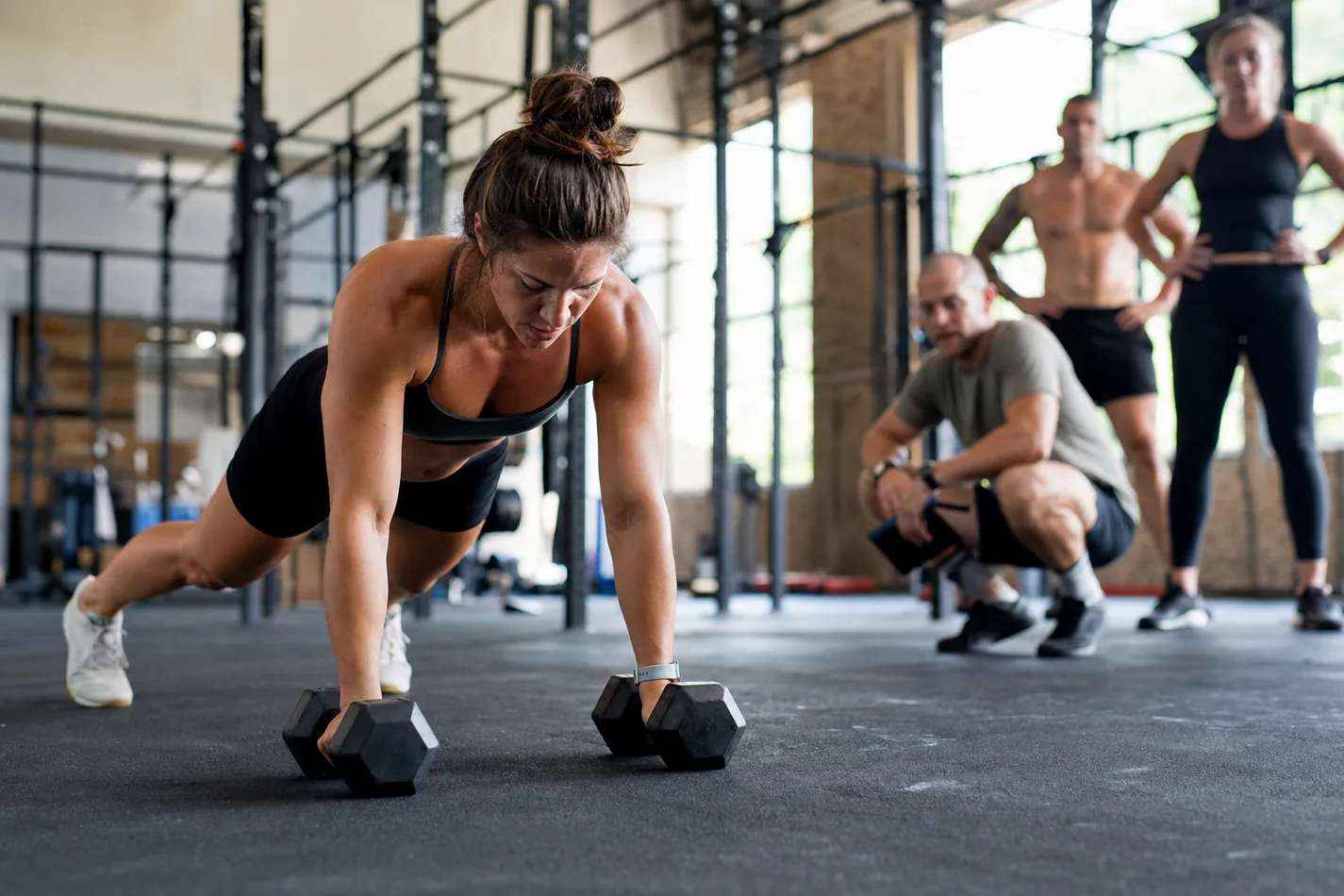
A common CrossFit man maker starts with the hands on two dumbbells, moves through a push-up, adds a row on each side, brings the feet forward, then finishes with a dumbbell clean into an overhead press. Standards can vary by gym or workout, so read the workout notes before assuming exactly what counts.
The movement borrows pieces from burpee pacing, hand release push-up control, ring row strength, and dumbbell clean and jerk mechanics. That is why it can feel so awkward. You are not doing one movement. You are linking several small jobs while breathing hard.

Start with the dumbbells in the right place
Set the dumbbells roughly shoulder width apart. Too narrow, and the shoulders feel jammed. Too wide, and the push-up and row become unstable before the rep even starts. The handles should give you a firm base without forcing the wrists into a painful angle.
From the plank, keep the feet wide enough to stop the hips from rolling side to side. A little rotation is normal under fatigue. A big twist usually means the athlete is pulling with the whole body instead of rowing with control.
| Part of the rep | Common mistake | Better cue |
|---|---|---|
| Push-up | Chest dives while the hips stay high | Lower as one piece and reset the hands before rowing |
| Dumbbell row | Hips spin open on every pull | Widen the feet and pull the elbow toward the ribs |
| Jump or step in | Feet land too far behind the dumbbells | Bring the feet close enough to clean from a strong hinge |
| Clean and press | Dumbbells swing away from the body | Keep them close, stand tall, then press with control |
The row is where most reps get messy
The row should be short, controlled, and close to the body. If the dumbbell flies wide, the shoulder has to chase it. If the hips roll open, the core is no longer doing its job. Think about holding the same trunk shape you would want in hollow body tension, then pull one dumbbell without letting the other side collapse.
This is also where load selection matters. A pair of dumbbells that feels fine for presses can be too much for rows from the floor. If you have to yank every pull, go lighter before the workout turns into bad reps with expensive equipment.
The demo below is worth watching before trying to speed up the movement. Pay attention to how the athlete controls the dumbbells through the plank and brings them back under the body before standing.
Bring the feet back under you before the clean
After the rows, do not leave the feet stranded behind the dumbbells. Step or jump them close enough to create a real hinge. From there, the dumbbells can travel up the body instead of swinging out in front like a tired curl.
The finish should feel closer to dumbbell snatch timing or push jerk timing than a random heave. Stand, receive the dumbbells in a stable position, then press or jerk according to the workout standard. When the dumbbells start looping away from the body, the rep usually gets slower and the low back starts paying for it.

How to pace man makers in a WOD
Man makers punish fake urgency. A frantic first set usually creates three problems at once: shaky hands, ugly rows, and a press that gets stuck halfway up. Most athletes do better with steady singles or small sets, especially when the workout also includes running, box work, or more pulling.
Use the top of the rep to breathe. Put the dumbbells down deliberately. Get the hands set before the next push-up. That half second of control is often faster than rushing into a rep you have to fix three times.
Scaling options that still train the movement
Good CrossFit scaling keeps the main lesson intact. Use lighter dumbbells, remove the push-up, step the feet forward instead of jumping, or turn the row into a single controlled pull per side. If the athlete cannot hold a stable plank on dumbbells, move the hands to the floor and use the dumbbells only after standing.
For newer athletes, a clean version with less load is more useful than the prescribed weight done badly. The workout should challenge the lungs and shoulders, not teach the athlete to twist, curl, and hope.
What to test before adding speed
Before a hard workout, try three slow reps. Can you keep the dumbbells steady? Can you row without the hips spinning? Can you bring the feet forward enough to clean well? Can you finish overhead without leaning back?
If those checks pass, start moving. If one fails, fix that piece first. Man makers get hard either way. They do not need extra chaos.


