The plan
Dumbbell deadlifts look simple until the workout gets fast. Two bells on the floor, stand up, repeat. Then the dumbbells drift forward, the hips shoot up, and a movement that should train the hinge turns into a low-back endurance test.
In CrossFit, the dumbbell deadlift shows up because it is easy to set up, easy to scale, and useful in mixed-modal workouts. It also punishes lazy positions. The bells do not give the same feedback as a barbell, so the athlete has to create the path on purpose.
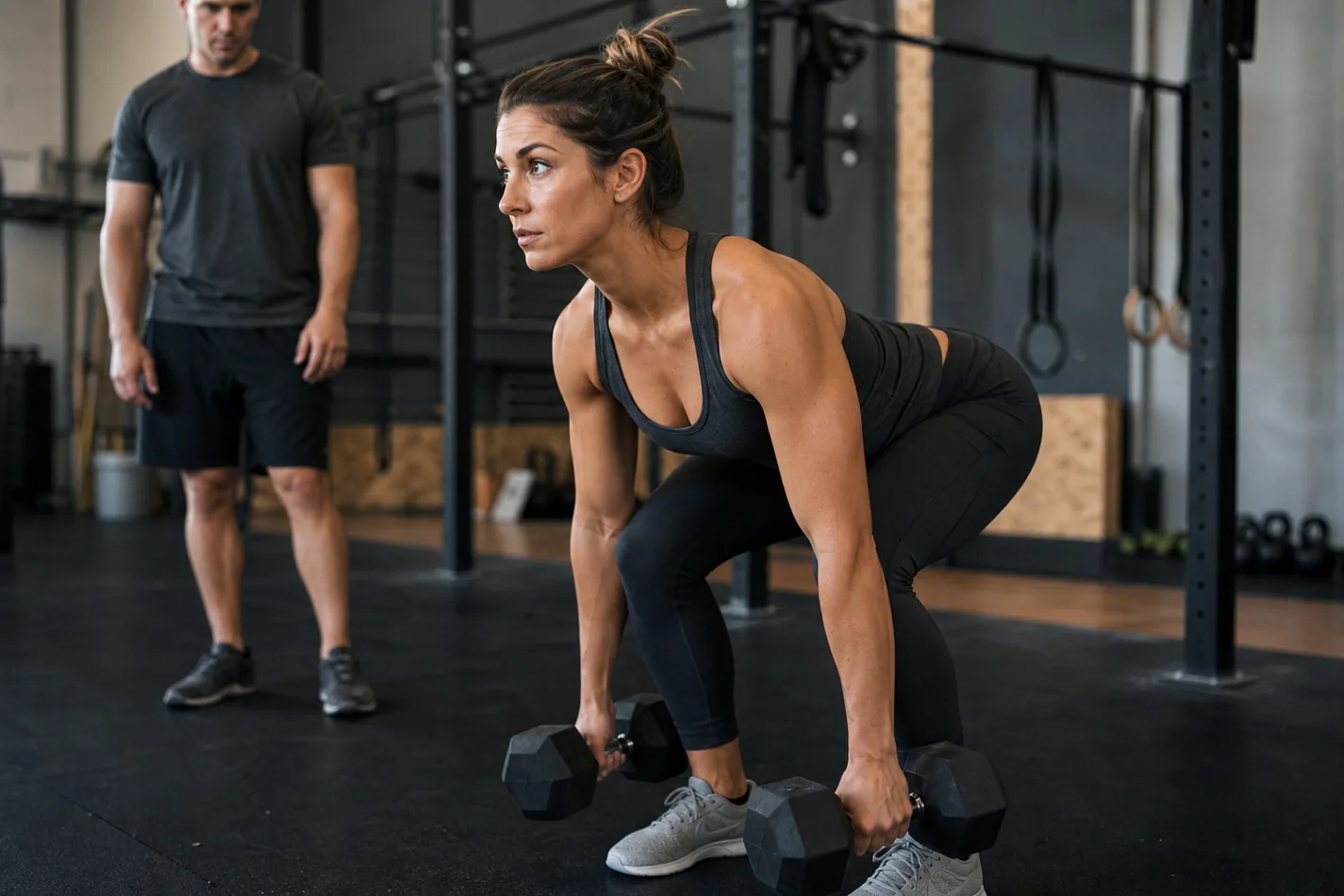
- Start with the dumbbells close to the shoes, not out in front of the toes.
- Push the hips back and keep the shoulders slightly in front of the bells at the start.
- For metcons, choose a load that lets every rep look like a hinge, not a squat curl.
Set the dumbbells where the lift can actually work
The setup matters more than most athletes think. If the dumbbells start too far forward, the first pull has already gone wrong. The athlete has to reach, the back rounds, and the bells swing back toward the body on the way up.
A better start is tighter. Place the dumbbells just outside the feet or slightly in front of the mid-foot. Hinge back, bend the knees enough to reach the handles, brace, and let the shoulders sit a little in front of the bells. That position should feel closer to barbell deadlift setup than to a squat with weights in the hands.
What a clean rep should feel like
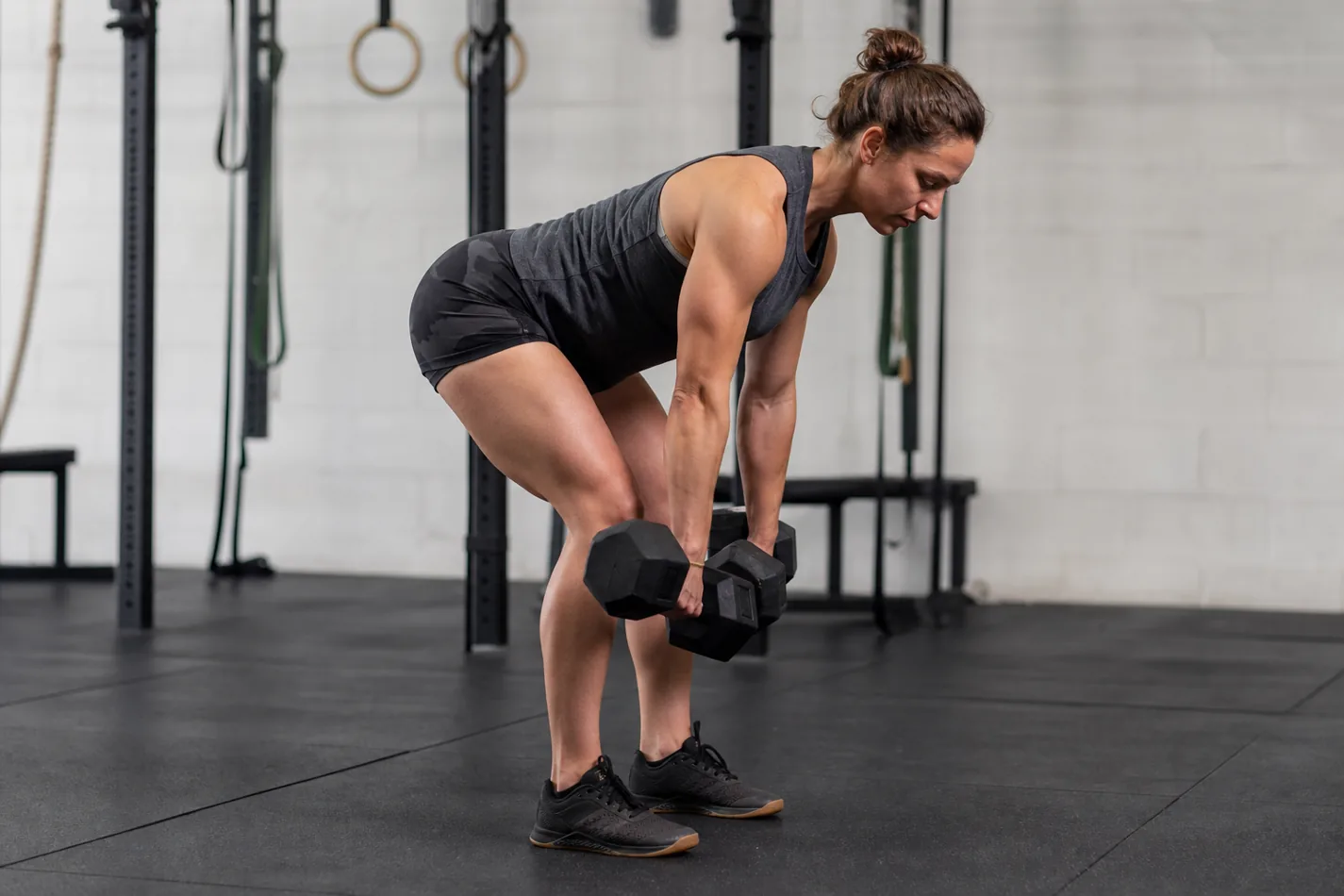
The dumbbells move in a quiet line. They do not swing forward. They do not scrape wildly around the knees. The athlete pushes through the floor, keeps the ribs down, and finishes tall with the bells at the sides.
The hinge should feel familiar if the athlete has worked on Romanian deadlift hinge control, good morning hinge pattern, or kettlebell swing hip drive. The difference is that the dumbbells start from the floor each rep, so there is less room to fake the bottom position. If the athlete cannot reset the back and breathe before the next pull, the set is already too rushed.
| Fault | What it usually means | Fix to try |
|---|---|---|
| Bells drift forward | The setup is too far from the body | Start closer to the shoes and pull the handles back toward the legs |
| Hips shoot up first | The athlete lost leg drive and bracing | Reset the start position and push the floor away |
| Rep turns into a squat | Knees are doing all the work | Send the hips back and keep the shins quieter |
| Shoulders roll forward at the top | The load is dragging the athlete out of position | Use lighter bells and finish with packed shoulders |
Where dumbbell deadlifts fit in a WOD
Dumbbell deadlifts work well in couplets and triplets because they are fast to cycle and do not require a rack. They pair cleanly with box jumps, burpees, carries, rowing, running, or gymnastics work. They also make sense before dumbbell clean timing or dumbbell snatch pull, since both movements need a close pull from the floor.
The trap is speed without shape. High-rep dumbbell deadlifts can look harmless because the weights are lighter than a barbell. That is when athletes start bouncing the bells, losing tension at the bottom, and yanking from the low back. A workout load should let the athlete touch down, reset enough to stay organized, and stand again without panic.
The official demo below is short, which is exactly why it helps. Watch how the bells start close, the back angle stays calm, and the athlete stands before pulling the shoulders behind the body.
How to choose the right load
For strength work, heavier dumbbells can be useful, but only if the setup stays sharp. For conditioning, the better question is whether the athlete can repeat the same rep while breathing hard. If rep ten looks like a different lift from rep one, the dumbbells are too heavy for that workout.
Farmers and mixed-modal athletes already know this feeling from farmer carry posture. The hands may be fine, but the trunk and upper back have to keep the bells from pulling the athlete forward. That is the part coaches should watch when the clock starts to bite.
Scaling without losing the hinge
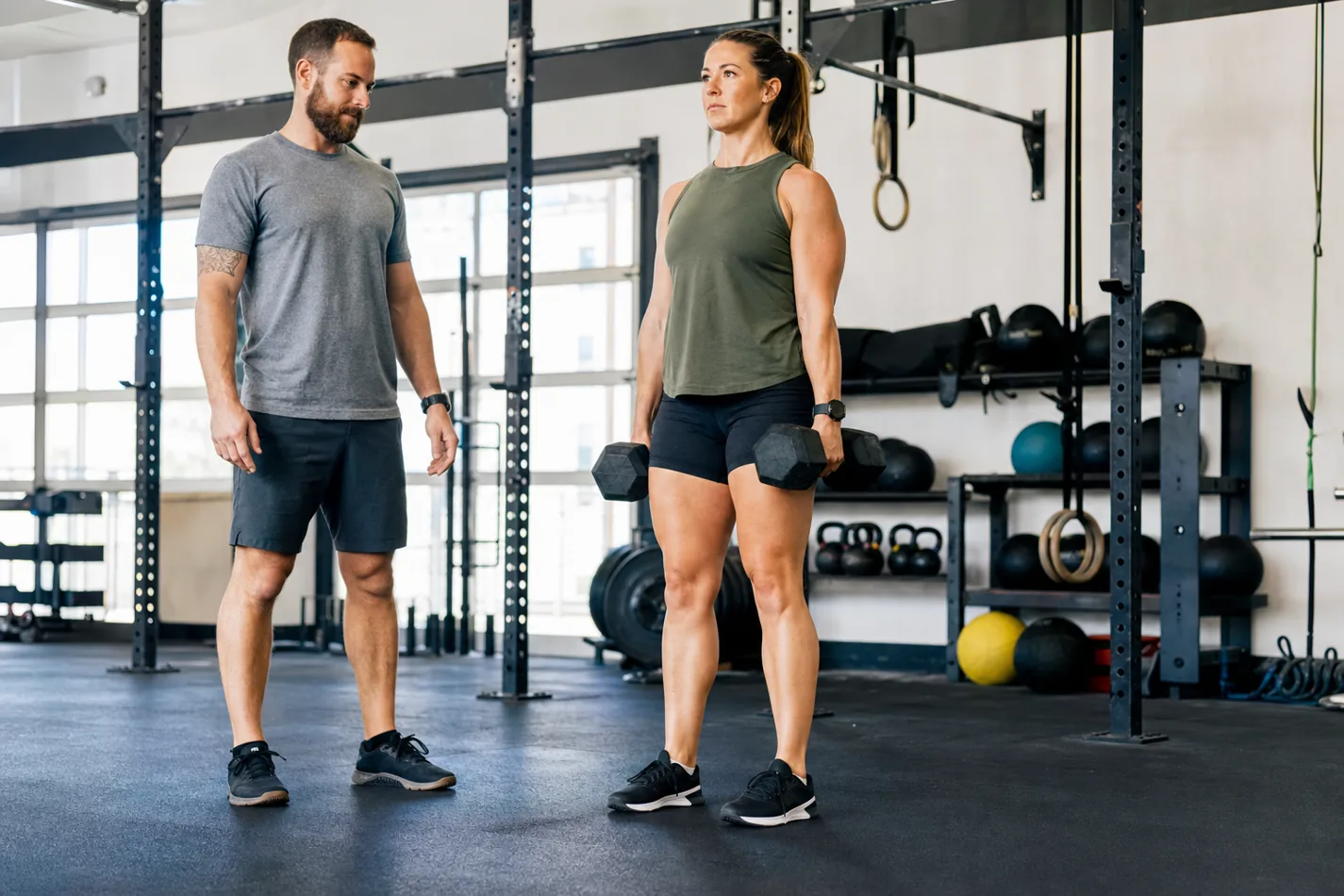
Good CrossFit scaling keeps the hinge instead of turning the rep into something else. Raise the dumbbells on plates, use lighter weights, reduce the range, or switch to a kettlebell deadlift if the athlete needs one object between the feet. For new athletes, a few slow reps in the CrossFit warm-up often fix more than another cue shouted mid-workout.
If the athlete has back pain, numbness, or cannot brace in the start position, do not solve it with motivation. Change the range or pick a different movement for the day. Dumbbell deadlifts should train the posterior chain and teach a close pull. They should not be a test of how long someone can ignore bad reps.
What to check before the clock starts
Ask for five smooth reps before the workout. The dumbbells should start close, the back should look the same at the bottom of each rep, and the athlete should stand tall without leaning back. If those pieces are there, the movement is ready for the WOD.
If they are not, fix the setup first. The same close-bell habit will show up later in the power clean pull, dumbbell cycling, and any workout where the floor feels lower with every round.


