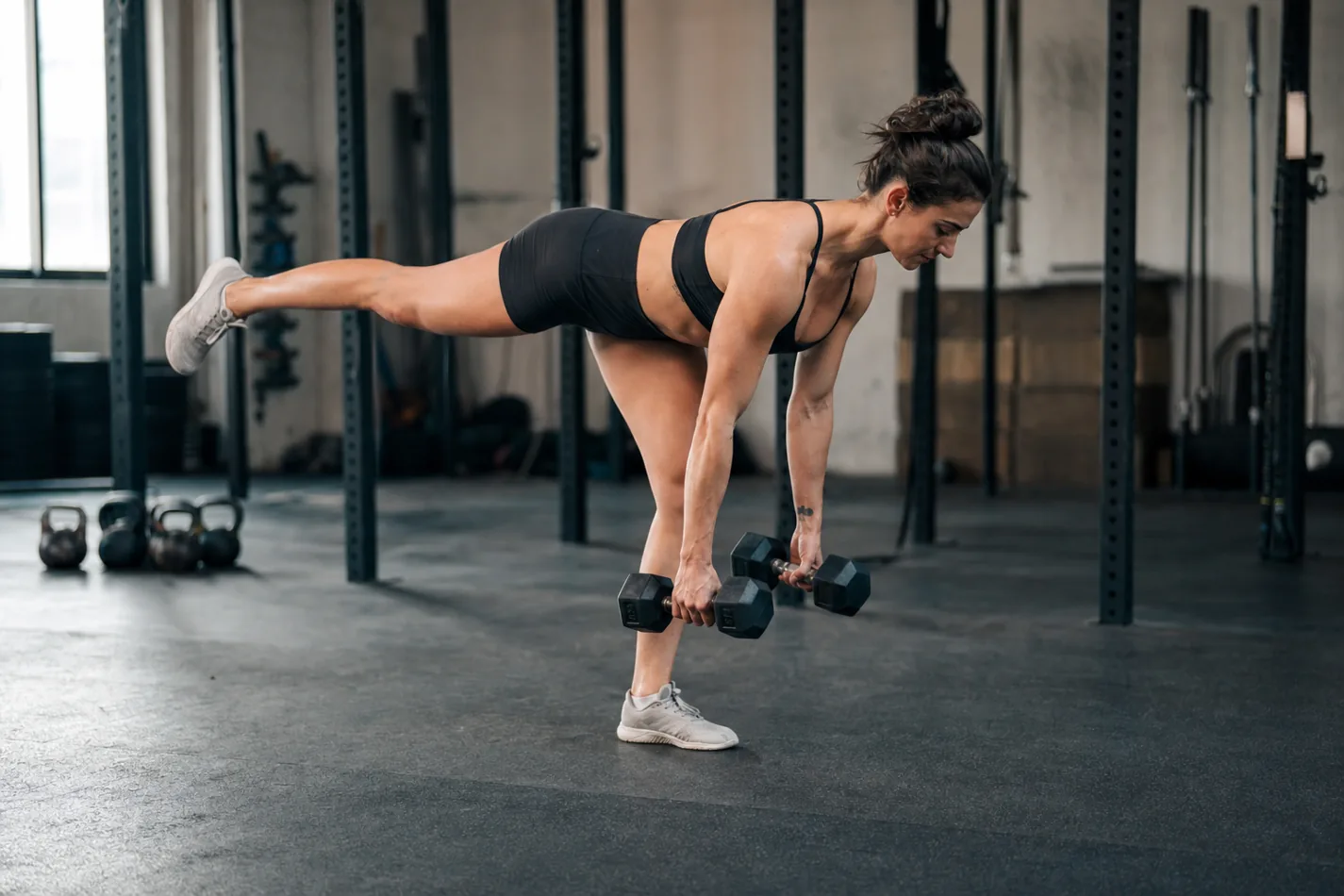
The plan
A single-leg deadlift exposes things a regular deadlift can hide. The athlete has to hinge, balance, and keep the hips square while one foot does the job of two. Add fatigue, a dumbbell, or a kettlebell, and the rep gets honest fast.
In CrossFit, the movement is usually not about lifting the heaviest load in the room. It is about keeping a clean hinge when the base of support is small. The best reps look quiet: soft knee, long spine, hips level, and a back leg that does not turn into a wild counterweight.
- Keep the standing foot rooted and the hips square before worrying about range of motion.
- Reach the back leg long instead of kicking it high. Height is not the goal.
- Scale with support, lighter load, or shorter range before the rep turns into a twist.
What the single-leg deadlift is really testing
The single-leg deadlift starts with the same hinge idea as deadlift setup, but the one-leg stance changes everything. The hamstring and glute of the standing leg have to control the descent. The trunk has to resist rotation. The foot has to stay connected to the floor without grabbing at balance every second.
That makes it a good bridge between Romanian deadlift control, good morning hinge work, and unilateral leg work like reverse lunge balance. The athlete is not just building posterior-chain strength. They are learning whether the hip can move without the knee, ankle, and low back all trying to rescue the rep.
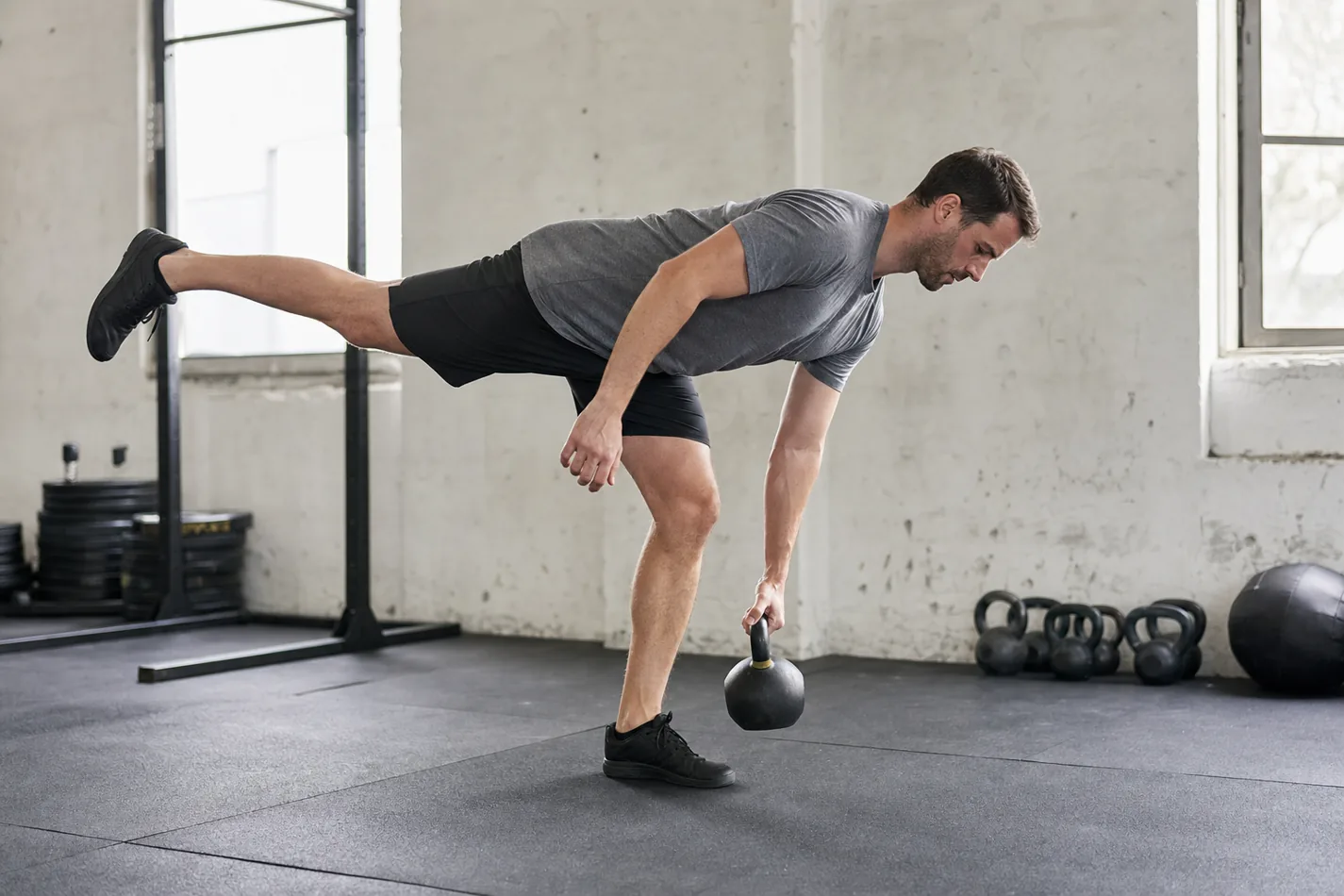
Set the standing leg before you hinge
Start with bodyweight or a light kettlebell. Put most of the pressure through the middle of the standing foot. The knee should be soft, not locked. From there, push the hips back and let the free leg reach behind you. The torso and back leg should move together, like a seesaw, without the chest diving first.
The hips are the big tell. If the free-side hip rolls open toward the ceiling, the athlete has found range by rotating, not by hinging. Shorten the rep and square the belt line back to the floor. A clean half-depth rep beats a full-depth rep that looks like a balance drill gone wrong.
| Fault | What it usually means | Fix before the next set |
|---|---|---|
| Hips open as the leg rises | The athlete is rotating to find depth | Reduce range and point both hip bones toward the floor |
| Standing knee caves in | The foot and hip are not controlling the line | Slow down and press the big toe into the floor |
| Back rounds near the bottom | The hinge is going past the athlete's current control | Stop higher and keep the ribs and pelvis stacked |
| Rep becomes a toe tap circus | Balance is failing before strength gets trained | Use a wall, rig post, or light fingertip support |
Where it fits in CrossFit training
Single-leg deadlifts work well in warm-up prep, accessory blocks, or lower-intensity conditioning pieces. They can wake up the hamstrings before pulling, clean up hip control before running or jumping, and give athletes a lower-load way to train hinging when heavy barbell work would be too much.
They also pair well with dumbbell deadlift positions, step-ups, light carries, and Bulgarian split squat strength. The key is intent. If the workout is for balance and position, keep the load honest. If the class is already full of heavy pulling, use single-leg deadlifts as a small dose after a CrossFit warm-up, not as another way to smoke the low back.
The CrossFit demo below is useful because it keeps the rep simple. Watch the standing hip first. If it opens, the athlete is no longer training the hinge they think they are training.
Loading options that do not wreck the pattern
A kettlebell in the opposite hand of the standing leg is a clean place to start. It asks the trunk to resist rotation without making the setup too awkward. A dumbbell in each hand feels more symmetrical and can make sense once balance is no longer the limiting factor. A barbell version is possible, but it is rarely the best first choice in a group class.
Tempo helps. Try three seconds down, a short pause, then stand without bouncing. The pause tells the truth. If the athlete has to hop, twist, or yank the weight back up, the set is too hard for the goal of the drill.
Scaling without losing the point
Good CrossFit scaling keeps the hinge and removes the chaos. Use a kickstand deadlift if balance is the blocker. Use fingertip support on a rig if the athlete needs feedback. Use a lighter load or shorter range if the back rounds. For newer athletes, five slow bodyweight reps per side can teach more than a heavy kettlebell they cannot control.
The movement should leave the athlete feeling the hamstring and glute of the standing leg, not the low back fighting for survival. If that is not happening, make the rep smaller. Then make it cleaner. Load comes later.
What to check on your next set
Film from behind for one set. It is the easiest way to see the problem. Do the hips stay level? Does the standing knee track over the foot? Does the free leg reach back, or does it swing around to save balance? Fix those answers before adding weight or speed.


