The plan
Bulgarian split squats look like assistance work until the first hard set. Then the front leg starts shaking, the back foot gets awkward, and athletes find out whether they can keep pressure through one leg without twisting out of position.
In CrossFit, that makes the movement useful. It builds single-leg strength without needing a heavy bar, and it exposes the balance issues that often hide inside lunges, step-ups, and squats. The trick is not making the setup so fancy that nobody can repeat it under fatigue.
- Set the front foot first. If that distance is wrong, the whole rep feels wrong.
- Let the front leg do the work while the back foot stays light on the box or bench.
- Add dumbbells only after the athlete can control depth, knee tracking, and balance.
Start with the front foot, not the bench
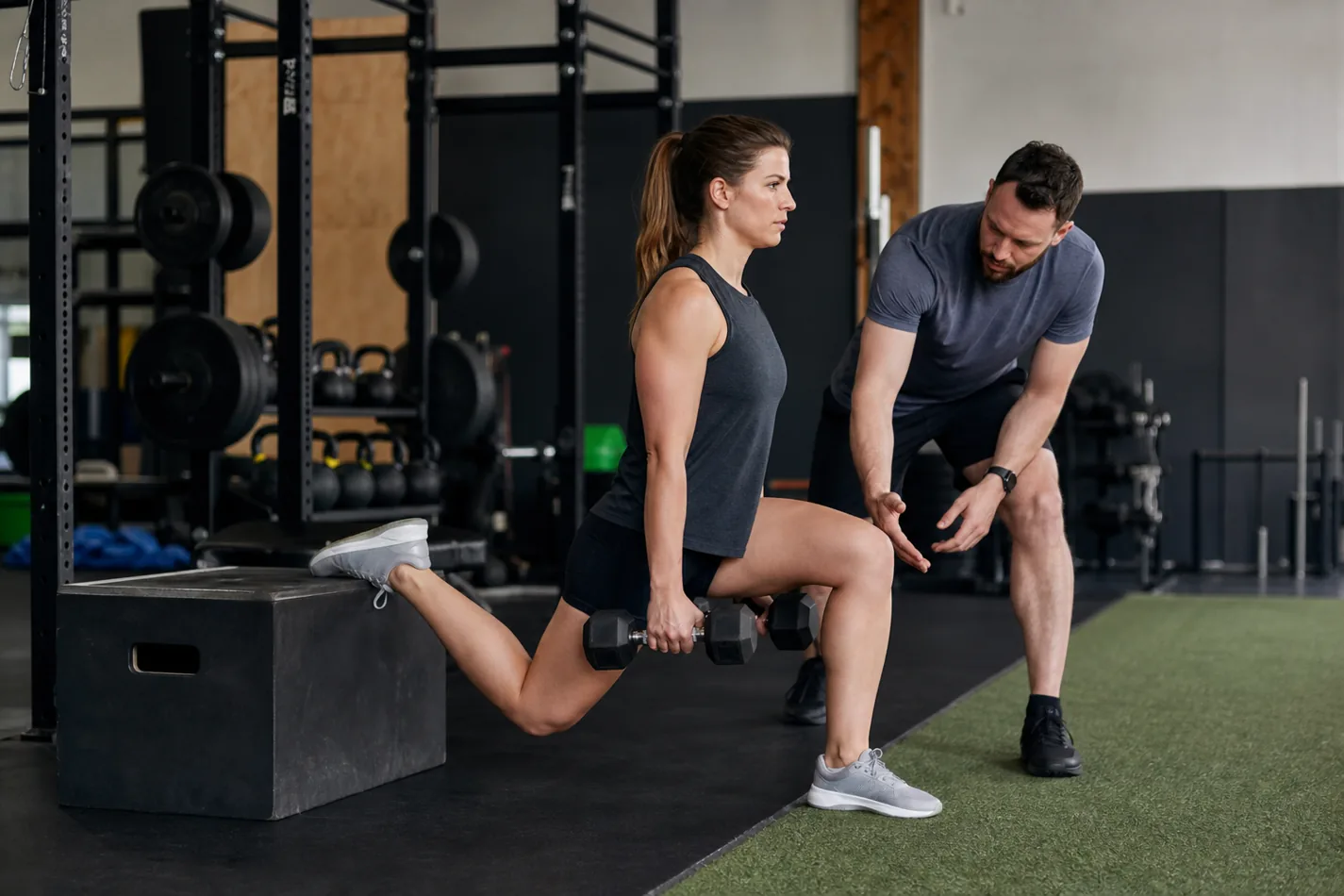
Most messy Bulgarian split squats start before the first rep. The athlete puts the rear foot on a box, hops around, then drops into a position that never had a chance. A better setup starts from the bottom. Place the front foot where the knee can bend without the heel peeling up, then set the rear foot lightly behind you.
The back foot is a kickstand, not the engine. If the athlete feels most of the work in the rear quad or hip flexor, the stance is probably too short or the rear foot is pushing too hard. The front leg should carry the rep the same way it does in walking lunge mechanics and reverse lunge control, just with less room to hide.
What the rep should feel like
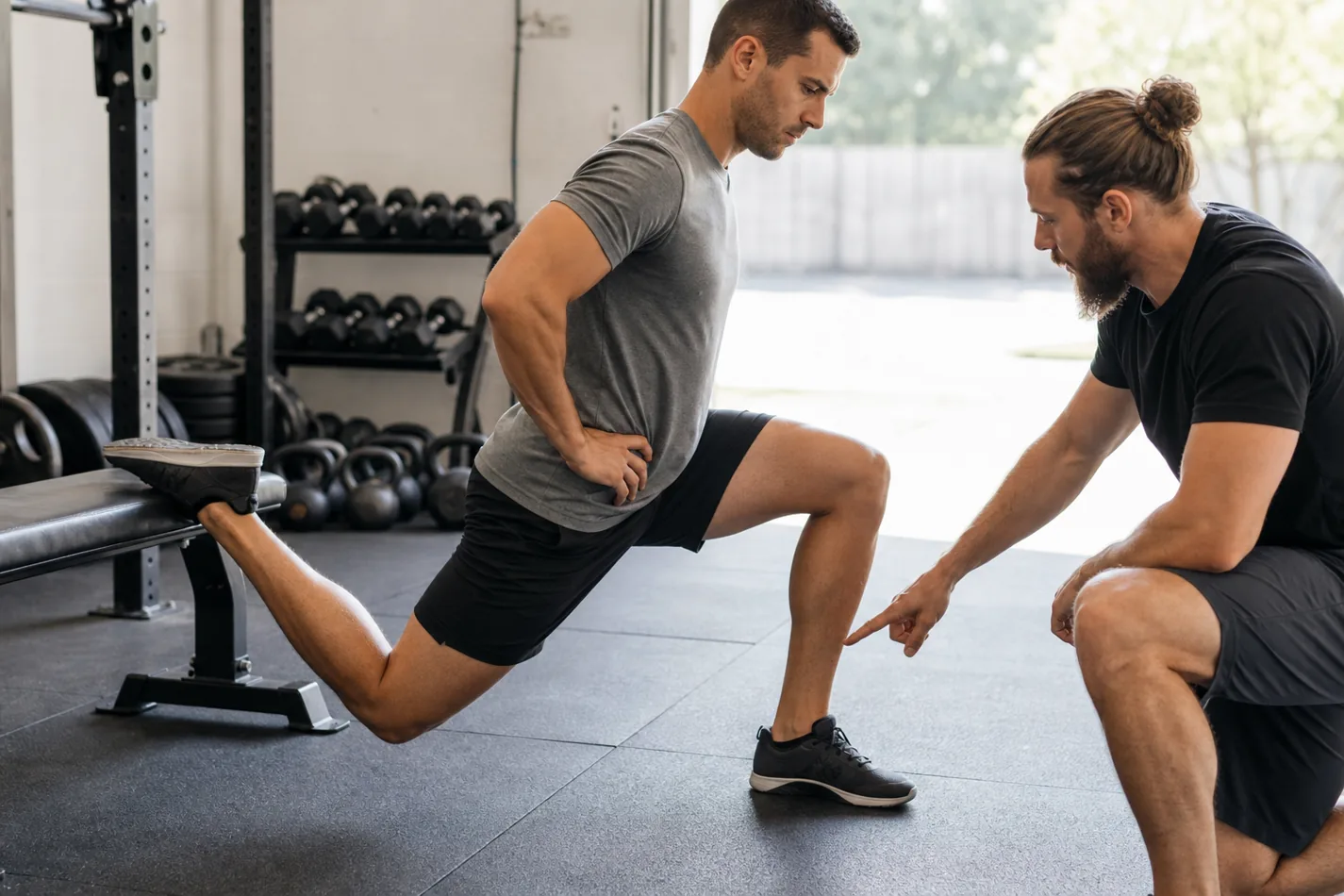
A good rep has pressure through the front mid-foot and heel, a knee that tracks over the toes, and a torso angle the athlete can keep from top to bottom. The chest does not need to stay perfectly vertical. A slight forward lean is normal, especially with dumbbells, as long as the front foot stays planted and the back does not round.
Depth should be earned. Some athletes can tap the rear knee close to the floor without losing shape. Others need to stop higher. The standard is not how low the knee goes. The standard is whether the athlete can stand up using the front leg without bouncing, twisting, or pushing hard off the back foot.
| Problem | What it usually means | Fix to try |
|---|---|---|
| Front heel lifts | Stance is too short or the athlete is driving forward | Move the front foot a little farther out and slow the descent |
| Back leg burns first | The rear foot is pushing instead of balancing | Use a lower box or keep the rear foot lighter |
| Knee caves inward | The athlete is losing hip and foot control | Reduce depth and track the knee over the middle toes |
| Rep turns into a wobble | Load or height is too aggressive | Go bodyweight, then add dumbbells after control returns |
Where it fits in CrossFit training
Bulgarian split squats work well in strength accessory blocks, warm-ups before squat or lunge days, and slower pieces where the goal is control rather than speed. They also make sense after goblet squat bracing, front squat posture, or lighter unilateral work when the coach wants the legs to train without another heavy barbell exposure.
They are not the best choice for every metcon. High-rep rear-foot-elevated work gets clumsy fast when athletes are breathing hard. For a fast conditioning piece, regular lunges or step-ups may be safer and easier to judge. For a focused strength piece, the Bulgarian split squat is much cleaner.
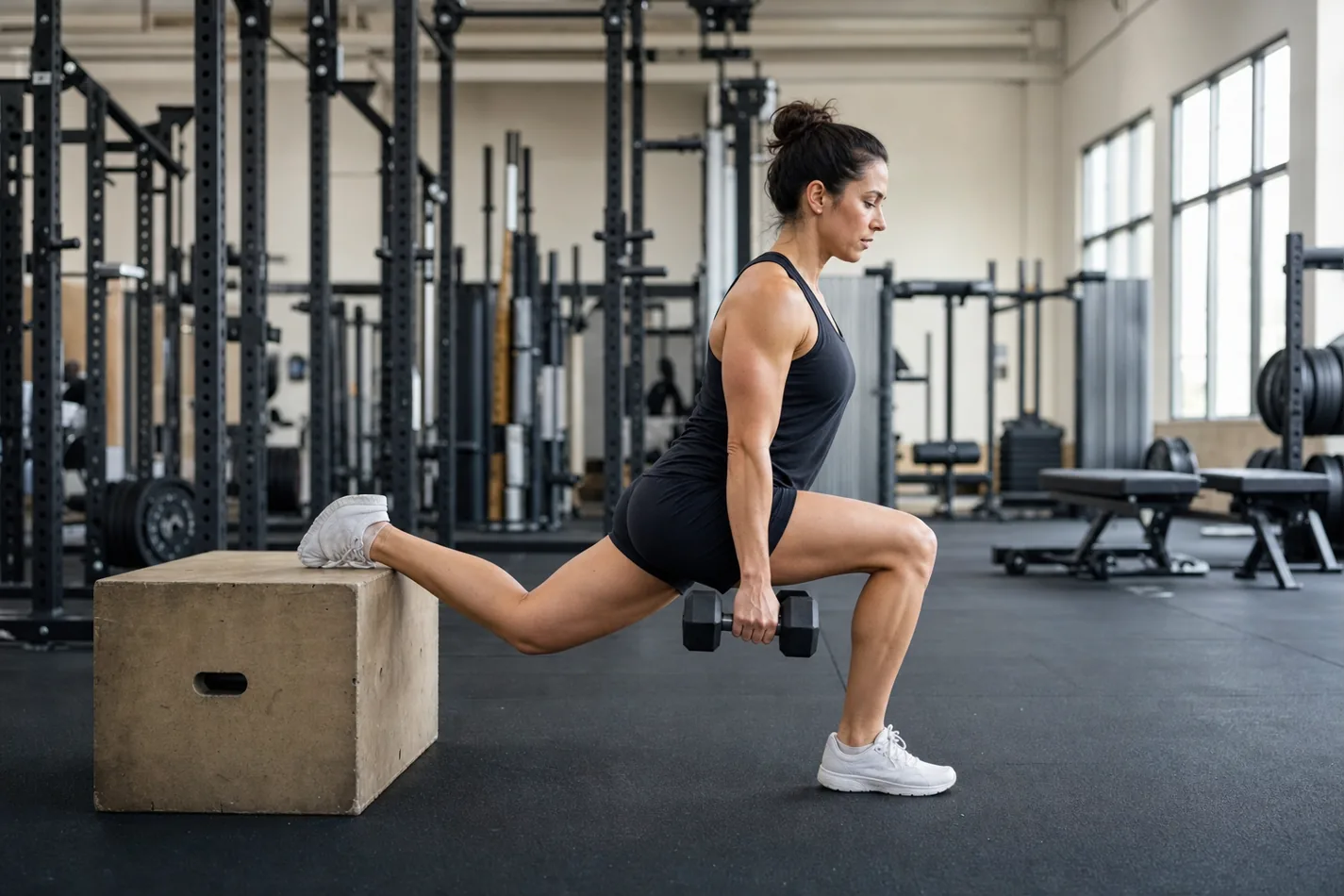
The clip below is simple enough to be useful. It shows the rear foot elevated, the front leg doing the work, and the athlete moving through a repeatable range instead of bouncing through the bottom.
How to load it without wrecking the movement
Start with bodyweight. Then use light dumbbells at the sides. A goblet hold can work too, but it often makes athletes fight the torso more than the leg. If the workout already includes heavy squats, box jumps, sled work, or loaded carries, keep the split squat volume honest.
For class athletes, sets of 6 to 10 reps per side are usually enough. Tempo helps more than ego here. Try a three-count lower, a quiet pause, and a controlled stand. If rep five looks like a different exercise from rep one, the set is over or the load is too heavy.
Smart scaling for real classes
Good CrossFit scaling keeps the single-leg demand while removing the chaos. Use a lower box, a bodyweight split squat with both feet on the floor, a supported split squat holding the rig, or step-ups when balance is the limiter. If the athlete has knee pain, hip pinching, or cannot find a stable stance after a few tries, change the movement instead of arguing with the setup.
The movement also pairs well with box step-up balance and single-leg squat strength progressions because it teaches the same lesson in a less dramatic way: one leg has to own the floor before the athlete can move well under fatigue.
What to check before the next WOD
Test three bodyweight reps per side before adding load. The front foot should stay flat, the knee should track cleanly, and the athlete should stand without a big push from the rear leg. If those three things hold, add light dumbbells. If one breaks, fix the stance before making the workout harder.
That small check saves a lot of ugly reps. Bulgarian split squats do not need to look heroic. They need to look repeatable.


