The plan
Dumbbell box step-overs look harmless on the whiteboard. Then the workout starts, the box feels taller every round, and the dumbbells turn a simple step into a breathing problem.
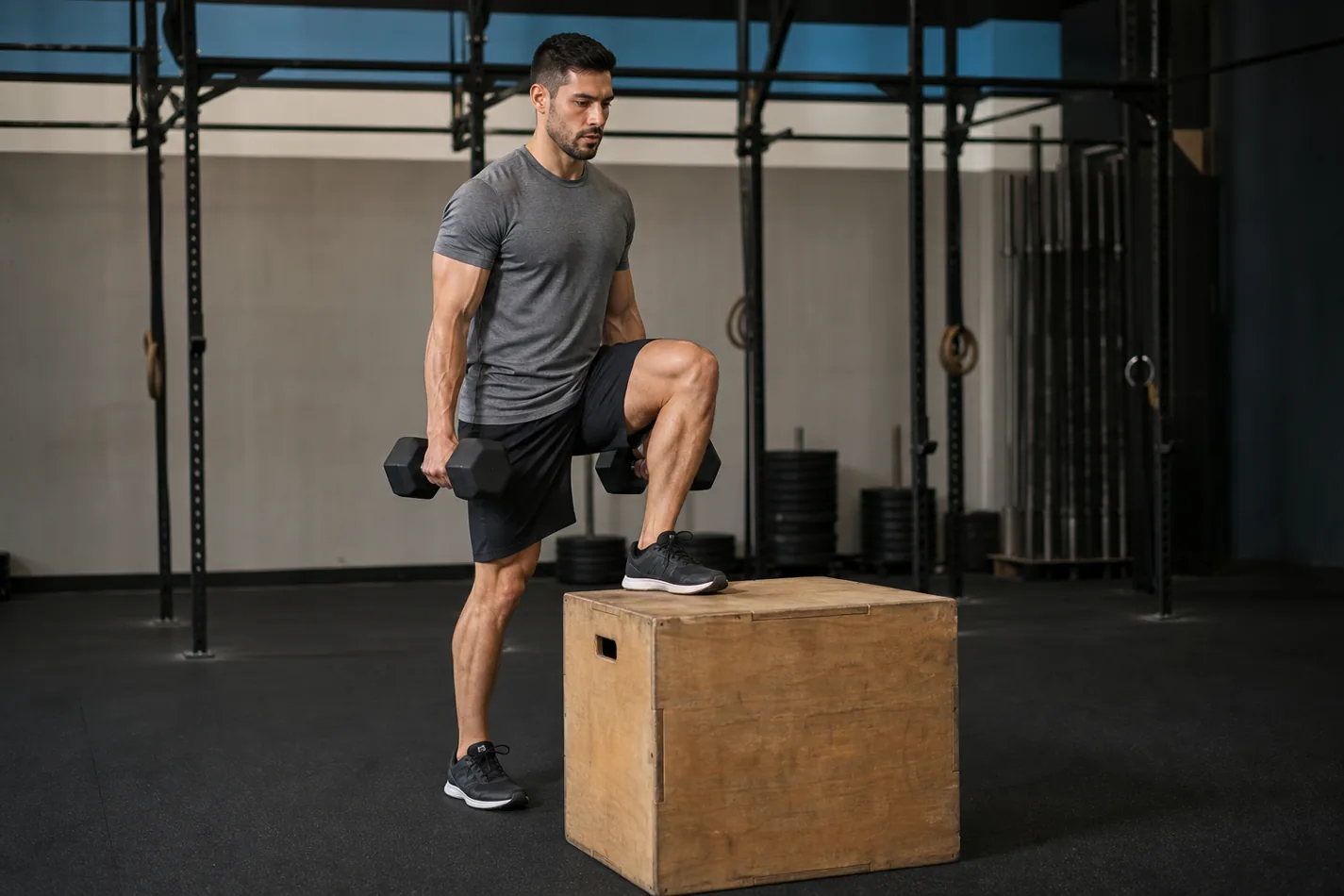
In CrossFit, this movement rewards athletes who stay boring. Good reps are not flashy. The foot lands cleanly, the torso stays organized, and the athlete gets over the box without bouncing, twisting, or rushing the step down.
- Step tall on the box before crossing over. A rushed half-stand wastes energy and beats up the knees.
- Dumbbells at the sides are usually faster than a front rack, but only if posture stays solid.
- In workouts, smooth turnover beats sprinting the first round and stumbling later.
What a clean dumbbell box step-over looks like
A good rep starts with a full foot on the box, not just the toes. The working leg drives down, the athlete stands tall enough to clear the box, and the other foot steps to the far side. Some workout standards allow different details, so read the workout brief, but the basic idea stays the same: control the climb, then control the descent.
The movement is close to box step-up control, but the dumbbells change the demand. They pull the shoulders down and make the athlete fight for posture. That is why a strong, quiet carry position matters almost as much as leg strength.
Pick the dumbbell position that matches the workout
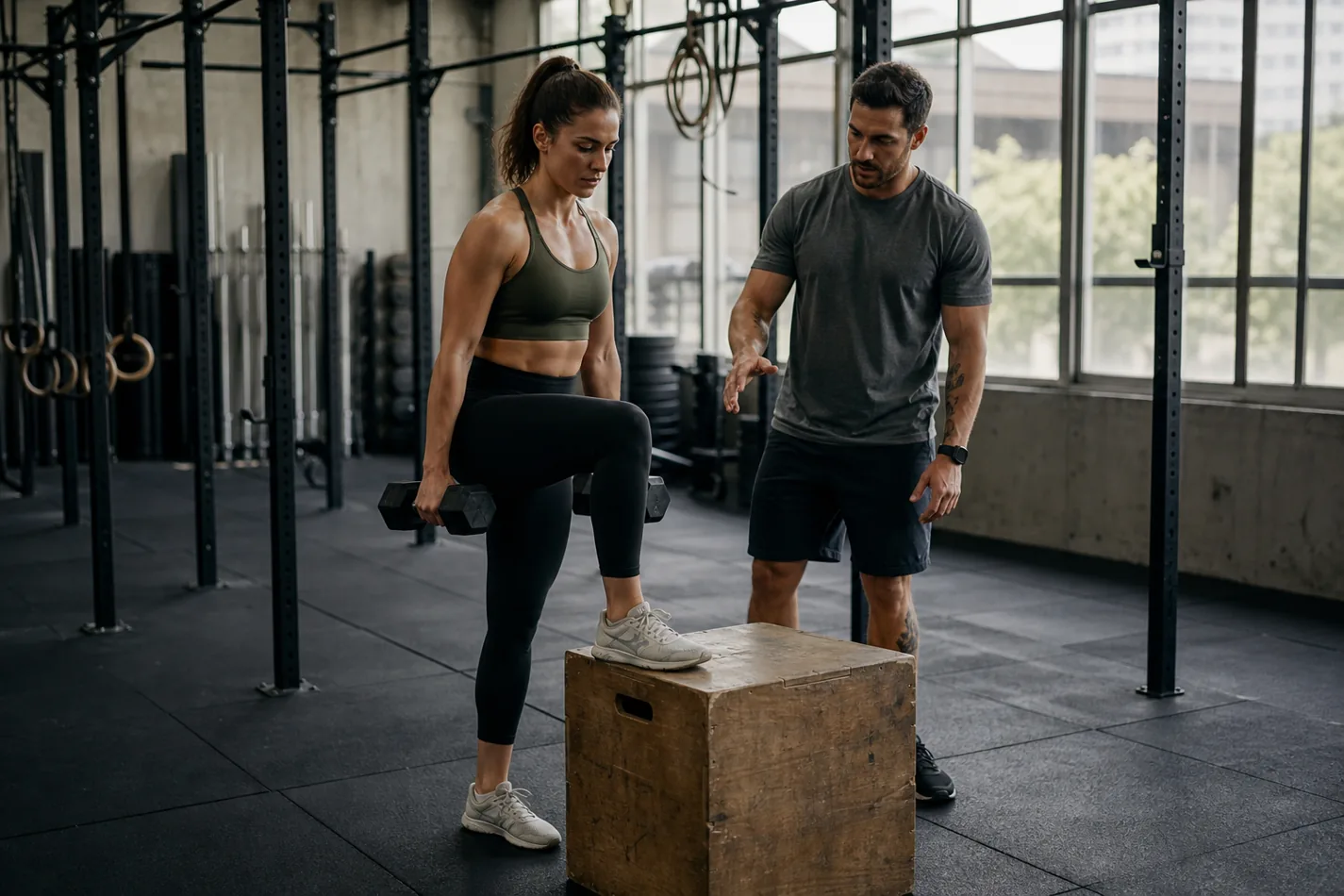
Most athletes hold the dumbbells at the sides because it keeps the breathing cleaner and makes transitions simple. The mistake is letting the weights swing. If the dumbbells drift forward and back every rep, the torso follows them, and the box starts to feel messy.
A front rack can be useful when the workout standard requires it or when space is tight. It also costs more breathing room. If the legs are already loaded from squats, lunges, or wall ball breathing, side carry is usually the smarter choice unless the workout says otherwise.
| Fault | What it causes | Fix to use right away |
|---|---|---|
| Only the toes land on the box | Unstable push-off and extra calf fatigue | Plant more of the foot before standing |
| Dumbbells swing every rep | The torso twists and the step gets sloppy | Keep the weights close to the thighs |
| Step down turns into a drop | Lost rhythm and more impact | Step down quietly before the next rep |
| First round is too fast | Quads and grip fade at the same time | Start at the pace you can hold in round three |
How to pace box step-overs in a WOD
The trap is treating the movement like cardio with dumbbells. It is partly that, but the legs still have to produce a clean step every rep. If the workout has high volume, breathe at the top of the box or as you step down. Do not waste time standing around, but do not turn the first minute into a race you cannot pay for later.
A simple pacing rule works well: keep the steps quiet. Loud, crashing feet usually mean the athlete has lost control. That same warning sign shows up in walking lunge pacing, where speed without position can turn a useful leg piece into survival.
The tutorial below is useful because it shows the simple rhythm this movement needs: step up, get tall, pass over the box, then step down under control. Watch the foot placement first. Speed only helps if the athlete still owns each step.
When to scale the movement
Scale the height first if the athlete cannot step up with a stable knee and a full foot on the box. Lower boxes, lighter dumbbells, or bodyweight step-overs all keep the pattern alive without forcing ugly reps. Good CrossFit scaling should still train the step, the posture, and the breathing pattern.
For newer athletes, alternating legs is often easier to manage than chasing one dominant leg over and over. For experienced athletes, the limiter may be grip. If the dumbbells keep sliding out of position, think about the same calm shoulder and hand position used in farmer carry posture.
What to test in your next set
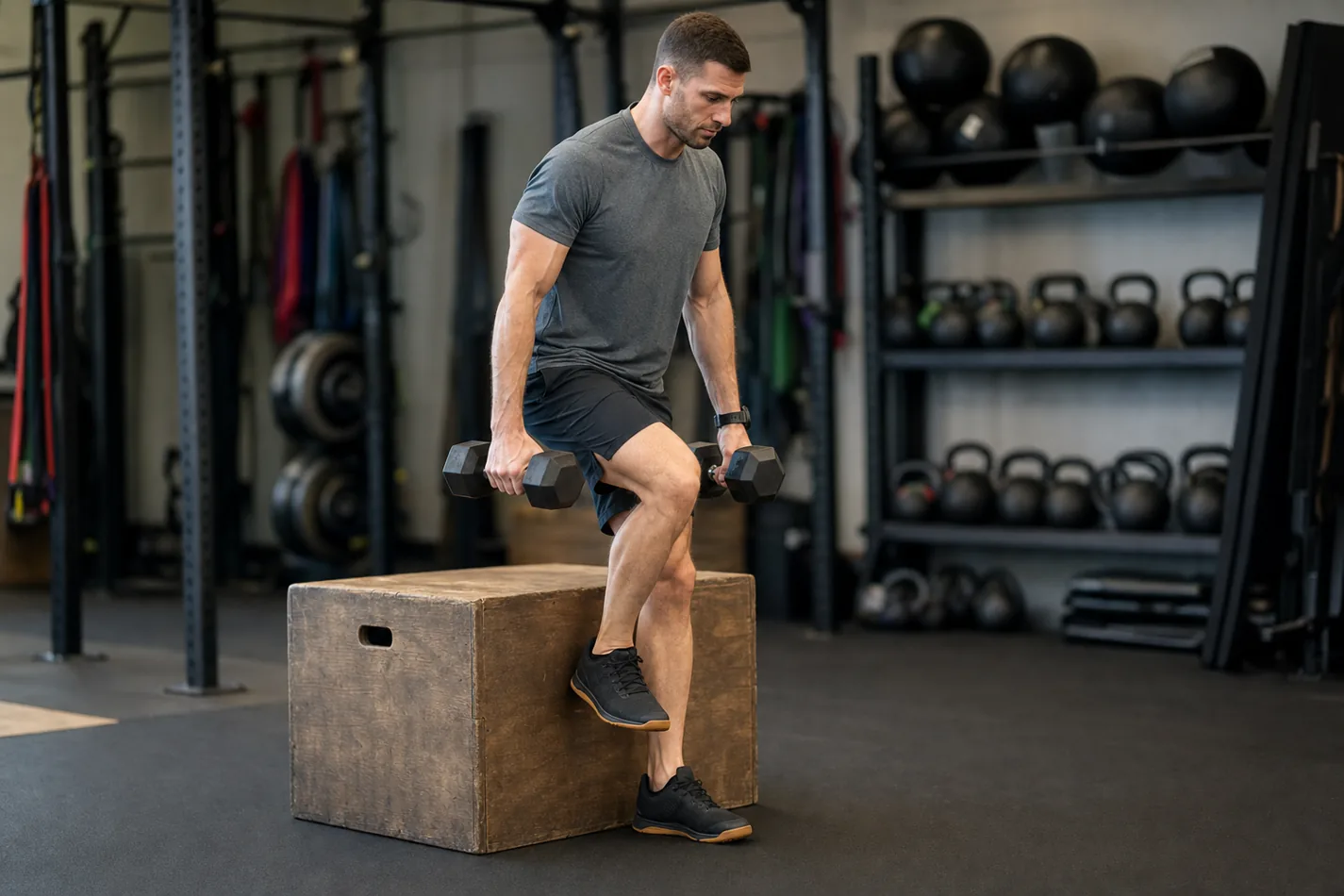
Try ten reps at a pace that feels almost too controlled. Full foot on the box. Dumbbells quiet. Step down without crashing. If that pace still feels good after the tenth rep, then speed up a little.
The best dumbbell box step-overs do not look dramatic. They look repeatable. That is the point. In a long CrossFit workout, repeatable usually wins before heroic does.


