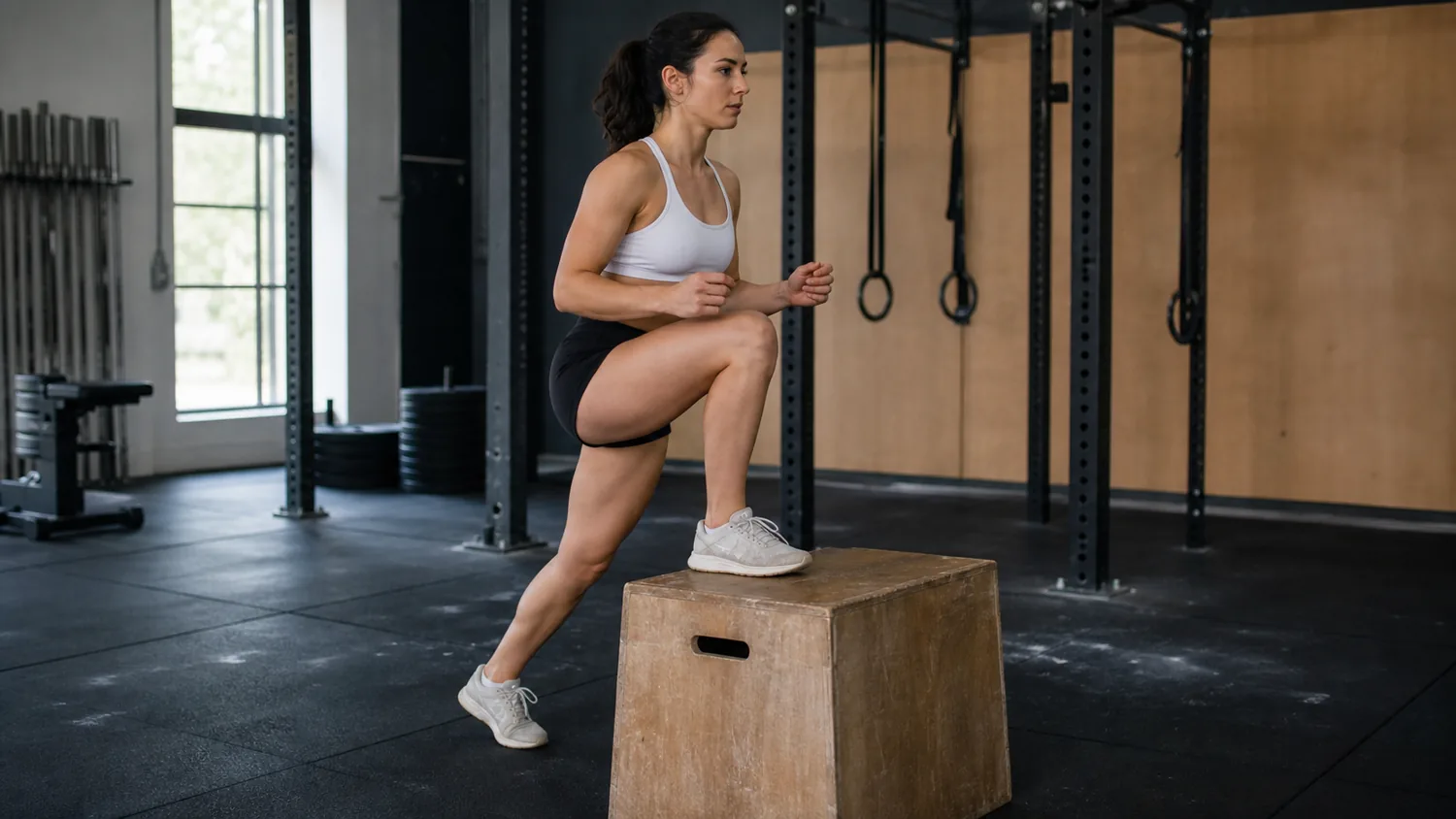
The plan
Box step-ups do not look dramatic on the whiteboard. Then the workout starts, the box gets taller than it felt in warm-up, and every rep asks the same question: can you keep moving without turning your legs into concrete?
In CrossFit, the box step-up is usually a pacing movement. It can show up with dumbbells, a ruck, a sandbag, bodyweight only, or as a substitute for jumping. The mistake is treating it like a slow box jump. A good step-up is quieter than that. It uses full-foot pressure, a strong stand, and a rhythm you can keep after the first round.
- A CrossFit box step-up should use the whole foot on the box, not a toe-heavy push from the floor.
- The best pace is usually steady and boring early. Sprinting step-ups makes the legs disappear fast.
- Scale height, load, or rep volume before knee tracking and posture fall apart.
What box step-ups are really testing
A box step-up is a single-leg strength and conditioning movement, but the gym version is not a bodybuilding exercise. You are repeating a simple pattern under fatigue: plant the foot, drive through the box, stand tall, step down under control, and repeat without wasting motion.
That sounds easy until the workout pairs step-ups with running, machine calories, carries, or lunges. The same leg control that matters in walking lunge control shows up here too. If the knee caves in, the torso folds, or the back foot does all the work, the rep still counts in many gyms, but it stops training the thing you wanted.

Set the foot before you chase speed
Place the entire working foot on the box. Heel down. Big toe down. Outside edge down. If only the front half of the shoe lands on the box, the athlete usually has to shove from the back leg or rock forward to stand up. That works for a few reps, then the calves and quads start arguing.
Drive through the foot on the box and finish with the hips open at the top. You do not need to slam the knee straight or exaggerate the lockout. Just stand clearly before stepping down. On the descent, stay close to the box. Big backward steps make the next rep slower and turn a simple movement into a balance drill.
The pacing error that wrecks a box step-up workout
Most athletes lose this movement by winning the first minute. They pop up fast, rebound down, and tell themselves the box is the easy station. Two rounds later, every step feels like a negotiation.
| Problem | What it usually means | Fix it on the next set |
|---|---|---|
| Only the toes land on the box | The setup is too rushed or the box is too high | Slow the first contact and plant the whole foot |
| Back leg does the work | The athlete is bouncing off the floor | Pause for a split second before standing |
| Knee collapses inward | Hip control or load choice is breaking down | Reduce load or height and track the knee over the toes |
| Breathing gets frantic | The cadence is too aggressive | Step, exhale, step down, repeat at a pace that survives round two |
The goal is similar to shuttle run pacing: move at a pace that still lets you make clean decisions. You should not need three seconds at the bottom to remember which leg goes next. If you do, the pace was too hot or the loading was wrong.
How to scale box step-ups without changing the workout
Scaling starts with the box height. A lower box often keeps the intended stimulus better than a standard box done with ugly reps. If the workout is meant to be continuous, the athlete should be able to step smoothly for sets of five to ten without twisting, hopping, or using the hands on the thigh.
Load is the next lever. Dumbbells at the sides are easier to organize than a front-rack load for most newer athletes. A sandbag changes the breathing. A ruck changes posture. Use CrossFit scaling to protect the pace and the joints, not to make the movement feel impressive on paper.

Box step-ups versus box jumps
Box step-ups and box jumps share a box, but they do not ask the same thing from the athlete. Box jumps are about a powerful jump, a safe landing, and a controlled descent or step-down depending on the workout. Step-ups are about repeatable single-leg drive. If your calves are smoked, your Achilles is irritated, or the workout needs lower impact, step-ups may be the smarter choice.
That does not make them easy. A high-rep step-up workout can be nastier than jumping because there is nowhere to hide. You keep moving, rep after rep, and small leaks add up. The athlete who already understands box jump landing usually has an advantage because they respect the box instead of rushing every contact.
For a quick visual reset, watch Bodyweight Box step up before you coach or do the movement. The useful part is not a flashy trick. Look at the full-foot contact, the patient stand, and the way the athlete avoids pushing off the back leg too hard.
Coaching cues that work under fatigue
- Whole foot on the box: no hanging heel, no toe-only scramble.
- Stand tall before you leave: finish the rep without overextending the low back.
- Alternate with intent: switching legs is fine, but do not let it become random stumbling.
- Stay close on the way down: long backward steps waste time and balance.
- Choose a pace you can repeat: the first round should feel controlled, not heroic.
What to test in your next workout
Before the clock starts, do six step-ups at the exact box height and load you plan to use. If you can plant the full foot, stand without shoving from the floor, and breathe through all six, the setup probably fits. If rep three already needs a hop, lower the box or reduce the load. Box step-ups reward athletes who stay patient early and honest late.


