
The plan
Shuttle runs look harmless on the whiteboard. No barbell. No skill standard that scares beginners. Just run to the line, touch, come back. Then the workout starts, the turns stack up, and the athlete who treated every length like a full sprint is suddenly walking with hands on knees.
The hard part is not top speed. In most CrossFit workouts, shuttle runs are won or lost at the turn. Clean footwork keeps the breathing under control, protects the calves, and lets you return to the next movement without feeling like the floor moved under you.
- Run fast enough to stay competitive, but save the all-out sprint for short, low-volume pieces.
- Own the turn: decelerate early, plant under control, touch the line, and leave without twisting the knees.
- Match the pace to the workout. Shuttle runs before heavy lifts need a different gear than shuttle runs before rest.
What shuttle runs should train in CrossFit
A good shuttle run is not just conditioning. It trains acceleration, braking, coordination, and the ability to stay composed when direction changes make the heart rate jump. That matters because CrossFit rarely asks you to run fresh and stop. It asks you to run, then pick up a bar, jump, pull, breathe, and do it again.
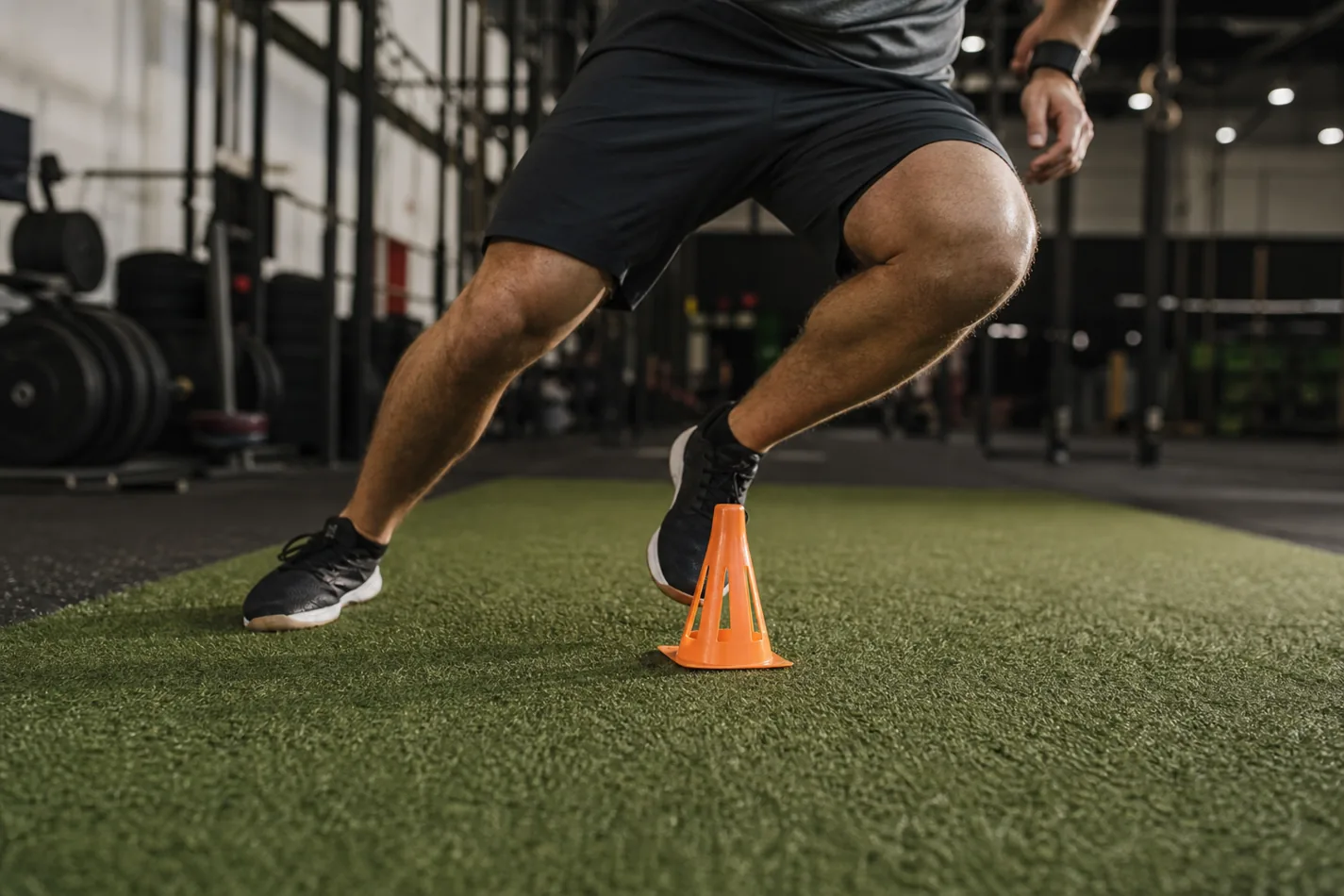
Think of each length as three pieces: build speed, brake before the line, and push back out. Athletes who skip the braking piece end up sliding, overstriding, or turning with the knee collapsed inside the foot. It may look fast for two reps. It usually gets expensive by minute five.
The turn matters more than the sprint
The fastest athletes are not always the ones with the wildest first ten yards. They are often the ones who lose the least time at the line. Start slowing one or two steps before the turn, lower the hips a little, and plant the outside foot in a position that lets you push back across the lane.
Do not crash into the line. If you arrive too hot, the touch becomes a full stop and the next length starts late. If you arrive under control, the touch is just a checkpoint. You are already leaving as your hand comes up.
This is similar to how smart sled push body angle keeps force moving in the right direction. The body angle changes, but the idea is the same: push the floor instead of fighting it.
How to pace shuttle runs in a WOD
The right pace depends on what sits around the running. Shuttle runs paired with rest or simple bodyweight work can be aggressive. Shuttle runs paired with heavy cleans, high-skill gymnastics, or another machine should be controlled enough that you can start the next station without a long stare at the equipment.
| Workout setup | Best pace | Mistake to avoid |
|---|---|---|
| Short interval with rest | Hard acceleration and sharp turns | Jogging the first reps because the movement looks simple |
| AMRAP with mixed movements | Repeatable pace, clean breathing, no sloppy turns | Sprinting early and losing the next station |
| Shuttles before barbell work | Controlled run that keeps the legs ready | Arriving at the bar with shaky feet |
| High volume shuttle piece | Smooth cadence with relaxed arms | Turning every line touch into a deep squat |
Use the same thinking you would use for air bike pacing or rowing stroke efficiency. The goal is not to look tough for the first minute. The goal is to keep producing work when the simple movement starts asking for payment.

Footwork cues that actually help
Keep the eyes forward as long as possible, then find the line without staring at the floor for the whole length. If your head drops early, the chest folds, the stride shortens, and the next push-off gets weaker.
Use short, quick steps into the turn. Long braking steps beat up the calves and make the plant unpredictable. Touch with the hand that lets your torso stay balanced. Some athletes like touching with the inside hand. Others feel better with the outside hand. Test both before the workout instead of learning under fatigue.
The plant foot should feel active, not jammed. If you hear a heavy slap at every turn, you are probably arriving too fast or too upright.
Common shuttle run mistakes
The first mistake is treating every length like a 40-yard dash. That works only when the workout is short enough to reward it. In mixed CrossFit pieces, the cost shows up later in bad reps, missed transitions, and long chalk breaks that were never part of the plan.
The second mistake is turning with the knees caving in. Fatigue makes this worse. Slow the last step, plant with the knee tracking over the foot, and push away from the line instead of spinning around it.
The third mistake is holding the breath. Short sprints tempt athletes to brace and go silent. That can work once. Across rounds, it leaves you panicked. Exhale into the turn, breathe as you accelerate, and settle quickly before the next movement.
The turn is easier to understand when you see it. In How To | Perform Shuttle Runs Efficiently, notice how the athlete slows just enough to plant cleanly, then leaves the line with the chest still organized instead of folding into the floor.
Scaling shuttle runs without changing the workout
Shuttle runs can be scaled by distance, speed, line-touch standard, or total volume. The best choice depends on why the athlete is struggling. A newer athlete with poor deceleration may need fewer lengths. An athlete returning from a calf or Achilles issue may need a controlled run, step turns, or a machine substitute.
Do not scale every shuttle into a slow walk unless the workout demands that level of caution. Good CrossFit scaling keeps the stimulus alive. If the workout wants repeated accelerations, choose a version that still asks the athlete to move with intent.
What to check before your next shuttle workout
Before the clock starts, walk the lane and confirm the distance, line-touch standard, and traffic pattern. Then do two or three turns at workout speed. If your first test turn feels like a skid, fix it immediately. Shorten the last steps, lower the hips, and leave the line with control.
Pick a pace that lets you start the next movement within a few breaths. That is the quiet skill of shuttle runs in CrossFit: run hard, turn clean, and avoid borrowing speed from reps you still have to do.


