The plan
- What a clean pistol squat should feel like
- Why pistols fall apart in CrossFit workouts
- Start with a box before chasing full depth
- Use assistance without turning it into a pull
- A useful video progression to watch before practice
- How to train pistols during the week
- Mobility checks that actually matter
- Common mistakes to fix first
- When to put pistols back into the WOD
The pistol squat looks simple from across the gym: one leg down, one leg out, stand back up. Then you try it in a workout and everything shows up at once. Ankles. Hips. Balance. Knee control. A little panic when the bottom position feels lower than expected.
For CrossFit athletes, the pistol is not just a party trick. It is a test of usable single-leg strength under fatigue. If you rush it, the rep turns into a wobbly fall with a knee diving inside. If you build it patiently, it can clean up your squat mechanics, expose left-right differences, and give you a better way to scale leg-heavy WODs.
- A good pistol squat starts with control to a target, not with chasing the lowest possible depth on day one.
- The most common limit is not strength alone. Ankle mobility, hip position, and balance usually decide whether the rep stays clean.
- Use boxes, rings, counterweights, and tempo reps before adding pistols to fast workouts.
What a clean pistol squat should feel like
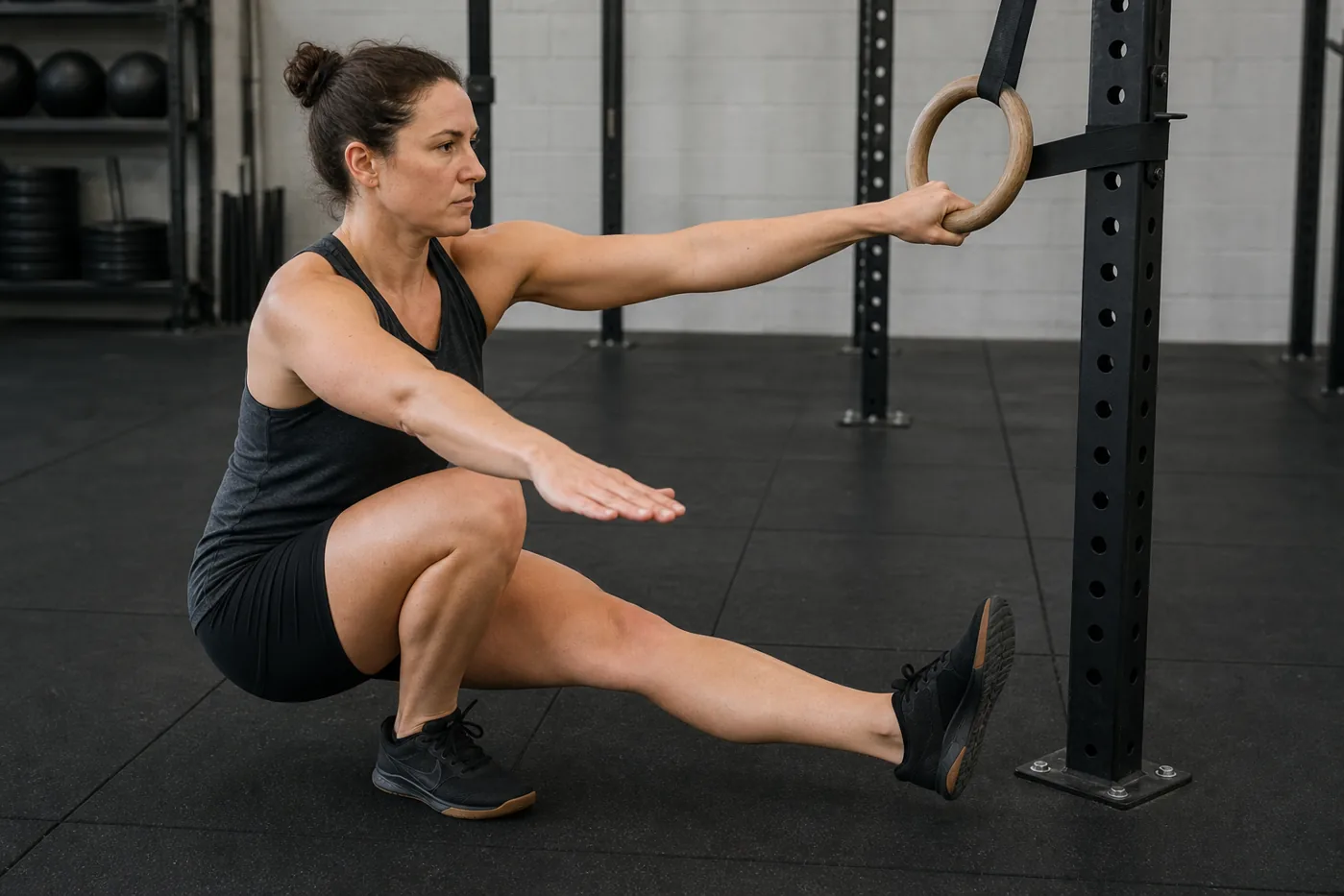
A clean pistol squat does not feel like folding into a bad position and hoping your quad saves the rep. The working foot stays planted. The knee tracks roughly with the toes. The chest does not have to be perfectly upright, but the athlete should look balanced rather than trapped at the bottom.
The free leg can be straight or slightly bent depending on mobility. What matters more is that it does not crash into the floor before the working hip reaches depth. If the lifted leg is the only thing stopping the rep, scale the range of motion.
The same squat habits still matter here. If your front rack position and torso control are already limiting your front squat in CrossFit, pistols will usually expose the same bracing problem in a louder way.
Why pistols fall apart in CrossFit workouts
Pistols fail for a few predictable reasons. The first is speed. Athletes treat them like air squats and drop too quickly, then lose tension before they can stand. The second is a soft foot. If the arch collapses, the knee follows. The third is trying to meet the Rx standard before the body can own the positions.
Fatigue makes all of this worse. A pistol after rowing, running, or wall balls is a different movement than a fresh pistol during skill work. That is why the goal in practice is not just to get one rep. It is to make the rep repeatable when your breathing is already high.
| Problem | What it usually means | Better scale |
|---|---|---|
| Heel lifts off the floor | Ankle range or balance is not ready yet | Box pistol, heel-elevated drill, slow calf and ankle prep |
| Knee dives inward | Hip and foot control are fading | Assisted pistol with a ring, tempo step-downs |
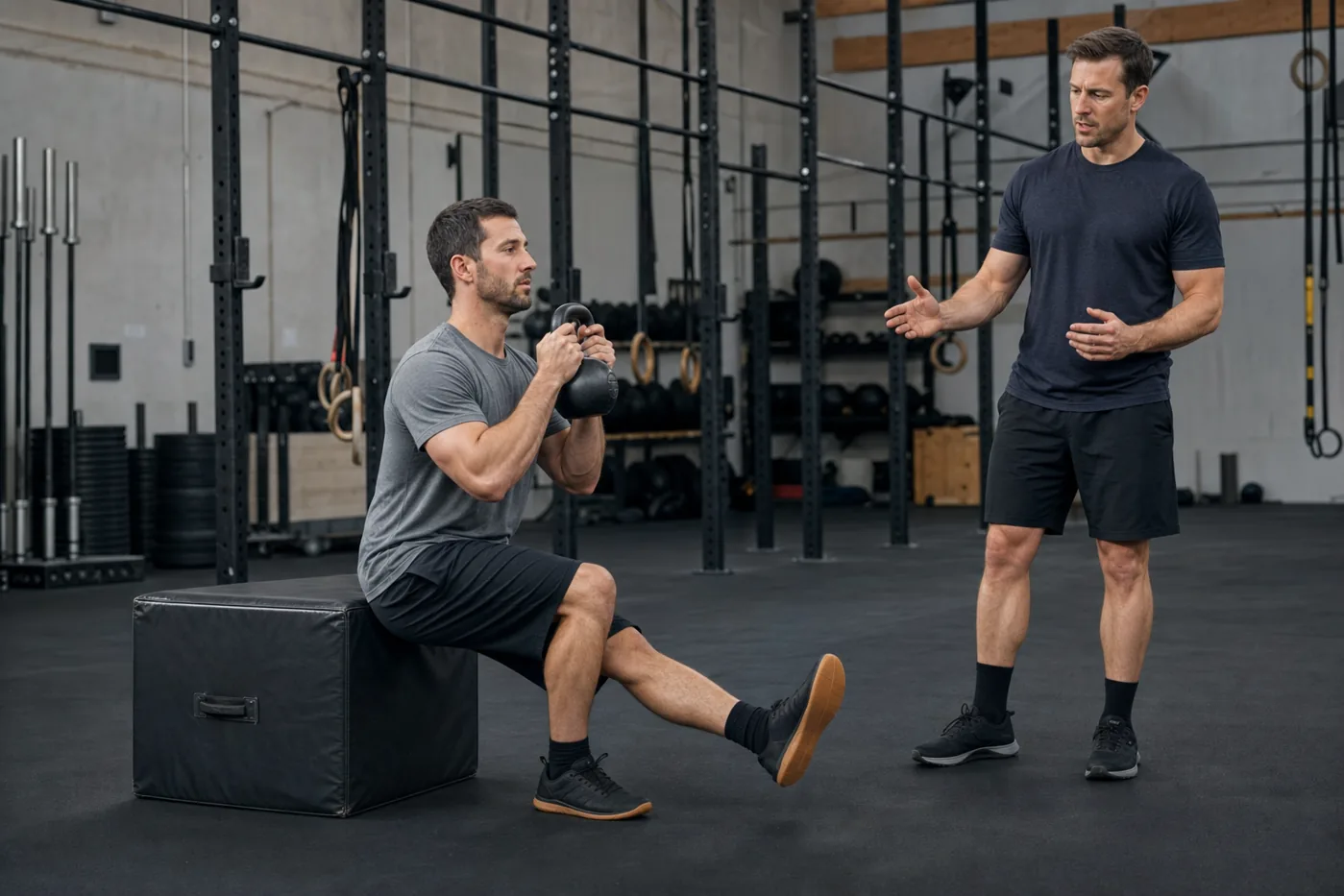
| You fall backward | Counterbalance and bottom position are missing | Light plate or kettlebell counterbalance |
| Free leg hits the floor early | Hip flexor strength or hamstring mobility is limiting depth | Lower box target, seated leg raises, controlled negatives |
Start with a box before chasing full depth
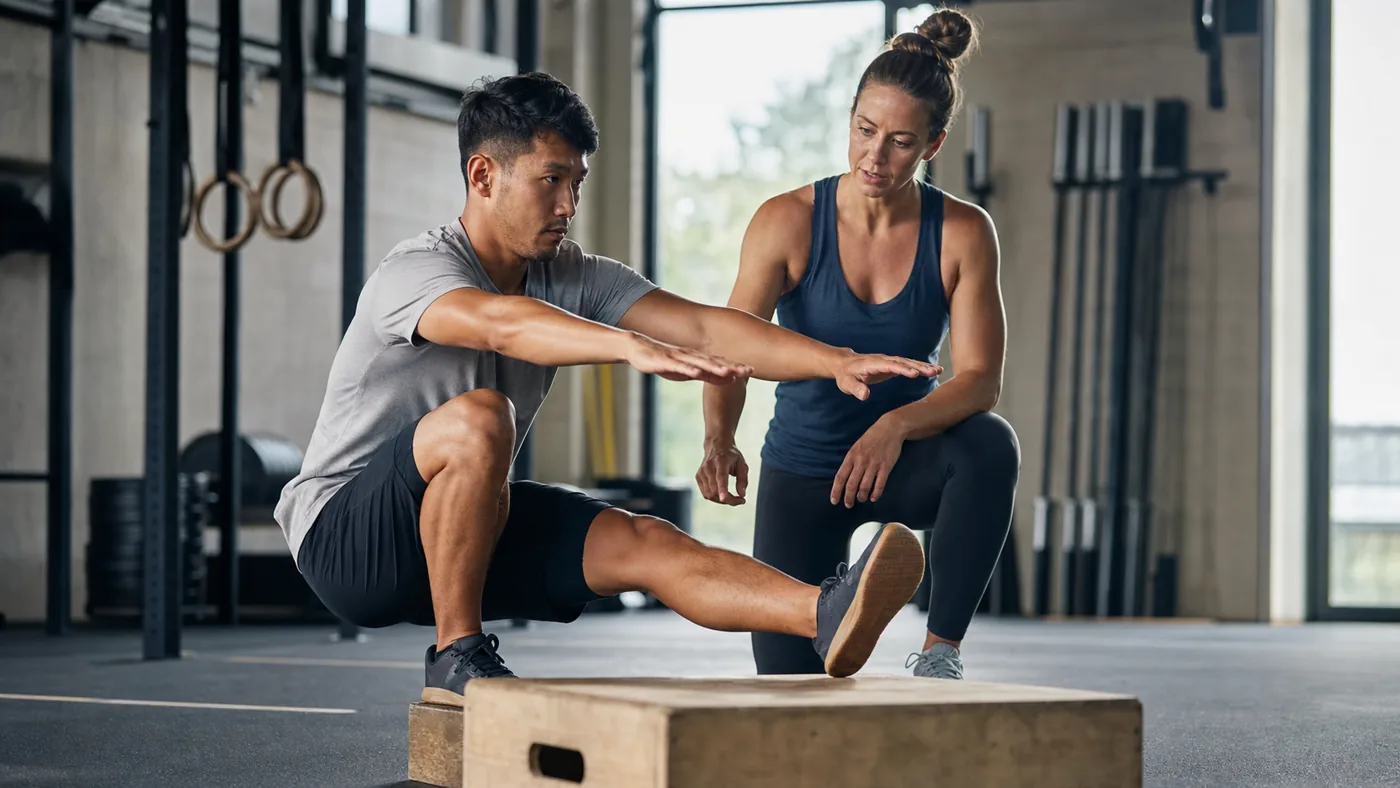
The box pistol is the cleanest first step for most athletes. Set a box or stack of plates at a height where you can sit back under control and stand without twisting. Tap the box, keep tension, then drive through the whole foot.
Do not collapse onto the box. That teaches the exact habit you are trying to remove. Think of the target as a depth gauge, not a chair. When five slow reps per side look the same, lower the target by a small amount.
Use assistance without turning it into a pull
Rings, a rig upright, or a light band can help you learn the bottom position. The trap is using the arms to yank yourself up. That makes the rep easier, but it does not build the single-leg strength you need when the workout starts.
Use only enough help to keep balance. Keep the working leg honest. If your arms are doing more than guiding the movement, raise the box or slow the rep down.
A useful video progression to watch before practice
This WODprep tutorial is worth watching because it breaks the pistol into practical progressions instead of pretending every athlete should drop straight into the full movement. Use it as a checklist, then pick the version that lets you move without pain or panic.
How to train pistols during the week
Pistols need practice when you are fresh. They also need exposure when you are slightly tired. Keep those sessions separate at first.
- Skill day: 4 to 6 sets of 3 slow reps per side to a box, resting enough to make every rep look clean.
- Strength accessory: rear-foot-elevated split squats, step-downs, and tempo lunges for controlled single-leg strength.
- Workout scale: alternate box pistols, assisted pistols, or weighted step-ups when the WOD calls for high volume.
If the workout is meant to be fast, scaling is not a failure. It is the right decision when the full pistol would turn the session into a balance test. The same rule applies across the board: a smart CrossFit scaling choice keeps the stimulus of the workout intact.
Mobility checks that actually matter
You do not need circus-level mobility, but you do need enough ankle bend to keep the foot planted while the hip drops. Test it with a knee-to-wall drill. If one side is clearly worse, expect the pistol to show it.
Hip control matters too. If you can sit into a deep squat but cannot hold a stable single-leg bottom position, the issue is probably not just flexibility. It is strength at the end range. That is where slow negatives, pauses, and box targets do more for you than another rushed mobility circuit.
Overhead work can reveal the same pattern. Athletes who lose midline position in an overhead squat position often struggle to stay organized when the pistol gets deep and narrow.
Common mistakes to fix first
- Dropping too fast: own the descent for two or three seconds before trying touch-and-go reps.
- Letting the foot roll inward: spread the toes, keep pressure through the big toe, little toe, and heel.
- Twisting out of the bottom: reduce depth and rebuild the path before adding speed.
- Practicing only your strong side: start sets on the weaker leg so it does not always get the sloppy reps.
When to put pistols back into the WOD
Put full pistols back into workouts when you can do small sets without pain, without a knee cave, and without needing ten seconds to reset between reps. That might mean sets of three per leg before sets of ten. Good. CrossFit rewards movement you can repeat, not one dramatic rep that wrecks the rest of the workout.
For the next few weeks, judge the pistol by one question: did the last rep look close to the first? If the answer is no, the scale is telling you the truth. Stay there a little longer, build the control, then lower the target.


