The plan
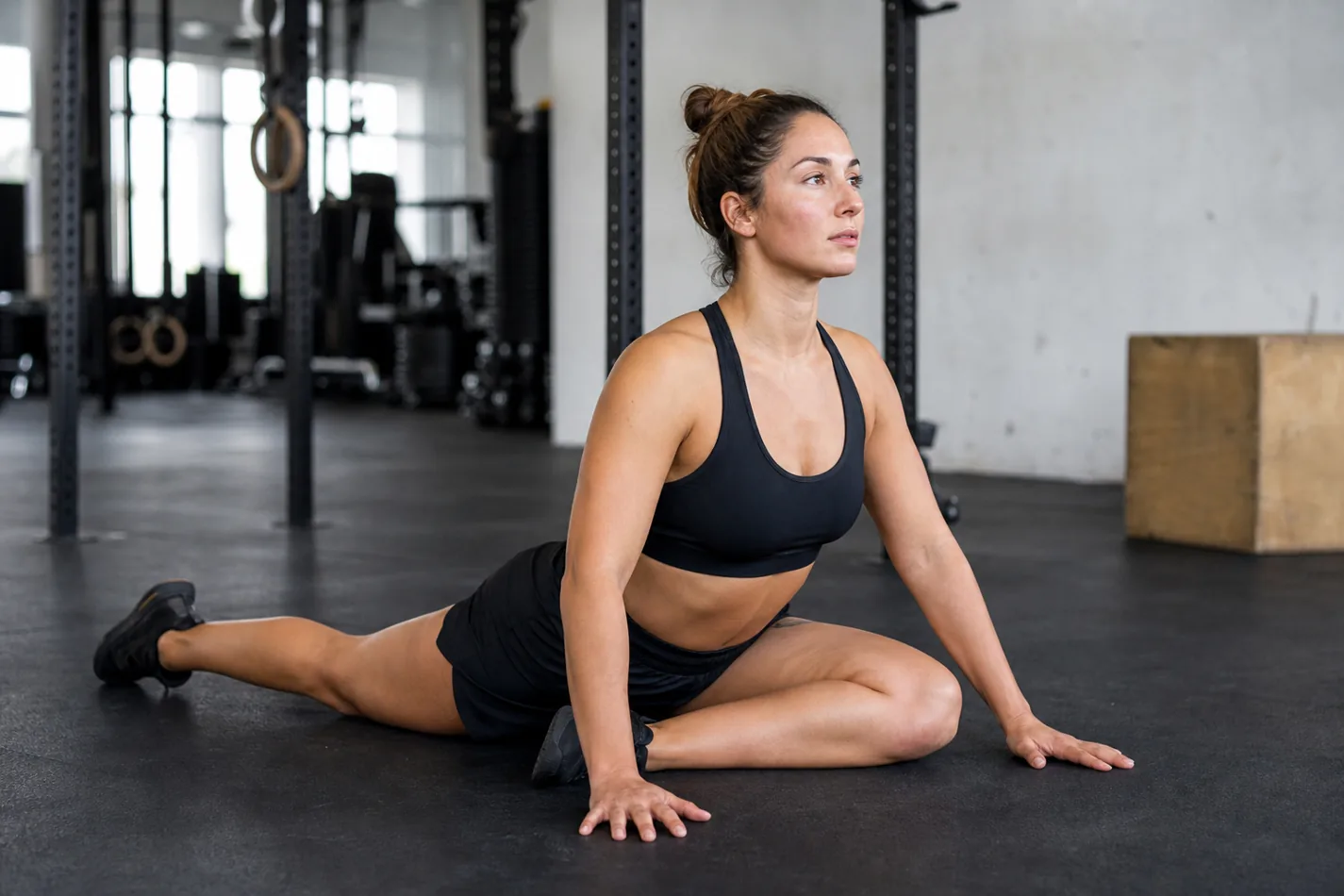
The pigeon stretch shows up in CrossFit warm-ups because tight hips are easy to blame. The problem is that athletes often turn it into a knee fight. They fold the front leg into whatever shape looks familiar, drop the hip toward the floor, then wonder why the outside of the knee feels annoyed before the workout even starts.
A better pigeon stretch is quieter. It gives the outside hip and glute a chance to open while the knee stays calm, the back leg stays long, and the athlete can breathe without bracing. That makes it useful before squats, lunges, running, burpees, wall balls, and any session where hip position changes how the next rep feels.
- Set the front shin where the knee feels safe, not where the pose looks deepest.
- Keep the torso supported so the hip gets the work instead of the low back or knee.
- Use pigeon stretch when the next movement needs cleaner hip rotation, then stand up and retest the squat or lunge.
What pigeon stretch should do for a CrossFit athlete
Pigeon stretch targets the outside hip, glute, and deep rotators on the front-leg side. That can help athletes who feel blocked at the bottom of a squat, struggle to keep a steady lunge position, or feel stiff after high-volume running and box work.
The stretch should not feel like a test of pain tolerance. CrossFit already gives athletes enough intensity. Mobility work before class should make the next skill cleaner. If pigeon stretch leaves the athlete limping, guarding, or rubbing the knee, the setup is wrong or the drill is not the right choice that day.
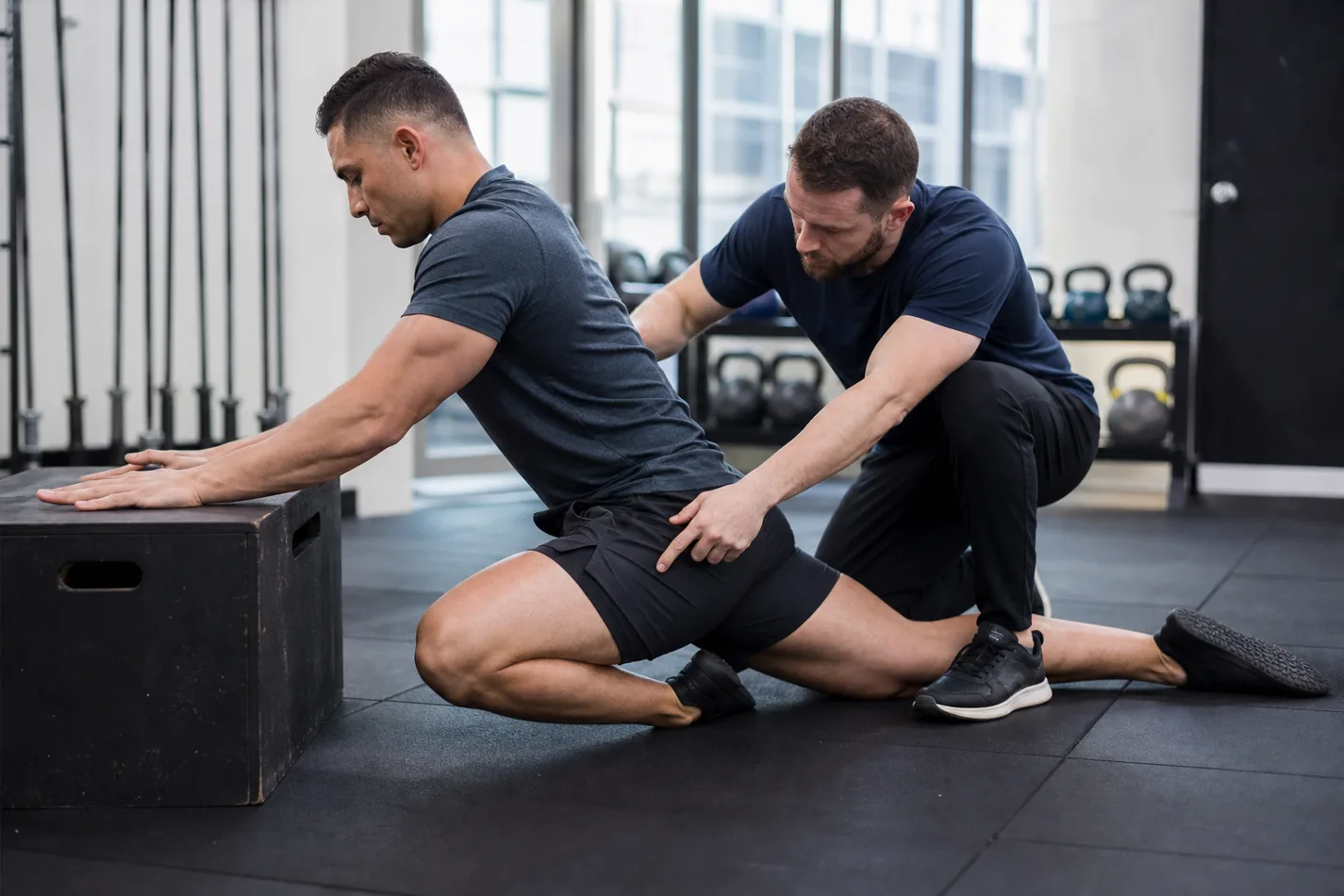
Set the front leg without chasing a perfect shape
The front shin does not need to be parallel to the front edge of the mat. That cue works for some athletes and punishes others. Start with the front knee bent and the foot closer to the hip if that keeps the knee comfortable. From there, square the hips only as much as the body allows without twisting.
Think about where the pressure lands. The stretch should sit around the outside hip, not inside the knee. Athletes who already use Spiderman stretch work or frog stretch prep will recognize the same rule: range only counts if the joints around it still feel organized.
| Fault | What you notice | Better fix |
|---|---|---|
| Front shin forced too far across | Knee pressure shows up before the hip stretch | Bring the foot closer and support the torso higher |
| Back leg turns out hard | The hips rotate away from the stretch | Lengthen the back leg and keep the pelvis quieter |
| Chest collapses to the floor | Breathing gets tight and the low back rounds | Stay on the hands, a box, or stacked plates |
| Long hold before explosive work | The athlete feels loose but slower afterward | Use shorter holds, then add active reps |
Where it belongs in a warm-up
Pigeon stretch works best after the athlete is already a little warm. A short row, bike, jog, or inchworm sequence helps. Then the stretch can be used as a check for hip rotation before front squats or overhead squats, lunges, step-ups, or wall-ball volume.
For class prep, try twenty to thirty seconds per side, then stand up and perform three air squats or two controlled reverse lunges. If position improves, the drill earned its place. If the athlete feels no change, a more active option such as lateral lunges or Cossack squats may transfer better.
The demo below is useful because it shows the stretch as a position to control, not a shape to force. Watch how the athlete sets the front leg, supports the torso, and avoids twisting the knee for extra range.
How to scale it when the floor version feels sketchy
The easiest scale is height. Put the hands on a low box, plates, or parallettes. That keeps the torso from dumping forward and gives the athlete space to adjust the front leg. Newer athletes often get more from this supported version because they can stay relaxed enough to notice what is happening.
Another option is a seated figure-four stretch. It is less dramatic, but it gives coaches a clean way to see whether the athlete can find the outside hip without pressure in the knee. Pair it with a quick glute bridge or hollow body check if the athlete needs more control before moving back to standing reps.
When to choose another drill
Skip pigeon stretch if there is sharp knee pain, hip pinching, numbness, or a blocked feeling that gets worse as the athlete breathes. Mobility should not turn into a negotiation with pain. Use Samson stretch for hip flexor tightness, frog stretch work for adductor range, or inchworms when the warm-up needs more active movement.
It is also not the best first drill right before sprinting, jumping, or fast change-of-direction work if the athlete feels unstable after long holds. Keep it short, then add active reps that look like the workout.
When to use pigeon stretch before the clock starts
Use pigeon stretch when it gives the athlete a better squat, lunge, step-up, or running stride within a few minutes. That is the test. If the next movement feels cleaner and the knee stays quiet, keep it. If the stretch only makes the athlete chase a deeper pose, change the drill and save the hip project for slower accessory work.