The plan
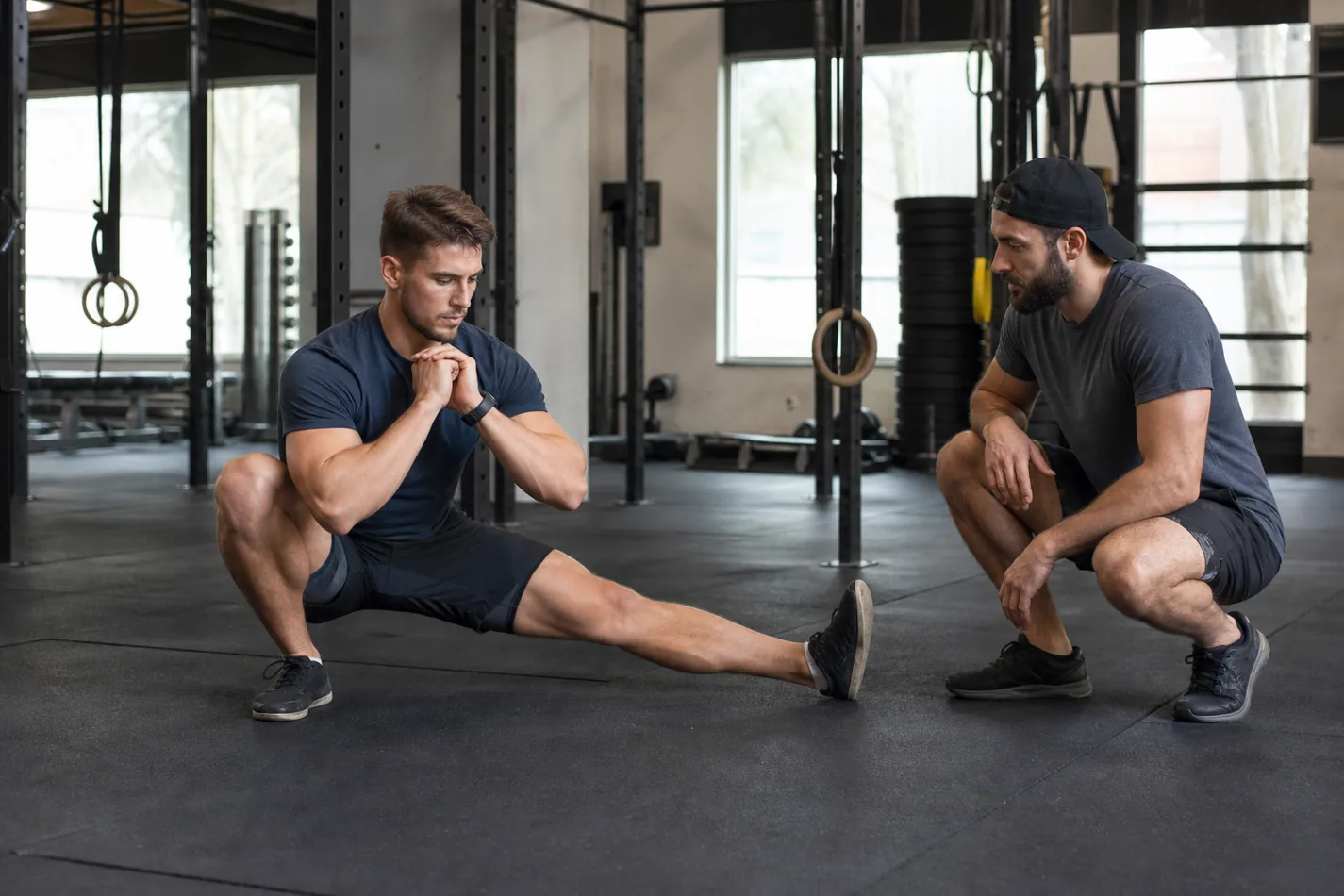
Cossack squats are not just a flashy mobility drill. In a CrossFit class, they show whether an athlete can shift into one hip, keep the working foot planted, and control the knee while the other leg stays long.
That makes the movement useful before squats, lunges, pistols, and wide-stance pulling. It also makes it easy to butcher. Go too deep too soon and the rep turns into a hip dump, a heel lift, or a knee cave that teaches the wrong lesson.
- Start wider than a squat stance, then shift slowly into one side.
- Keep the working foot flat and let the knee track over the toes.
- Use load only after bodyweight reps look controlled on both sides.
Set the stance before chasing depth
The stance should be wide enough to let one leg bend while the other stays mostly straight. Too narrow, and the athlete runs out of room. Too wide, and the rep becomes a slide instead of a squat. Most people need a few slow test reps before they find the right distance.
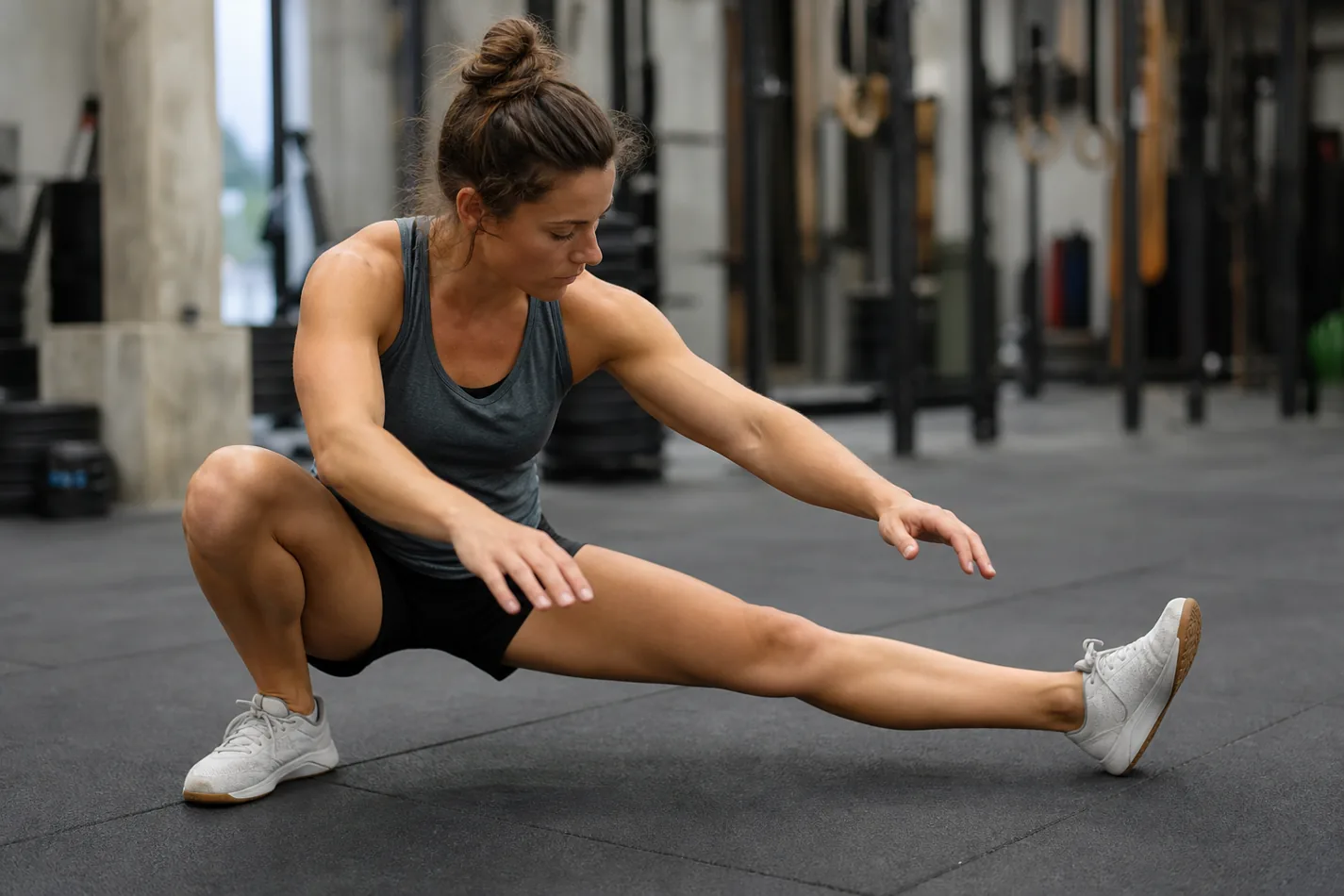
The working foot stays flat. The knee can travel forward, but it should not cave toward the arch. The extended leg can turn the toes up if that helps the athlete sit lower, but the goal is still control, not a dramatic pose for the camera.
What the movement should teach
A good Cossack squat teaches lateral hip control. The athlete shifts weight into one side, keeps pressure through the full foot, and stands back up without yanking on the spine or bouncing out of the bottom.
That lesson carries into walking lunge mechanics, reverse lunge control, and box step-up balance. All three ask the athlete to own one leg at a time. The Cossack squat just makes the side-to-side weakness harder to ignore.
| Fault | What it usually shows | Fix to try |
|---|---|---|
| Heel pops up | Ankle range or stance width is limiting the rep | Reduce depth and move the foot slightly wider |
| Knee caves in | The athlete is losing hip and foot control | Slow down and track the knee over the middle toes |
| Torso folds hard | The athlete is chasing depth instead of position | Use a counterbalance or stop higher |
| Extended leg cramps or twists | The stance is too wide or the adductor is not ready | Shorten the stance and work smaller ranges first |
How to use Cossack squats in a CrossFit warm-up
Cossack squats fit well in a CrossFit warm-up before front squats, overhead squats, lunges, box work, and single-leg sessions. They are also useful after easy cardio, when the hips are warm but the athlete is not tired yet.
Keep the dosage modest. Two sets of 5 to 8 reps per side is plenty for most classes. Coaches can ask athletes to pause for one second in the bottom position, then stand with control. If the pause changes the rep completely, the athlete found the real working range.
The demo below is worth watching for the footwork alone. The athlete shifts side to side without letting the bent knee collapse inward, which is the first standard to protect before adding load.
When to add a kettlebell or dumbbell
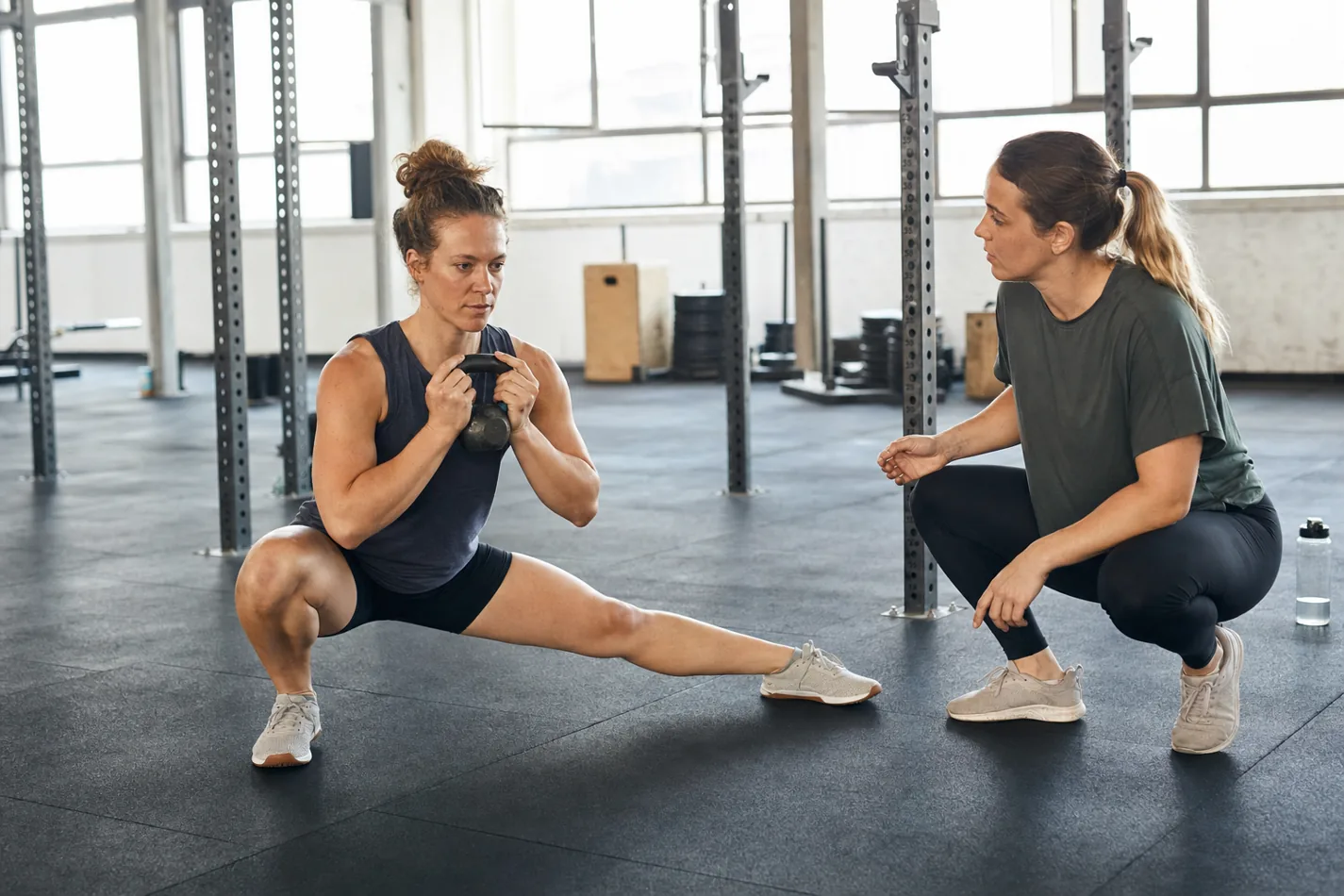
Load can help, but only if the bodyweight rep already has shape. A light goblet hold gives some athletes a counterbalance and makes the torso calmer. It also raises the cost of sloppy depth. If the bell drifts forward or the heel lifts, the load is too much for that range.
This is where goblet squat bracing and overhead squat position matter. Both teach athletes to keep the ribs organized while the hips and knees move. The Cossack squat asks for the same honesty, just on one side at a time.
Scaling that keeps the point of the drill
Good CrossFit scaling does not mean forcing every athlete to the floor. Use a rig for support, reduce the range, hold a light plate as a counterbalance, or turn the drill into a lateral lunge if the position is not ready yet.
For athletes working toward pistol squat progressions, the Cossack squat can be a useful bridge. It trains the ankle, hip, and knee to share the work without asking for a full single-leg squat. That said, painful pinching in the hip or knee is not a cue to push harder. Change the range, change the stance, or pick a different drill for the day.
What to test before adding it to the WOD
Ask for three slow reps per side. The foot should stay flat, the knee should track cleanly, and the athlete should stand without using a big bounce. If those pieces hold, the movement can live in a warm-up or controlled accessory block.
For a fast metcon, be more selective. Cossack squats lose their value when athletes rush through half-reps just to keep moving. Use them when the workout rewards control. Skip them when the clock will turn the drill into noise.


