The plan
The Samson stretch shows up in CrossFit warm-ups because it looks simple and gets athletes into a position they often avoid: a long lunge with the hip flexor under real tension.
The problem is that many athletes turn it into a backbend. They reach the arms up, let the ribs flare, and feel a big stretch somewhere near the front of the hip. It may feel dramatic, but it does not always prepare the body for squats, lunges, wall walks, or overhead work.
- Set the lunge first, then reach. Do not chase a bigger overhead position by arching the low back.
- The stretch should hit the back hip and quad area, not pinch the front hip or dump pressure into the spine.
- Use it before lunges, squats, running prep, burpees, wall walks, and overhead sessions where hip position changes everything.
What the Samson stretch should do
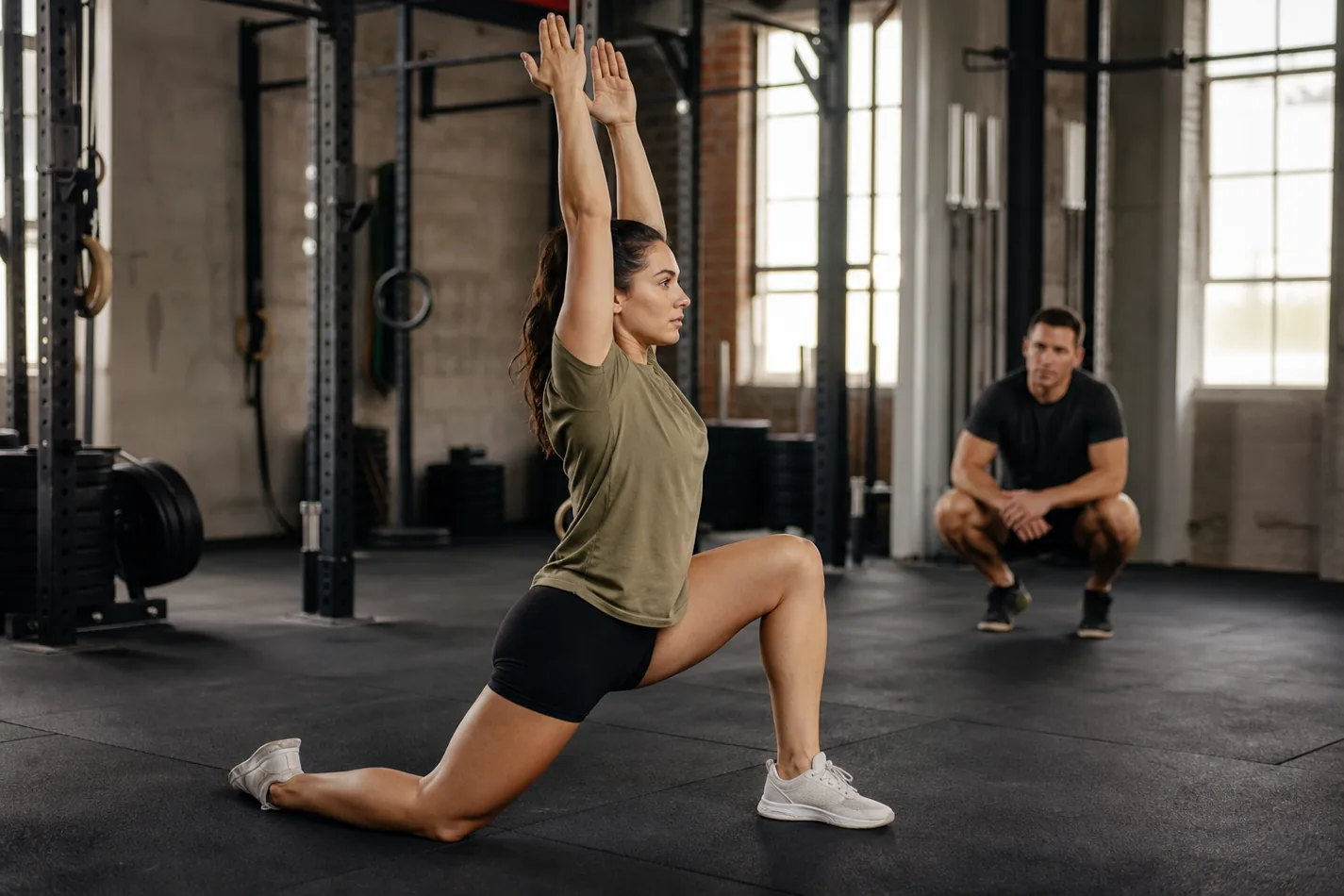
Start in a long lunge with the back knee on the floor or hovering just above it. The front foot stays flat. The back hip moves forward only as far as the athlete can keep the pelvis and ribs under control. From there, the arms can reach overhead, but the reach should not steal the position.
A clean Samson stretch feels like a hip flexor opening with the trunk still organized. If the athlete has to squeeze the low back to get the hands higher, the stretch has already drifted away from the point.
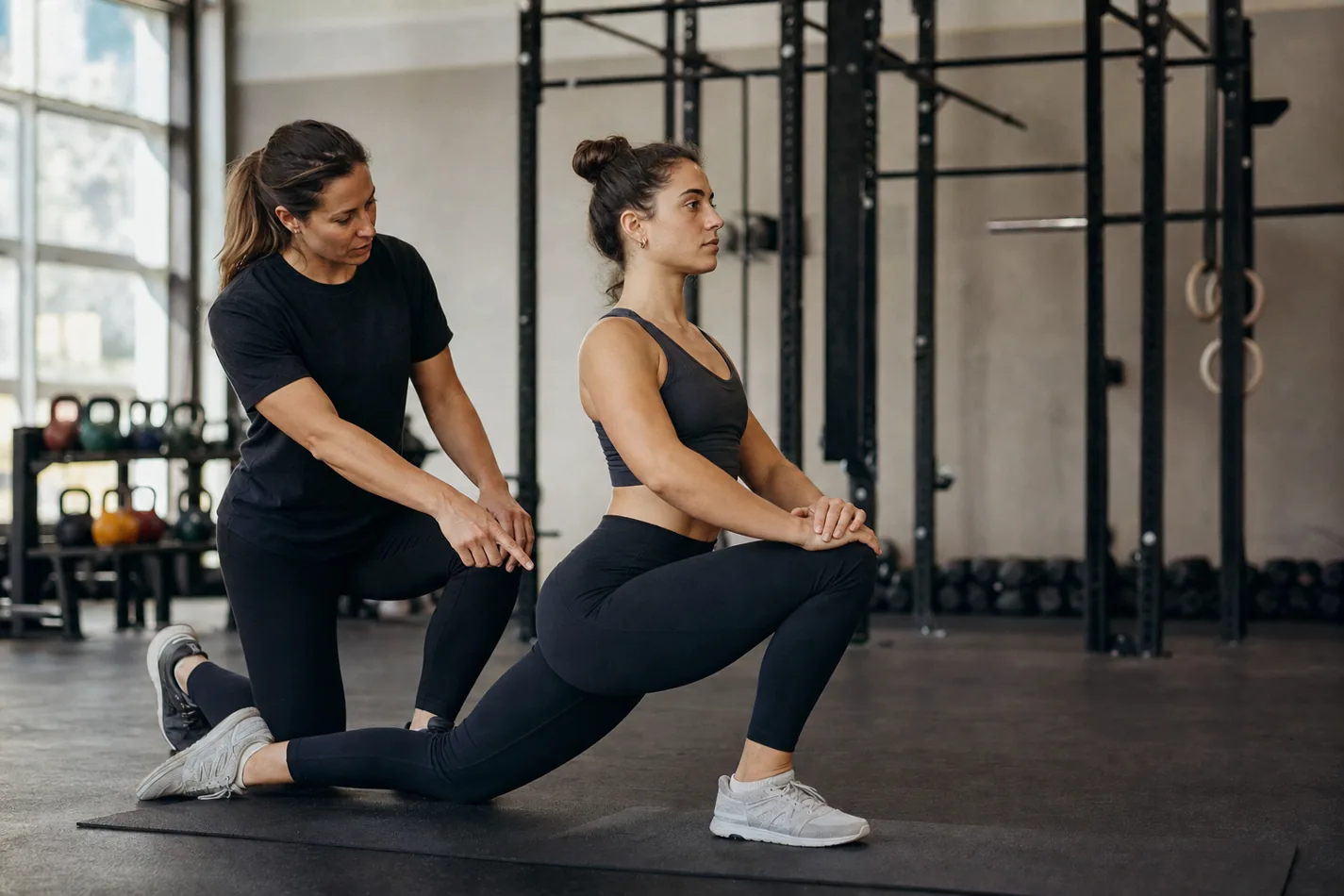
The rib flare is the hidden leak
Most athletes think the fault is tight hips. Sometimes it is. Often, though, the body is just taking the easy route. Instead of opening the back hip, the athlete arches the spine and calls it mobility.
Coach this the same way you would coach position before overhead lunge work or front rack lunges. Ribs down, glutes lightly active, front foot heavy. If the athlete can breathe in that position, the stretch is probably usable. If every breath pops the ribs up, shorten the stance and rebuild it.
| Fault | What you see | Fix |
|---|---|---|
| Low back arches | The athlete reaches overhead but loses the ribs | Exhale first, squeeze the back-side glute, and lower the hands if needed |
| Front knee collapses | The lunge twists inward | Keep the front foot flat and let the knee track with the toes |
| Back hip pinches | The stretch feels sharp instead of useful | Shorten the stance or place a pad under the back knee |
| Position is rushed | The athlete bounces through both sides | Hold for three slow breaths before switching |
Where it fits in a CrossFit warm-up
The Samson stretch is a good fit before sessions with lunging, squatting, running, box step-ups, wall walks, and overhead stability. It can also calm down the first few minutes of class because it asks athletes to slow the breath and own the lunge position before intensity climbs.
Use it before reverse lunges when the workout asks for step-back control, or before back rack lunges when the trunk has to stay tall under load. If the day includes squats, the drill can help athletes feel the difference between opening the hip and borrowing range from the low back.
The video below is useful because it shows the basic shape without adding noise. Watch the back hip and ribs first. That tells you whether the stretch is doing its job or just turning into a low back arch.
How long to hold it
Hold each side for twenty to forty seconds, or use three to five slow breaths. Longer is not automatically better. If the position gets worse after ten seconds, the athlete has found a range they cannot control yet.
For a faster class warm-up, use one controlled hold per side, then move into active reps such as walking lunges or Spiderman steps. The static hold should make the next movement cleaner, not put everyone to sleep before the workout brief.
Scaling the stretch without losing the target
Some athletes need the back knee down. Some need the hands on the front thigh instead of overhead. That is not a downgrade. It is the right version if it keeps the stretch in the hip instead of the spine.
For knee sensitivity, use a pad and shorten the stance. For athletes who cannot reach overhead without arching, keep the hands low or reach one arm at a time. If the workout includes wall walks or handstand work, shoulder position matters, but it should come after the lunge is honest.
What to check before the next WOD
Before the next workout with lunges or overhead reps, ask for one Samson stretch per side where the athlete can breathe without the ribs popping up. If that stays quiet, add the reach. If it does not, keep the hands lower and own the hip first.
The stretch is not about looking flexible. It is about finding enough hip extension to move better when the clock starts.