The plan
The front rack lunge looks like a leg exercise until the bar starts sliding down the shoulders. Then it becomes a posture test. If the elbows drop, the ribs flare, or the step gets too long, the athlete spends the set fighting the bar instead of training the lunge.
In CrossFit, front rack lunges show up in strength work, mixed conditioning pieces, and awkward barbell complexes. They ask for single-leg control, but they also punish lazy breathing and a soft rack. A good rep feels stacked, quiet, and repeatable.
- Set the front rack before the first step. Low elbows usually lead to a folded torso.
- Use a step length that lets the front foot stay planted and the back knee track cleanly.
- Scale the load early if the bar position is stealing the movement.
What front rack lunges test
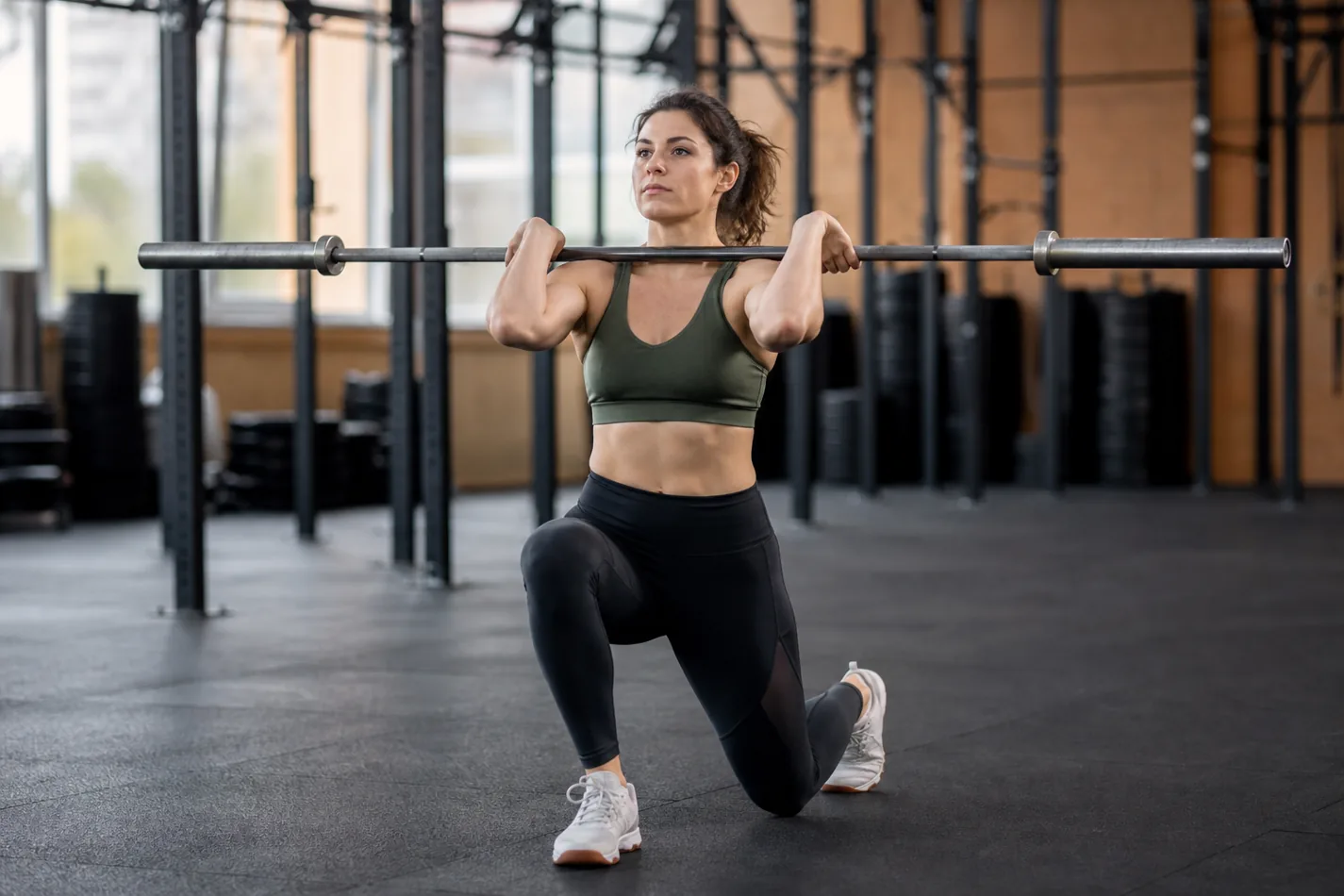
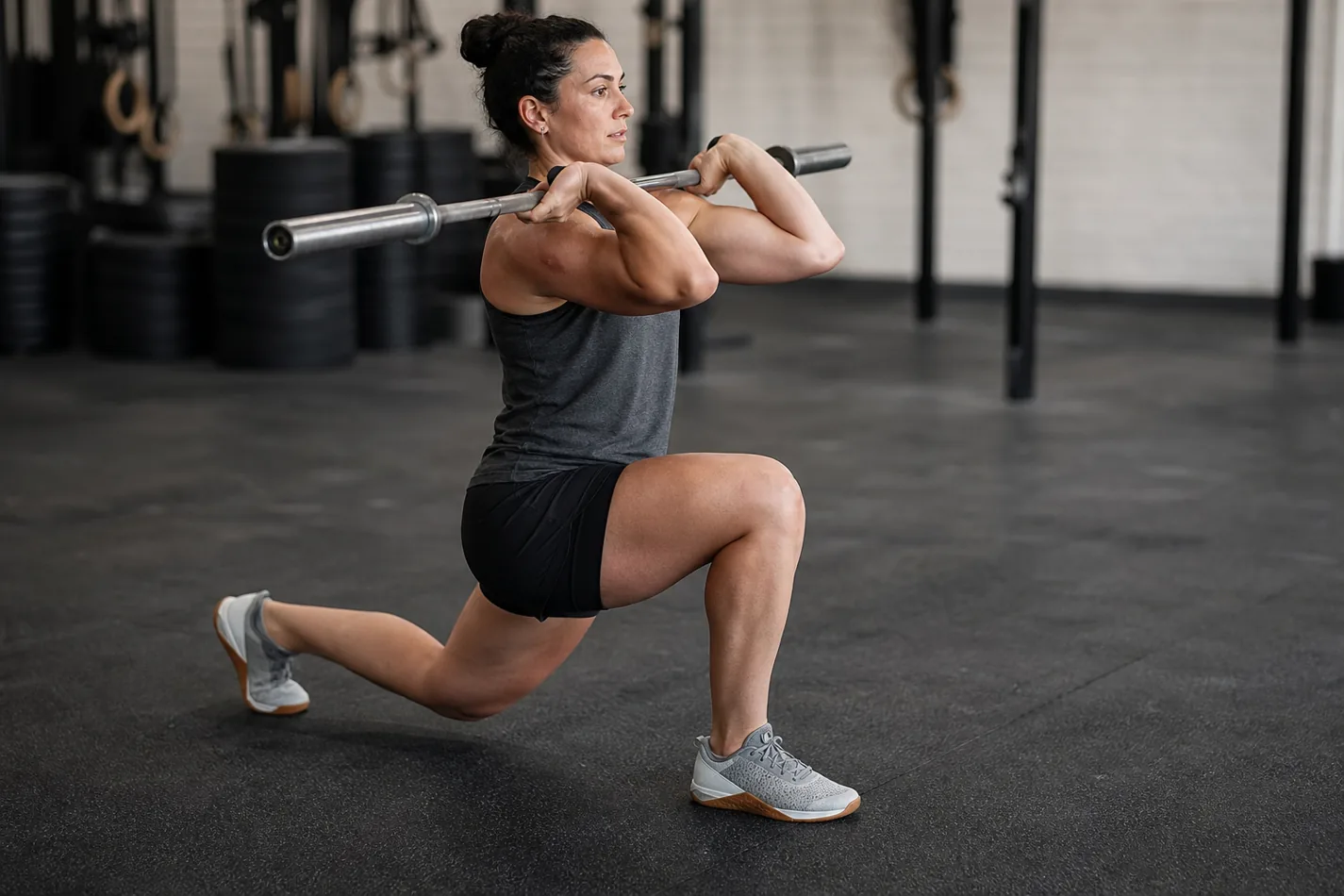
A front rack lunge puts the bar across the shoulders while the athlete steps forward, backward, or walks through reps. The load sits in front of the body, so the athlete has to keep the torso tall and the elbows lifted while one leg does most of the work.
That makes it different from the back rack lunge. The back rack version can hide a little more posture loss. The front rack version exposes it quickly. It also borrows heavily from the front squat rack position: if the bar cannot sit on the shoulders there, it will not magically feel better during lunges.
Build the rack before the step
The first mistake is rushing into the lunge before the bar is settled. Set the hands, lift the elbows, brace, and take one calm breath. The bar should rest on the shoulders, not hang from the wrists. If the athlete is holding the weight with the hands, the forearms will complain long before the legs get real work.
A useful cue is simple: show the logo on the shirt. That keeps the chest from folding and gives the knees a cleaner path. Athletes who struggle here can spend time with light front rack holds, empty-bar squats, or goblet squat depth before loading lunges.
Choose a step you can repeat
Front rack lunges fall apart when the step changes every rep. Too short, and the front knee has nowhere to go. Too long, and the athlete gets pulled into a split that is hard to recover from. The right step lets the front foot stay flat, the knee track over the toes, and the back knee lower under control.
For many athletes, walking lunge mechanics are easier to feel because the body keeps moving. Reverse reps demand more balance and usually expose weak control on the return, which is why reverse lunge control can be a good prep piece. Either way, the bar should stay over the middle of the body, not roll forward with every step.
| Fault | What you will see | Fix it with |
|---|---|---|
| Elbows drop | The bar slides down and the torso folds | Lower the load and pause in a front rack hold before stepping |
| Step is too long | The athlete has to lurch forward to stand | Shorten the stride until the back knee can lower straight down |
| Front heel lifts | The knee shoots forward and balance gets shaky | Keep pressure through the whole foot and slow the descent |
| Breath gets trapped | Every rep becomes a grind after five or six steps | Breathe at the top before the next lunge, especially in longer sets |
How to pace them in a WOD
Front rack lunges are expensive because they tax the legs and the upper back at the same time. In a workout with cleans, wall balls, or thruster breathing, the rack may fade before the legs do. That is a sign to break earlier, not a reason to sprint into sloppy reps.
Short sets with quick, calm resets often beat one long ugly set. If the workout uses a fixed distance, mark a point where you can set the bar down safely. If it uses reps, decide before the set whether you are doing six and six, eight and four, or another split you can actually hold.
The demo below is useful because it shows the front rack first, then the step. Watch the elbows and torso before you watch the feet.
Scaling without turning it into another movement
Good CrossFit scaling keeps the front-loaded lesson alive. Use an empty bar, two dumbbells in the front rack, one dumbbell held at the shoulder, or a kettlebell goblet hold. Reduce the range only if the athlete cannot control the knee or hip yet. The goal is still a stable step with the torso tall.
If the rack position is the limiter, start with front rack holds and lunges without weight. If the step is the problem, use split squats or slow reverse lunges. If overhead stability is the training goal, that is a different session and the overhead lunge lockout may fit better. Do not blend the drills just because the athlete wants the hardest-looking version.
When front rack lunges make sense in training
Use them when you want single-leg strength that carries into squats, cleans, and barbell cycling. They fit well after a CrossFit warm-up that opens the ankles, hips, and upper back. They also work as accessory strength on days when the main lift is not already crushing the front rack.
They are a poor choice when wrist pain, shoulder irritation, or knee pain shows up early. They are also risky late in a workout if athletes are already missing rack positions on cleans or thrusters. In that case, a simpler lunge variation may give better training with less noise.
What to check before the next set
Film three reps from the side. Look for the bar first. If it stays on the shoulders and the elbows do not dive, check the step. If the front foot stays planted and the athlete stands without twisting, the load is probably right.
If the video shows a folded torso, a rolling bar, or a different stride every rep, fix that before adding weight. Front rack lunges do not need to look dramatic. They need to look repeatable when the breathing gets loud.