The plan
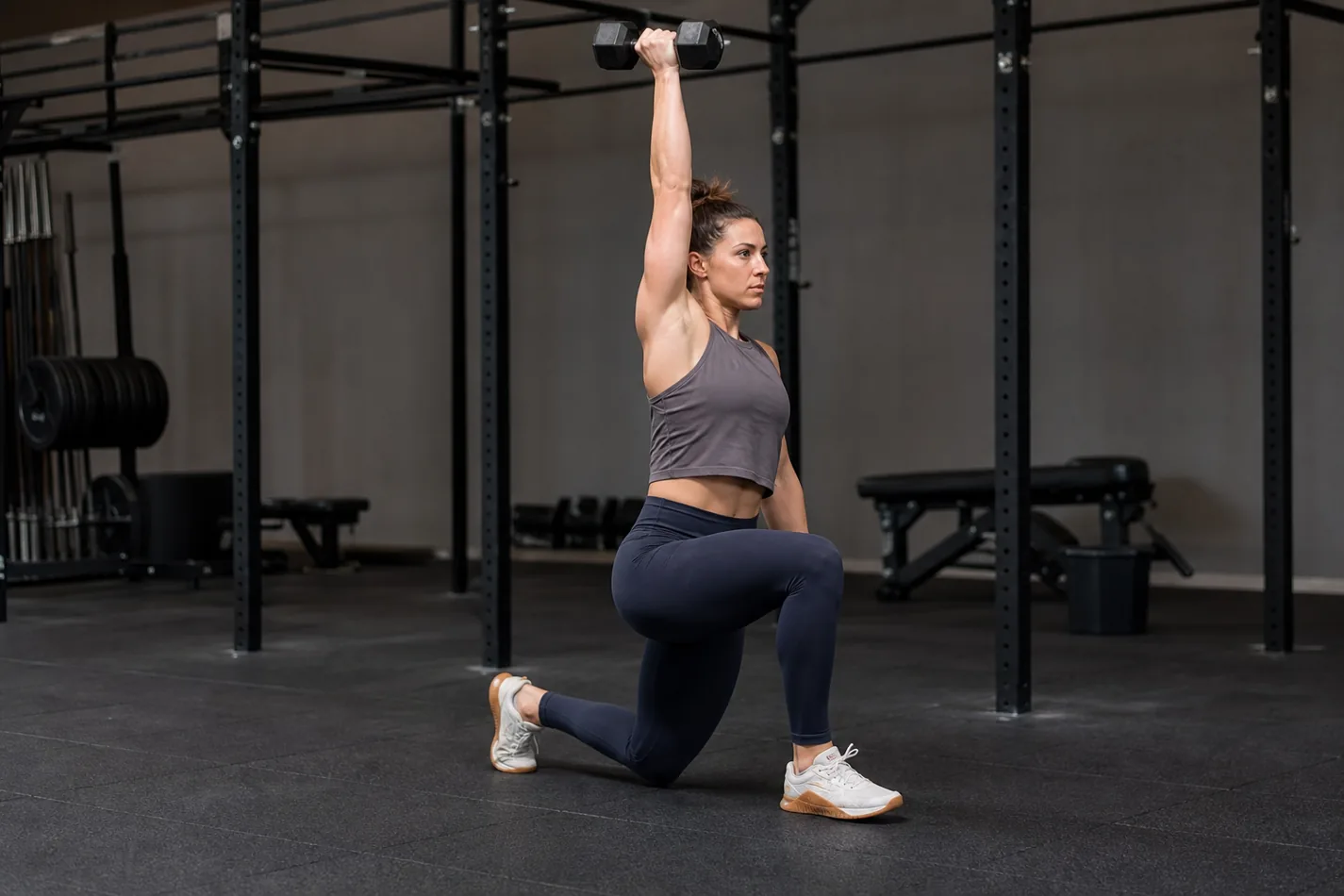
Overhead lunges expose two things quickly: whether you can keep a load stacked overhead, and whether your legs can keep stepping once the breathing gets messy. The movement is not just a lunge with a dumbbell in the air. The overhead position changes the whole rep.
In CrossFit workouts, overhead lunges usually show up with dumbbells, kettlebells, plates, or a barbell. The implement changes the feel, but the main question stays the same. Can you keep the ribs down, arm locked, and front foot controlled while you move?
- The load should stay stacked over the shoulder instead of drifting behind the head.
- Shorter steps often beat big lunges when the workout is fast or grip-heavy.
- If the lockout fails, scale the load before the knees and back start paying for it.
What overhead lunges are really training
The legs do the obvious work, but the limiter is often the midline and shoulder. A good rep starts with the load stacked over the shoulder, ribs pulled down, and eyes forward. Then the athlete steps, touches the back knee with control, and drives up without letting the arm chase the balance.
If the weight drifts, the body will find a shortcut. Some athletes overarch the low back. Others bend the elbow or rotate the torso. Those fixes may save one rep, but they usually fall apart over a long set. This is why overhead lunges connect closely with shoulder-to-overhead lockout and overhead squat mobility.
Set the lockout before the first step
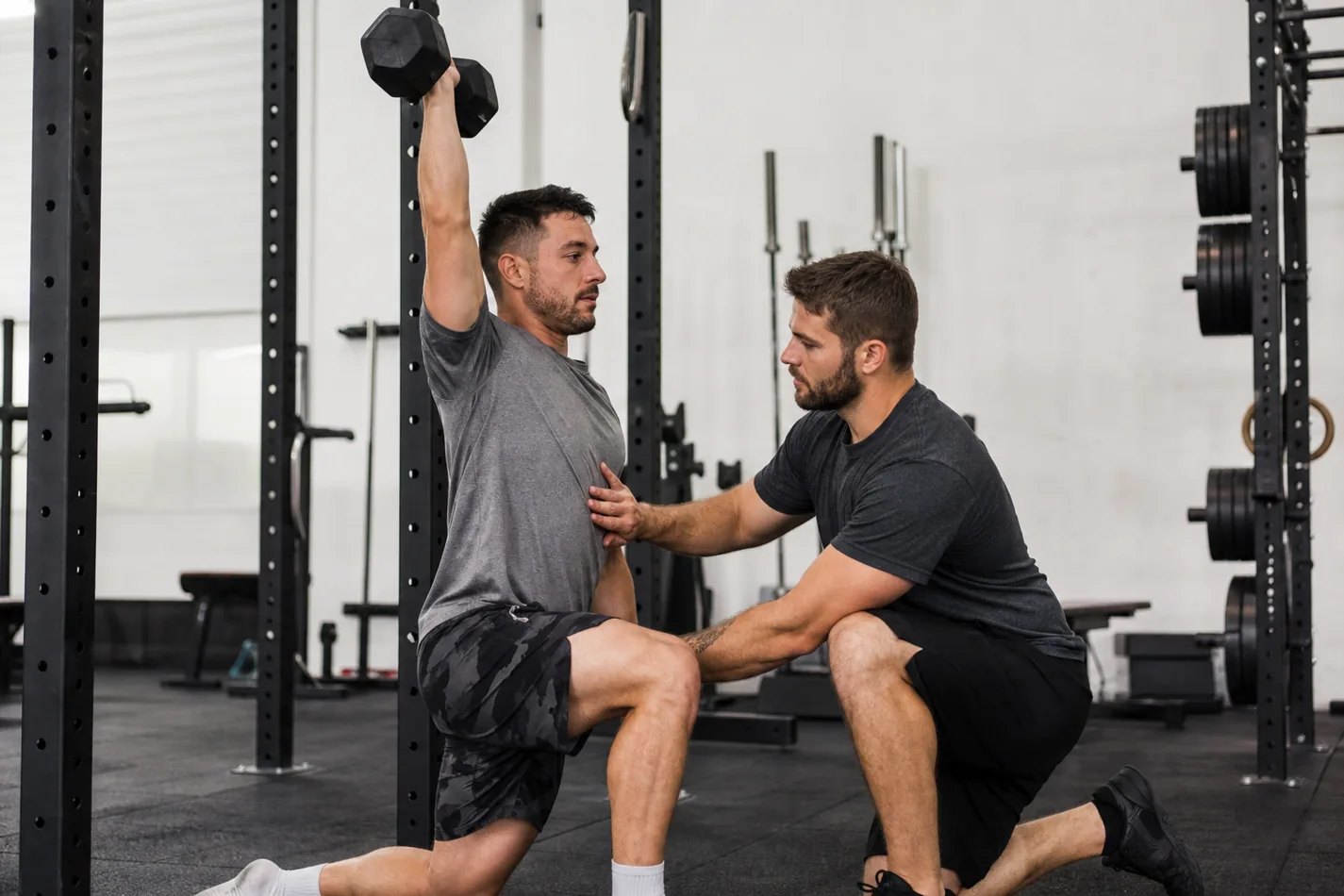
Most messy overhead lunges start before the athlete moves. If the wrist is bent hard, the elbow is soft, or the ribs are already flared, the first step only makes the problem louder. Take one breath, lock the arm, and stack the load over the shoulder before stepping out.
With a dumbbell, the biceps should sit near the ear without forcing the head forward. With a barbell, the hands need enough width to keep the shoulders active without turning the position into a shaky snatch balance. With a plate, the trap is different: athletes often push the plate forward and lose the upper back.
| Fault | What it usually means | Better correction |
|---|---|---|
| Load drifts behind the head | Ribs flare and the back arches | Bring ribs down and lower the weight if needed |
| Elbow bends during the step | The load is too heavy or shoulder is tired | Rest sooner or scale the implement |
| Front knee caves in | Step is too long or control is gone | Shorten the step and drive through the whole foot |
| Back knee crashes down | Athlete is rushing the descent | Touch lightly and stand before speeding up |
Pick the step length that lets you keep moving
Huge steps look athletic, but they are not always faster. In a CrossFit workout, a slightly shorter step can keep the torso stacked and make the next rep easier to start. The goal is not to stretch into every lunge. The goal is to cover distance while keeping the load in a safe, repeatable line.
Athletes who already have solid walking lunge control can usually add the overhead piece without changing everything. Athletes who wobble on regular lunges should fix that first. Adding a dumbbell overhead does not clean up footwork. It magnifies what is already there.
The video below is worth watching for one reason: it shows the overhead position during the step, not just the start. Look at the ribs, the elbow, and how little the athlete rushes the footwork.
How to scale without losing the stimulus
Scaling overhead lunges should protect the workout, not water it down. If the workout is meant to tax legs and breathing, choose a load that lets the athlete move in sets. If it is meant to challenge stability, keep the pace calmer and make each rep cleaner.
The easiest scale is load reduction. A lighter dumbbell or kettlebell often keeps the movement intact. If the overhead position is the problem, front rack lunges or goblet lunges may be better for the day. They keep the leg demand high without turning every step into a shoulder fight.

Breathing and grip matter more than people think
Overhead lunges get ugly when athletes hold their breath too long. A short brace before the step is fine. Staying locked down for an entire length of the gym is not. Breathe between reps, especially when the workout also includes pulling, carries, or other dumbbell work under fatigue.
Grip can sneak up too. With a single dumbbell overhead, the hand and shoulder may fatigue before the legs do. Switch arms only when the workout allows it, and do it with intent. Dropping the dumbbell every few steps usually costs more time than taking one planned break.
When to scale the overhead position
Scale if the athlete cannot keep the elbow locked, feels pinching in the shoulder, or has to lean back to keep the load overhead. Those are not toughness problems. They are position problems. A lighter weight, front rack option, or unloaded lunge can keep the athlete training without teaching a bad pattern.
Before your next workout, test ten steps at the planned weight. If the arm stays locked, the front foot lands flat, and the back knee touches softly, you are probably ready. If the weight wobbles before rep five, fix the lockout first. The legs can only do their job if the overhead position gives them a fair chance.


