The plan
The lateral lunge looks harmless until it shows up in a warm-up and half the class folds into the inside knee. Moving sideways exposes things regular squats can hide: ankle stiffness, weak hip control, and athletes who do not know how to load one leg without twisting.
In CrossFit, that matters. Side-to-side strength shows up in shuttle changes, odd-object work, wall-ball footwork, burpees around equipment, and any workout where fatigue pulls the knees inward. The lateral lunge is not just a mobility drill. It is a simple way to see whether an athlete can shift weight without losing the line of the leg.
- Push the hips back and sideways before you chase depth.
- The bent knee should track with the toes. If it dives in, reduce range or slow the rep down.
- Use lateral lunges before squats, lunges, running, shuttle work, and lower-body sessions that need cleaner knee control.
What a good lateral lunge should feel like
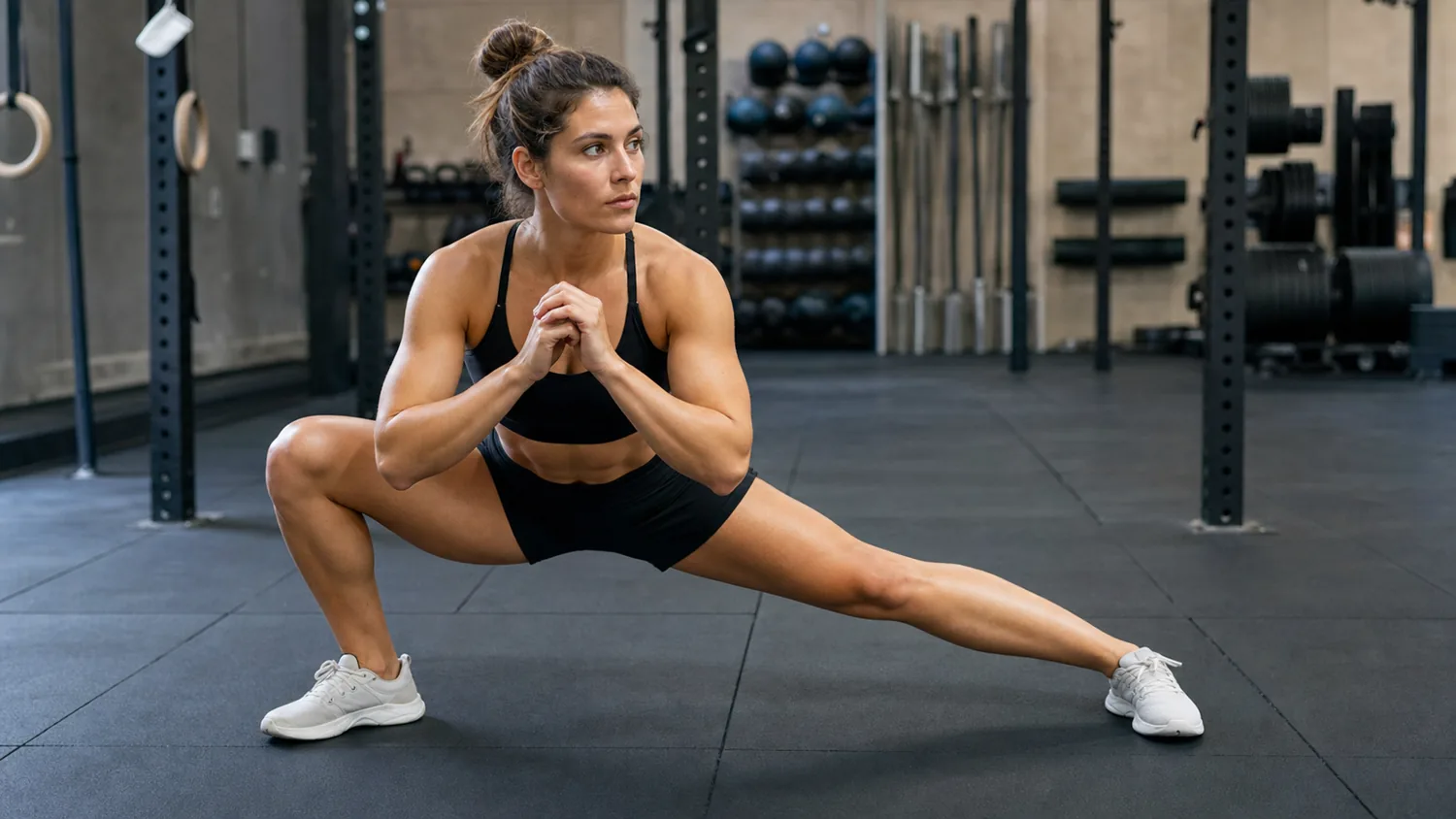
Start tall with the feet wider than shoulder width. Shift the hips toward one side, bend that knee, and keep the other leg long. The working foot stays flat. The straight-leg toes can point forward or slightly up depending on the athlete, but the movement should not turn into a collapsed squat on one side.
The best cue is boring and useful: sit into the hip, not into the knee. If the knee moves first and the heel gets light, the athlete is usually chasing depth instead of loading the leg. That same control helps before reverse lunges and overhead lunge work, where one messy knee line can make a light workout feel heavier than it should.
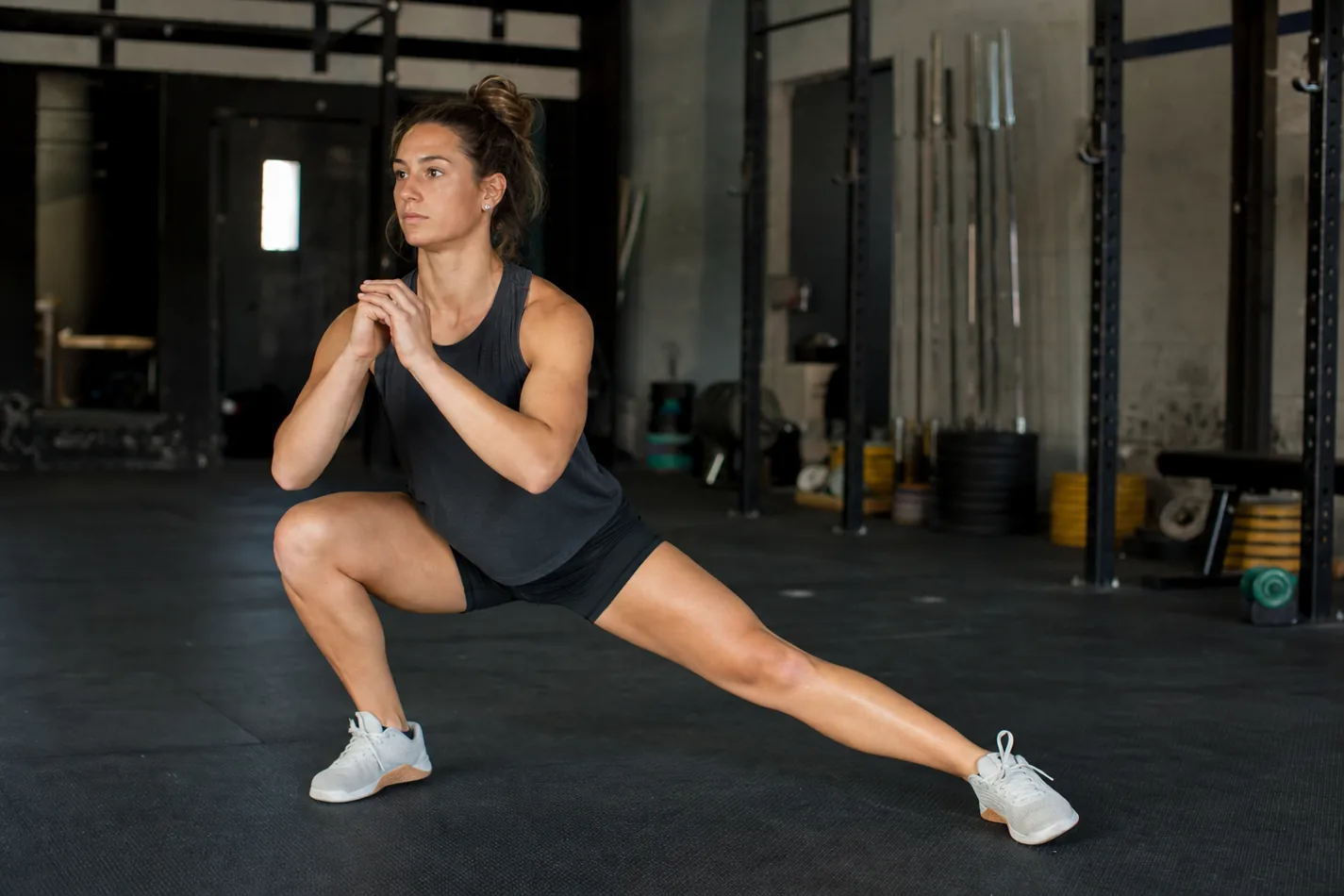
The knee line tells you almost everything
Watch the bent leg from the front. A clean rep has the knee tracking in the same direction as the toes. It does not have to be perfect, but it should look stable. If the knee drops inward every time the athlete changes sides, going deeper will not fix it.
Use a shorter range first. Let the athlete touch a box, bench, or target with the hips. Keep the foot heavy and ask for a controlled return to the middle. Once that is quiet, add range. If the athlete already struggles to keep the trunk stacked in front rack lunges, do not load lateral lunges too early.
| Fault | What you see | Fix |
|---|---|---|
| Knee caves in | The bent leg falls toward the midline | Shorten the range and keep the knee tracking with the toes |
| Heel lifts | The athlete rolls onto the ball of the foot | Push the hips back and keep the whole foot down |
| Chest collapses | The torso drops to reach depth | Use a higher target and keep the ribs organized |
| Straight leg twists | The long leg turns awkwardly or the foot spins | Let the toes adjust slightly, but keep the hip shift smooth |
Where it fits in a CrossFit warm-up
Lateral lunges work well before squats, step-ups, shuttle runs, dumbbell workouts, box work, and mixed conditioning pieces that ask athletes to cut, turn, or absorb fatigue through one leg. They also pair well with hip-opening drills like the Samson stretch because the two positions test different parts of the hip.
For a short class warm-up, use six to eight controlled reps per side. For mobility work, hold the bottom position for two slow breaths, then drive back to the middle. If the next piece includes front squats or loaded squats, keep the reps slow enough that the athlete can feel the foot and knee before the barbell comes out.
The video below is worth watching for the direction change. Pause on the bottom position and check the foot, knee, and hip line before worrying about speed.
How to scale it without making it useless
The simplest scale is range. Do not force depth. A shallow lateral lunge with a flat foot and clean knee line beats a deep rep that twists everywhere. Athletes can also hold a rig upright, use a box as a hip target, or keep the hands in front for balance.
Loading comes later. A goblet hold can help some athletes stay honest, but it can also pull a newer athlete forward. If the goal is warm-up quality, bodyweight is usually enough. Add load only when both sides look controlled and the athlete can return to center without bouncing.
When lateral lunges expose a bigger issue
A sharp groin pinch, knee pain, or repeated loss of balance is not something to push through. Change the range, widen or narrow the stance, and see whether the position cleans up. If it does not, use a different drill for the day and revisit the pattern later.
Some athletes need more basic hip control first. Work like glute bridges can help them feel the difference between hip drive and low-back compensation before they ask one leg to handle a side shift under fatigue.
What to test before loading it
Before adding a dumbbell, kettlebell, or barbell variation, test three slow reps per side. The working foot stays flat. The knee tracks with the toes. The athlete can breathe at the bottom without rushing out of the position.
If those three checks pass, a light load can make sense. If one side still caves, keep the drill simple. CrossFit rewards speed, but lateral lunges are one of those places where cleaner slow reps usually buy you better fast reps later.