The plan
The frog stretch is a useful CrossFit mobility drill, but only when the athlete stops trying to win it. The goal is not to force the hips flat to the floor. The goal is to create usable adductor range while the knees, ankles, ribs, and pelvis stay calm enough to carry into the workout.
That matters before squats, lunges, wall balls, sumo pulls, lateral work, and any WOD where the athlete needs the knees to track without feeling locked in the groin. Done well, the frog stretch gives the hips room. Done badly, it turns into a knee-and-low-back argument.
- Start wider than a tabletop position, but do not chase maximum knee width on the first rep.
- Keep the inside of the knees supported and move the hips back only as far as breathing stays easy.
- Use it before squat patterns, sumo stance work, lateral lunges, and warm-ups that need cleaner adductor range.
What the frog stretch is actually training
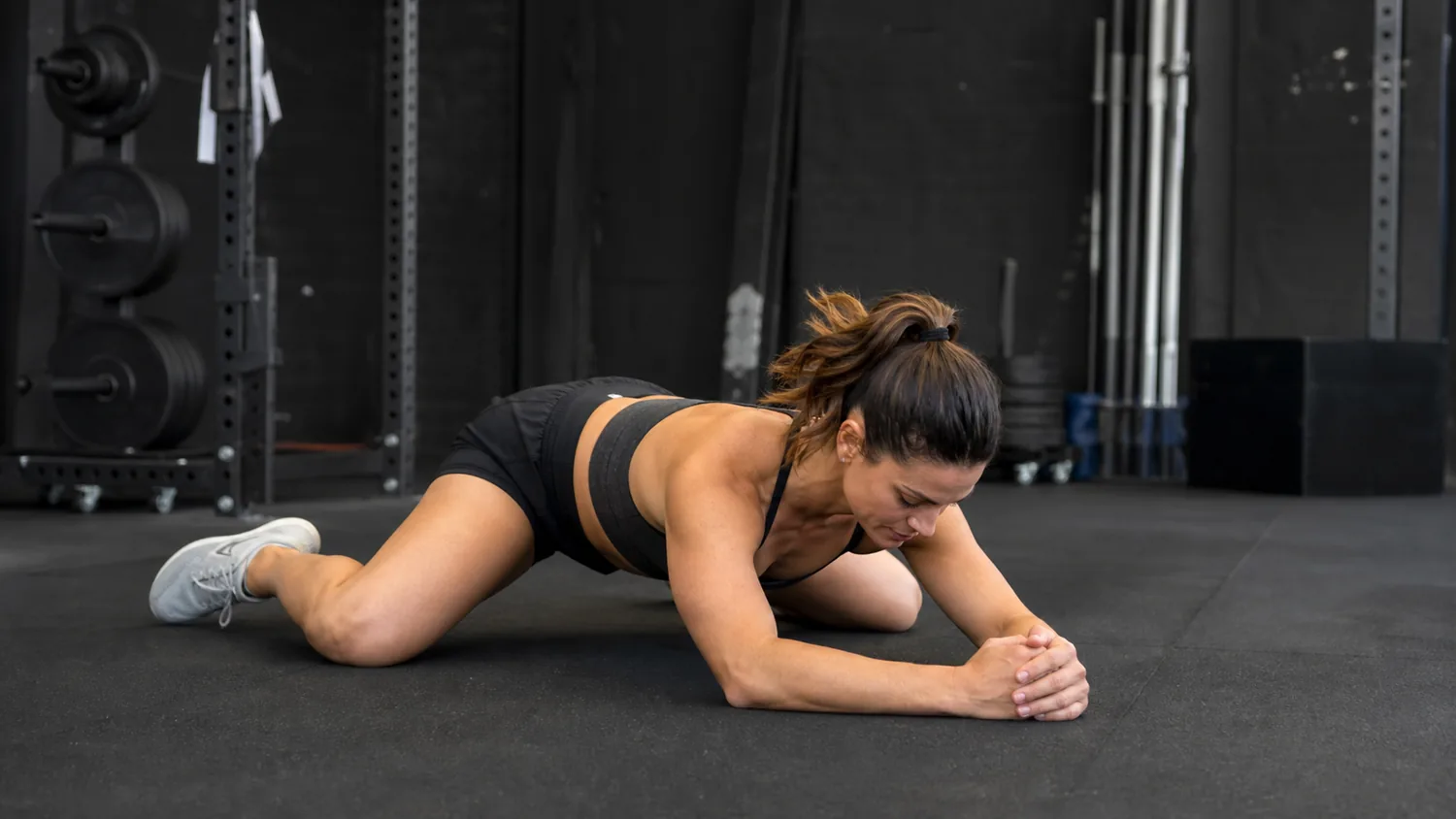
The frog stretch loads the adductors in a bent-knee position. That makes it different from a straight-leg hamstring stretch or a casual lunge. The athlete starts on all fours, slides the knees apart, keeps the lower legs turned out or neutral enough to stay comfortable, then rocks the hips slightly back.
The useful part is control. If the athlete can breathe, keep the ribs down, and move in and out of the position without bracing the face, the drill has a chance to help. If the athlete is stuck on the edge of pain, the position is too wide or too low.
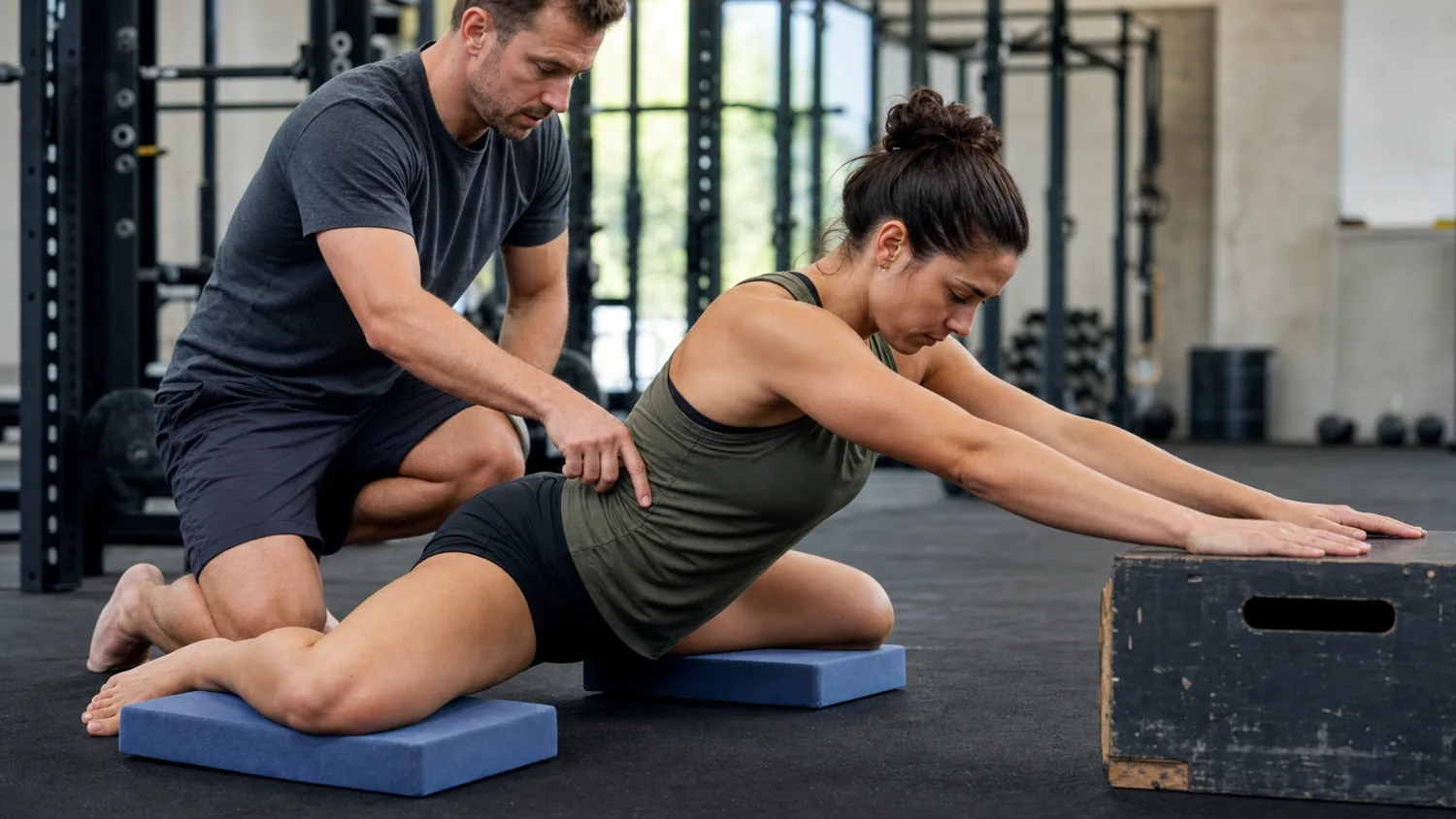
Set the knees, then move the hips
Knee setup decides whether the drill feels productive or sketchy. Put padding under the knees if the floor is hard. Move the knees wide enough to feel the inner thighs, then stop before the athlete has to twist the feet or dump the low back to survive the position.
From there, rock back a few inches. That is enough for most athletes. The same idea shows up in Cossack squat or lateral lunge control: the athlete needs range, but the knee still has to feel owned. Forcing more depth does not make the next squat better if the body only learns to guard harder.
| Fault | What you see | Fix |
|---|---|---|
| Knees too wide too soon | The athlete freezes or holds the breath | Narrow the stance and use smaller rock-backs |
| Low back arches hard | The hips move by dumping the ribs | Exhale first, then move the hips less |
| Feet twist painfully | Ankles or knees feel pinched | Change the shin angle and add padding |
| Hands collapse | The shoulders shrug and the chest drops | Press the floor or use a low box for support |
Where it fits in CrossFit training
Use the frog stretch when the workout asks for a wider stance, a deeper squat, or repeated knee tracking under fatigue. It pairs well with Spiderman stretch work when the class needs both front-hip and inner-thigh prep. It also makes sense before front squats or overhead squats if the athlete tends to lose depth by collapsing the knees inward.
For general prep, try two sets of five slow rock-backs, then stand up and test an air squat. If the squat feels cleaner, keep the dose. If the hips feel irritated or slower, pick a smaller drill that gives the athlete a better position without as much stretch.
The demo below is useful because it shows the drill without rushing the hips toward the floor. Watch the knee width, the foot angle, and how small the rock-back can be when the athlete stays organized.
How to scale it without turning it into a struggle
The easiest scale is height. Put the hands on a low box, stack of plates, or parallettes. That takes some demand off the shoulders and gives the athlete more room to control the pelvis. Newer athletes often get more from this version than from forcing the forearms to the floor.
Another option is a narrower knee position with shorter pulses. Think small and repeatable. The frog stretch should feel like a position the athlete can revisit during warm-up, not a one-time battle. If midline control disappears, add a quick hollow body check before trying again.
When to use a different drill
Sharp knee pain, hip pinching, numbness, or a blocked feeling that gets worse with each breath are signs to change the plan. Use Samson stretch for the hip flexors, lateral lunge patterns for side-to-side control, or glute bridge work if the athlete needs hip drive without a deep groin stretch.
The frog stretch is also not the best first choice right before max-speed work if the athlete feels loose and uncoordinated after long holds. In that case, keep it brief, then move to active prep such as inchworms or light squat reps.
When the frog stretch belongs in the warm-up
Use it when the athlete can keep the knees comfortable, breathe in the position, and stand up with a better squat or lunge pattern than before. That is the test. If the drill improves the next movement, it has earned its spot. If it only creates more tension, make it smaller or save it for slower mobility work after class.