The plan
The kettlebell snatch can feel smooth for three reps and brutal by rep ten. When the bell crashes over the wrist, the athlete starts flinching. When the swing gets too wide, the shoulder has to save the rep. That is usually where good pacing disappears.
In CrossFit, the goal is not to make the snatch look fancy. The goal is to move one kettlebell from the swing to a stable overhead position without wasting grip, bruising the forearm, or turning every rep into a loose one-arm swing.
- Keep the bell close on the way up. A long arc makes the catch harder.
- Punch through late so the kettlebell wraps around the hand instead of crashing onto it.
- Scale load or use Russian swings if the lockout gets soft under fatigue.
What a kettlebell snatch should train
A good kettlebell snatch trains hip speed, shoulder control, and timing. The rep starts like a hinge, not a curl. The hips drive the bell up, the arm guides it close, and the hand meets the handle at the top before the bell has a chance to flip hard into the forearm.
That timing connects to kettlebell swing timing and kettlebell clean rack position. The swing teaches the hip drive. The clean teaches the idea of taming the bell instead of letting it crash. The snatch asks for both, then adds an overhead finish.
Keep the bell close before the punch-through
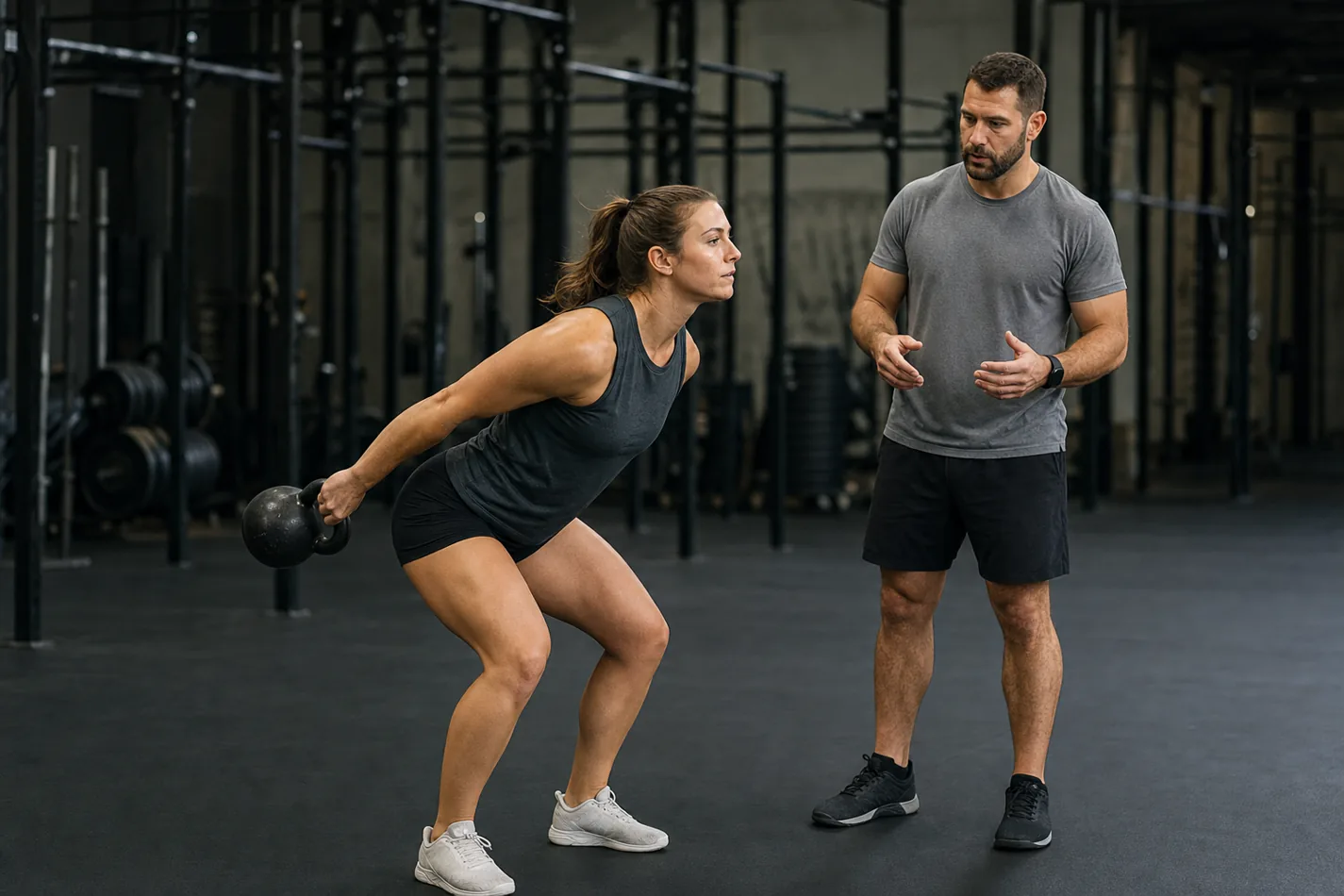
The most common mistake is letting the kettlebell travel too far away from the body. Once the bell swings out, the athlete has to pull it back in, then survive the turnover. That wastes grip and makes the catch loud.
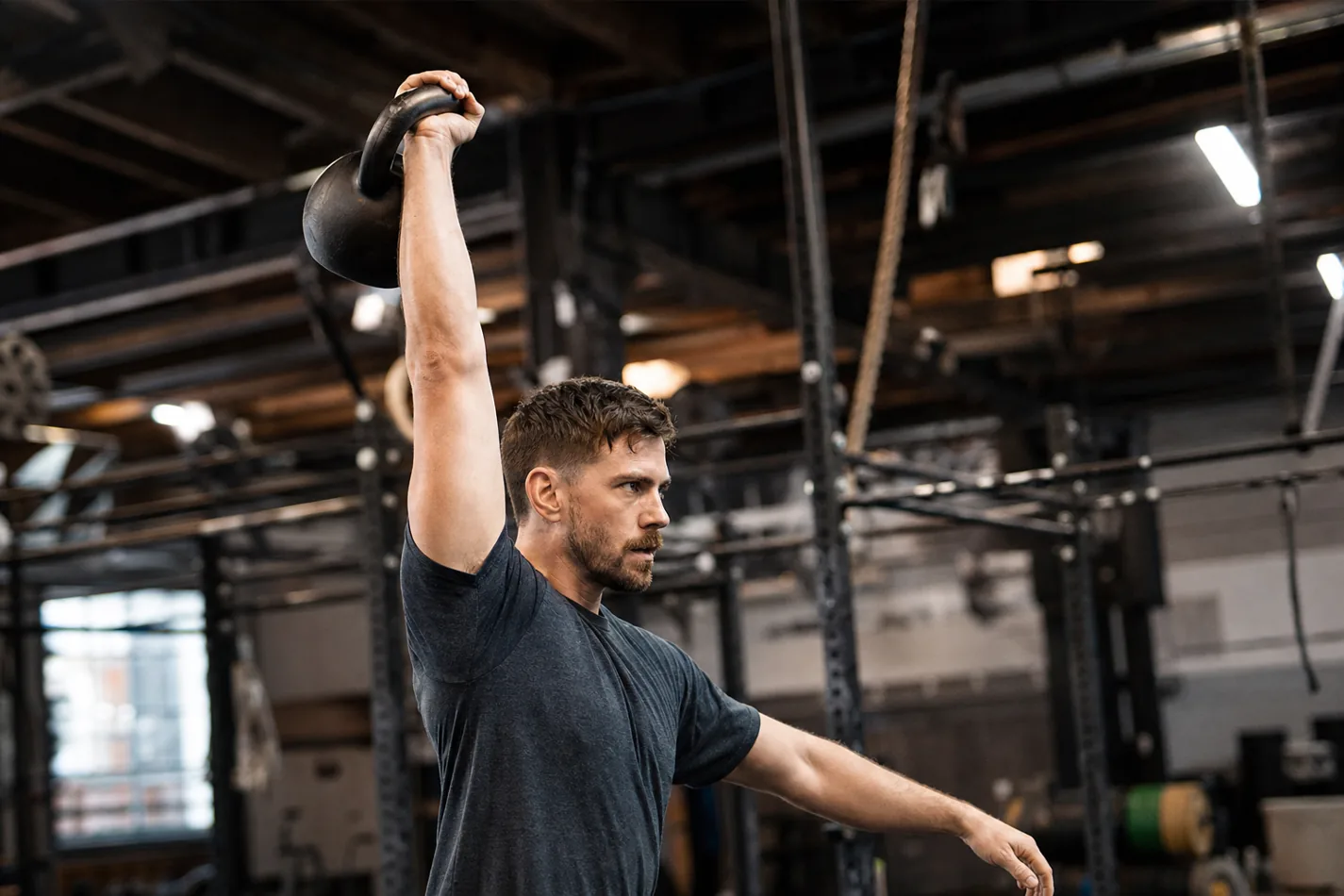
Start with a tight backswing. Let the forearm stay close to the ribs as the bell rises. Near the top, loosen the grip just enough to slide the hand around the handle and punch toward the ceiling. The finish should feel like a fast zip-up, not a big outside loop.
| Fault | What it usually means | Fix before adding reps |
|---|---|---|
| Bell smacks the wrist | The turnover is late or the grip is too tight | Guide the bell close and punch through before it flips over |
| Arm pulls too early | The athlete is muscling the bell instead of using the hips | Reset the hinge and let the hips start the rep |
| Lockout drifts forward | The bell finished away from the midline | Reduce load and finish with biceps near the ear |
| Grip burns out fast | The handle is being squeezed through the whole swing | Relax the hand in the backswing and save the squeeze for the top |
How it differs from a dumbbell snatch
A dumbbell snatch path is more forgiving because the dumbbell does not wrap around the hand. It still needs a close pull, but the catch is simpler. A kettlebell punishes bad timing. If the athlete yanks early or lets the bell float, the forearm usually pays for it.
The kettlebell snatch also asks for a cleaner overhead stack. That makes it useful for athletes who need better shoulder control before heavier barbell work like the power snatch finish. The load is lighter, but the feedback is immediate.
The demo below is worth watching for the top of the rep. The bell does not slam over the hand. It turns over late, the athlete punches through, and the lockout finishes stacked instead of soft.
How to scale it in a workout
Good CrossFit scaling starts before the wrists get beat up. Lower the load first. If the catch still crashes, switch to kettlebell cleans, high pulls, or Russian swings for the day. Those options keep the hinge and pull without forcing a bad overhead rep.
For athletes who can snatch but lose position in big sets, shorten the sets and switch hands before the grip gets desperate. A workout does not get better because every rep is technically legal. It gets better when the athlete can repeat the same clean path under fatigue.
Where to place it in training
Kettlebell snatches work well after a CrossFit warm-up, in skill practice, or in conditioning pieces where the load is light enough to stay crisp. They also pair well with carries because both punish lazy overhead position. If the athlete struggles with waiter walk lockout or overhead lunge stability, the snatch lockout will probably show the same problem.
Be careful when the workout already has pull-ups, rope climbs, toes-to-bar, or heavy carries. The snatch may look like a shoulder movement, but the hand and forearm do a lot of quiet work. If grip under fatigue is already the limiter, choose sets that leave room for the rest of the workout.
What to test next time
Do five slow reps per side before the clock starts. Listen to the catch. If the bell lands quietly and the elbow locks with the ribs down, the weight is probably workable. If every rep slaps the wrist or finishes forward, go lighter and fix the path first.
The best kettlebell snatch reps feel almost boring at the top. The bell arrives, the arm locks, and the athlete is ready for the next swing without a fight.


