The plan
The kettlebell clean is one of those CrossFit movements that tells on you right away. If the bell slaps the wrist, the pull is too loose. If the rack feels like a fight, the bell is probably looping away from the body.
Done well, it is a fast way to move weight from the floor or hang into a usable rack. Done badly, it becomes a bruise machine that steals grip, breath, and patience before the workout has really started.
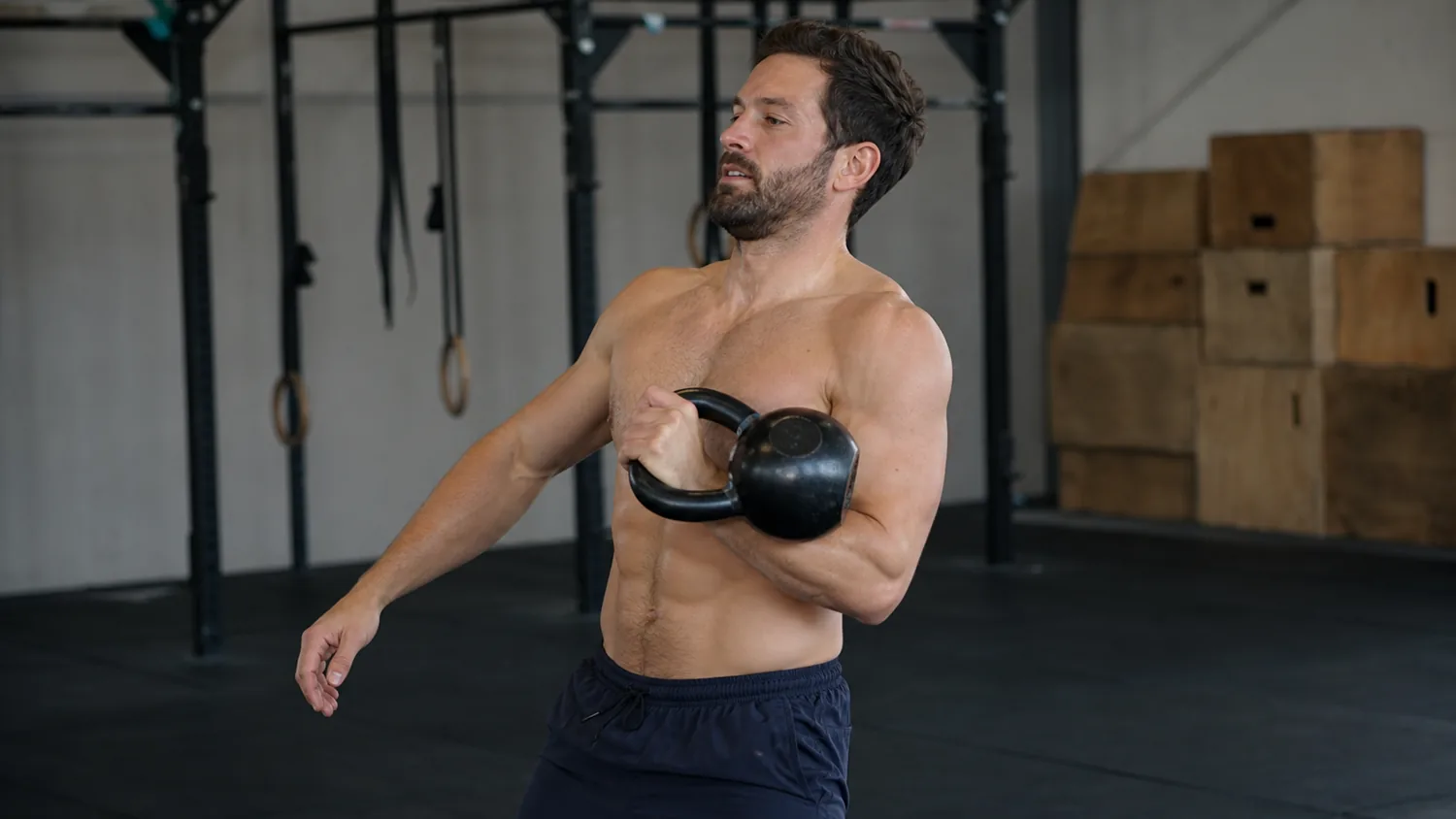
- The bell should travel close and rotate around the hand, not flip over the top and crash.
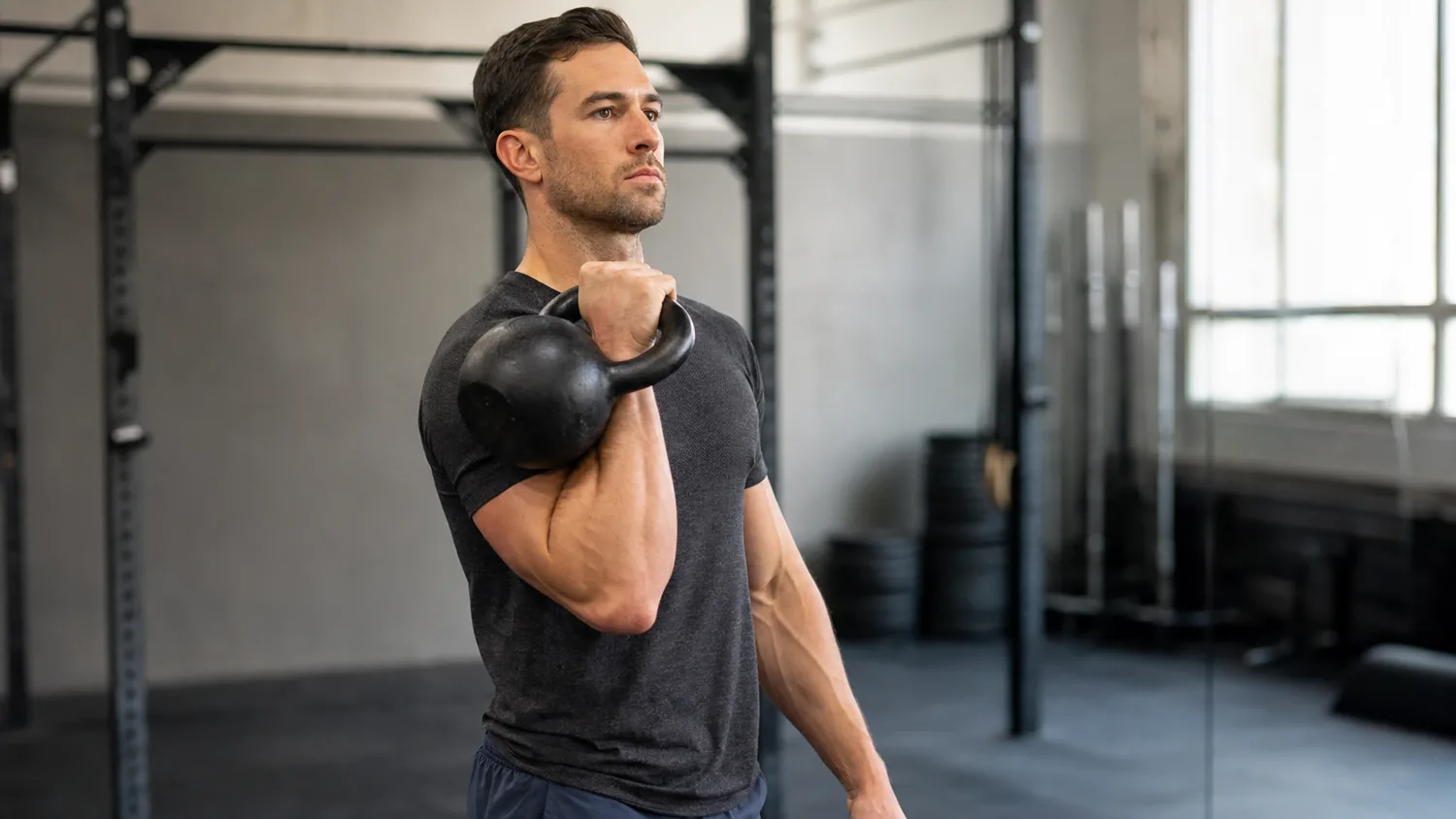
- The rack needs ribs down, wrist quiet, and the bell resting against the forearm without a death grip.
- In workouts, clean reps that breathe well beat heavy reps that bang the wrist every time.
What the kettlebell clean is supposed to do
A kettlebell clean brings the bell to the rack so the athlete can front squat, press, jerk, carry, or breathe for the next rep. It is not just a way to get the bell off the floor. The clean sets up the next movement, so the finish matters.
The movement shares a hinge with the kettlebell swing hinge, but the bell should not swing far away from the body. The athlete guides it up, keeps the elbow close, then lets the bell wrap into the rack. That wrap is the skill. The hand does not punch through late like it is chasing the bell.
Why the bell keeps banging your wrist
Wrist impact usually comes from one of three things: the bell starts too far forward, the elbow drifts away, or the athlete grips the handle like a dumbbell and tries to curl it. The kettlebell does not want that path. It wants a close line and a small rotation.
Think zipper, then rack. The elbow stays near the ribs as the bell rises. At the top, loosen the grip enough for the handle to settle diagonally across the palm. That is where this feels different from the dumbbell clean timing. A dumbbell lands on the shoulder. A kettlebell has to wrap around the hand.
| Fault | What it looks like | Fix before adding load |
|---|---|---|
| Bell flips over the hand | The forearm gets slapped at the top | Keep the elbow closer and let the bell rotate around the hand |
| Curling the clean | The biceps do the lift and the shoulder tires early | Use a hinge and leg drive, then guide the bell |
| Overgripping the handle | The rack feels tense and breathing gets short | Relax the fingers slightly once the bell lands |
| Loose ribs in the rack | The athlete leans back to hold the bell | Stack ribs over hips and keep the elbow connected |
The rack should feel boring
A good rack is not dramatic. The bell rests against the forearm and upper arm. The wrist stays mostly neutral. The elbow sits close enough that the shoulder is not doing all the work. If the rack feels like a max effort hold, the clean is costing too much.
This is where the medicine ball clean turnover helps as a teaching idea. Both movements reward a fast turnover and a stable receiving position. The kettlebell version is less forgiving because the load is offset. You feel every lazy catch in one wrist.
The demo below is useful because Jeff Martone shows the bell rolling around the hand instead of crashing onto the wrist. Watch the path of the elbow and the quiet rack, not just the speed of the rep.
How to use kettlebell cleans in a workout
In a WOD, the question is rarely whether one rep looks good. The question is whether rep twenty still lands quietly. If every clean crashes, the athlete will start avoiding the rack, holding the breath, or rushing the next station.
For single bell workouts, switch hands before the forearm gets angry. For double kettlebell work, keep the first reps almost too smooth. The temptation is to muscle the bells up because they are smaller than a barbell. That catches up fast, especially when the workout also asks for grip under fatigue or overhead reps.

Single kettlebell, double kettlebell, or clean and jerk
A single kettlebell clean gives more room to learn the path. The athlete can rotate through one side, breathe, and reset. Double kettlebell cleans demand more trunk control and a cleaner rack because both bells land at once.
If the workout continues into a press or jerk, the clean has to leave the athlete stacked. A messy catch makes the next piece expensive. That is the same lesson athletes learn with the dumbbell clean and jerk rack, just with a different implement and a less forgiving handle.
Scaling the clean without losing the point
Good CrossFit scaling keeps the pattern intact. If the bell is banging the wrist, reduce load and practice hang cleans. If the hinge is missing, use dead-stop reps from the floor and pause in the rack. If the rack is painful, check handle position and forearm angle before assuming the athlete just needs to toughen up.
Some athletes do better with a dumbbell clean while they learn the idea. That is fine for a workout scale, but it does not teach the same hand path. For skill practice, a lighter kettlebell usually gives better feedback than a heavier bell that forces ugly reps.
What to test in your next set
Do five cleans per side with a bell you can control. Listen to the catch. If the bell thuds against the wrist, slow down and fix the path. If the rack is quiet, add breathing: clean, exhale in the rack, then put the bell back down without losing posture.
The goal is not to make the rep look fancy. It is to make it cheap enough to repeat. A quieter kettlebell clean will make your power clean pull feel more patient, your rack more reliable, and your conditioning work less chaotic.


