The plan
The power jerk gets confusing because it sits between two lifts athletes already know. It is not a push press, because you rebend under the bar. It is not a split jerk, because the feet stay in a power stance. That small difference changes the whole rep.
In CrossFit, the power jerk is useful when a workout asks you to move weight overhead without the extra footwork of a split. It rewards a vertical dip, a patient drive, and a catch that stays stacked instead of sliding wide and soft.
- The dip must stay straight. If the chest drops, the bar usually leaves the shoulders forward.
- The catch is a shallow power position, not a quarter squat collapse.
- Use it when the load is heavy enough to need a rebend but light enough that a split is not worth the reset.
What is a power jerk in CrossFit?
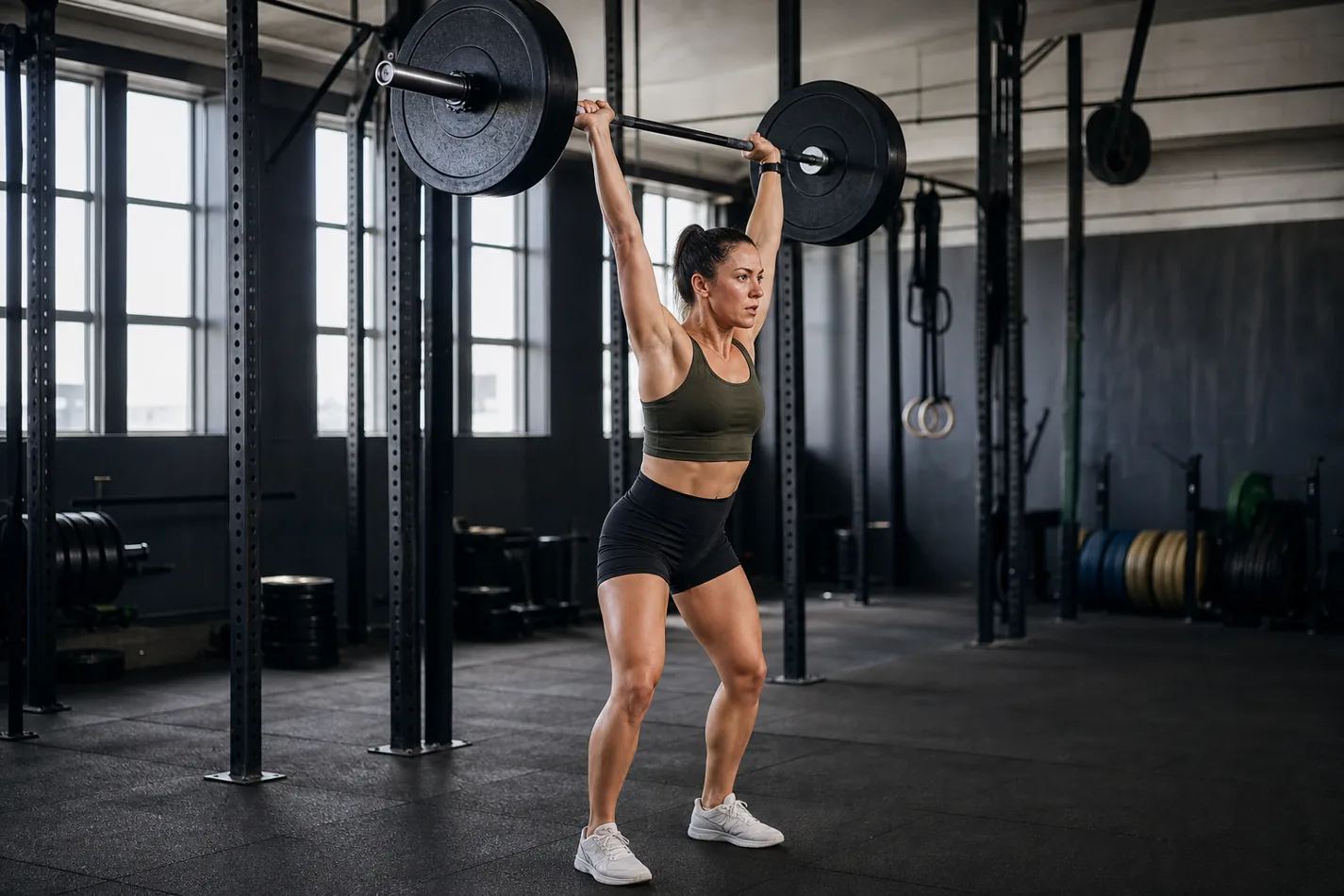
A power jerk is a shoulder to overhead lift where the athlete dips, drives the bar up with the legs, then rebends the knees to receive the bar overhead with the feet roughly in the same stance. The athlete stands to finish the rep once the bar is locked out.
That makes it a close cousin of the push jerk timing, but the intent is usually a little more weight and a more deliberate catch. It also shares pieces with the clean and jerk setup, especially after a heavy clean when the rack and breathing are already under pressure.
The dip decides where the bar goes
Most missed power jerks start before the bar leaves the shoulders. The athlete dips too low, lets the knees cave, or tips the chest forward. Then the drive sends the bar away from the body, and the catch turns into a chase.
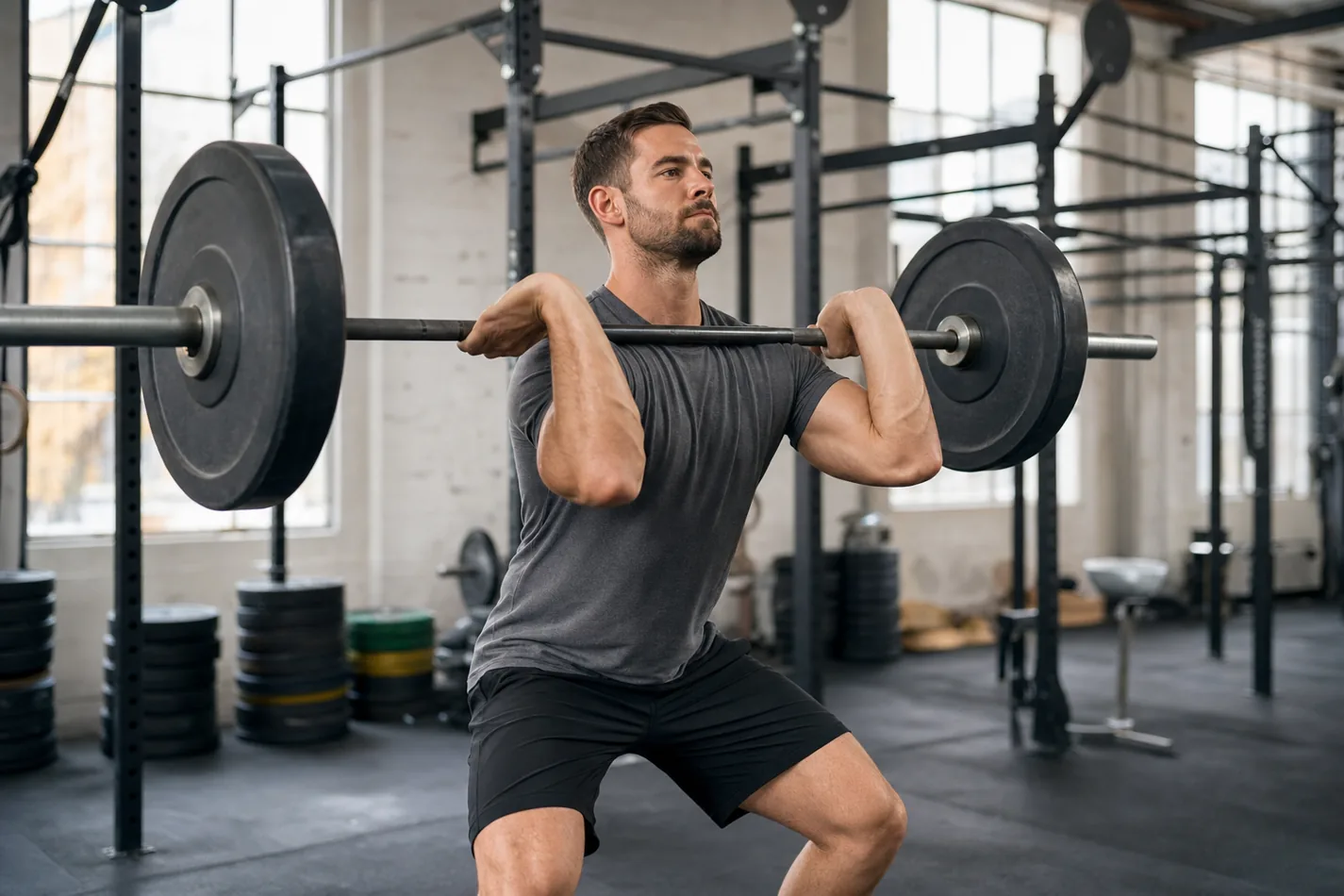
Keep the dip short and vertical. Heels stay down. Torso stays tall. Elbows keep enough height to let the bar leave the shoulders cleanly. The same rack discipline you need for a good front rack position shows up here, but now the cost of a bad position is overhead.
| Fault | What happens next | Fix before adding load |
|---|---|---|
| Dip drifts forward | The bar lands in front of the body | Shorten the dip and keep the ribs stacked |
| Feet jump too wide | The catch loses power and balance | Mark a receiving stance and land with full feet |
| Arms press too early | The legs stop doing the work | Drive first, then punch under the bar |
| Catch is soft overhead | The athlete has to save the lockout | Practice a sharp rebend with lighter weight |
Power jerk versus push press versus split jerk
The push press is the simplest option: dip, drive, press to lockout, no rebend. It is fast and useful for moderate loads, especially when push press leg drive is already strong. The power jerk adds a catch under the bar, which can save the shoulders when the weight gets heavier.
The split jerk gives you the deepest receiving position and more margin when the load is near maximal. It also costs more time to reset the feet. In a workout, split jerk footwork may be the right call for heavy singles, while the power jerk can make sense for repeated shoulder to overhead reps where a stable power catch is enough.
The demo below is useful because it isolates the power jerk without turning it into a split. Watch the dip first, then the straight drive and the small rebend under the bar.
How to catch without jumping wider every rep
A wider catch can feel safer for one rep. Over a workout, it often becomes a leak. The feet land wider, the knees get soft, and the athlete has to stand from an awkward position before the next rep can start.
Think about moving down under the bar, not out to the sides. The feet may shift slightly, but they should land in a stance you can stand from immediately. If your overhead position looks different every rep, spend time with lighter power jerks and overhead holds before chasing speed.
Where the power jerk fits in a WOD
The lift works well in workouts with cleans, front rack work, or repeated shoulder to overhead choices. It is less useful if the load is so light that a push press is clearly faster, or so heavy that you need the stability of a split.
Watch the movement before and after it. If the workout pairs power jerks with rowing, burpees, or running, breathing will shape the set size. If it pairs them with thrusters or heavy cleans, the rack and legs take the beating. Planned breaks are better than a failed lockout that costs twice as much time.
Scaling and drills that keep the lift honest
Good CrossFit scaling starts with the reason the rep is failing. If the dip is loose, reduce the load and practice dip drives. If the catch is unstable, use jerk balances, tall power jerks, or pauses in the receiving position. If overhead mobility is the limiter, fix the range before forcing heavier reps.
The CrossFit warm-up should include empty bar dip drives, push presses, and light power jerks before the workout weight. Use the warm-up to answer one question: can you drive straight and catch stacked while tired? If not, lower the weight or choose a simpler shoulder to overhead version.
What to test before your next overhead workout
Before loading the bar, film one light set from the side. Does the dip stay vertical? Does the bar finish over the midfoot? Does the catch look like a stable overhead squat stack, or does it land forward with the ribs open?
If those answers are clean, the power jerk can be a fast and strong option. If they are not, the fix is usually boring and worth it: lighter weight, shorter dip, better footwork, and reps that land in the same place every time.


