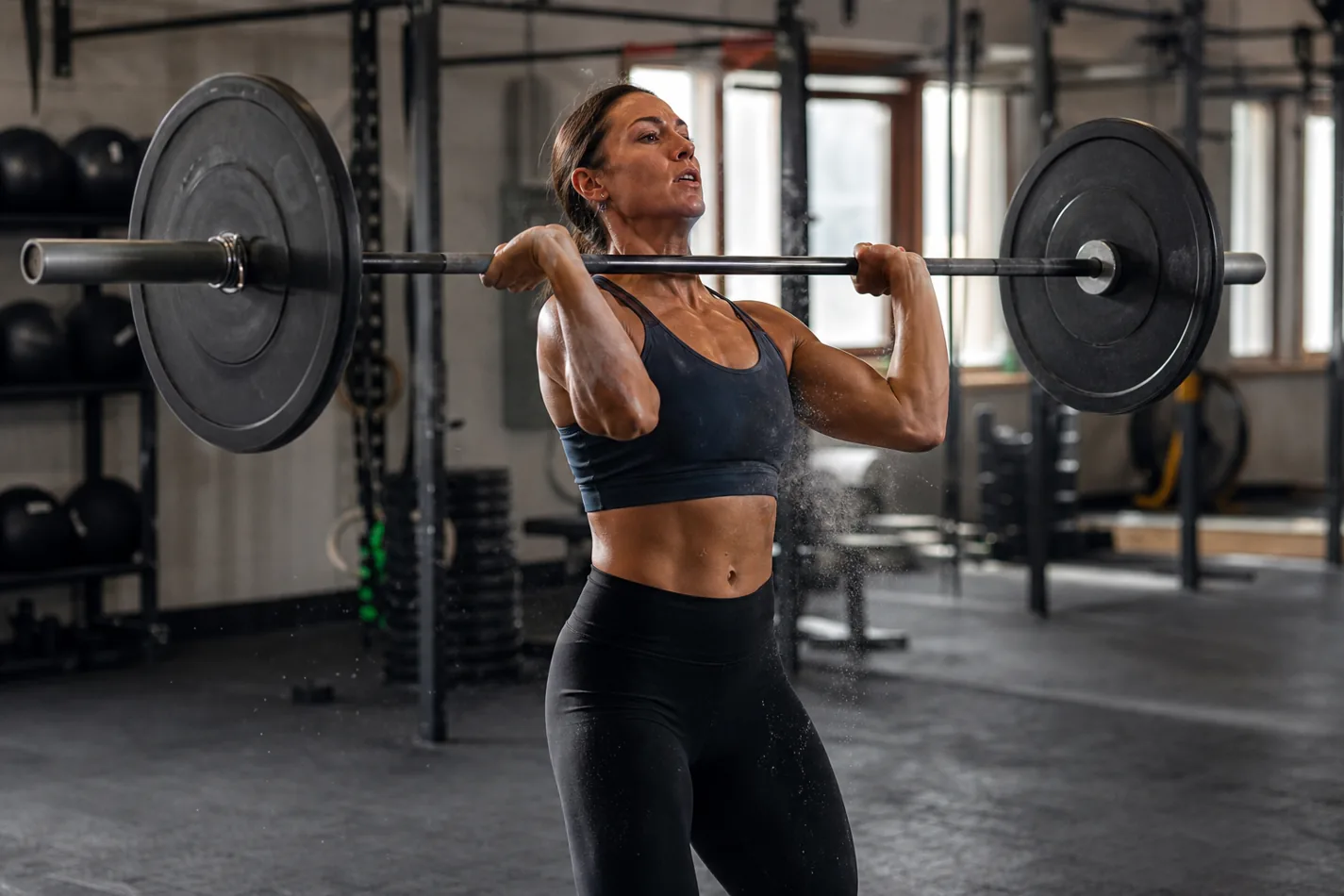
The plan
Barbell cycling looks fast when the bar stays close. It looks expensive when every rep has to be rescued. The difference is usually not bravery. It is grip, breathing, and whether the athlete knows when to break before the bar starts drifting.
In CrossFit, cycling a barbell is rarely about doing the prettiest single rep. It is about repeating good-enough reps without turning the next station into a survival walk. A clean set should feel organized, not frantic.
- Keep the bar close on the way down, not only on the way up.
- Use planned breaks before the hook grip, back position, or breathing disappears.
- Touch-and-go reps are useful only when the next rep starts in a better position, not a worse one.
What barbell cycling means in CrossFit
Barbell cycling means linking reps together with as little wasted movement as possible. It can show up in cleans, snatches, shoulder to overhead, deadlifts, thrusters, or mixed complexes. The standard changes by workout, but the problem is the same: can you keep the bar moving without letting position fall apart?
The mistake is treating it like a shortcut around technique. Fast power clean cycling, power snatch bar path, and clean and jerk timing still need a close bar. The athlete just has less time to fix a bad rep once the set starts.
The descent sets up the next rep
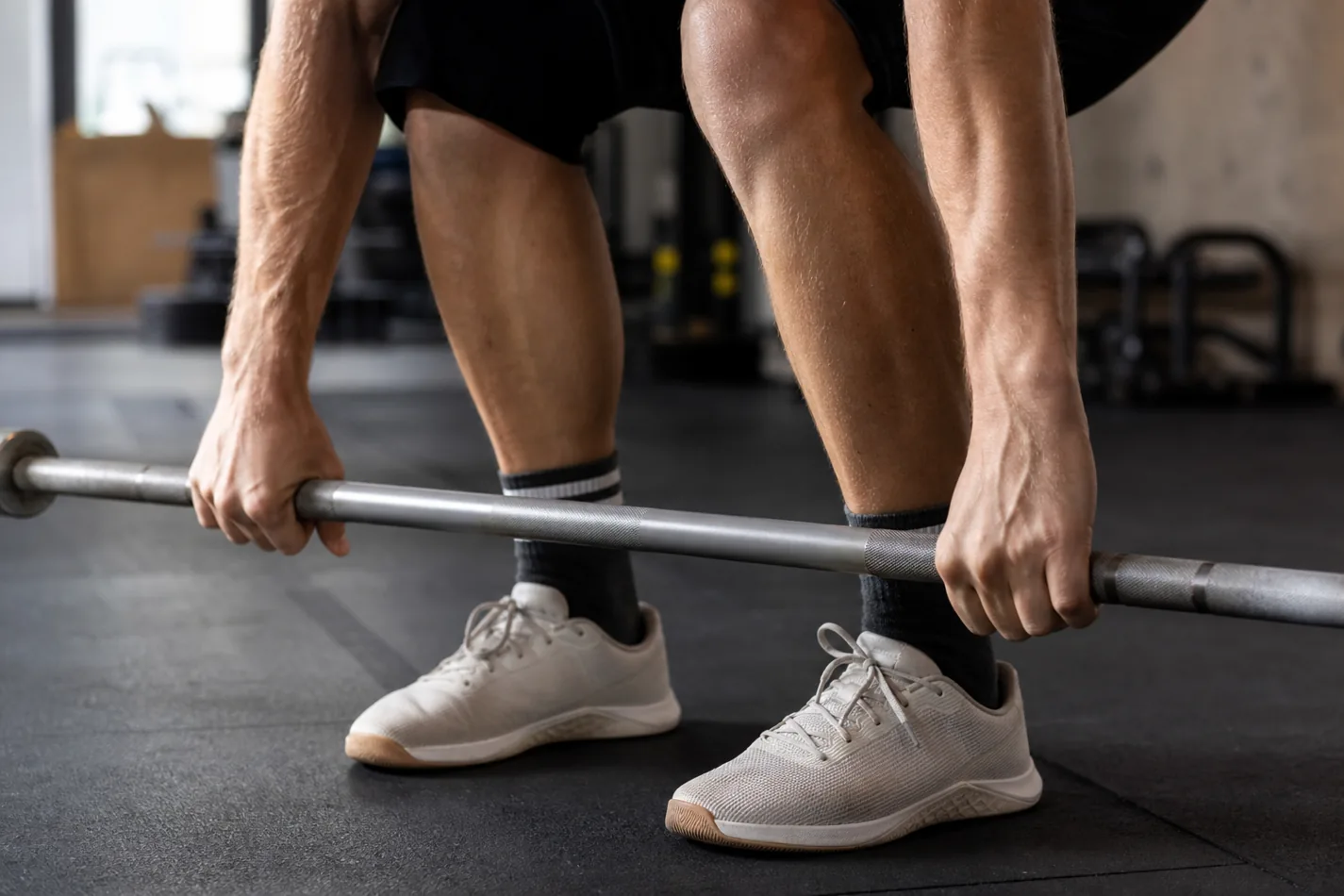
Most athletes think about the pull. Better barbell cycling starts with the return. If the bar crashes away from the body, the next rep starts too far forward. That forces a bigger pull, a worse catch, and usually a louder heart rate.
Guide the bar down close to the body. Hips move back. Lats stay on. Hands stay connected without death-gripping the bar. That same patience helps with bar path off the floor, because the bar should not wander just because the workout is moving fast.
| Fault | What it does to the set | Fix before adding speed |
|---|---|---|
| Bar swings away on the way down | The next pull starts forward | Keep the lats on and guide the bar back to the thighs |
| Hook grip disappears after two reps | The athlete starts arm-pulling | Practice regripping at the hip or break the set earlier |
| Feet jump wider every rep | The catch turns into a rescue | Reset the feet or use quick singles |
| Breath is held for the whole set | The athlete redlines before the next movement | Breathe at the top or during the controlled return |
Touch-and-go is not always the fastest choice
Touch-and-go reps feel efficient when the load is light and the athlete owns the positions. They become a trap when the bar is bouncing off the floor, the shoulders are loose, or every catch lands lower than the last one.
Quick singles can be faster over a full workout. Drop, breathe, step back in, and pull a clean rep. That is often better than five ugly reps followed by ten seconds of staring at the bar. The right choice depends on load, movement, and what comes next.
The demo below is worth watching because it shows barbell cycling as a timing problem, not a max-effort pulling contest. Watch the bar return, the hands, and how the athlete keeps the next rep ready before the bar gets away.
Grip and breathing decide more than ego does
Athletes usually break because the grip, lungs, or back position fails first. The fix is not always to get tougher. Sometimes it is to pick a set size that lets the workout keep moving.
For a moderate bar, sets of five may be perfect early and a mistake later. For heavier work, singles from the start can keep the heart rate lower. If the workout includes thruster breathing, push press leg drive, or more front rack work, saving the shoulders matters. If it includes running or burpees, saving your breathing matters more.
How to practice barbell cycling without making it sloppy
Use the CrossFit warm-up to test the exact pattern before the workout. Empty bar sets are not just a formality. They show whether the athlete can return the bar, regrip, breathe, and start the next rep without rushing.
A simple practice set works well: three smooth reps, short break, three more. If the third rep already looks different from the first, lower the weight or switch to singles. Good CrossFit scaling keeps the workout moving while protecting the movement pattern.
What to check in your next barbell workout
Before the clock starts, decide the first break. Not the emergency break. The planned one. Then watch one thing during the set: does the bar come back to the same place each rep?
If it does, you can usually speed up later. If it does not, the workout is already telling you something. Break, reset your hands, and make the next rep cheaper.


