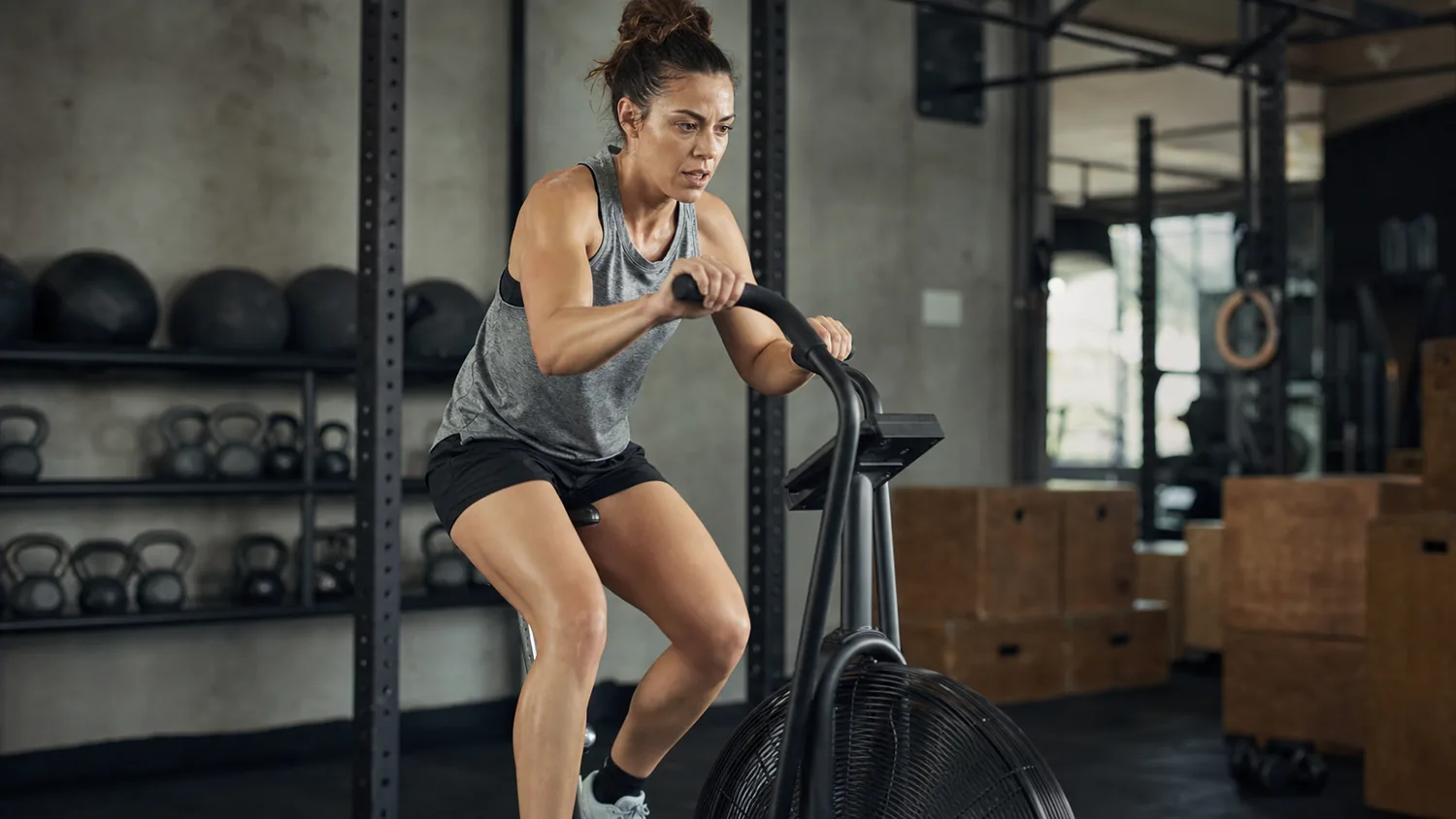
The plan
The BikeErg feels friendly for about twenty seconds. Then the flywheel starts telling the truth. If the seat is wrong, the cadence is jumpy, or the damper is set like an ego test, the legs go flat long before the workout is over.
In CrossFit, the BikeErg is different from the fan bike. The arms do not save you. The work comes from the legs, the rhythm, and the ability to hold a pace when the monitor tempts you to chase one more calorie too early.
- Set the saddle so the pedal stroke feels smooth, not cramped.
- Use cadence and damper together. Heavy resistance is not automatically faster.
- Start at a pace you can repeat, especially when the bike is paired with leg work.
What the BikeErg changes in a CrossFit workout
The BikeErg removes the upper-body push and pull that athletes feel on an air bike pacing. That makes it cleaner in some workouts and nastier in others. There is nowhere to hide if the legs are already loaded from squats, lunges, sled work, or running.
It also behaves more like rowing technique and SkiErg pacing than a casual gym bike. The monitor rewards a repeatable stroke. Wild surges can look good for a few seconds, but the split usually tells on you.
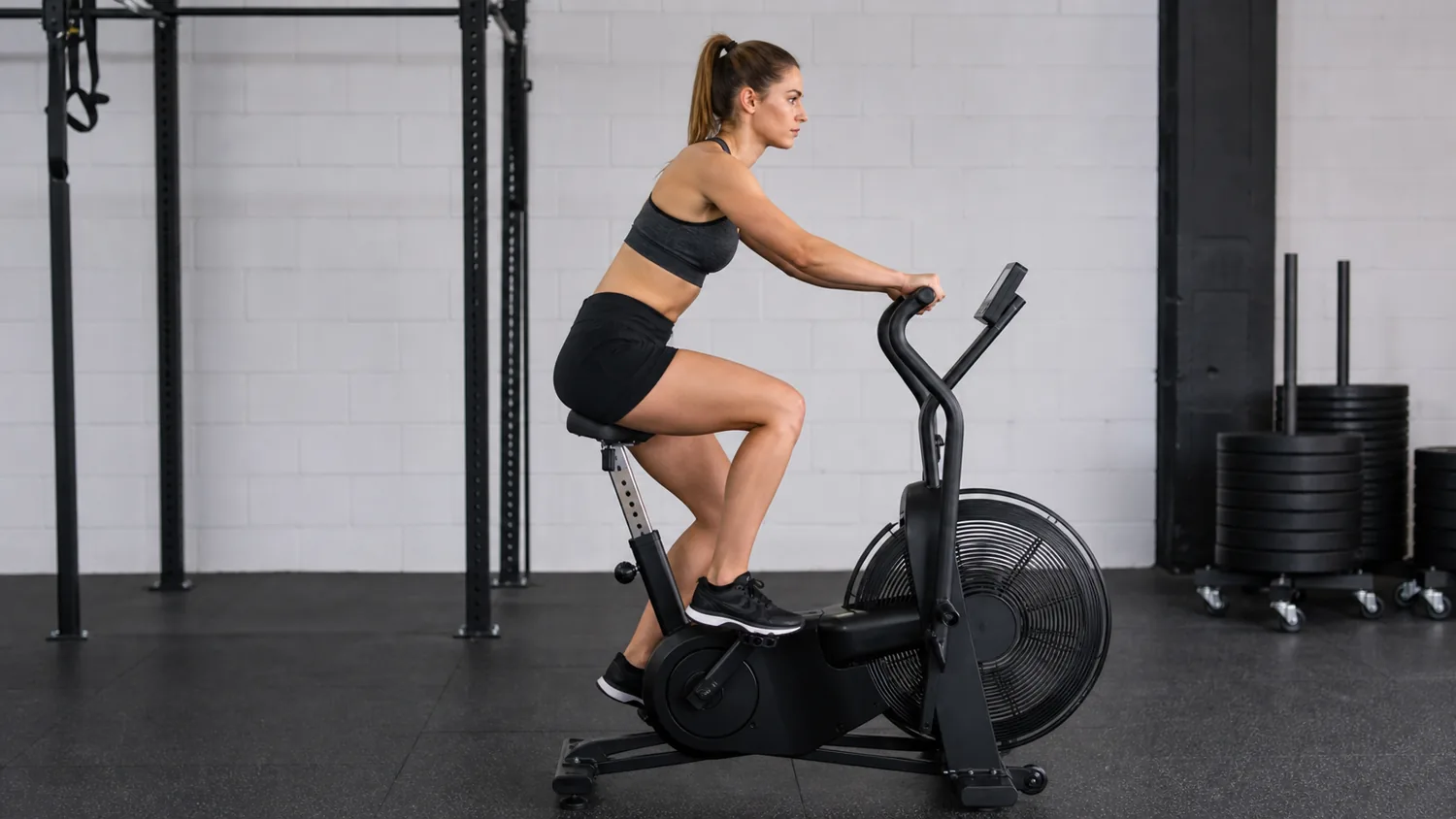
Set the seat before you judge your pace
A poor saddle height makes every other cue harder. Too low, and the quads burn early because the knee stays cramped. Too high, and the hips rock side to side. Neither version helps when calories matter.
Use a height that lets the leg extend without locking the knee at the bottom of the stroke. Keep the shoulders relaxed, hands quiet, and torso steady. If the athlete is bouncing to hit a number, the number is probably too aggressive for the workout.
| Fault | What it usually means | Fix before adding intensity |
|---|---|---|
| Hips rock on the saddle | The seat is too high or cadence is forced | Lower the saddle slightly and smooth the pedal stroke |
| Quads blow up in the first minute | The damper or opening pace is too heavy | Back off resistance and settle into repeatable rpm |
| Cadence jumps every few seconds | The athlete is chasing the monitor | Pick a split and hold it for a full interval |
| Breathing spikes before the legs do | The start was too hot | Open slower, then build over the last third |
Damper choice should match the workout
A high damper can feel powerful, but it turns each pedal stroke into heavier work. That can make sense for a short sprint. It can be a bad trade when the workout also includes wall ball breathing, sled push drive, or heavy lunges.
For longer pieces, use a setting that lets you keep cadence without grinding. If the legs feel stuck on every turn, lower the damper and ride smoother. The goal is not to win the first ten seconds. The goal is to get off the bike ready to keep moving.
The demo below is useful because it treats the BikeErg like a machine you set up, not just a place to suffer. Watch the saddle position, cadence, and how the rider avoids bouncing through the pedal stroke.
How to pace BikeErg calories
The cleanest plan is usually a controlled start, a steady middle, and a harder finish if the next station allows it. That sounds boring, but it works. Athletes who sprint the first calories often lose more time walking to the next movement than they gained on the bike.
If the BikeErg is paired with shuttle run turns, keep enough legs to turn and accelerate. If it comes before squats or step-ups, avoid grinding the flywheel. If it appears after gymnastics, the bike can be a place to breathe, but only if you do not panic pedal.
How to scale without missing the point
Good CrossFit scaling keeps the conditioning target intact. Reduce calories, set a time cap, or give athletes a watts range they can hold. For newer athletes, a slightly lower cadence with steady breathing is better than a short sprint followed by a collapse.
Use the CrossFit warm-up to test the day. Ride easy for a minute, build for twenty seconds, then check whether the target pace feels repeatable. If it already feels like a max effort, change the plan before the clock starts.
What to test next time
Before your next BikeErg workout, note three numbers: saddle height, damper setting, and a pace you can hold for two minutes without fighting the machine. That gives you a real starting point instead of a guess.
The best BikeErg athletes do not look dramatic early. They look almost too calm. Then they are still pedaling the same way when everyone else is staring at the monitor, wondering where their legs went.


