The plan
- What the SkiErg actually trains in CrossFit
- Set up before you start pulling
- The stroke: hinge first, arms last
- How to pace calories without getting trapped
- Where athletes waste energy
- How to use the SkiErg in mixed WODs
- Scaling the SkiErg without missing the point
- Simple drills that clean up the stroke
- What to check before your next WOD
The SkiErg looks simple until it shows up in a workout with wall balls, burpees, or heavy pulls. Then the machine gets honest fast. Athletes who attack it like a rope climb usually spend the next round staring at the handles and wondering why their shoulders are cooked.
Used well, the SkiErg is not just another cardio station. It rewards timing, breathing, and patience. The athletes who move best on it do not pull harder every second. They make each stroke cheaper.
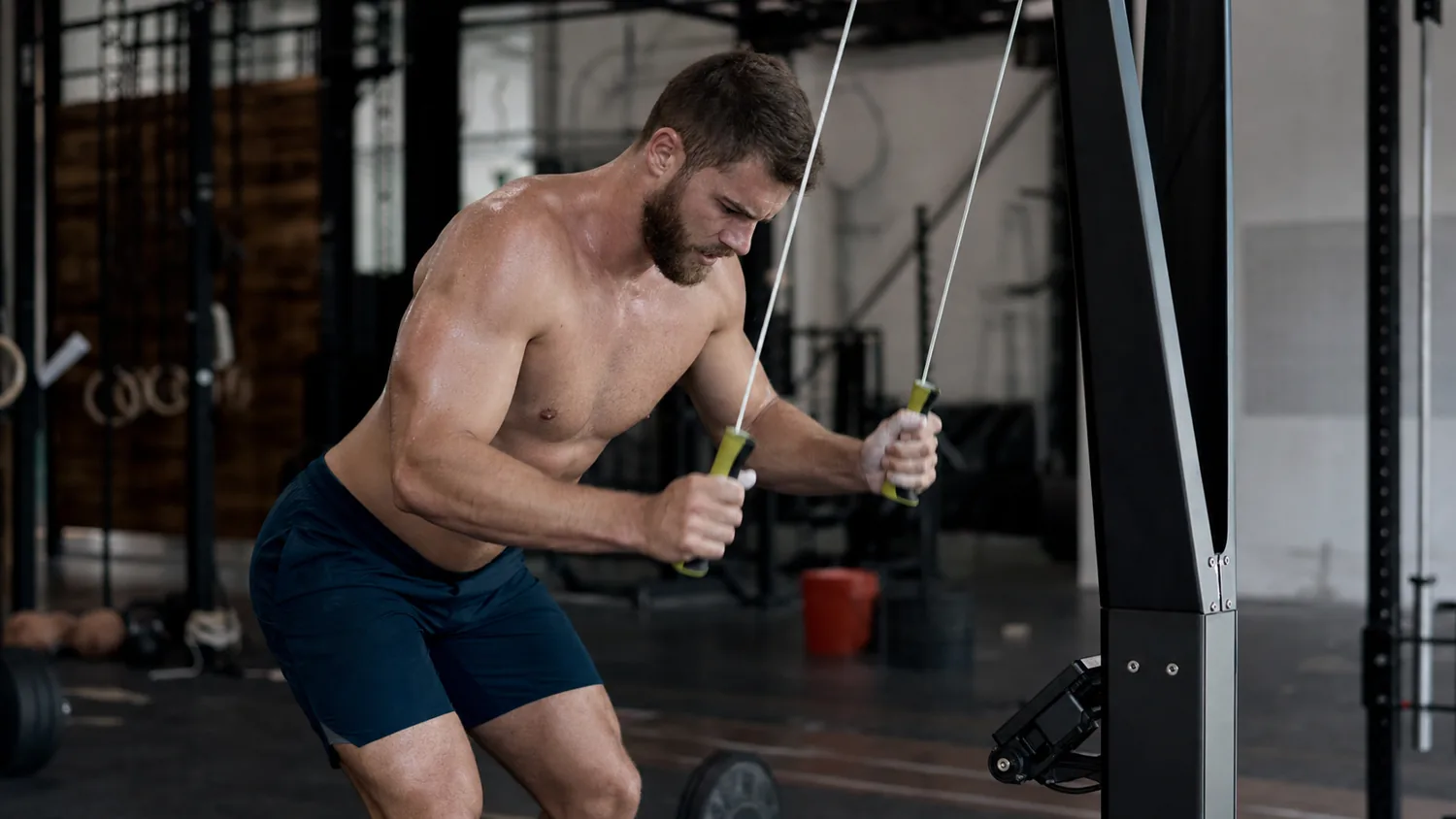
- The SkiErg stroke should start tall, fold through the hips, then finish with the arms. Pulling early with the biceps wastes grip and lats.
- For CrossFit workouts, calories usually come from a repeatable rhythm, not from one heroic opening sprint.
- Damper, stroke rate, and transitions matter. A small setup mistake can turn a simple machine into a shoulder trap.
What the SkiErg actually trains in CrossFit
The SkiErg trains a mix of upper-body pulling, trunk control, hip hinge, and breathing under tension. That is why it feels different from the rower or bike. Your legs still help, but they do not rescue you the same way they do on a rower. Your arms and lats feel the bill much sooner.
That makes it useful in CrossFit programming. It can add monostructural work without beating up the legs like running or biking. It can also punish lazy midline positions. If your ribs flare, shoulders shrug, or hands drift wide, the machine gives immediate feedback.

Set up before you start pulling
Start close enough to the machine that the handles travel straight down, not out in front of you. Stand tall. Feet can be hip width or slightly wider. The exact stance is less important than whether you can hinge without rounding your back or collapsing your chest.
Set the damper with the workout in mind. A high damper can feel powerful for ten seconds, then suddenly feel like you are pulling a stuck garage door. Many athletes are better off in the middle range, especially in mixed workouts where the SkiErg is only one piece of the fatigue.
Before the clock starts, take three easy strokes. If the handles swing away from your body or slap around at the top, reset. The best SkiErg reps feel almost boring at first: tall start, strong fold, clean finish, easy recovery.
The stroke: hinge first, arms last
The common mistake is pulling with the arms before the body moves. That turns every calorie into a mini curl. It might work for a short sprint, but it falls apart when the workout asks for repeated rounds.
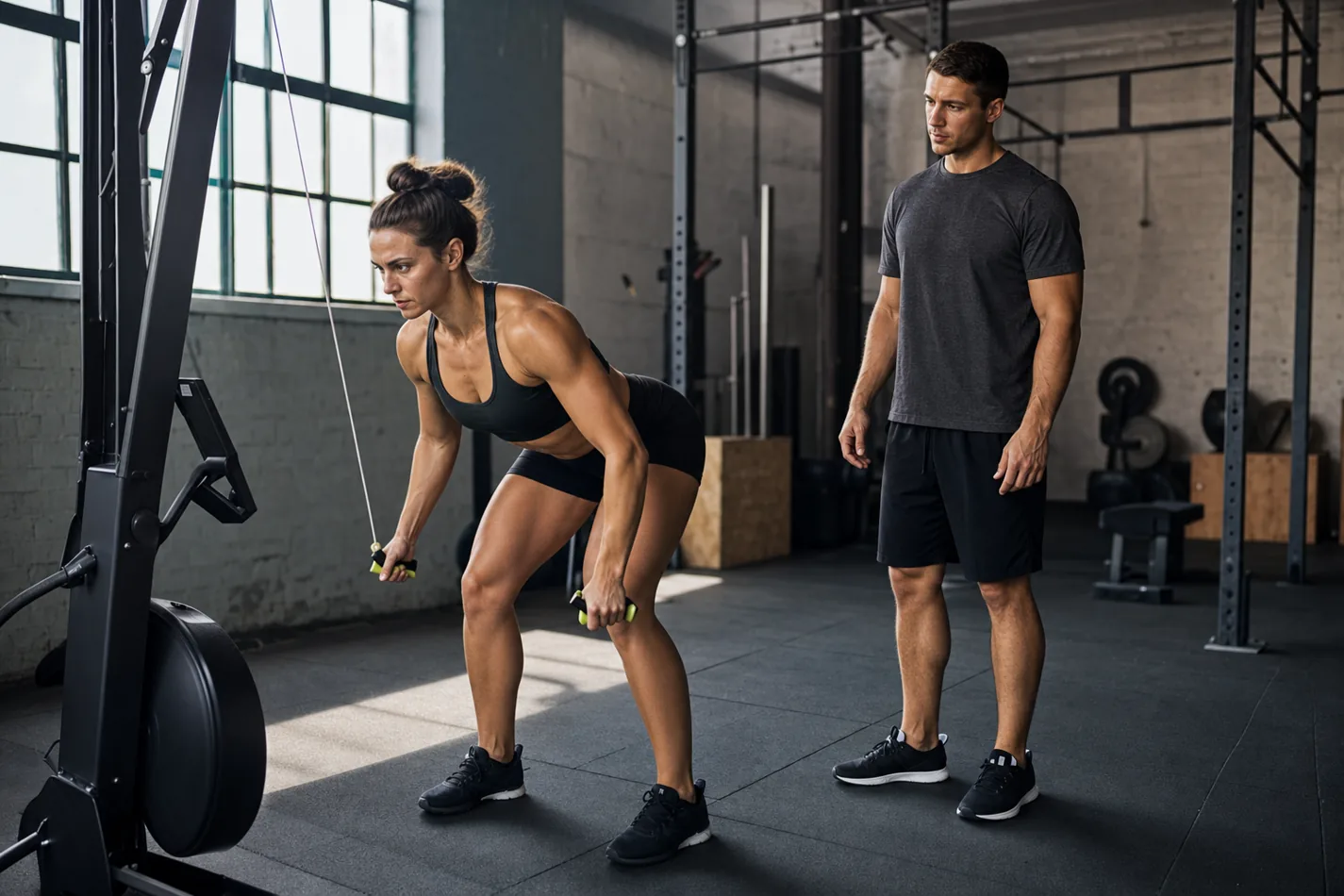
A better stroke has a simple order. Start tall with the hands high. Brace lightly. Fold through the hips and drive the hands down as the torso closes. Finish by pulling the handles toward the thighs, then let the arms return before you stand tall again. The recovery should not feel like a fight.
If you already understand the patience needed in CrossFit rowing technique, this will feel familiar. The machine is different, but the lesson is the same: sequence beats panic. When the body and arms fire at the same time, the first few reps look aggressive and the next thirty look expensive.
How to pace calories without getting trapped
Calories on the SkiErg can tempt athletes into chasing the monitor. That is usually a bad trade. If the workout has multiple rounds, your first goal is to leave the machine able to move well on the next station.
For most class workouts, use the first 10 to 15 seconds to settle into a pace you can repeat. If the workout calls for 12 to 20 calories at a time, think strong but controlled. If it calls for 30 or more, breathe early and keep the stroke smooth. The final third is where you can decide whether to squeeze harder.
| Workout setup | Smart SkiErg approach | What to avoid |
|---|---|---|
| Short sprint, one time through | Higher stroke rate, aggressive finish, quick transition | Standing too far back and losing handle path |
| Repeated rounds of 10 to 20 calories | Controlled start, same split each round, breathe before leaving | Winning round one and surviving the rest |
| Long calorie piece | Moderate damper, relaxed recovery, steady cadence | Death gripping the handles from the first minute |
| SkiErg paired with pulling work | Save grip, keep arms loose on recovery, break other movements early | Treating every stroke like a max effort pull |
Where athletes waste energy
The first leak is shrugging. If your shoulders climb toward your ears, your neck and traps start doing work your lats and trunk should share. Keep the shoulders heavy. Think about driving the handles down, not pulling them back into your face.
The second leak is overreaching at the top. A long reach can be useful, but only if you keep control. If you have to chase the handles, you will probably lose the first inch of every stroke.
The third leak is rushing the recovery. Athletes often pull hard, then stand back up in a hurry with no rhythm. That makes the next stroke worse. Let the handles rise, get tall again, then repeat. The recovery is part of the rep.
How to use the SkiErg in mixed WODs
The SkiErg becomes tricky when it sits next to movements that use the same tissues. SkiErg plus pull-ups, rope climbs, dumbbell cleans, or farmer carries can smoke the grip faster than expected. SkiErg plus burpees can make breathing feel messy. SkiErg plus wall balls can turn the trunk into the limiting factor.
This is where you should pace the whole workout, not just the machine. If the next movement needs grip, soften the hands on the SkiErg recovery. If the next movement is a squat or burpee, leave the SkiErg breathing under control. The same idea applies to air bike pacing: the machine is only successful if it sets up the next station.
A short coaching video helps here because the mistake is easier to see than to describe. In SkiErg Technique (4 Steps), watch how the pull starts with the body folding from a tall position instead of the arms yanking first.
Scaling the SkiErg without missing the point
Scaling should preserve the stimulus. If the workout wants a fast machine effort, reduce calories before you turn the movement into a slow grind. If the goal is steady aerobic work, keep the pace conversational enough that the athlete can repeat it.
Good substitutions include rowing, biking, running, or light sumo deadlift high pulls, depending on the workout and equipment. None of those are perfect copies. The right choice depends on why the SkiErg was programmed in the first place. That is the same rule behind smart CrossFit scaling: change the tool, not the purpose.
Simple drills that clean up the stroke
Try a pause drill at the top. Start tall, hold for one second, then pull. It forces you to begin each stroke from a real position instead of bouncing through the handles.
Next, use a legs-and-hips-only rhythm for easy calories. Keep the arms relaxed for a few strokes and feel the body initiate the movement. Then add the arm finish back in without changing the tempo.
Finally, practice negative splits. Start a little slower than you want, hold the middle steady, then finish stronger. It teaches patience. More importantly, it shows whether your opening pace was honest.
What to check before your next WOD
Do not wait until the workout starts to learn the machine. Check your stance, damper, handle path, and first few strokes in the warm-up. If the SkiErg feels like all arms, fix the order before you add speed. If the monitor pace jumps wildly from stroke to stroke, smooth the recovery before blaming your engine.
The best CrossFit SkiErg work is rarely dramatic. It is repeatable. You step up, pull clean calories, breathe, and leave with enough control to keep the workout moving.


