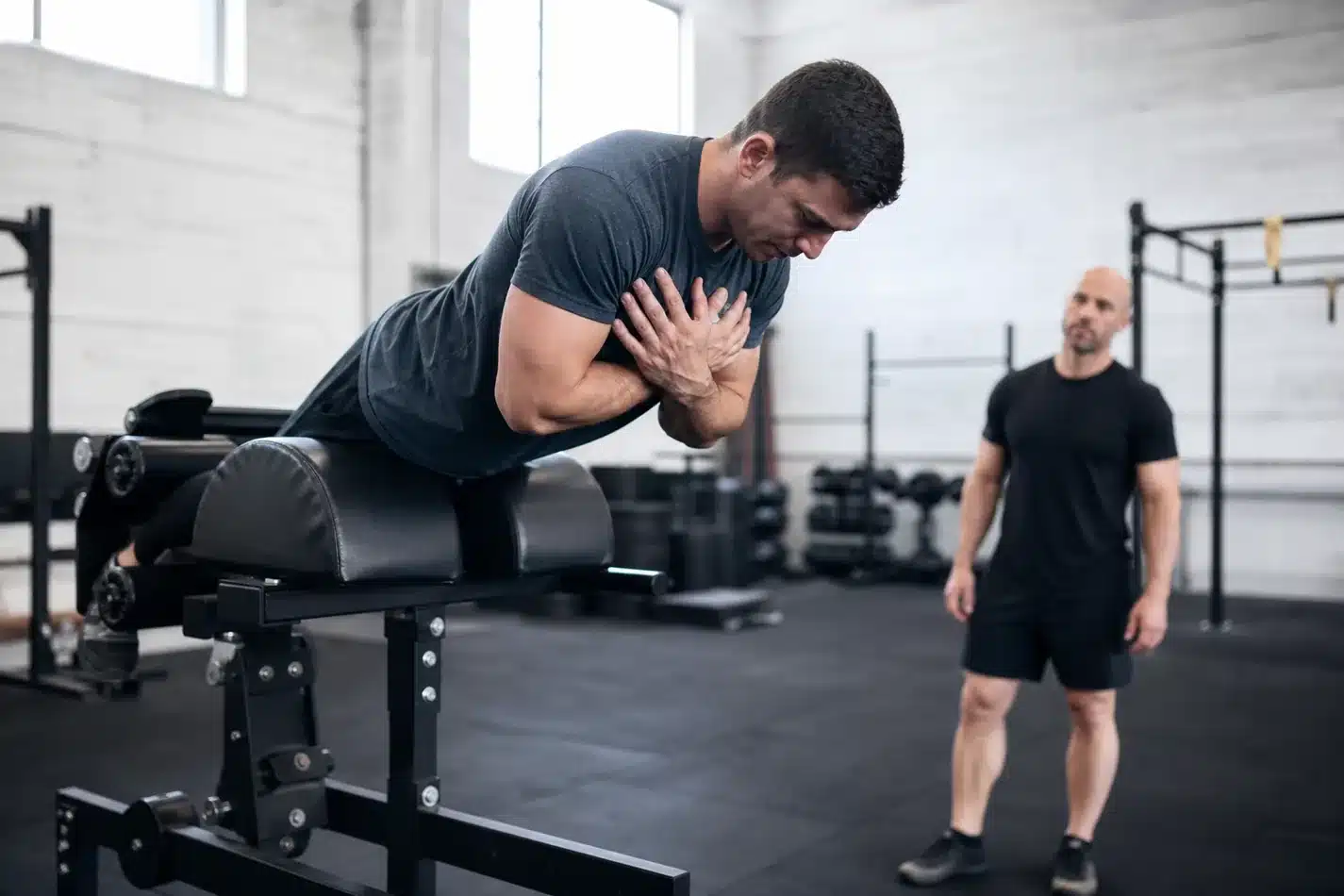
The plan
Back extensions are quiet work. They do not have the drama of a heavy barbell lift, and nobody brags about them after class. Then a workout asks for deadlifts, rowing, carries, or GHD work under fatigue, and the athlete with a weak posterior chain starts folding through the low back.
In CrossFit, the back extension is not there to see how far someone can bend. It is there to teach the hamstrings, glutes, and spinal erectors to share load while the trunk stays organized. Done well, it makes hinging feel cleaner. Done carelessly, it turns into a cranky low-back drill.
- Set the hips on the pad so the body can hinge, not just arch.
- Move with control. Speed hides whether the posterior chain is doing the work.
- Scale range, tempo, and load before chasing high-rep GHD sets.
What a back extension should train
A good back extension teaches controlled hip extension. The athlete starts with the body long, lowers with tension, then returns to a straight line without snapping the head or throwing the ribs open. The back works, but it should not feel like the only thing working.
This is why the movement pairs so well with deadlift setup, good morning hinge, and Romanian deadlift control. All three need the same basic skill: hold the trunk steady while the hips move. The load is different. The lesson is similar.
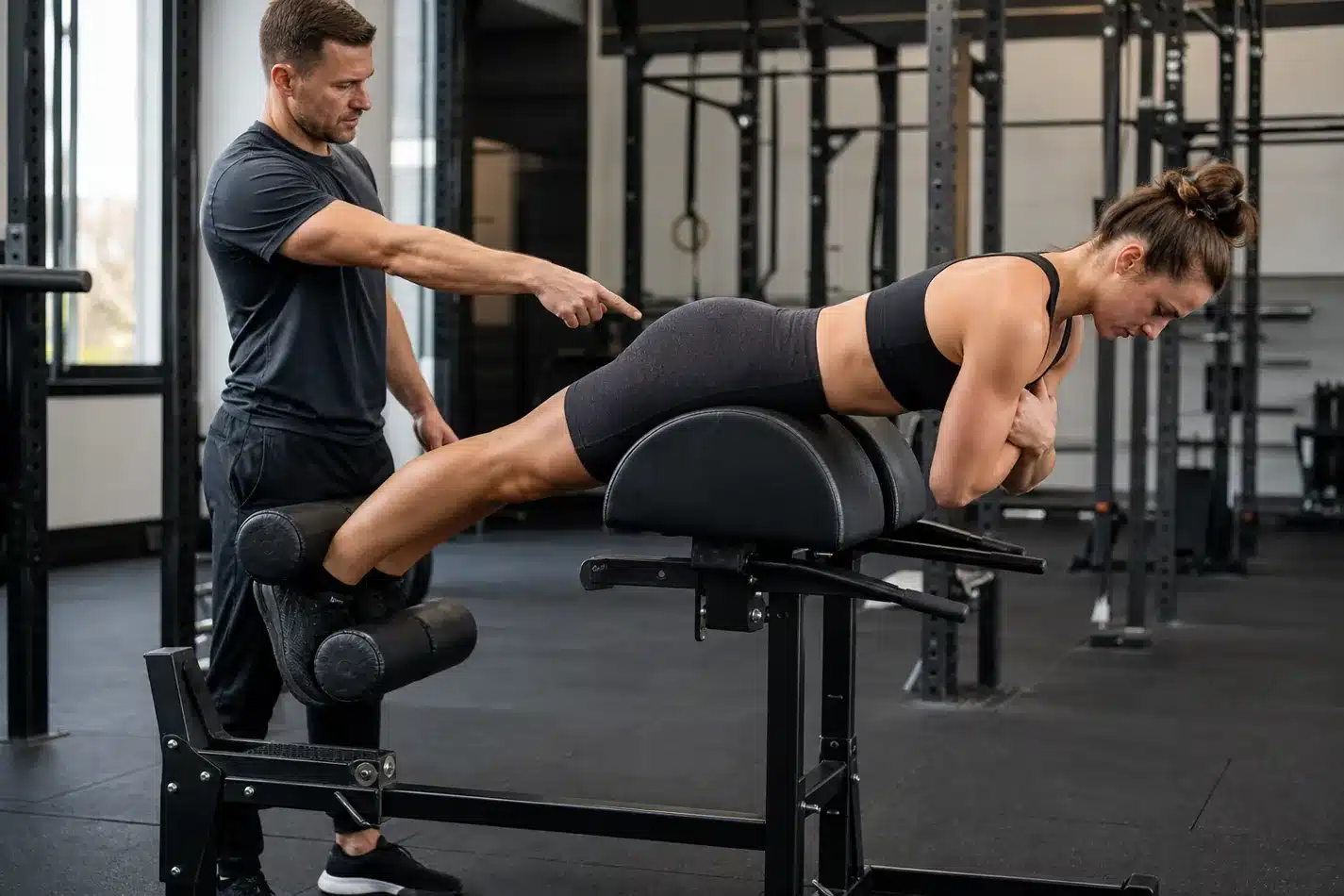
Set the GHD before you worry about reps
The setup matters more than most athletes think. If the pad is too high, the athlete may not be able to hinge cleanly. If the pad is too low, the movement can feel unstable or turn into a long lever through the spine. Start with the hips supported and the feet locked in without forcing the body into an awkward position.
From there, keep the neck quiet, brace lightly, and lower until control starts to fade. Some athletes will have a large range. Others should work shorter. Range is useful only if the athlete can return from it without a sudden arch or a hard swing.
| Fault | What it usually means | Fix before adding volume |
|---|---|---|
| Rep turns into a fast back bend | The athlete is chasing range instead of control | Slow the lower and stop before the ribs flare |
| Hamstrings cramp right away | The setup or tempo may be too aggressive | Shorten the range and use smaller sets |
| Low back feels pinchy | The athlete may be arching rather than hinging | Reset the pad, brace, and reduce the range |
| Feet pull hard against the rollers | The athlete is using the anchors to yank through the rep | Lower the speed and keep pressure even |
How to scale back extensions without losing the point
Good CrossFit scaling keeps the posterior chain working and removes the part that breaks first. If the GHD setup is too much, use a hip extension on a lower box, a banded good morning, or a slow unloaded hinge. If the athlete cannot control the bottom, cut the range before adding reps.
Tempo is the easiest tool. Try three seconds down, a brief pause, then a smooth return to line. That pace makes cheating obvious. It also keeps the work useful for athletes who need better hinge awareness before higher-skill work or heavier pulling.
The demo below is useful because the movement is easy to confuse with a fast back bend. Watch where the athlete moves first. The hips stay anchored, the trunk stays organized, and the rep is driven by controlled hip extension rather than yanking the low back.
Where back extensions fit in CrossFit training
Back extensions fit well after a CrossFit warm-up, as accessory work after lifting, or in small doses inside posterior-chain conditioning. They can also help athletes prepare for GHD sit-up volume, where midline fatigue shows up quickly if the hips and trunk are not ready.
They should not be treated like throwaway reps. High volume can sneak up on the low back and hamstrings, especially when the same session also includes rowing, kettlebell swing timing, running, or carries. If the workout already taxes hinging, keep the back extension sets smaller and cleaner.
What to check before adding load
Add weight only after the bodyweight rep is boring in the best way: smooth down, smooth up, no head whip, no rib flare, no sharp feeling in the low back. A plate across the chest or behind the head changes the lever fast. Start lighter than pride wants.
The best carryover is not a sore back the next day. It is a cleaner hinge when the workout gets messy. If the athlete can hold position on back extensions, then find the same shape during sandbag carry bracing, pulling, and long mixed-modal pieces, the drill is doing its job.


