The plan
A banded lat stretch can clean up an overhead warm-up fast, but only if the athlete stays honest. The common version looks simple: loop a band on the rig, grab it, sink the hips back, breathe. The bad version is just as common. The ribs flare, the shoulder hangs loose, and nothing carries over when the barbell gets overhead.
For CrossFit, the point is not to spend five quiet minutes pretending the workout is a mobility class. The point is to make overhead positions feel easier before snatches, jerks, wall walks, kipping work, thrusters, or any WOD where tight lats pull the ribs open and make the lockout feel expensive.
- Use the band to create a gentle pull through the lat, not to yank the shoulder forward.
- Keep the ribs down, breathe slowly, and retest an overhead position right after the drill.
- It fits best before overhead work, pulling volume, wall walks, and days with front rack or shoulder fatigue.
What the banded lat stretch should actually change
The lats run from the upper arm into the back and pelvis. When they feel stiff, an athlete often pays for it overhead. The arms do not stack cleanly, the ribs pop up, and the low back takes the shape the shoulder could not find. You see it on a snatch receiving position, a jerk dip and drive, or a tired set of wall walks when the athlete starts arching just to keep the hands moving.
The banded lat stretch gives the athlete a way to feel that line before loading it. A good rep should create space through the side of the torso and back of the armpit while the trunk stays quiet. If the athlete comes out of the stretch and the overhead reach looks the same, the setup probably missed the mark.
Set the band before you sink into the stretch
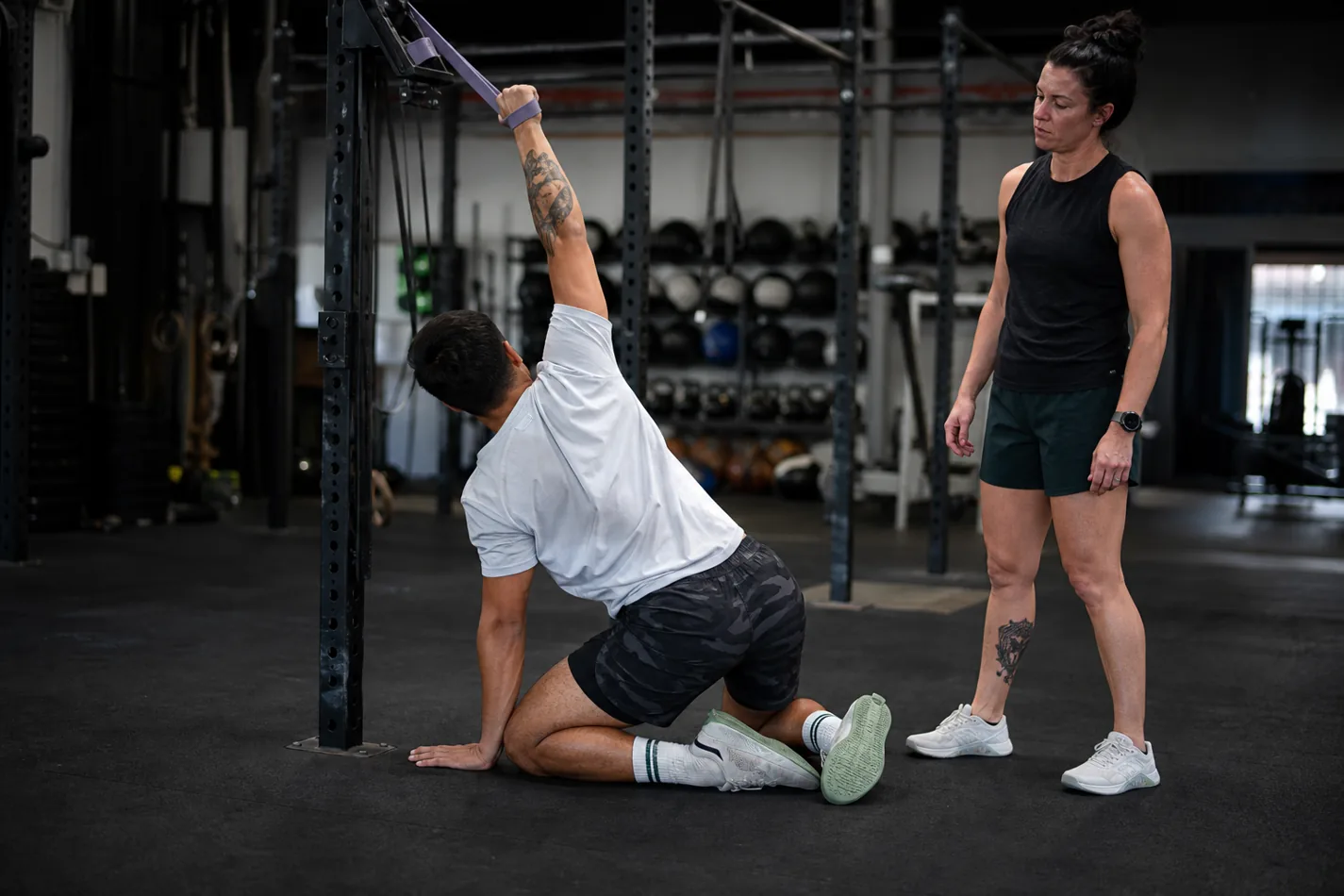
Anchor a light or medium band to a pull-up rig around shoulder height or slightly above. Put one hand through the band or grip it with the palm down. Step back until there is tension, then hinge the hips away from the rig. The stretching arm should stay long, but the shoulder should not feel like it is being dragged out of the socket.
From there, turn the palm slightly up or down and notice where the stretch lands. Some athletes feel more lat with the thumb up. Others need a small rotation away from the band. Keep the ribs stacked over the pelvis. If the back arches hard, reduce the band tension and make the shape smaller.
| Fault | What it usually means | Coaching fix |
|---|---|---|
| Ribs flare as soon as the arm reaches | The athlete is borrowing range from the low back | Exhale first, bring the ribs down, then lean back again |
| Shoulder feels pinchy | The band is pulling too hard or the arm angle is wrong | Use less tension and move the hand slightly lower |
| Stretch is only in the forearm or hand | The grip is doing all the work | Loop the band over the wrist or relax the hand |
| No change after the drill | The stretch was not connected to the workout position | Retest a press, squat hold, or overhead reach immediately |
Where it fits in a CrossFit warm-up
This drill works well after general heat and before the specific overhead prep. Pair it with PVC pass-throughs when the day needs shoulder flexion, then move to lighter presses, empty-bar snatches, or a wall-facing overhead hold. If the workout includes a push press or jerk, keep the stretch short and retest the stacked lockout between sets.
It also pairs with hip and trunk work. Tight lats are not always the only reason an athlete arches overhead. If the squat pattern is also stiff, combine this with ankle mobility or a lunge stretch like couch stretch or Samson stretch. The goal is not to collect drills. It is to find the one or two changes that make the first working set look better.
This demo is useful because it shows the stretch as a setup problem, not a contest for the biggest lean. Watch the band angle, the quiet ribs, and the way the athlete keeps pressure through the hand instead of hanging passively from the shoulder.
How long to hold it
Most athletes need 30 to 60 seconds per side, not a marathon. Breathe slowly. On each exhale, let the ribs settle and let the band pull gently through the side body. If the position gets numb, sharp, or sketchy, come out of it. A warm-up drill should make the next rep clearer, not create a new problem.
For class coaching, two short rounds often beat one long hold. Stretch the right side, stretch the left side, then grab a PVC or empty bar and test the overhead shape. If the athlete can keep the arms stacked without flaring the ribs, the drill did its job. If not, adjust the band angle or move to a more active drill.
When to skip or scale the drill
Skip the aggressive version if the athlete has shoulder pain, nerve symptoms, or a history that makes loaded end-range stretching a bad idea. Scale it by lowering the anchor, reducing band tension, or using a simple child pose lat stretch on a box. For some athletes, a slower inchworm or wall-facing reach gives better feedback than hanging from a band.
Do not force the drill before every workout. It makes sense before overhead squats, snatches, jerks, wall balls, wall walks, and high-volume pulling. It is less useful as a random filler before a bike and burpee day unless the athlete needs the position work anyway.
What to test before the next overhead WOD
After the banded lat stretch, test one movement that matches the workout. Reach overhead with ribs down. Hold a PVC in an overhead squat stance. Press an empty bar to lockout. Kick up to a wall walk position if that is on the board. The test should be quick enough that the athlete can feel whether the stretch changed anything.
If the lockout is cleaner, keep the drill in the warm-up and move on. If nothing changes, do not keep stretching just because the band is there. Try active shoulder work, lighter loading, or a smarter scale. The useful version of banded lat stretch is the one that earns its spot before the clock starts.