The plan
The couch stretch is one of those CrossFit warm-up drills that can fix a lot or irritate a lot, depending on how it is set up. Athletes usually reach for it when the front of the hip feels locked after sitting, running, rowing, biking, lunging, or squatting. The problem is that many people turn it into a low-back arch contest.
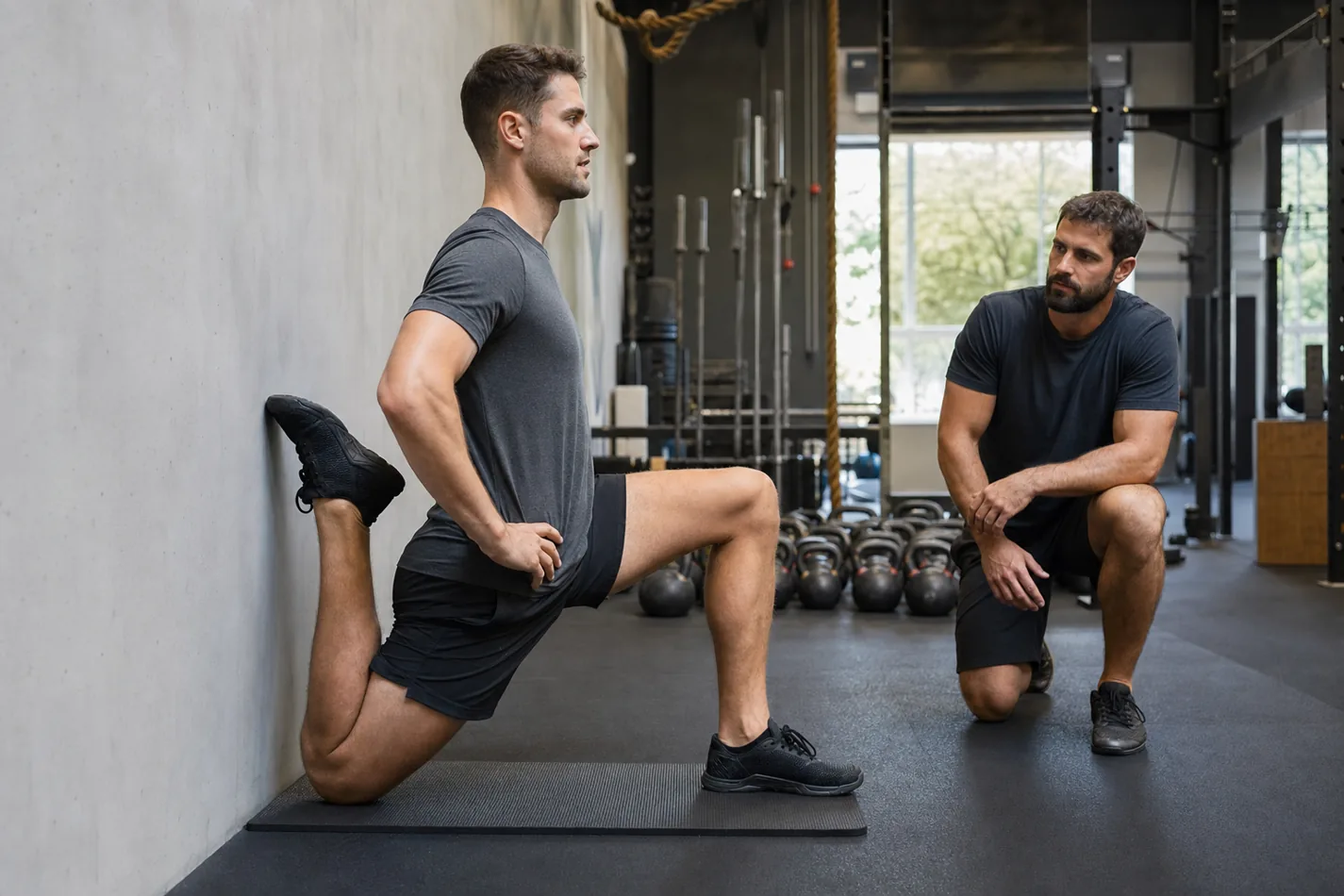
A good couch stretch should open the hip flexor and quad on the back leg without making the athlete flare the ribs, jam the lumbar spine, or grit through knee pressure. If the position only looks dramatic but the next squat still feels ugly, it did not do its job.
- Start with the back knee padded and the rear foot lower than you think you need.
- Squeeze the back-side glute lightly so the stretch stays in the front hip, not the low back.
- Use couch stretch before lunges, squats, wall walks, running, and overhead work when hip extension is the limiter.
What the couch stretch should change
The couch stretch targets the front of the back-leg hip, especially the hip flexors and the quad. That matters in CrossFit because poor hip extension leaks into a lot of movements. The athlete may overarch in overhead positions, shorten the back leg in lunges, or feel blocked when trying to stand tall out of a squat or step-up.
The stretch is useful when it gives the athlete a better position right away. Pair it with a retest. Do ten seconds of movement, set the stretch for twenty to thirty seconds per side, then stand up and check a lunge, squat, or overhead reach. If nothing changes, do not just hold longer.
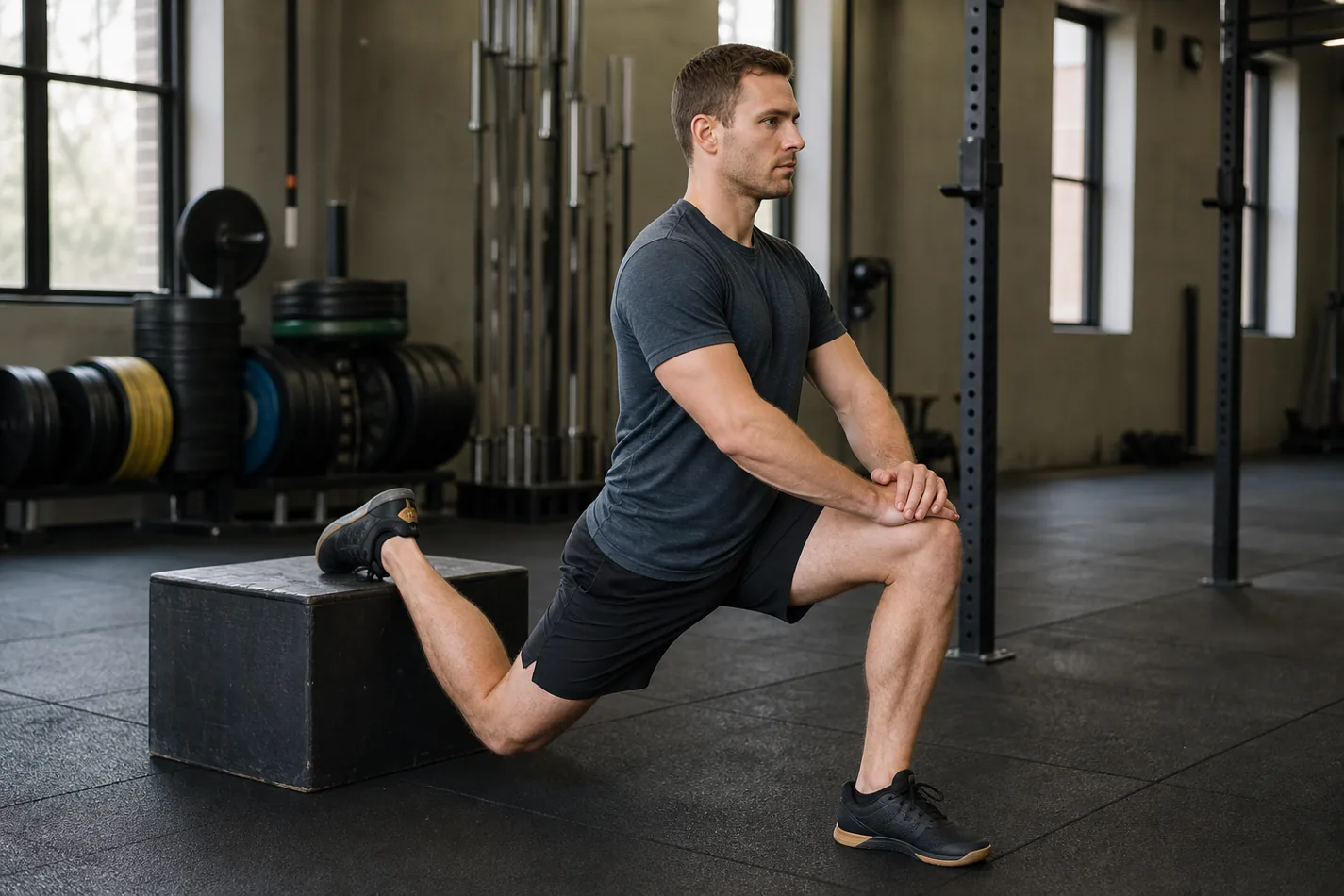
Set the back leg before you chase height
The rear foot does not need to be pinned high on a wall on the first attempt. That version looks impressive and often creates the wrong fight. Start with padding under the back knee. Put the rear foot against a wall, box, bench, or plate stack, then bring the front foot forward enough that the athlete is not trapped.
From there, the key is the pelvis. A light glute squeeze on the back-leg side helps pull the hip under the ribs. The athlete should feel stretch through the front hip or quad, not a pinch in the low back. The same idea shows up in Samson stretch prep and reverse lunge mechanics: the back hip has to open without the spine pretending to do the work.
| Fault | What you see | Better fix |
|---|---|---|
| Rear foot too high | The athlete arches hard and cannot breathe | Lower the foot to a box or plate stack |
| Back knee on a hard floor | Knee pain shows up before the hip stretch | Add a pad and move the knee slightly away from the wall |
| Ribs flare up | The stretch moves into the low back | Exhale, tuck the pelvis slightly, and squeeze the back-side glute |
| Front foot too close | The athlete feels cramped and unstable | Step the front foot forward until the shin can stay calm |
Where it fits in a CrossFit warm-up
Couch stretch fits best after the athlete is already warm. A short bike, row, jog, or inchworm sequence makes the tissue more ready to move. Then the stretch can act as a position reset before overhead squats or front squats, wall balls, split jerks, wall walks, running intervals, or high-volume lunges.
Keep the dose small before intensity. Twenty to thirty seconds per side is plenty for many classes, especially if the workout needs speed or power. Long passive holds can make some athletes feel loose but disconnected. If that happens, stand up and add active reps before the clock starts.
The demo below is worth watching before you coach this stretch in a class setting. The useful detail is not how deep the athlete gets. It is how the ribs stay down while the back-side hip opens.
How to scale couch stretch for real athletes
The first scale is height. Put the rear foot on a low box instead of a wall. This gives the athlete room to organize the pelvis and breathe. It also helps bigger or less mobile athletes avoid the feeling that the back knee is being folded underneath them.
The second scale is support. Let the athlete hold a rig upright, box, or stacked plates. A supported torso often gets more honest hip opening than a proud, unsupported version where the athlete shakes through the whole hold. If the position still feels too aggressive, use a half-kneeling hip flexor stretch and add a short glute bridge check before returning to standing work.
When to choose another drill
Skip the couch stretch if the athlete feels sharp knee pain, front-hip pinching, numbness, or low-back pressure that gets worse with each breath. Mobility work should make the next rep cleaner. It should not teach the body to guard harder.
If the class needs more adductor range, frog stretch work may fit better. If the goal is shoulder and trunk prep for wall walk practice, add active shoulder work instead of spending the whole warm-up on the hip. The drill has to match the workout, not the other way around.
What to test before your next WOD
Use couch stretch when a short dose gives you a taller lunge, an easier overhead reach, or a squat that does not feel pulled forward by the front of the hips. If the back stays quiet and the next movement improves, keep it. If the stretch only creates a deeper pose for Instagram, lower the foot, make the drill active, or pick a different warm-up tool.