The plan
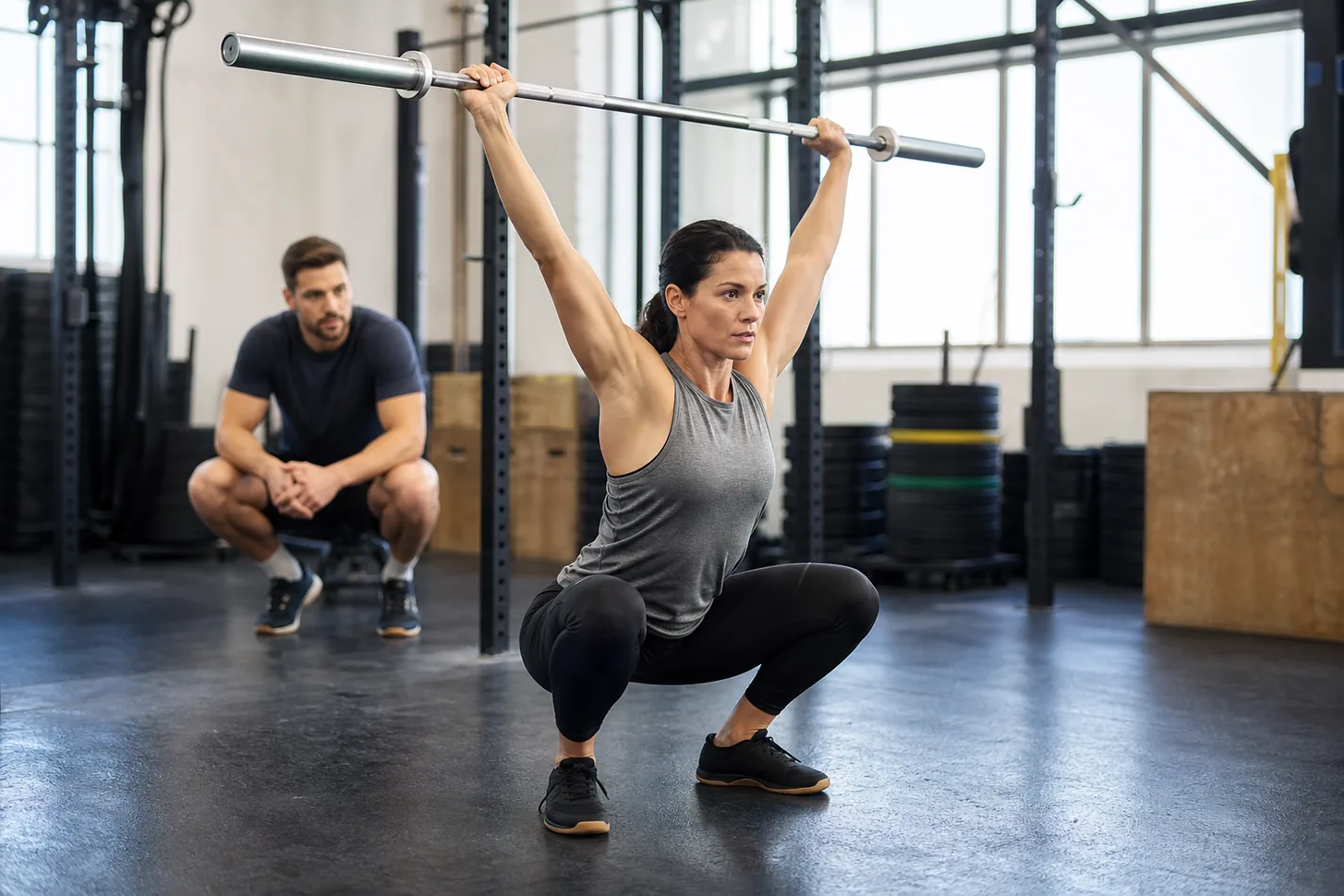
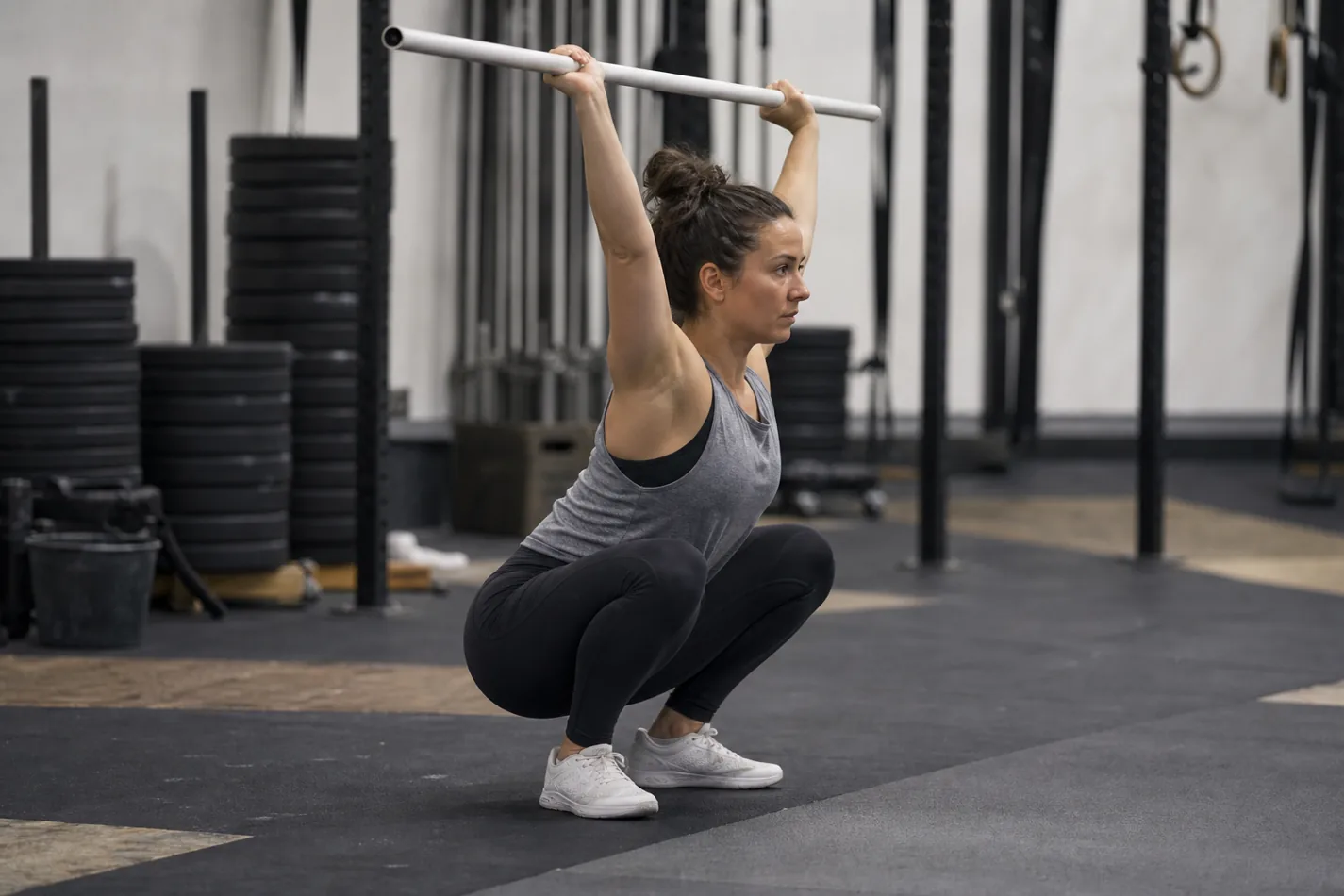
The Sots press is humbling because it removes every hiding place. You sit in the bottom of a squat, hold the torso tall, and press from there. If the ankles, hips, upper back, or shoulders are faking it, the bar tells you quickly.
In CrossFit, it shows up less often than a snatch or jerk, but it is a useful drill for athletes who need better bottom-position strength. Done well, it teaches patience under the bar. Done too heavy, it turns into a shoulder fight with a bad squat underneath it.
- Use the Sots press as a drill, not as a max-effort lift.
- The squat must stay balanced before the press matters.
- Start with PVC, an empty bar, or a very light load until the ribs, wrists, and shoulders stay quiet.
What a Sots press is actually testing
A Sots press starts in the bottom of a squat. From there, the athlete presses a barbell, PVC pipe, or light implement overhead while staying low. Most CrossFit athletes see it as a snatch mobility drill, but the movement is not only about flexibility.
It tests whether the athlete can keep pressure through the whole foot, hold the chest without overextending the low back, and press without losing the squat. That is why it pairs so well with the overhead squat position. If the bottom position already feels unstable, the press will only expose the problem.
Set the squat before you press
The first rep should not start with the bar. Start with the body. Feet stay planted. Knees track in the same direction as the toes. The ribs stay stacked over the pelvis. The athlete should be able to breathe in the bottom without tipping forward or sitting on the joints.
If that position is missing, use a box, a counterbalance, or a wider stance for practice. The goal is not to force a pretty shape for one photo. The goal is a position that can support work. Good squat control gives the press somewhere to go.
Press from the upper back, not the lower back
The mistake is easy to spot. The athlete drops into the squat, runs out of room in the shoulders, then steals motion by arching hard through the low back. The bar moves, but the drill has changed. Now it is a spinal extension drill with a press attached.
A cleaner rep feels smaller and more honest. Grip the bar, keep the elbows under control, and press upward while the ribs stay down. The finish should look closer to solid overhead stability than a rushed lean-back press. Athletes who already have a reliable strict press may still struggle here because the squat removes their usual compensation.
| Fault | What you will see | Better fix |
|---|---|---|
| Chest collapses | The bar moves forward and the heels get light | Use a lighter tool and pause in the bottom before pressing |
| Ribs flare | The athlete leans back to finish the press | Exhale, brace, and press only as far as the trunk stays stacked |
| Wrists fold | The bar sits behind a loose wrist | Adjust grip and keep the knuckles pointed upward |
| Too much load | Every rep turns into a grind | Drop weight and use slow, repeatable reps |
Where it helps CrossFit athletes
The Sots press can support snatch receiving positions, overhead squats, and lighter skill work that demands control below parallel. It also gives coaches a quick look at where an athlete is losing position: ankles, hips, thoracic spine, shoulders, or bracing.
That does not mean it belongs in every warm-up. For many athletes, it works best as a small accessory piece before snatch balance, light snatches, or controlled shoulder-to-overhead work. Two or three sets of careful reps are enough. If the drill makes the next lift worse, it is too heavy or too aggressive for that day.
The demo below is worth watching before you load the drill. The rep is slow enough to show the point: the press has to rise from a quiet squat, not from a rushed bounce or a collapsed bottom position.
Scaling the Sots press without missing the point
Good CrossFit scaling keeps the lesson intact. Use PVC. Press from a higher squat. Sit to a box. Move the grip wider. Try a single dumbbell or kettlebell if the barbell position is too demanding. The scaled version should still ask for a stable squat and a quiet trunk.
What should not happen is a fake rep. If the athlete stands halfway up before pressing, it is no longer the same drill. If the back arches hard to finish every rep, the load is wrong. A patient CrossFit warm-up with squats, wall-facing overhead reaches, light presses, and tempo overhead squats usually tells you which version to use.
When to skip it
Skip the Sots press when shoulder pain shows up, when the athlete cannot squat below parallel without pain, or when the workout already includes a lot of overhead fatigue. It is also a poor choice for racing the clock. The drill rewards control. Speed usually makes it worse.
For newer athletes, the better path may be goblet squats, empty-bar presses, overhead holds, and slow overhead squats before combining everything. The Sots press is a test and a teacher, but it is not the only road to a better receiving position.
What to test next
Film three light reps from the side. Check the feet first, then the ribs, then the bar path. If the heels stay down, the ribs stay quiet, and the bar finishes over the middle of the body, the drill is doing its job. If one piece breaks, fix that piece before adding load.
A good Sots press feels almost too controlled. That is the point. It teaches the athlete to own the bottom of the squat before asking the shoulders to solve everything overhead.