The plan
The snatch balance is one of the fastest ways to find out whether an athlete can actually receive a bar overhead. It does not forgive a slow punch, a soft upper back, or feet that land wherever they feel like landing.
In CrossFit, that matters because the snatch rarely shows up when you are fresh and calm. It shows up after bike calories, burpees, or a grip-taxing couplet. The snatch balance teaches the part many athletes skip: getting under the bar with speed while keeping the overhead position quiet.
- The snatch balance trains a fast drop under the bar, not a bigger press from the shoulders.
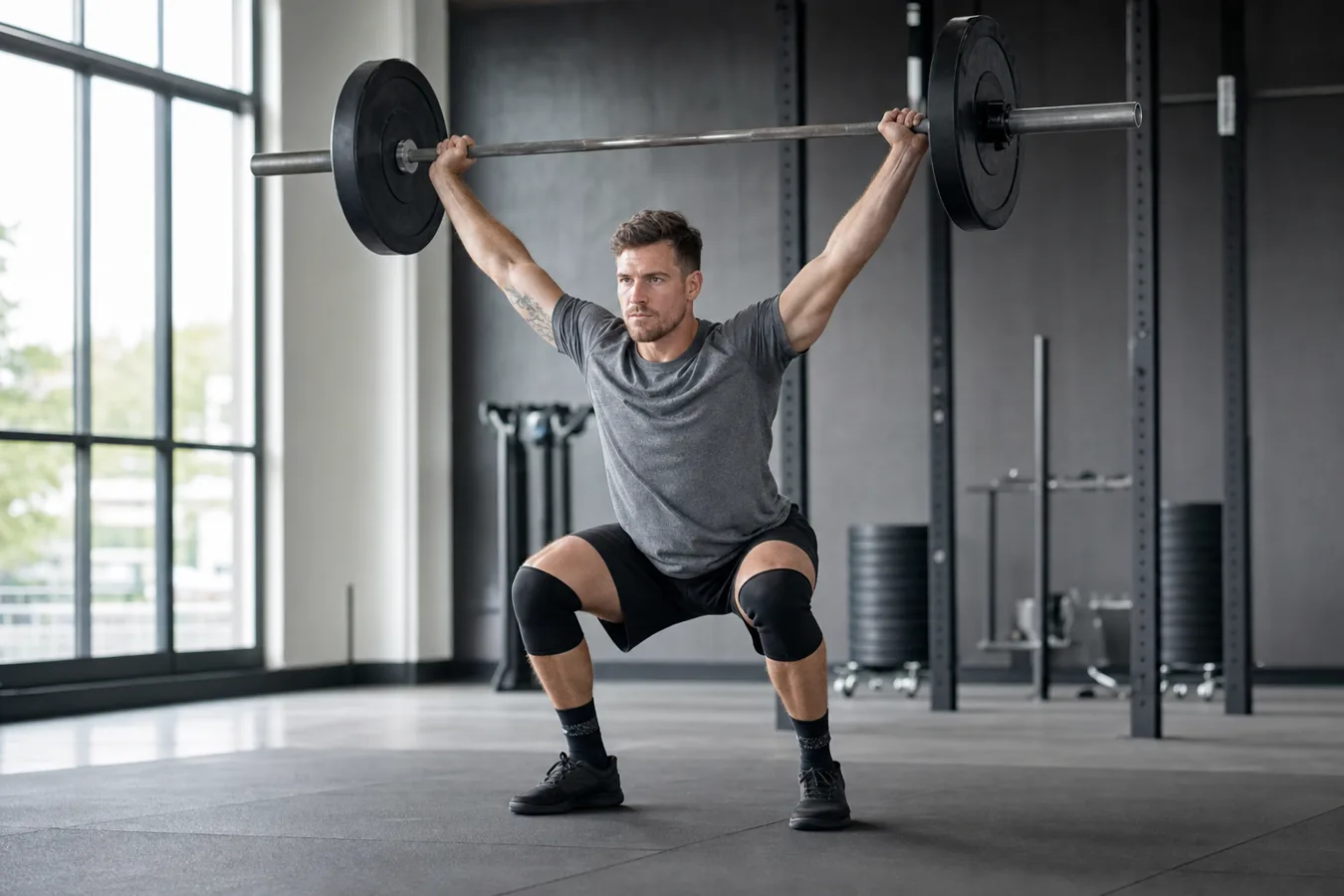
- Good reps land with the bar stacked over the midfoot and the athlete balanced in an overhead squat.
- Scale it early if the catch turns soft, the feet jump too wide, or the bar keeps drifting forward.
What the snatch balance is really testing
A snatch balance starts with the bar on the back, a short dip, and a hard drive. Then the athlete drops under the bar and catches in an overhead squat. The lift sits between strength work and skill work. You need enough leg drive to move the bar, but the rep only works if you commit to pulling yourself under it.
That is why it pairs naturally with the CrossFit power snatch. The power snatch rewards a fast pull. The snatch balance asks a different question: can you meet the bar lower without losing your shape?
Set the bar and feet before the dip
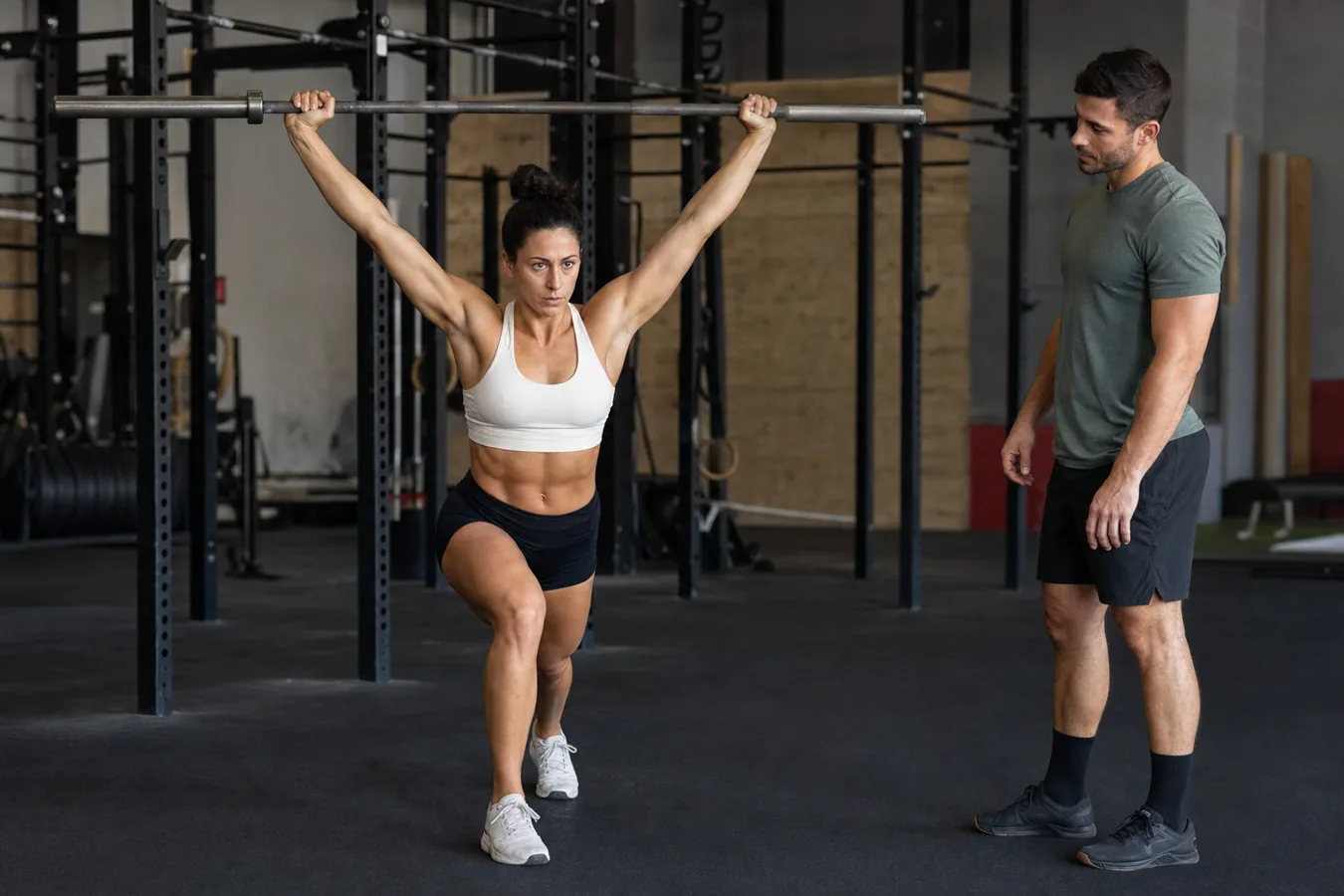
Start with the bar resting across the traps, hands in your snatch grip, ribs down, and eyes forward. The feet should begin around pulling stance, not already in a wide squat. If the setup feels loose before the dip, the catch will feel even worse.
The dip should be short and vertical. Think knees bend, torso stays tall, bar stays stacked. If the chest drops or the hips slide back, the bar tends to move forward. Then the athlete has to chase it with the shoulders, which is usually where the rep gets ugly.
| Checkpoint | Good rep | Fix when it breaks |
|---|---|---|
| Dip | Short, vertical, balanced over the midfoot | Use a smaller dip and keep the chest tall |
| Drive | Legs pop the bar up before the drop | Stand hard through the floor before moving the feet |
| Catch | Elbows lock fast with the bar over the shoulders | Reduce load and punch under the bar sooner |
| Feet | Feet land in squat stance, not a split or starfish | Mark the landing stance and drill light reps |
Watch the drop under the bar
This CrossFit coaching clip is useful because it keeps the focus where most athletes need it: the timing of the drive, the punch under the bar, and the receiving position. Watch the feet as much as the bar. A clean catch usually looks simple because the athlete did not rush the wrong part.
Use it to clean up your overhead squat
If the snatch balance feels unstable, the issue is often the same one that shows up in the overhead squat position. The ribs flare, the shoulders soften, or the athlete sits too far back and leaves the bar behind. The snatch balance just exposes it faster.
Hold the bottom position for a beat on lighter reps. If you cannot pause without wobbling, there is no reason to add weight yet. A quiet pause teaches more than a heavy rep that survives by accident.
Common mistakes that carry into WODs
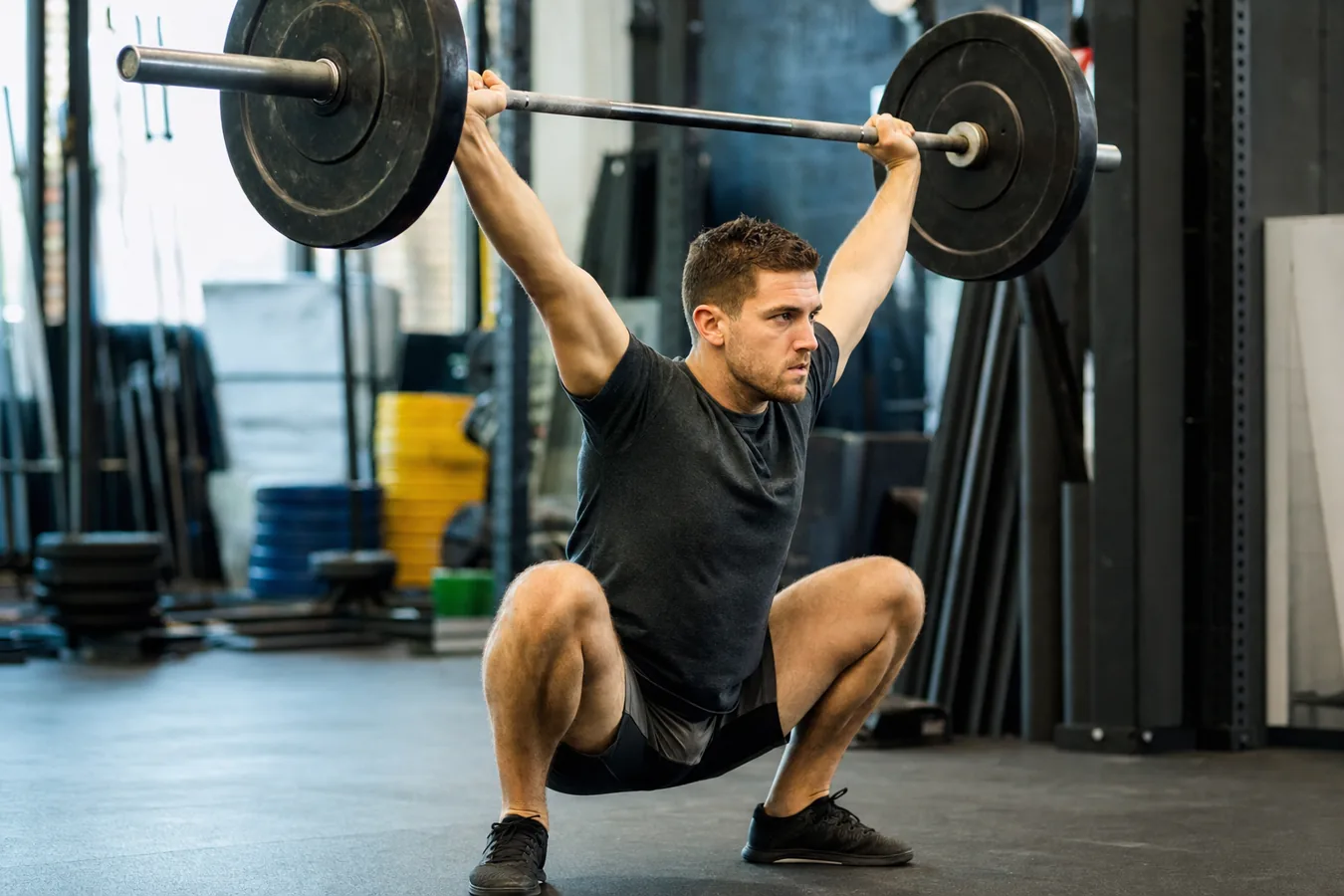
The biggest mistake is treating the snatch balance like a behind-the-neck push press. If the arms are doing all the work, the athlete is not learning to receive. The second mistake is jumping the feet too wide because it feels safer. That wide landing usually makes the bottom position weaker, not stronger.
- Driving the bar forward because the dip starts with a chest drop.
- Catching with bent elbows and trying to press out the finish.
- Landing wider than the normal overhead squat stance.
- Standing up before the bar is stacked and quiet.
When to scale the snatch balance
Scale the snatch balance when the athlete cannot lock out confidently, when the bar keeps drifting in front, or when the receiving position looks different every rep. A lighter bar, a PVC pipe, or a tempo overhead squat can be the better choice for that day.
For athletes who already have a solid overhead position, the snatch balance can be used before snatch work as a primer. Keep the reps low, move with intent, and stop before fatigue turns speed into a guess. If your workout also includes cycling overhead reps, review the leg drive in the CrossFit push jerk so the dip stays vertical under fatigue.


