The plan
The inverted burpee looks funny until it shows up in a workout. Then the joke ends fast. A sloppy roll steals air, a late foot plant kills the kick-up, and a rushed handstand turns every rep into a gamble.
In CrossFit, the movement is less about circus skills and more about body control under fatigue. You roll back, return to the feet, kick up to the wall, come down, and repeat. The athletes who move well are not the ones who throw themselves hardest. They are the ones who keep each piece connected.
- The inverted burpee needs a smooth roll, a fast foot plant, and a controlled kick-up.
- Most missed reps come from sitting too long after the roll or kicking to the wall with loose ribs.
- Scale the handstand piece before fatigue turns the rep into a crash landing.
What an inverted burpee actually asks from you
A standard burpee is already a full-body transition. The inverted version flips the demand. Instead of dropping to the floor and jumping up, you roll back, sit up, stand or plant the feet, then kick into an inverted position. That means the rep tests coordination as much as conditioning.
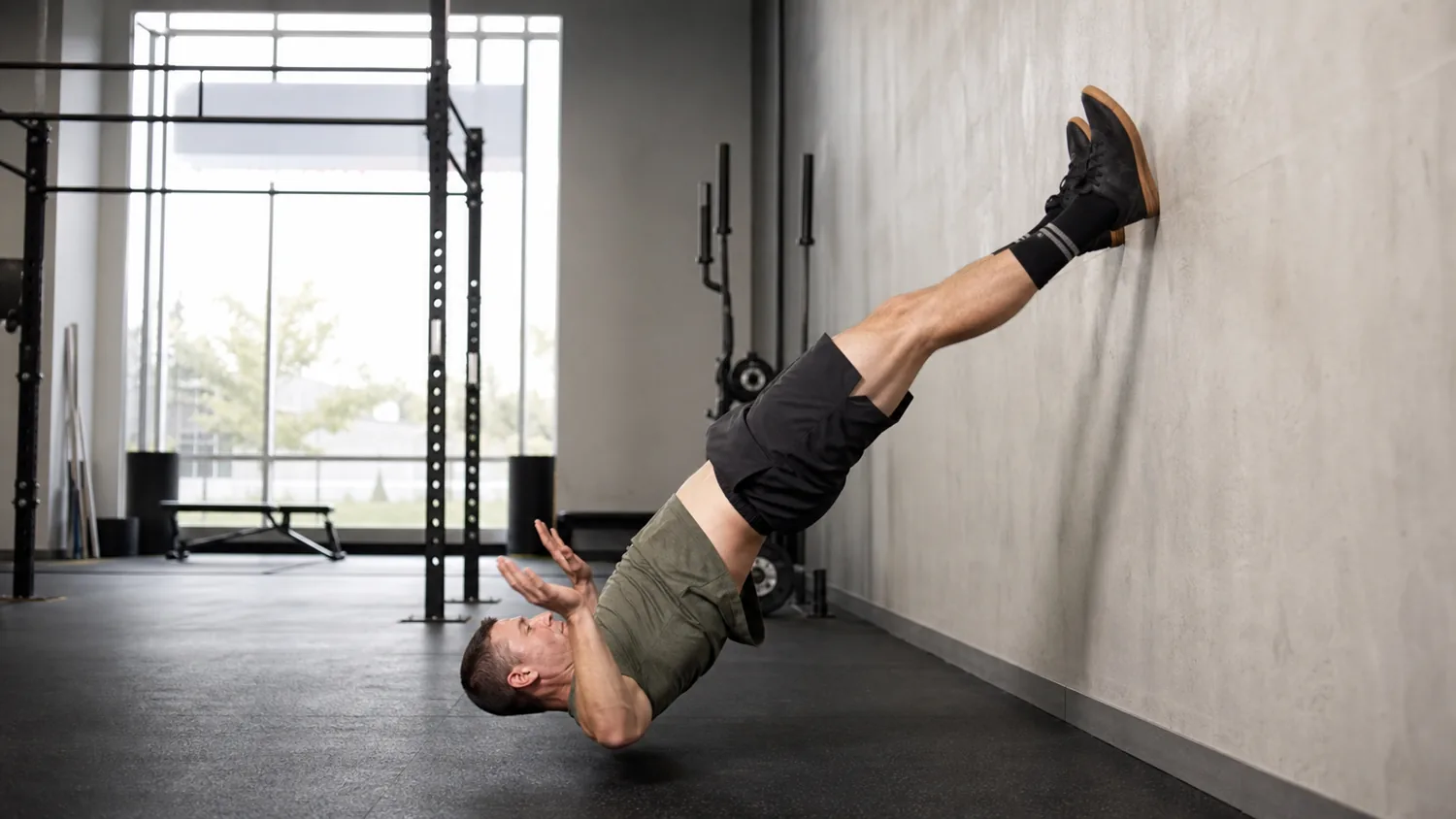
The roll should not leave you stuck on the floor. Think of it as a way to store momentum. Knees come toward the chest, feet return under the body, hands find the floor, and the kick-up follows. If there is a long pause in the middle, the rep gets heavier every round.
Own the roll before the wall
The first mistake is treating the roll like a break. Athletes lie back, rock around, then try to restart from nothing. A better roll is compact. Pull the knees in, keep the chin tucked, and come up with the feet close enough that you can use the legs right away.
This is where hollow body tension and V-up compression help. You need enough midline control to move from the floor without flopping. The goal is not a perfect gymnastics roll. The goal is to arrive in a position that lets you kick up safely.
The kick-up should be predictable
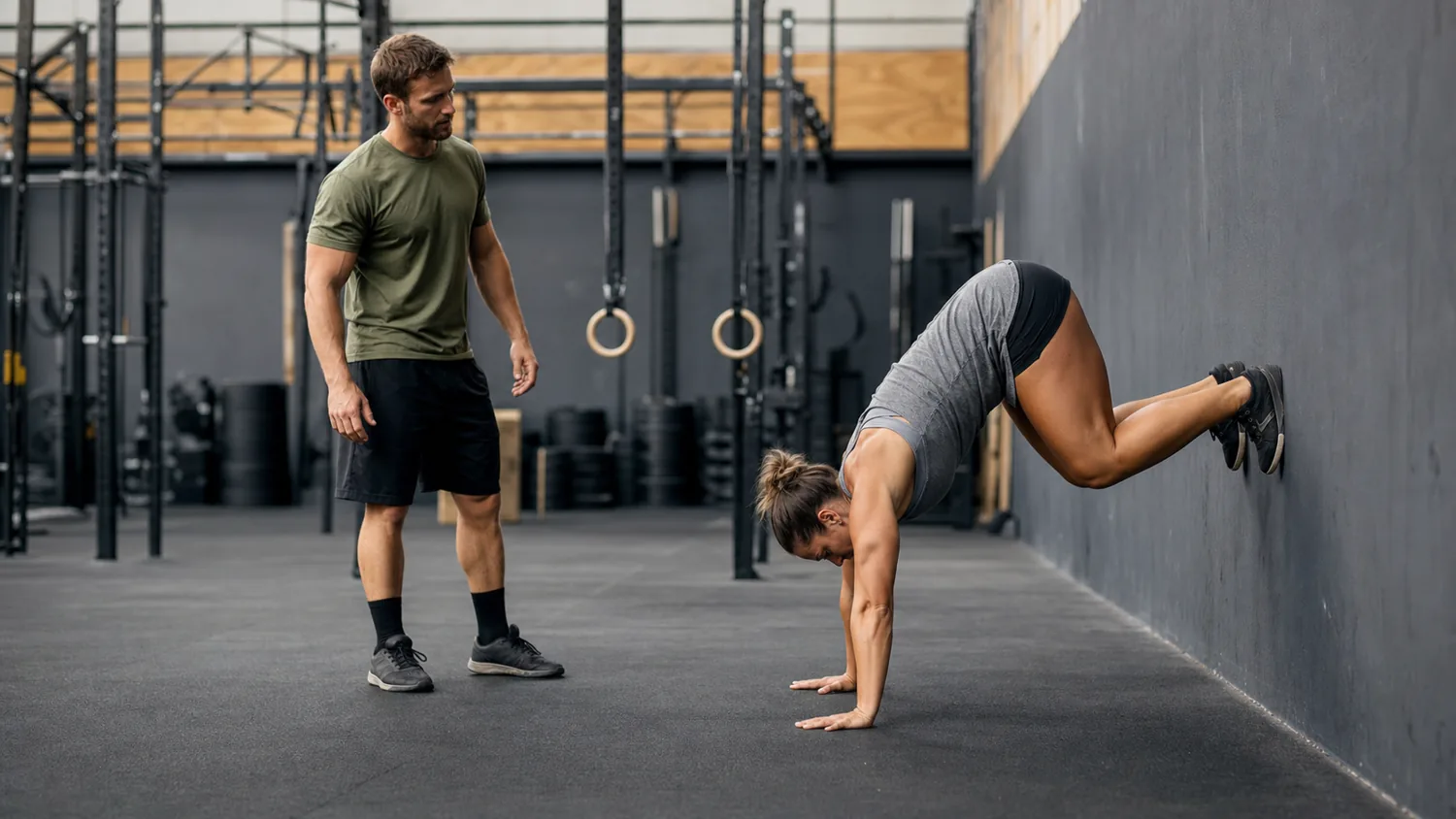
Once the feet are planted, the hands go down and the lead leg drives toward the wall. If the ribs flare and the arms soften, the athlete lands hard or over-arches. A cleaner rep keeps the hands set, elbows locked, and eyes between the hands as the legs rise.
The same shape shows up in wall walk control and handstand hold position. You do not need a long handstand hold during every inverted burpee, but you do need enough control to hit the wall without collapsing. If the handstand feels random, the workout will not fix it.
| Problem | What it looks like | Better cue |
|---|---|---|
| Loose roll | The athlete lands flat and has to sit up slowly | Pull the knees in and return the feet close |
| Late hands | The kick-up starts before the hands are set | Plant hands first, then drive the lead leg |
| Soft elbows | The wall contact bends the arms | Lock the arms before the feet rise |
| Wild descent | The athlete drops out of the handstand with no plan | Step down, reset the feet, start the next roll |
How to pace inverted burpees in a workout
The movement falls apart when athletes chase speed too early. One rushed rep leads to a bad kick-up, then a messy step down, then extra seconds spent finding the next roll. Smooth singles usually beat frantic reps that change shape every time.
Use the same mindset you would use for burpee pacing: breathe before the transition gets ugly. If the workout mixes inverted burpees with running, dumbbells, or pull-ups, pick a pace that keeps the handstand safe after round one.
The demo below is useful because it shows the rhythm of the movement instead of treating it like a random kick to the wall. Watch the roll, the foot plant, and the kick-up before you worry about speed.
Scaling without losing the movement
Good scaling keeps the pattern: roll, return, invert, control the way down. Newer athletes can roll to a stand and practice a wall kick-up separately. Others can reduce the range by kicking to a partial wall position or using a box-supported inversion.
If the kick-up is the problem, spend time on wall entries before adding more reps. If the roll is the problem, practice seated roll-ups and low-volume sets. A smart CrossFit scaling choice should make the rep more teachable, not just easier to survive.
When to practice it
Put a few slow reps into your next CrossFit warm-up, especially before workouts that include wall work, gymnastics transitions, or burpee variations. Start with clean singles. If each rep lands in the same place and the kick-up feels repeatable, then add speed. If every rep feels different, stay slow and fix the transition first.


