The plan
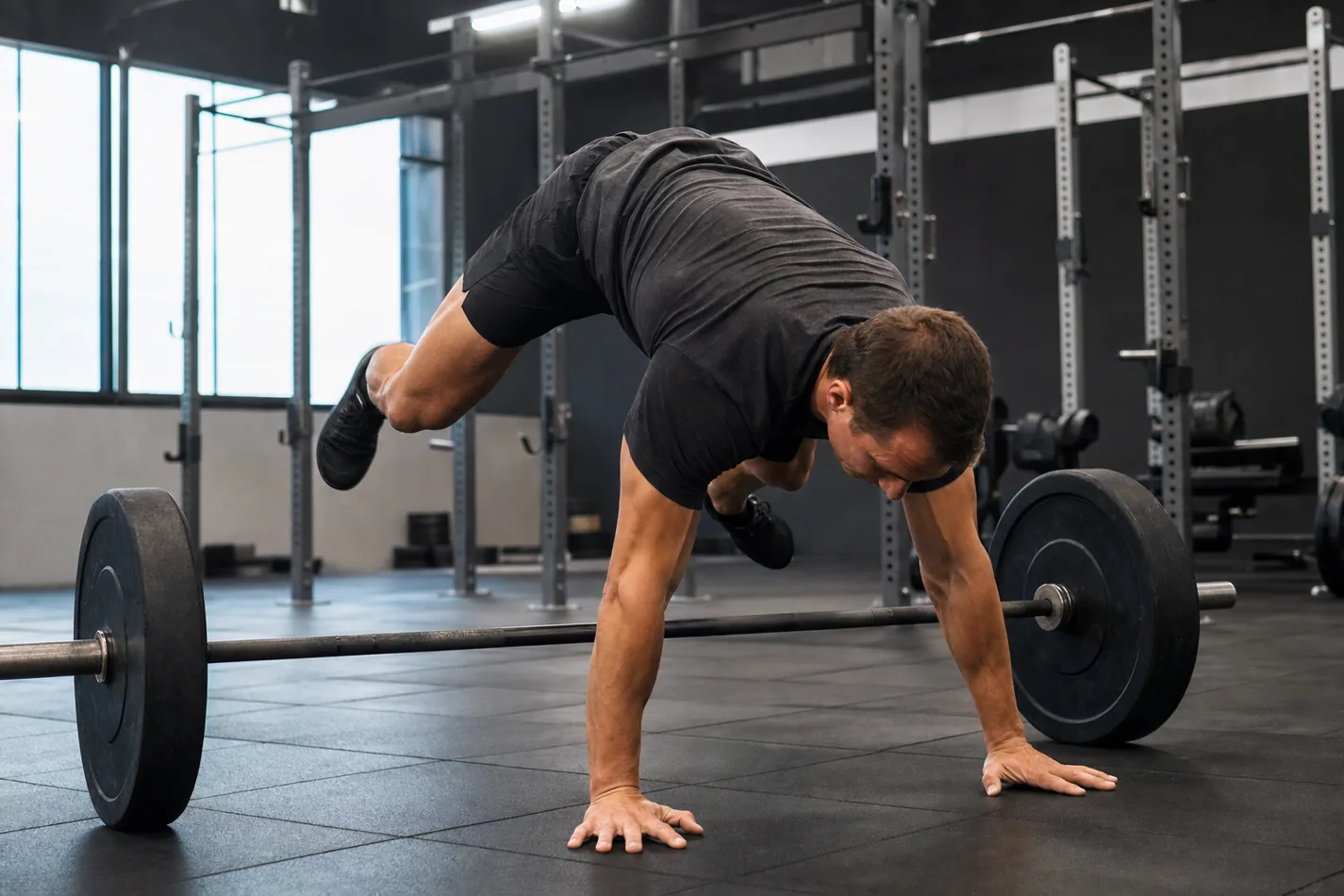
The lateral burpee over bar looks like a small change from a regular burpee. It is not. Once the bar sits beside you instead of in front of you, the rep becomes a test of rhythm, foot placement, and whether you can stay calm when the workout starts to bite.
In CrossFit, this movement usually shows up when the programmer wants burpees to feel faster but less predictable. You drop beside the bar, get up, jump sideways over it, and repeat on the other side. Simple enough until your feet clip the bar, your hips pop too high, or every rep turns into a stand-up-and-stare break.
- Lateral burpees over the bar reward a low, repeatable pattern more than big jumps.
- Most no-reps come from missing the jump standard, stepping when the workout requires a two-foot takeoff, or landing out of control.
- Scale the jump or the burpee depth before fatigue turns every rep into a messy pause.
What counts as a lateral burpee over bar rep
The exact standard can change by workout, division, or competition. In many gym workouts, the athlete lies beside the bar, gets the chest and thighs to the floor, then jumps laterally over the barbell. Some standards allow stepping over. Others require a two-foot takeoff and landing. Read the workout notes before you assume.
The word lateral matters. You are not turning to face the bar like you would in bar-facing burpees. You stay side-on, clear the bar, and drop into the next rep on the other side. That saves a turn, but it also punishes lazy feet.
Stay lower than you want to
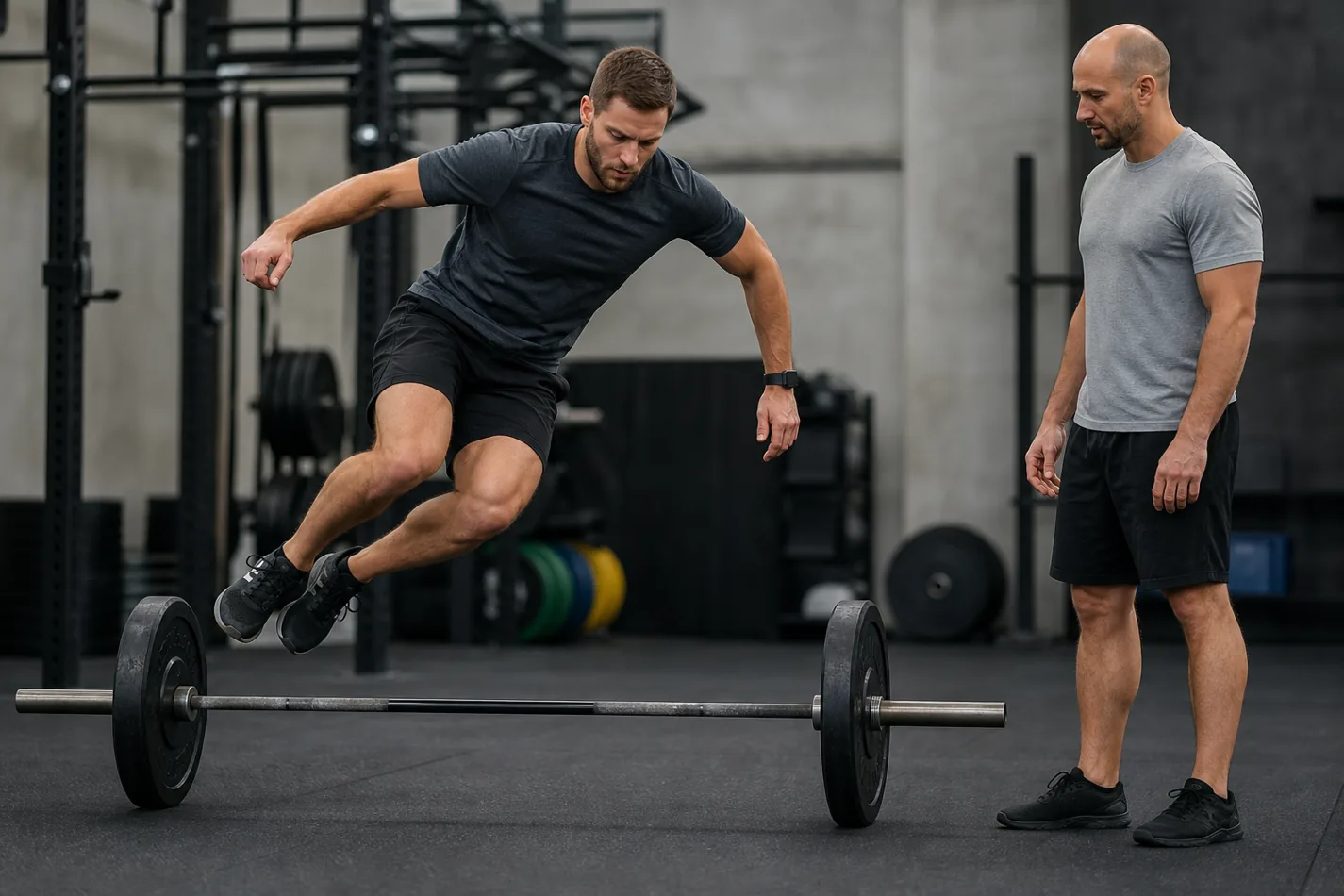
The first mistake is standing all the way up after every burpee. It feels natural because your legs want a second to breathe. It also adds height that the movement does not need. A cleaner rep keeps the athlete low enough to jump, land, and get back down without rebuilding the whole position.
Think about clearing the bar, not winning a vertical jump contest. The jump only needs enough height to pass the bar safely. Land with soft knees, turn the chest toward the floor, and place the hands before the feet start wandering.
| Problem | What it looks like | Fix on the next round |
|---|---|---|
| Too much standing | The athlete pops tall after every rep | Stay low enough to jump again without a reset |
| Feet clip the bar | The jump is rushed or too flat | Look at the bar, jump with both feet, and land balanced |
| Hands drift forward | Each burpee gets longer and slower | Place the hands close to the bar side and keep the line tight |
| No clear standard | Some reps are stepped, some are jumped | Confirm the rule before the clock starts |
Build a rhythm before you chase speed
The best lateral burpee over bar sets have a sound to them. Drop, floor, feet, hop. Drop, floor, feet, hop. When athletes go too hard in the first ten reps, the pattern breaks and the movement becomes random survival.
This is close to the lesson in shuttle run turns. The turn or transition is where time leaks. If you can make the landing point repeatable, you do not need to think as much when your breathing spikes.
The demo below is useful because it shows the side jump and the reset on the floor without extra noise. Watch the feet more than the hands. The fastest reps are usually the ones that stay low and repeat the same line over the bar.
How to pace them inside a WOD
Lateral burpees over bar are sneaky because they rarely fail all at once. The athlete just starts adding tiny delays. One breath before going down. One look at the bar. One extra step after landing. Ten reps later, the round has slowed down without any obvious crash.
Pick a pace you can hold for the middle of the workout, not just the first set. In a couplet with cleans, snatches, or deadlifts, the barbell will already tax the legs and back. If the burpees are paired with another jump, like burpee box jump overs, protect your calves early.
Scaling without changing the training goal
Good scaling keeps the athlete moving sideways over an object without turning the workout into a standing rest. Lower the object first. Use a PVC pipe, line, or low plate if the barbell makes the jump unsafe. If the workout allows it, step over with control and keep the burpee pattern honest.
If getting to the floor is the limiter, raise the hands to a box and keep the lateral step or hop. If jumping is the issue, remove the jump but keep the side-to-side direction. Smart CrossFit scaling should preserve the engine piece and the transition skill, not just make the movement easier on paper.
Warm up the jump, not just the burpee
A few slow burpees are not enough prep. Before the workout, add lateral line hops, short pogos, and two or three easy reps over an empty bar. A targeted CrossFit warm-up lets you test the landing and see whether the bar height, shoes, or floor space need an adjustment.
For athletes with irritated Achilles, calf issues, or poor landing control, this is the time to scale. There is no prize for proving you can clip a barbell with tired feet.
What to fix first
If your reps fall apart, do not start by trying harder. Check the line. Are your hands landing close enough to the bar? Are both feet clearing together when the standard asks for it? Are you standing taller than you need to? Fix one of those before adding speed. The movement gets faster when it gets quieter.


