The plan
The Curtis P looks simple on paper: clean the bar, lunge on each leg, then press it overhead. The problem is the bar never really gives you a break. If the clean is loose, the rack gets worse. If the lunges are rushed, the press turns into a fight.
In CrossFit, that makes Curtis P a sneaky test of barbell discipline. It is not a max lift. It is a complex that asks whether you can keep your breathing, footwork, and rack position together while the clock is pushing you forward.
- The clean should land in a rack you can lunge from, not a catch you have to rescue.
- Step the lunges with control before trying to cycle the bar faster.
- Use the legs on the final press. If the elbows drop, the rep gets expensive fast.
What is Curtis P in CrossFit?
Curtis P is usually performed as a barbell complex: one power clean, one front rack lunge on each leg, and one push press or shoulder to overhead. Gyms may adjust the exact standard, so check the workout brief before loading the bar.
The movement sits between weightlifting and conditioning. The power clean catch starts the rep, the lunges test the rack and the legs, and the press finishes what is left. It feels smooth when each piece sets up the next one. It feels awful when every piece is treated like a separate panic rep.
The clean has to set up the rest of the complex
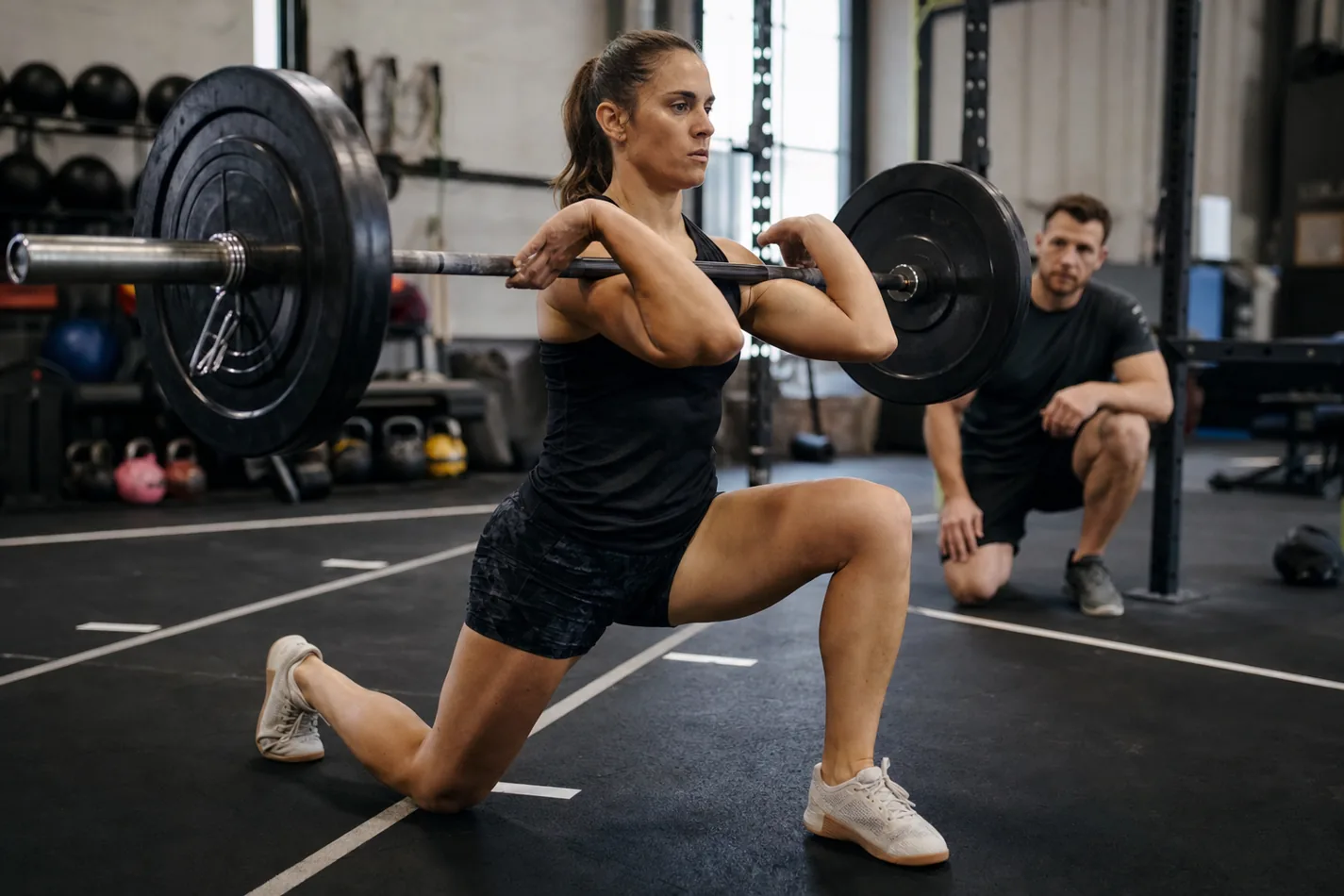
A sloppy clean can still count in some workouts, but it makes the next two parts harder. Catch the bar high enough to breathe. Keep the elbows through. Stand tall before stepping into the first lunge.
If the bar lands low on the shoulders, the athlete usually spends the lunges fighting the rack. That drains the upper back and makes the press feel heavier than it should. Think about earning a clean front rack position before chasing cycle speed.
Front rack lunges are where most reps leak time
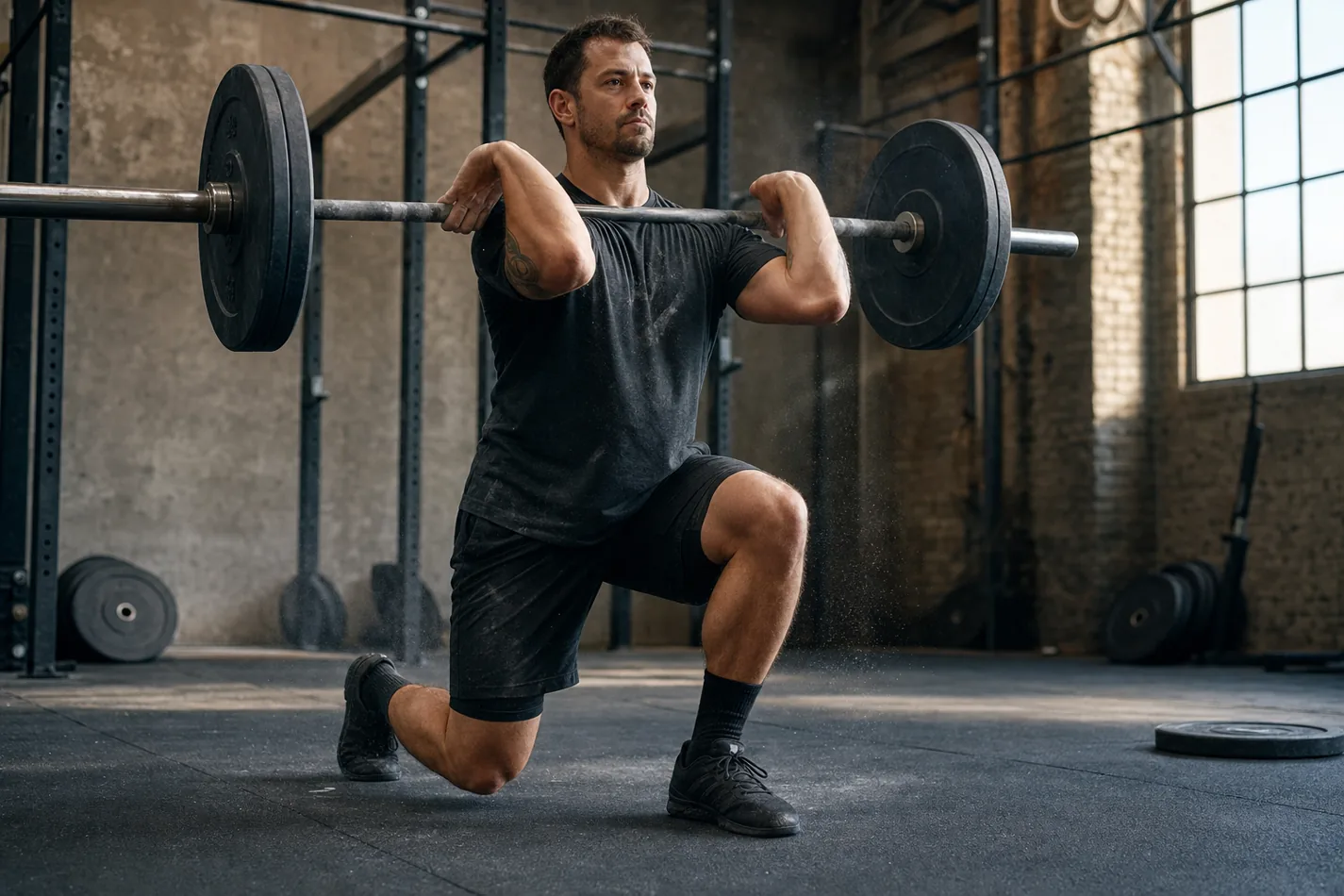
The lunges are not filler between the clean and the press. They are often the part that decides whether the rep stays clean. Step long enough to keep the front heel down, but not so far that the back knee crashes and the torso folds.
Good lunge balance is quiet. The feet land with purpose, the elbows stay up, and the athlete stands before switching legs. If the bar is rolling down the arms, slow down for one rep and fix the rack. A faster bad rep usually costs more than a controlled good one.
| Fault | What it does to the rep | Fix before adding weight |
|---|---|---|
| Elbows drop during the lunges | The bar pulls the torso forward | Brace, lift the elbows, and shorten the set if needed |
| Back knee crashes into the floor | The athlete loses tension and timing | Step under control and touch lightly if the standard requires it |
| Clean lands too low | The rack is already broken before the lunge | Use a lighter bar and catch with the elbows through |
| Press starts from a soft dip | The shoulders do all the work | Reset the feet and drive through the legs |
Do not waste the final press
After the lunges, many athletes rush the overhead finish. That is when the bar drifts forward. Set the feet, breathe once if the workout allows it, then use push press leg drive instead of turning the rep into a strict press by accident.
If the workout allows shoulder to overhead, choose the version you can repeat. A push press is simple and fast for lighter bars. A push jerk may save the shoulders when the load is heavier or the set is long. The goal is a locked out bar over the midfoot, not a dramatic save behind the head.
The demo below is useful because it shows the Curtis P as one connected barbell complex. Watch the rack before the lunges, then the way the athlete resets before the press instead of rushing the finish.
How to pace Curtis P in a workout
Curtis P punishes athletes who sprint the first minute because the complex keeps the bar in your hands for a long time. Break before technique breaks. In a workout with moderate loading, quick singles can beat ugly touch and go reps if they keep the rack sharp.
Watch what comes next. If Curtis P is paired with burpees, rowing, or running, the heart rate will already be loud. If it is paired with thruster breathing, wall balls, or more front rack work, the shoulders and legs need a plan. Do not make the first round the whole workout.
Scaling options that keep the stimulus
Good CrossFit scaling keeps the complex honest. Lower the weight first. If the rack position is the problem, use dumbbells only if the workout goal allows it. If lunges are the limiter, reduce range, use reverse lunges, or switch to step-ups when knees or balance make lunging a poor choice that day.
The CrossFit warm-up should include the full sequence with an empty bar. Do one clean, one lunge each side, one press, then ask a simple question: can you repeat that for several minutes without chasing the bar around? If not, change the load before the workout starts.
What to check before your next Curtis P
Before adding weight, check three things. Can you catch the clean in a real rack? Can you lunge without the elbows falling? Can you press without leaning back? If one answer is no, that is the part to train first.
The best Curtis P reps do not look rushed. They look organized. The bar stays close, the feet land where they should, and the athlete finishes each piece with enough control to start the next one.


