The plan
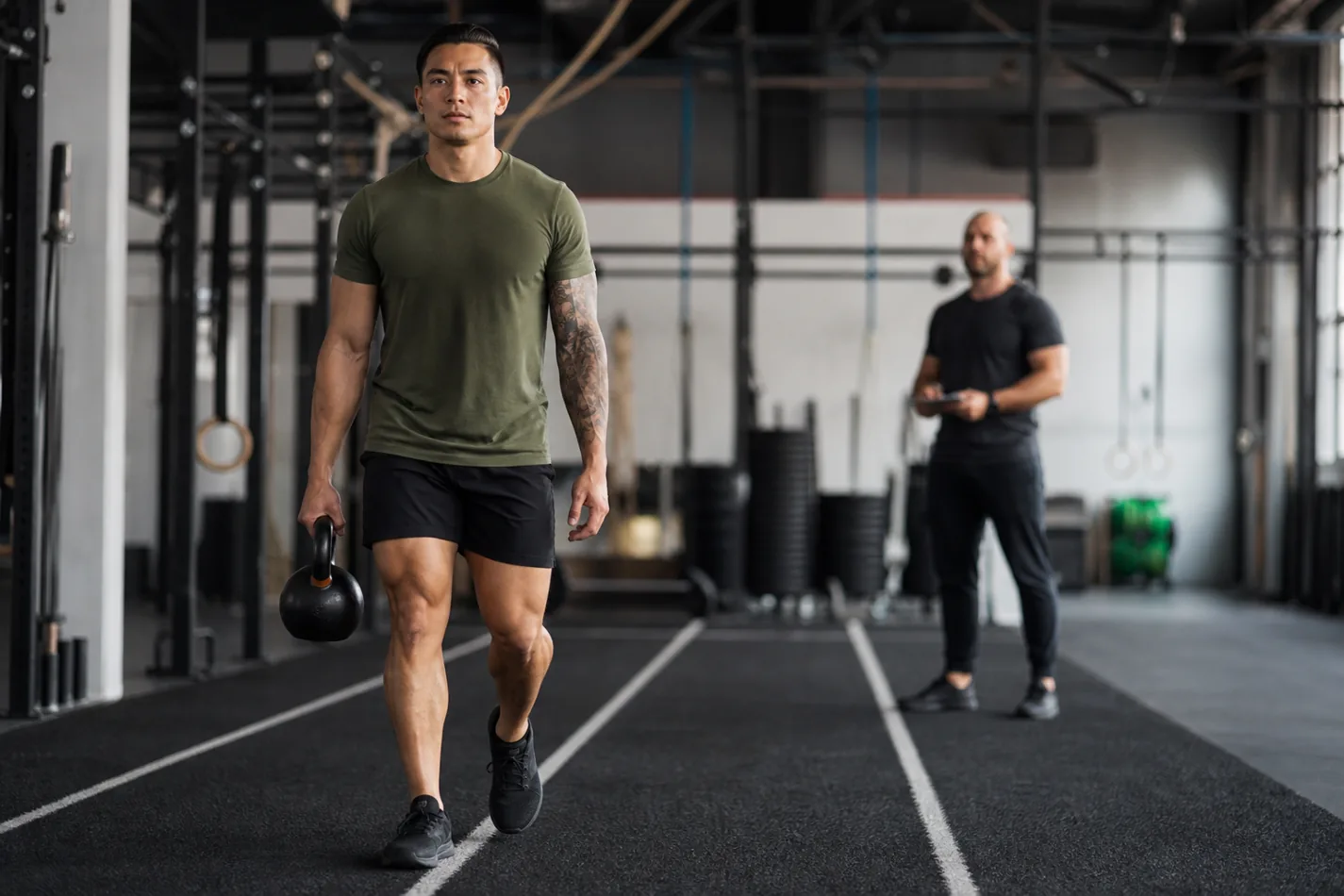
A suitcase carry looks almost too simple for a CrossFit class. Pick up one kettlebell or dumbbell, walk, switch hands, keep going. Then the loaded side starts dragging the shoulder down and the unloaded side starts doing weird things to compensate.
That is the point. The suitcase carry is a one-arm carry that trains grip, obliques, lats, posture, and patience under fatigue. It punishes leaning, rushed steps, lazy bracing, and the habit of turning every loaded walk into a shrug.
- Hold one weight at your side and walk without letting your ribs, hips, or shoulders tilt.
- Choose a load you can control for the full distance, not one that makes you stagger after five steps.
- Use it as grip and trunk work, or as a smarter scale when two-arm carries are too much.
Why suitcase carries feel harder than they look
With a two-arm carry, the load is balanced. With a suitcase carry, one side gets heavy and the body has to fight the pull. If the athlete relaxes, the torso bends toward the weight. If the athlete overcorrects, the opposite shoulder hikes up and the walk turns stiff.
The goal is not to look robotic. The goal is to walk like the weight is there, but not in charge. That same trunk control shows up in farmer carry work, yoke carry bracing, and longer pieces where the grip is tired but the spine still has to stay organized.
Set the weight before the first step
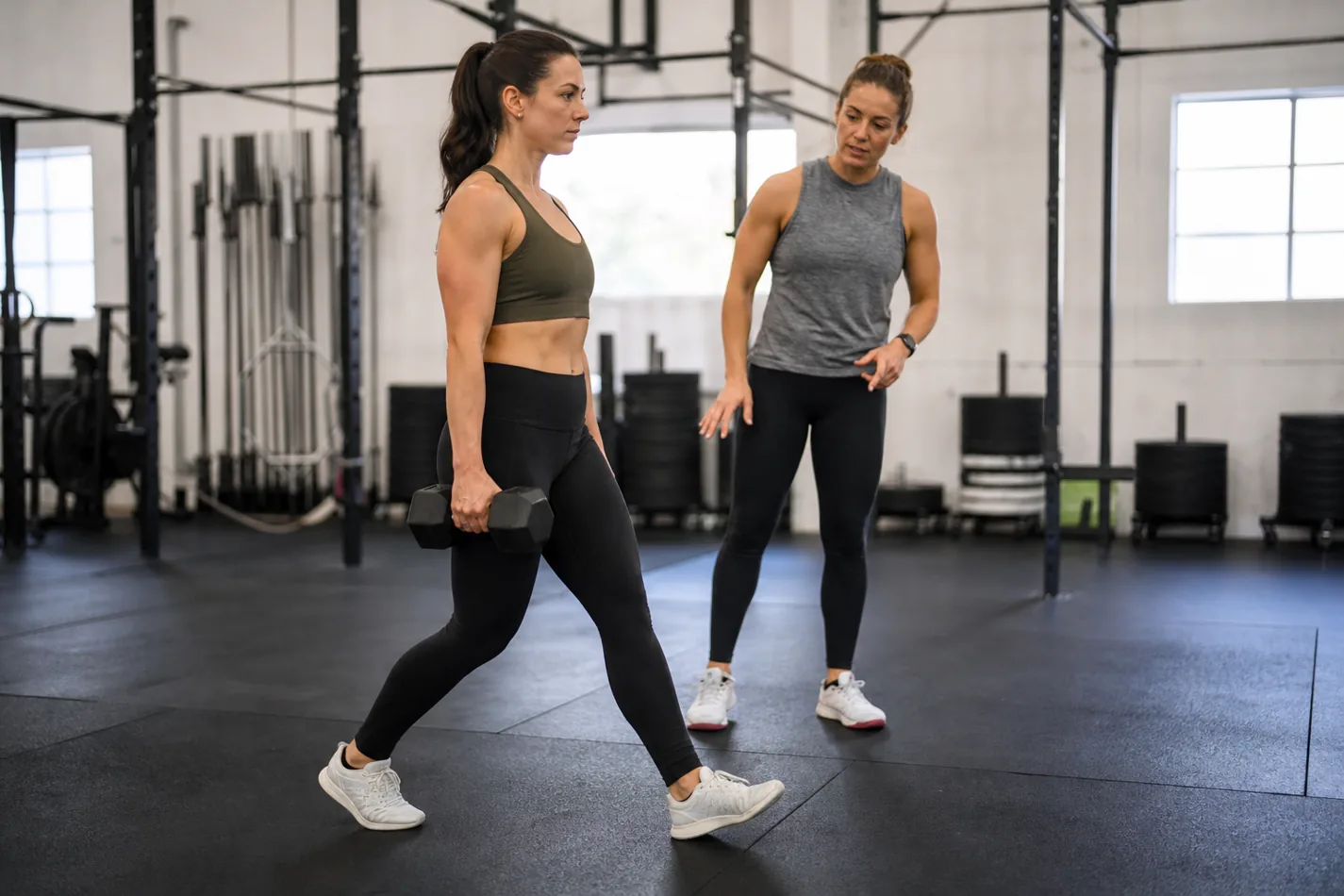
Start with the weight on the floor just outside one foot. Hinge down, grab the handle, and stand up without twisting. Think about a quiet version of the deadlift setup: feet planted, back set, weight close. Do not yank the bell from a rounded side bend just because the carry is light.
Once standing, let the loaded arm hang long. Pack the shoulder lightly, keep the ribs down, and look forward. The free hand should stay relaxed. If it starts flapping around or pressing into the hip, the athlete is probably fighting a load that is too heavy.
| Fault | What it usually means | Fix before the next set |
|---|---|---|
| Shoulder drops toward the weight | The load is pulling posture apart | Go lighter or shorten the distance |
| Opposite shoulder hikes up | The athlete is over-bracing | Exhale, walk slower, keep both shoulders quiet |
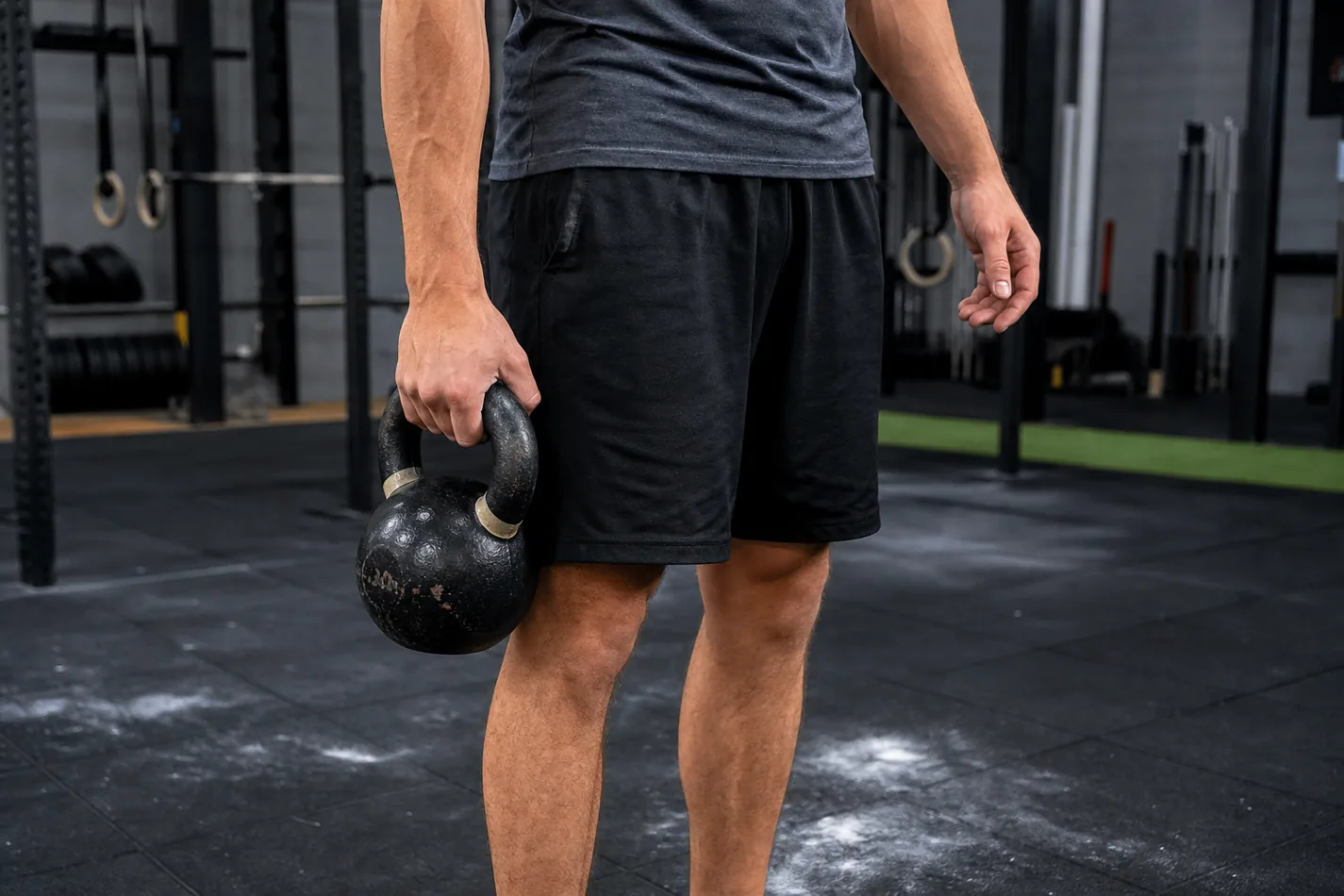
| Bell swings away from the leg | Steps are rushed or the grip is loose | Slow down and keep the weight close to the thigh |
| Feet cross or wobble | The stance is too narrow for the load | Use normal walking steps and reduce load if needed |
How to use suitcase carries in a WOD
Suitcase carries work well in intervals, warm-up prep, accessory blocks, and conditioning pieces that already tax the trunk. A coach might pair them with step-ups, rowing, burpees, sled work, or lighter pulling work. They also make sense after a CrossFit warm-up when the goal is to teach athletes what a braced walk feels like before the workout gets loud.
The trap is going too heavy too soon. A heavy carry is useful only if the walk stays clean. If every step turns into a sideways lean, the athlete is training the mistake harder than the movement.
The demo below is short, but it shows the detail that matters: the weight stays beside the leg while the torso refuses to tip toward it. Watch the shoulders and rib cage more than the feet.
Load, distance, and switching hands
For most class athletes, a useful starting point is a load they can carry for 50 to 100 feet per side without losing posture. That could be a kettlebell, dumbbell, farmer handle, or odd object with a reliable grip. The object matters less than the rule: the torso should look almost the same on both sides.
Switch hands before grip failure ruins the position. In a workout, that may mean planned breaks every 25 or 50 feet. In strength work, it may mean slower walks with more rest. Do not turn every set into a max hold unless that is the exact goal of the day.
Scaling without losing the point
Good CrossFit scaling keeps the one-sided challenge while removing the piece that is failing first. If grip is the issue, use a lighter bell or shorter distance. If balance is the issue, walk slower and use a clearer lane. If back position changes on the pickup, raise the weight on plates so the athlete can start from a better height.
Beginners can use march-in-place carries, short shuttles, or static holds. Stronger athletes can use heavier kettlebells, uneven carries, front-rack plus suitcase combinations, or longer pieces mixed with sandbag carry breathing. Just be careful with volume. One-arm carries can make the midline feel fine during the workout and angry later.
What to check before your next carry workout
Before adding load, walk 30 feet with a moderate kettlebell and ask one question: would the rep look the same if someone filmed it from the front? If the shoulders stay level, the bell stays close, and the feet stay calm, add distance or weight. If the body bends around the object, fix that first. The suitcase carry is simple, but it is honest.


