The plan
Cat cow stretch is easy to rush because it does not look like training. Hands on the floor, knees under the hips, arch the back, round the back, repeat. Then the barbell comes out and the athlete still cannot feel where the spine is.
Used well, cat cow gives a CrossFit athlete a quick check before squats, deadlifts, cleans, overhead work, crawling drills, or gymnastics. It is not a magic mobility fix. It is a low-risk way to wake up spinal control and breathing before the warm-up gets louder.
- Move slowly enough to feel the difference between rounding, arching, and neutral.
- Keep the elbows straight and hands rooted so the spine moves instead of the shoulders faking the rep.
- Use it early in the warm-up, then retest a squat, hinge, crawl, or overhead position.
What cat cow should do for a CrossFit warm-up
A clean rep teaches the athlete to move the spine on purpose. In cow, the chest opens and the tailbone tips up without collapsing into the low back. In cat, the athlete presses the floor away and rounds through the upper back without shrugging into the ears.
That control matters when the workout asks for bracing. Athletes who cannot find neutral from a quiet tabletop position often struggle to keep a solid torso under speed. Cat cow can sit before front squats, pulls from the floor, or simple prep like inchworms because it gives the athlete a body check before load or fatigue hides the problem.
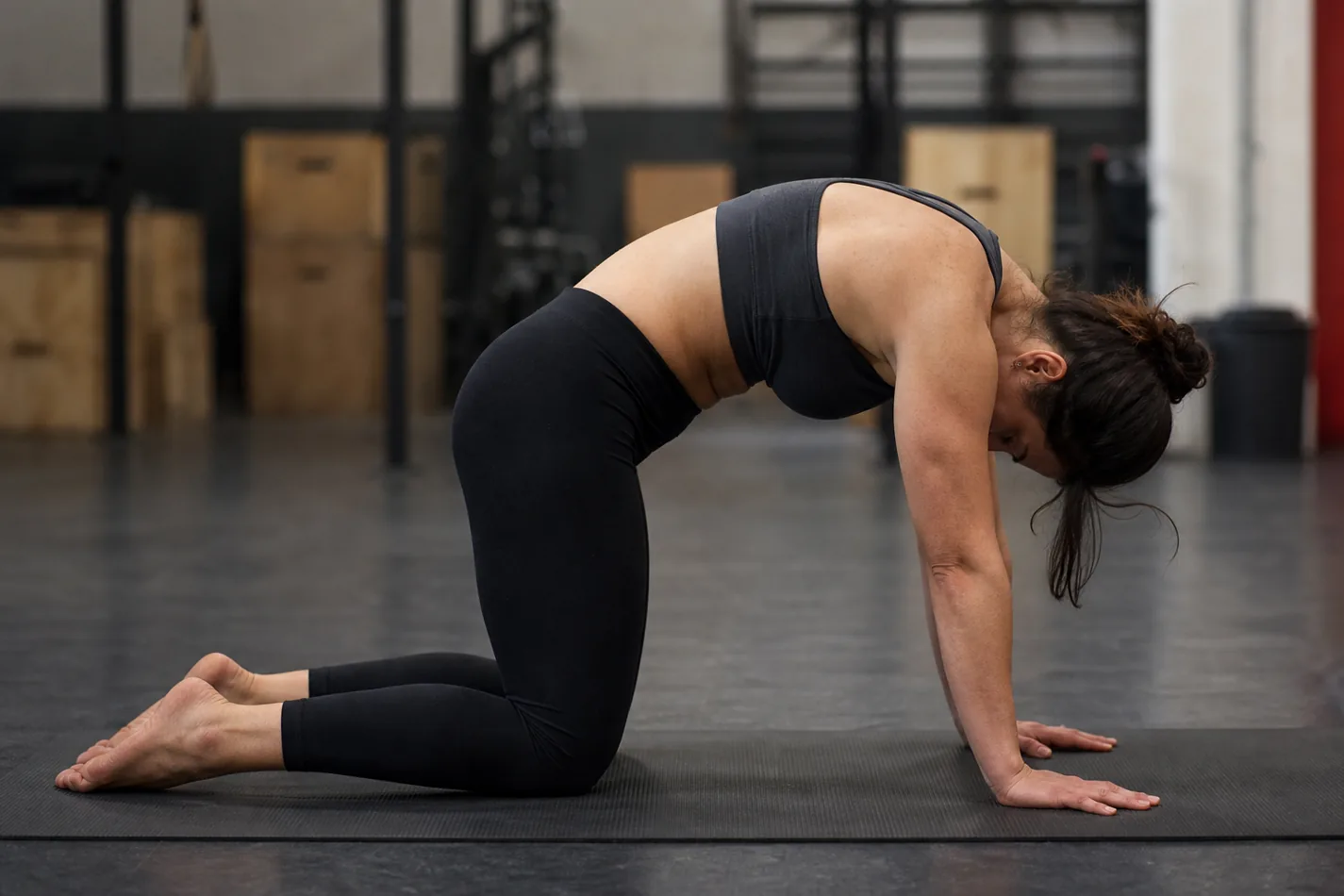
Set the tabletop before chasing range
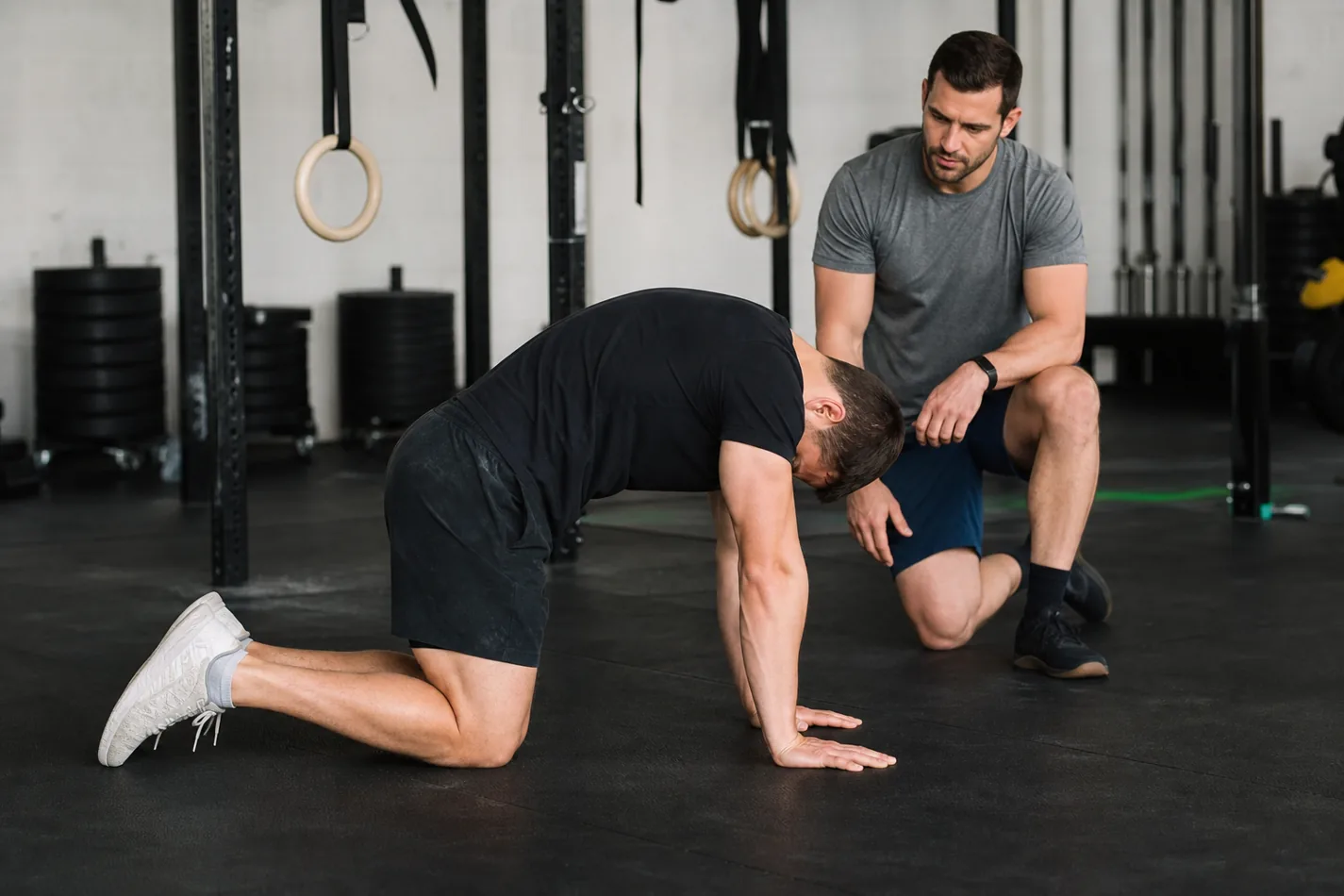
Start with the hands under the shoulders and the knees under the hips. Spread the fingers. Push the floor lightly. Keep the elbows straight, but not locked with tension. The head should follow the spine instead of snapping up and down like a separate movement.
The first few reps should be small. In cow, breathe in and let the chest move forward while the sit bones tip up. In cat, breathe out and round the back as if trying to make more space between the shoulder blades. The point is control, not the biggest arch in the room.
| Fault | What it usually means | Coaching fix |
|---|---|---|
| Neck moves more than the back | The athlete is chasing the shape with the head | Look down and let the head follow the ribs |
| Low back pinches in cow | The arch is being stolen from one spot | Make the range smaller and keep the ribs quieter |
| Shoulders shrug in cat | The athlete is pressing from the neck instead of the floor | Push through the hands and widen the upper back |
| Reps get fast and loose | The drill has turned into filler | Use five slow breaths instead of a random set of twenty |
Where it fits with other mobility drills
Cat cow works best near the start. It gives the spine a quiet reset before the hips, ankles, and shoulders get more specific. If the day includes squatting, pair it with ankle mobility and a lunge-based drill. If the day includes hinging or glute work, it can lead into glute bridges or light good mornings.
For overhead days, cat cow can come before wall walk prep, band work, or a thoracic rotation drill. It also pairs naturally with scorpion stretches and worlds greatest stretch when the warm-up needs rotation, not just flexion and extension.
The demo below is worth watching slowly. Do not look for a big yoga pose. Look for controlled movement through the spine, steady hands, and a clean return to neutral before the next rep.
How many reps are enough
Most classes do not need a long cat cow block. Five to eight slow reps usually beat thirty distracted ones. Coaches can count breaths instead of reps: inhale into cow, exhale into cat, pause in neutral, then repeat. That rhythm keeps the drill honest.
If an athlete feels stuck, give them a smaller target. Ask for a little motion at the upper back, a quiet neck, or a smoother return to neutral. If they feel pain, stop and choose another option. Warm-up drills should make the next task clearer, not turn into a test of tolerance.
Scaling and substitutions
Some athletes dislike wrist extension in tabletop. Put the hands on dumbbells, use fists, or move to forearms if needed. If knees are the issue, place a mat under them or do a seated pelvic tilt instead. The goal is still the same: feel the spine move and then find neutral again.
For athletes who already move well, add a slow reach or thread-the-needle variation after cat cow. Do not add it just to make the warm-up look busier. Add it when the next piece of training asks for more rotation or shoulder control.
When to use it before training
Use cat cow when the workout rewards better position: squats that need a steady torso, deadlifts that need a clean hinge, gymnastics that need shoulder control, or crawls that ask the athlete to own the floor. Run the drill, stand up, and retest the first movement of the day. If the athlete can breathe, brace, and find neutral faster, the drill did its job.
If nothing changes, move on. Cat cow is a tool, not a warm-up identity. The best version is short, quiet, and useful enough that the next rep with a barbell looks better.