The plan
The scorpion stretch shows up in CrossFit warm-ups because it is quick, easy to coach, and does not need equipment. It can also turn messy in about three seconds. Athletes lie face down, whip one heel across the body, twist through the low back, and call it hip mobility.
Used well, the drill gives the hips, front line, upper back, and shoulders a quick check before squats, burpees, running, wall walks, or overhead work. Used badly, it teaches the body to borrow range from the lumbar spine. That is not the trade you want before a hard WOD.
- Move slowly enough to know whether the rotation is coming from the hip, upper back, or low back.
- Keep the shoulders heavy on the floor. If the chest peels up, reduce the range.
- Use it as a warm-up check, not as a contest to see who can touch the foot farthest across the room.
What the scorpion stretch is trying to open
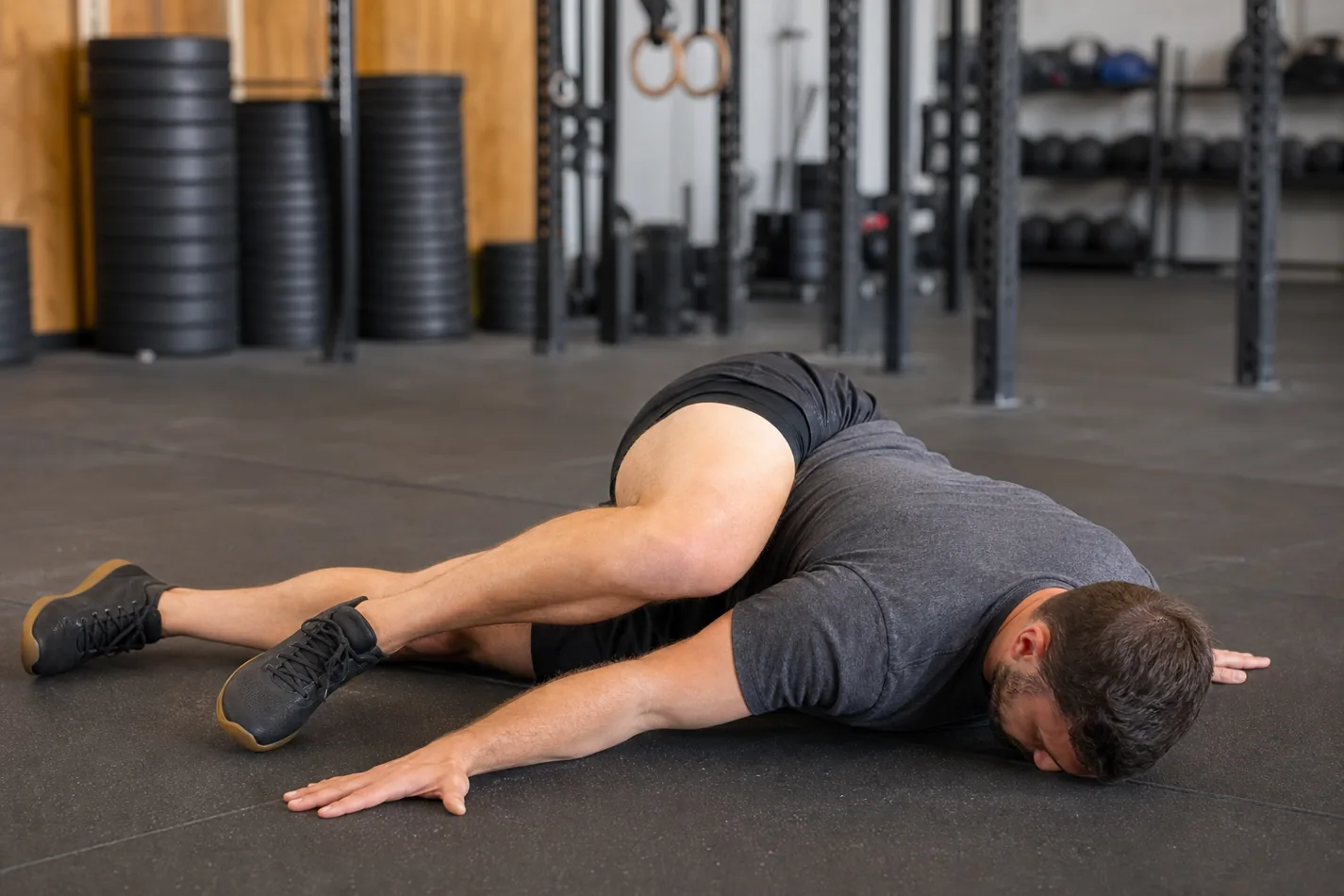
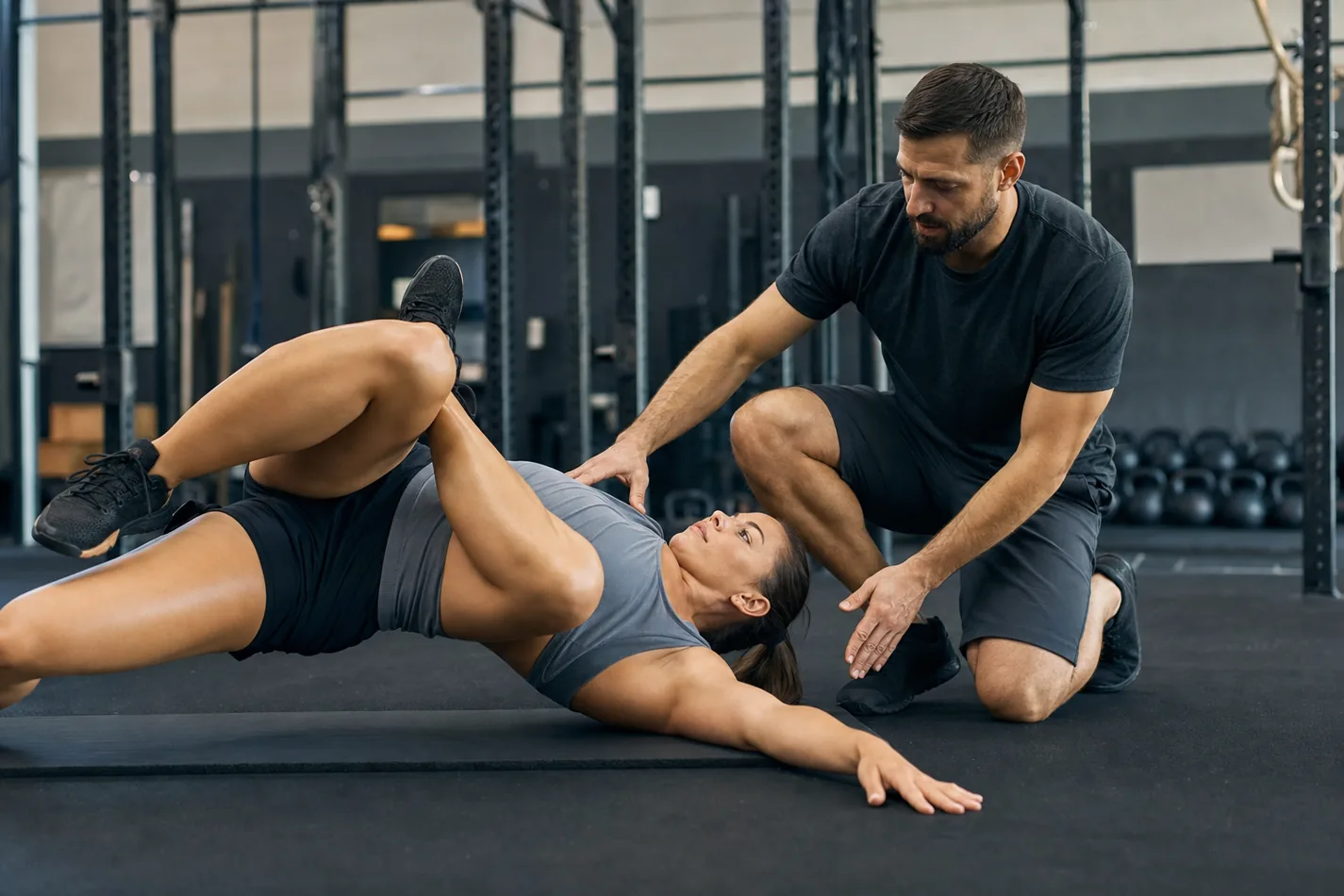
The scorpion stretch starts face down. One knee bends, the leg crosses behind the body, and the athlete lets the hip rotate while the chest stays as quiet as possible. The goal is not a dramatic shape. The goal is to see whether the hip can rotate without the low back doing all the work.
That makes it different from the pigeon stretch, which parks the front hip in a deeper external rotation position, and different from the couch stretch, which mainly attacks the hip flexor and quad line. The scorpion stretch is more of a moving screen. It tells you whether the back side of the body can turn without losing the front side of the body.
How to set up without cranking the back
Lie face down with the arms out wide or slightly bent. Bend one knee. Start the turn slowly. Let the heel travel toward the opposite side, but keep both shoulders heavy for as long as you can. If the shoulder pops up right away, the range is too big for the drill you are trying to do.
The most useful cue is boring: go slower. A fast rep hides where the motion comes from. A slow rep exposes it. If the athlete feels a pinch in the low back, bring the leg back, reset the ribs, and shorten the arc. The same rule applies to world's greatest stretch: a bigger reach is not better if the body has to cheat to get there.
| Common fault | What it usually means | Better fix |
|---|---|---|
| Leg swings across fast | The athlete is using momentum instead of range | Count two seconds out and two seconds back |
| Chest lifts off the floor | The shoulders are following the twist too early | Reduce the range and press the arms into the floor |
| Low back feels jammed | The lumbar spine is stealing the rotation | Reset the ribs and move through a smaller arc |
| Knee feels irritated | The athlete may be forcing the bent leg | Lower the foot path or choose another hip drill |
Where it fits before CrossFit training
The scorpion stretch fits best after a few minutes of heat and before loaded prep. Use four to six slow reps per side, then retest the movement that matters that day. Before wall walks, see if the rib position feels easier. Before squats or lunges, check whether the hips feel less blocked. Before running, notice whether the stride feels freer without getting loose and sloppy.
It pairs well with Spiderman stretch when the session needs hip opening and trunk rotation. It also works beside ankle mobility on squat days, because hips and ankles often share the blame when the bottom position feels stuck.
The demo below is useful because it keeps the drill simple. Watch the pace first. The athlete does not throw the leg across and hope the spine follows. The turn is controlled enough that you can see where the hips move and where the shoulders stay heavy.
When coaches should scale or swap it
Some athletes do not need more scorpion stretch. They need a smaller version they can control. If the floor version feels too aggressive, have them keep the knee lower, move only halfway across, or place a folded mat under the chest so the start position is less harsh.
If the athlete cannot keep the front of the body quiet, swap to a simpler drill. The glute bridge can wake up hip extension without rotation. A slower lunge variation can make more sense before lateral lunges. For gymnastics days, basic bracing work such as hollow rocks may matter more than another stretch.
What it should feel like
A good rep feels like a controlled turn through the hip and upper back. You may feel a stretch across the front of the hip, obliques, chest, or shoulder line. You should not feel a hard grab in the low back or pressure inside the knee. If you do, the range is too large or the drill is the wrong choice that day.
After the stretch, retest one simple thing: an air squat, a lunge, a push-up position, or the first few steps of the warm-up run. If the next movement looks better, keep it. If nothing changes, do not keep adding reps just because the drill looks athletic.
When to keep it out of the warm-up
Skip the scorpion stretch when an athlete has fresh back irritation, cranky knees in the bent-leg position, or shoulders that cannot stay comfortable on the floor. Use a smaller hip opener instead. The point of warm-up mobility is to make the first real reps cleaner, not to spend ten minutes proving who can twist the farthest.