The plan
The world's greatest stretch has a big name for a floor drill. In a CrossFit warm-up, that name can be a problem. Athletes rush it, bounce through the lunge, throw one arm to the ceiling, and call it mobility before the hips have done any real work.
Done well, it is useful. The drill opens the hip flexor on the back leg, asks the front hip to make room, and adds a controlled thoracic rotation. That combination carries into squats, lunges, running, burpees, wall walks, and overhead positions. Done badly, it becomes a sloppy lunge with a twist on top.
- Set the lunge first. The front foot should stay flat before you chase a bigger reach.
- Rotate through the upper back, not by dumping the ribs or letting the knee cave in.
- Use it before squat, lunge, running, wall walk, and overhead days when hips and T-spine need a quick check.
What the world's greatest stretch is trying to fix
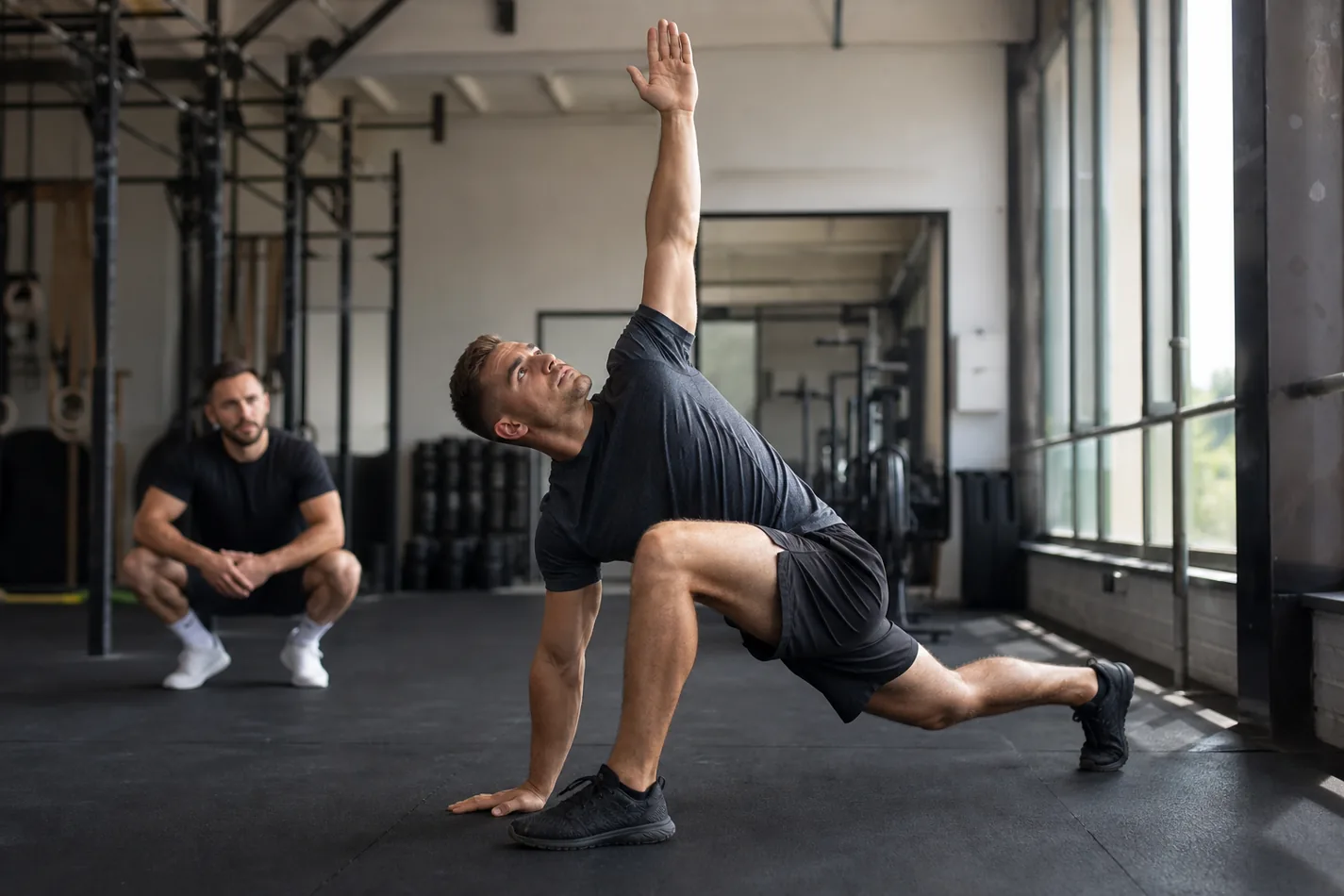
The drill starts in a long lunge. One hand stays near the front foot while the other arm reaches up after the athlete has found a stable base. That setup gives the body a quick conversation with several common CrossFit limits: front-hip space, back-leg hip extension, ankle position, trunk rotation, and shoulder line.
It should not feel like a yoga pose copied at double speed. The front foot has to stay active. The knee should track over the toes. The back-side glute should help keep the low back from stealing the stretch. If you already use Samson stretch or couch stretch for hip flexors, this drill adds a moving rotation layer instead of just holding one line.
Set the lunge before you twist
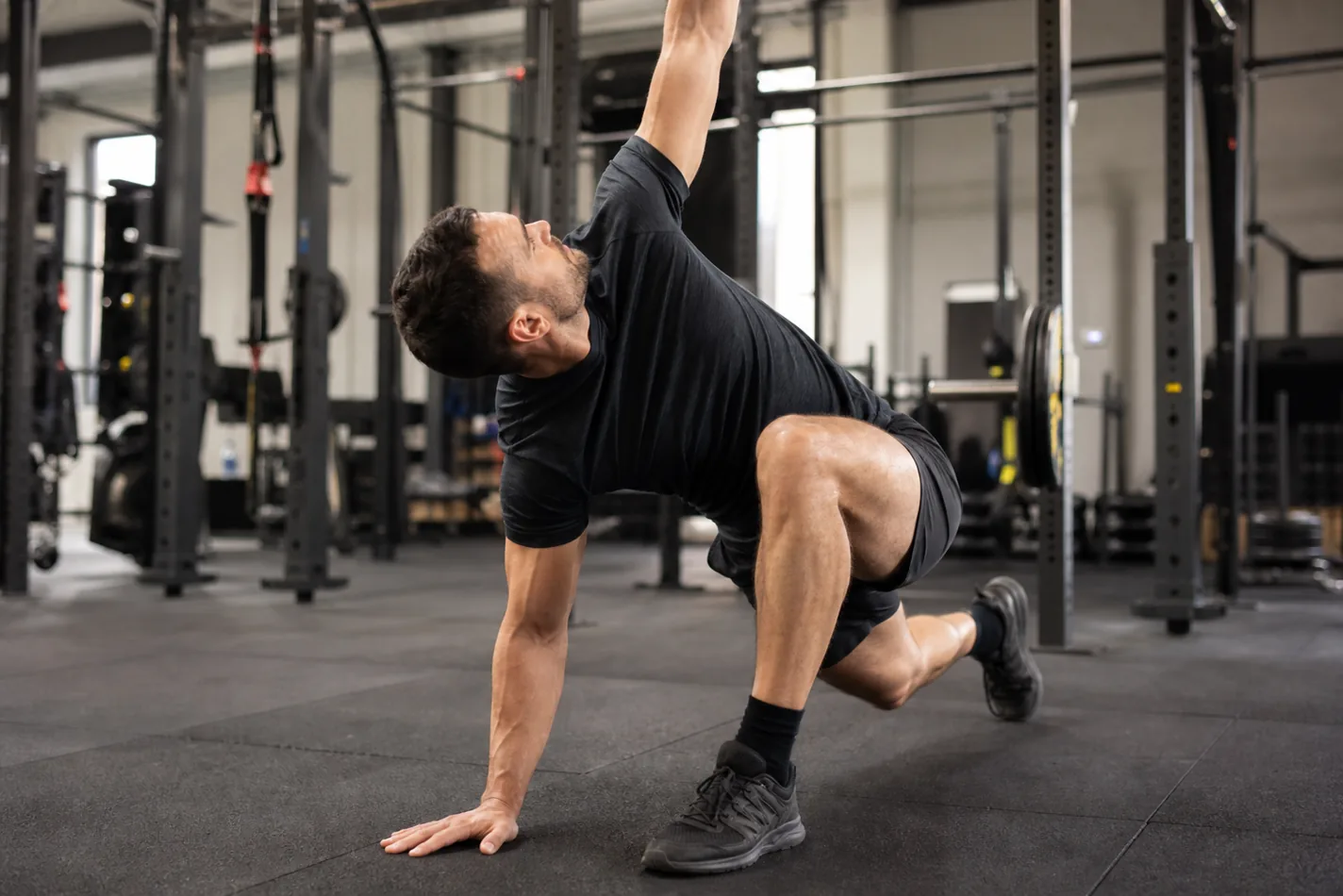
Most bad reps go wrong before the arm moves. Step one foot outside the same-side hand. Keep the whole front foot on the floor. Let the back leg stay long. Then breathe and check whether the hips are square enough to support the rotation.
If the front heel lifts, move the foot or reduce the range. If the knee falls inside, slow down and rebuild the foot pressure. Athletes who struggle with ankle mobility often feel this right away because the front shin has to travel without losing the heel.
| Fault | What it usually means | Better cue |
|---|---|---|
| Front heel pops up | The athlete is forcing range through the toes | Move the foot wider or shorten the lunge |
| Knee dives inside | The hip and foot are not holding the line | Track the knee over the second or third toe |
| Low back arches hard | The ribs are trying to fake hip extension | Squeeze the back-side glute and breathe down |
| Twist happens fast | The athlete is chasing motion, not control | Pause at the top for one calm breath |
Where it fits in a CrossFit warm-up
The world's greatest stretch works best early, after a little heat but before the loaded prep. Think five to eight controlled reps per side, not a long mobility project. On squat days, use it before air squats and light barbell work. On running days, pair it with skips or light shuttle runs. On gymnastics days, it can help open the front line before wall walks or handstand work.
It also pairs well with inchworms when the warm-up needs hamstrings, shoulders, and trunk tension in the same block. For lateral days, use it before lateral lunges or Cossack squat variations, but do not pretend it replaces side-to-side strength work.
The demo below is worth watching for the order of the drill. The useful part is not how far the athlete can twist. It is how cleanly the front foot stays planted, the back leg stays long, and the upper back rotates without the whole lunge collapsing.
How coaches should scale the drill
Some athletes do not need a bigger stretch. They need a cleaner one. Put the hands on plates or a low box if the floor position pulls them out of shape. Drop the back knee if the long lunge turns into a low-back fight. Skip the reach if the front knee cannot stay honest yet.
For newer athletes, a slower Spiderman-style lunge may be enough. If they can own that position, add the rotation. If they cannot, stay with the simpler version and build the range over time. There is no award for touching the elbow to the floor if the foot, knee, and ribs all fall apart to get there.
What it should feel like
You should feel the front hip working, the back hip opening, and the upper back turning with some control. You should not feel sharp pinching in the hip, pressure in the front knee, or a hard crank in the low back. Mild stiffness is normal. Pain is feedback to change the drill.
Before a heavy front squat day, retest an air squat after the stretch. Before a burpee or running workout, retest a few easy reps and see whether the stride or floor transition feels cleaner. Mobility only matters if it changes the next movement.
How to use it before class
Give it a job. Two rounds of five slow reps per side is enough for most warm-ups. Keep the front foot down, breathe at the top, and come out of the lunge with control. If the drill gives you better positions, keep it. If it only makes you tired or sloppy, choose a simpler hip opener and save the energy for the WOD.