The plan
Side planks look quiet, which is why athletes rush through them. Then the hips drop, the shoulder shrugs, and the set turns into a countdown instead of a position worth training.
In CrossFit, side planks are useful because they train the lateral trunk without asking for another heavy lift or another high-skill gymnastics rep. They help athletes feel whether they can keep the ribs, pelvis, and shoulder stacked while fatigue tries to pull the body out of line.
- Stack the elbow under the shoulder before lifting the hips.
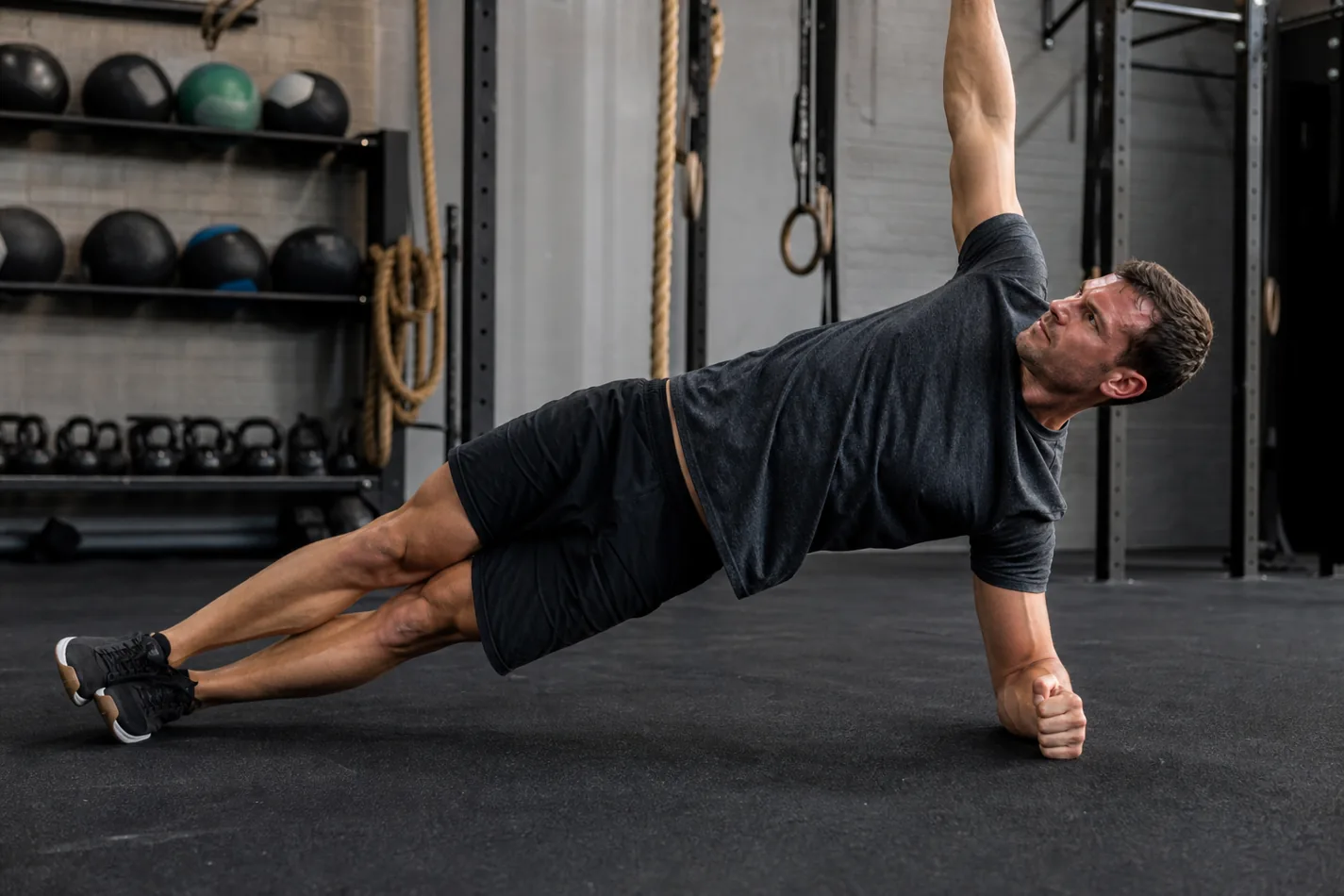
- Keep a straight line from shoulder to ankle. A high top hip with a sagging bottom hip is still a missed position.
- Scale from the knees before adding long holds, leg lifts, reaches, or rotation.
What a clean side plank should feel like
Set the elbow under the shoulder, not out in front of the face. Stack the feet if that is appropriate, or stagger them for a wider base. Then lift the hips until the body forms one long line. The top shoulder should stay open instead of rolling toward the floor.
A useful side plank feels active through the bottom shoulder, obliques, glutes, and the outside of the hip. It should not feel like the neck is holding the body up. If the athlete cannot breathe or keeps twisting, the set is already too hard.
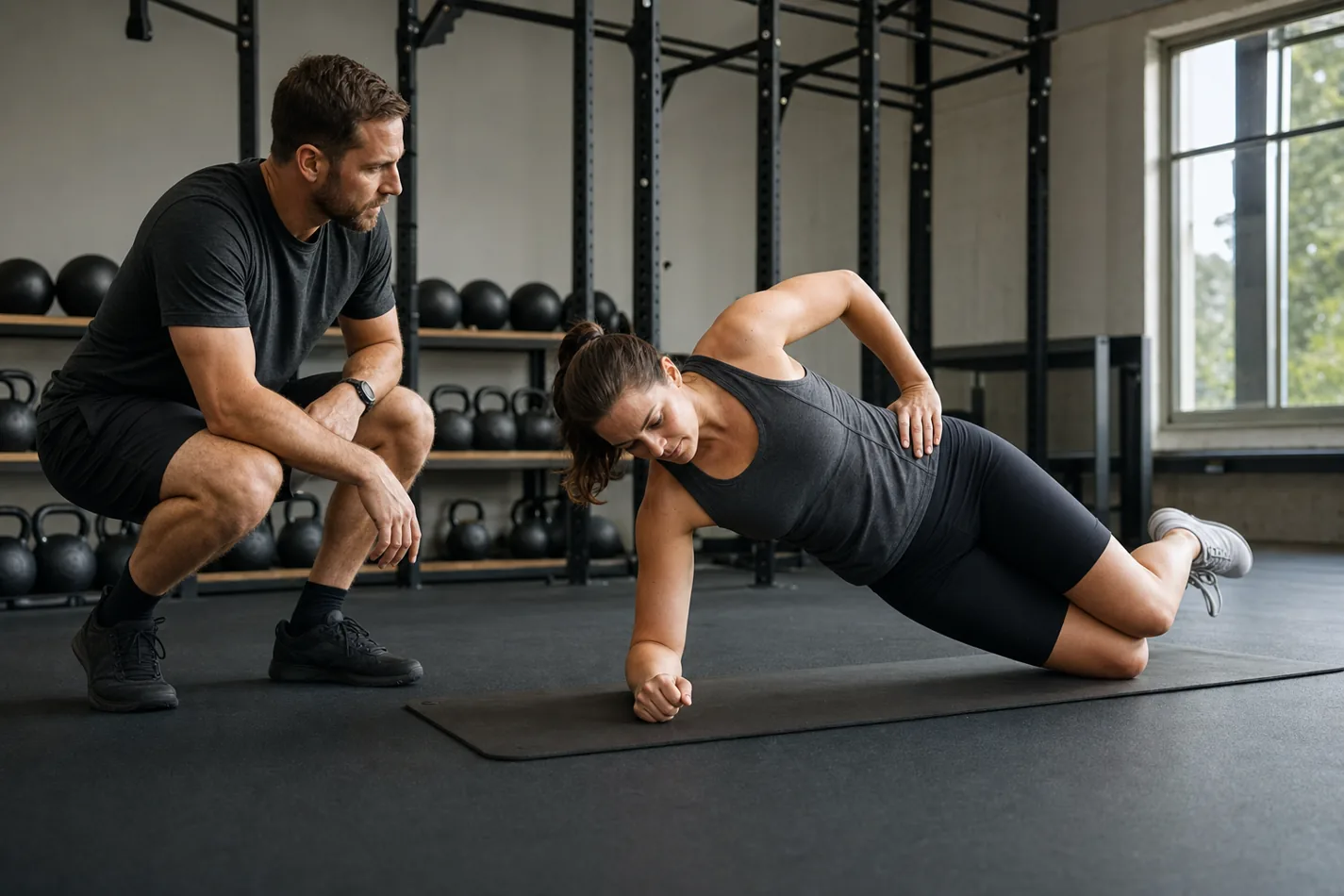
The hip drop is the first fault to fix
The common miss is simple: the athlete starts well, then the bottom hip slowly sinks. From the side, the rep still looks like a plank. From the front, the body has already lost the line.
Think long and stacked. Press the floor away, squeeze the glutes lightly, and keep the ribs from flaring. That trunk control pairs well with hollow hold work and arch holds, because all three teach athletes to keep shape without hiding behind speed.
| Fault | What you see | Fix |
|---|---|---|
| Elbow too far away | The shoulder feels jammed and the body drifts | Reset with the elbow directly under the shoulder |
| Hip drops | The bottom side sags toward the floor | Shorten the hold or scale to the knees |
| Top shoulder rolls forward | The chest points down instead of sideways | Open the chest and stack the shoulders |
| Neck tension | The athlete shrugs and holds the breath | Press the floor away and keep the head neutral |
Why CrossFit athletes should care about lateral core work
Most CrossFit midline work happens facing up, facing down, or hanging from a bar. Side planks fill a gap. They train the athlete to resist side bending and twisting, which matters when dumbbells, carries, lunges, and uneven positions start showing up in a workout.
The drill also gives coaches a low-risk way to check shoulder and trunk control before harder ring or pressing work. If an athlete cannot keep a calm side plank, harder positions like ring fallouts or unstable pressing in ring push-ups usually expose the same leak faster.
The video below is useful because it keeps the drill simple. Watch the straight line from shoulder to ankle, then watch how little the hips move when the position is owned.
How to scale side planks without losing the point
Scaling should protect the shape. Start from the knees if the full version turns into a hip drop after a few seconds. Keep the elbow under the shoulder, keep the torso long, and hold for shorter sets that look the same from start to finish.
Once the athlete owns the position, add small layers: staggered feet, stacked feet, a top-leg lift, a reach-through, or short side plank dips. Do not add variation just because the hold feels boring. Boring is often where the useful work is hiding.
Where side planks fit in a session
Side planks work well in warm-ups before carries, gymnastics, lunges, and pressing. Two or three short sets per side can wake up the trunk without leaving the athlete tired for the main piece.
They also fit after training, especially when the goal is better trunk control around the hips. Pair them with glute bridges when the athlete needs cleaner hip position, or with shoulder control drills when the bottom shoulder keeps collapsing.
How to use side planks in training
Use side planks when the workout keeps exposing a tilted pelvis, a soft shoulder, or a torso that twists under light fatigue. Keep the holds honest. Ten clean seconds per side can do more than a minute of surviving.
If the body line stays stacked and breathing stays calm, make the next set a little harder. If the hip drops or the neck takes over, scale it back. The goal is not to win the plank. The goal is to carry a stronger side body into the next WOD.