The plan
Arch holds are easy to fake. An athlete lies face down, lifts the chest and legs, and calls it done. Then the low back starts gripping, the glutes go quiet, and the drill stops looking like gymnastics prep.
In CrossFit, the arch position matters because it shows up in kipping, bar work, ring skills, and floor drills. The point is not to make the biggest banana shape possible. The point is to create a long, controlled line without dumping every bit of tension into the lumbar spine.
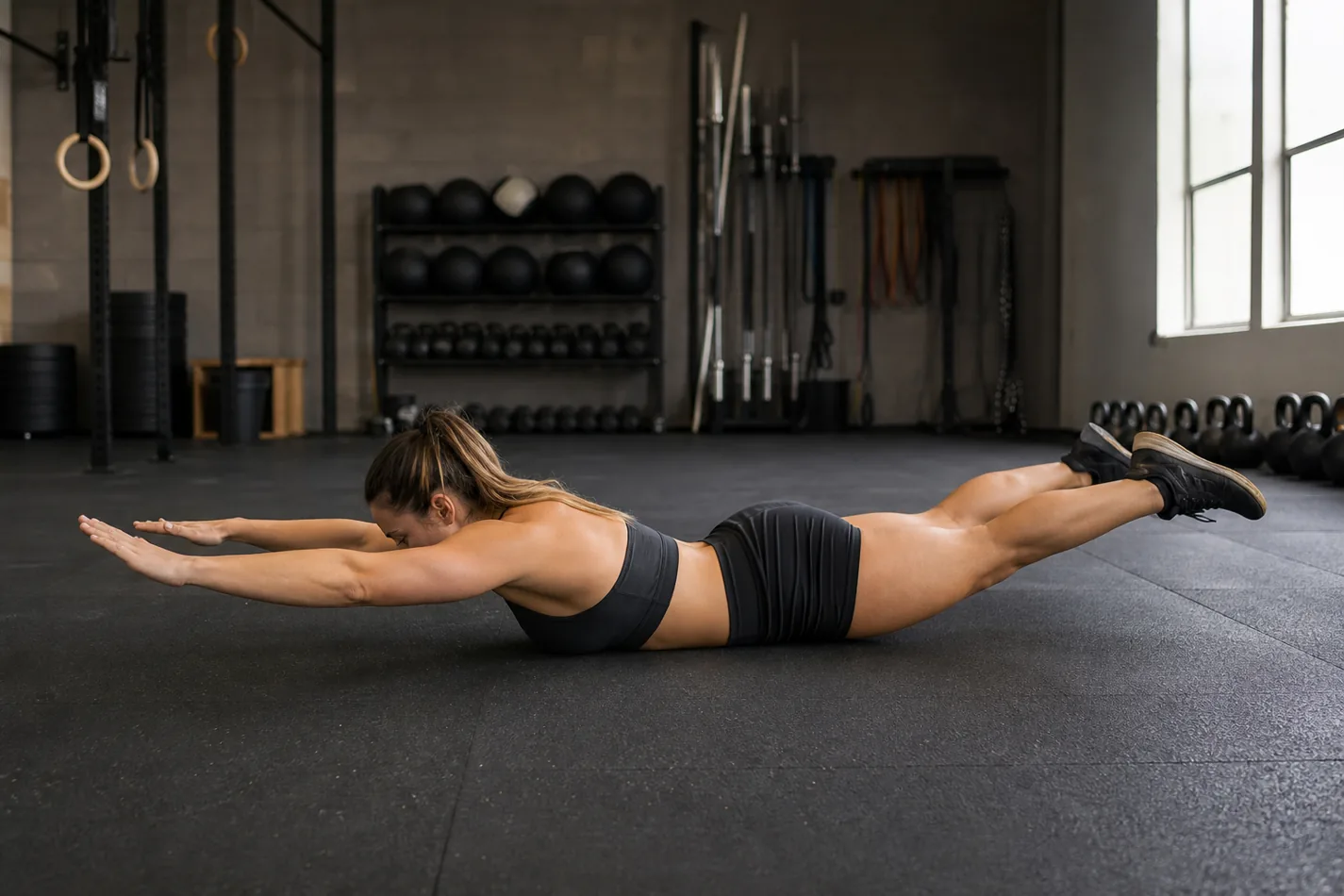
- Start long: arms reaching, legs straight, glutes squeezed, neck neutral.
- Lift only as high as you can without pinching the low back or losing the ribs.
- Use arch holds with hollow work, pull-up prep, and gymnastics warm-ups that need better body tension.
What an arch hold should feel like
Set up on the floor with the arms reaching forward and the legs long behind you. Squeeze the glutes before lifting. Then raise the chest and legs a small amount while keeping the body stretched from fingertips to toes. The face should stay down enough that the neck does not crank up.
A good rep feels active through the glutes, upper back, and shoulders. It should not feel like the low back is holding the whole drill hostage. That is the first difference between useful arch work and a sloppy superman hold.
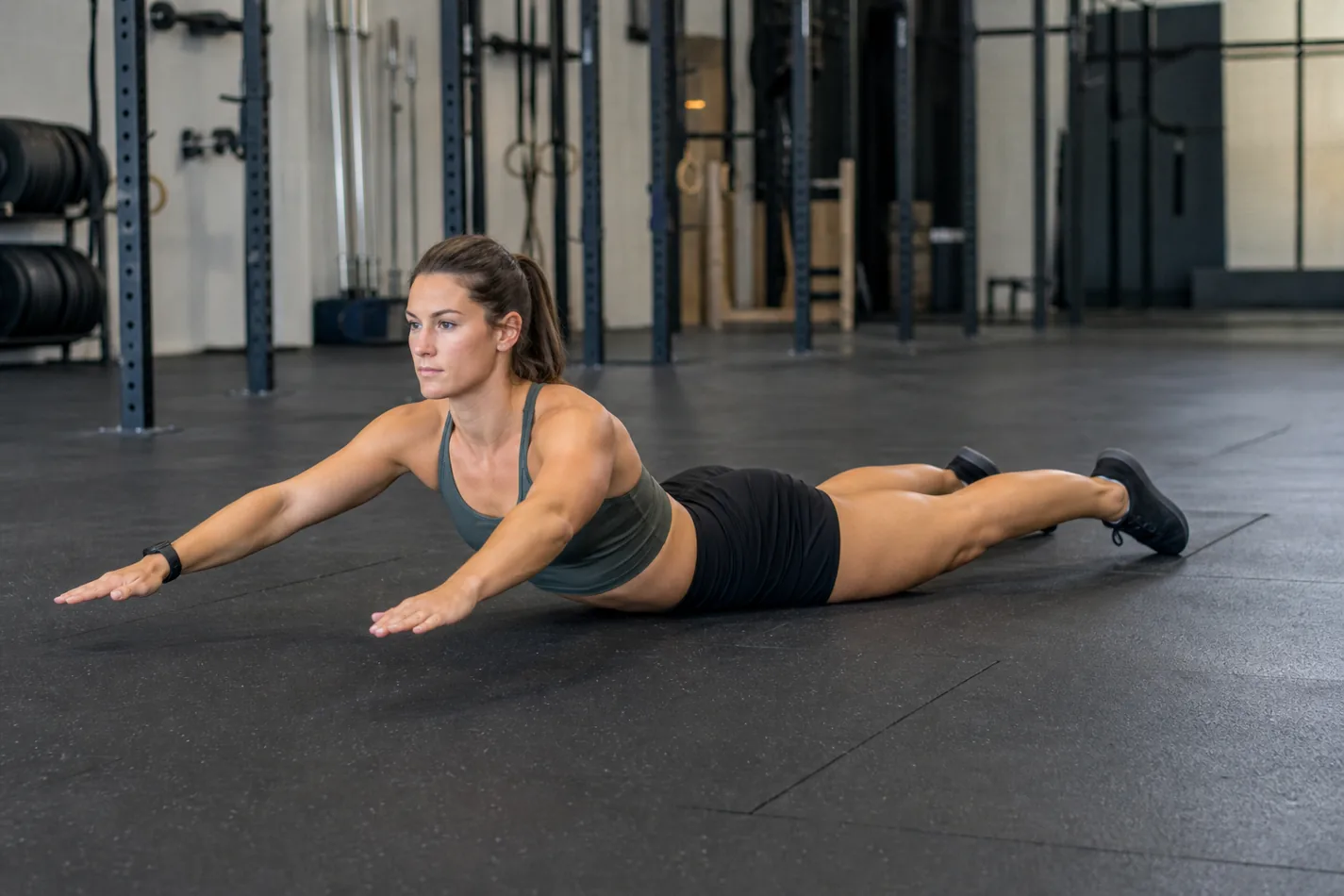
The low back is not the target
The most common mistake is chasing height. Athletes lift higher by compressing the low back instead of creating length. From the outside, the position may look harder. From the inside, it is just a cranky back waiting to happen.
Think reach before lift. The hands reach away, the toes reach back, and the glutes stay squeezed. That same bodyline shows up when athletes move from hollow holds to the arch side of a kip. If either shape is loose, the swing gets messy fast.
| Fault | What you see | Fix |
|---|---|---|
| Low back pinch | The athlete lifts high but cannot breathe well | Lower the range and squeeze the glutes before lifting |
| Bent knees | The feet drift apart and the legs go soft | Reach the toes back and keep the quads lightly active |
| Head thrown up | The athlete looks forward during every hold | Keep the gaze down and the neck long |
| No upper back tension | The arms hang low and the shoulders feel loose | Reach the arms away and lift from the upper back, not the neck |
Why CrossFit athletes need the arch shape
Arch holds are not just accessory filler. They teach one half of the hollow to arch rhythm used in kipping pull-ups, toes-to-bar, and bigger gymnastics skills. If the athlete cannot find the arch on the floor, the bar usually makes the problem louder.
The shape also helps with ring work. Movements like skin the cat and stable ring support work ask the athlete to control the shoulders and trunk while the body changes angle. The floor version strips away the fear and lets the athlete feel the line first.
The demo below is short and useful because it keeps the movement simple. Watch the long bodyline first, then the height of the chest and legs. More height is not always better.
How to scale arch holds without making them pointless
Start with shorter holds. Five to ten seconds done well beats thirty seconds of low back tension. If lifting both arms and legs is too much, keep the hands by the sides or lift only the upper body while the legs stay lightly active.
Arch rocks come later. So do hollow to arch rolls. The athlete should own a still position before adding motion. That same rule applies across good CrossFit scaling: reduce the piece that breaks the shape, not the piece that teaches it.
Where to put arch holds in a session
The cleanest place is in a gymnastics warm-up. Pair arch holds with hollow holds, scap pull-ups, beat swings, or low ring drills. Keep the volume modest. The goal is to wake up body tension, not make the back tired before the real work starts.
Arch holds can also sit after training as trunk accessory work, especially for athletes who overextend during pull-ups or lose their shape on toes-to-bar. If the next day includes heavy hinge work like GHD hip extensions or deadlifts, keep the holds lighter and crisp.
When to practice arch holds
Use arch holds when the workout or skill session asks for better bodyline control. Before pull-ups, toes-to-bar, bar muscle-ups, or handstand drills, two or three short sets are usually enough. If the shape improves, move on.
If the athlete only feels the low back, stop and scale the drill. The arch should teach tension you can carry into movement. It should not be another place to practice compensating harder.