The plan
Skin the cat looks like a party trick until the rings start moving. Then it becomes a shoulder honesty test. If the athlete rushes the first pull or relaxes at the back of the rotation, the drill can feel sketchy fast.
Used well, it teaches slow inversion, active shoulders, and awareness in positions that show up around rings, bar gymnastics, and handstand work. Used badly, it becomes a loose swing through end range with no plan for getting back out.
- Skin the cat is a ring rotation drill, not a max range shoulder stretch.
- Start tucked, keep the rings close, and move slowly enough to reverse the rep at any point.
- Scale with low rings, foot support, or partial range before chasing a full German hang.
What skin the cat trains in CrossFit
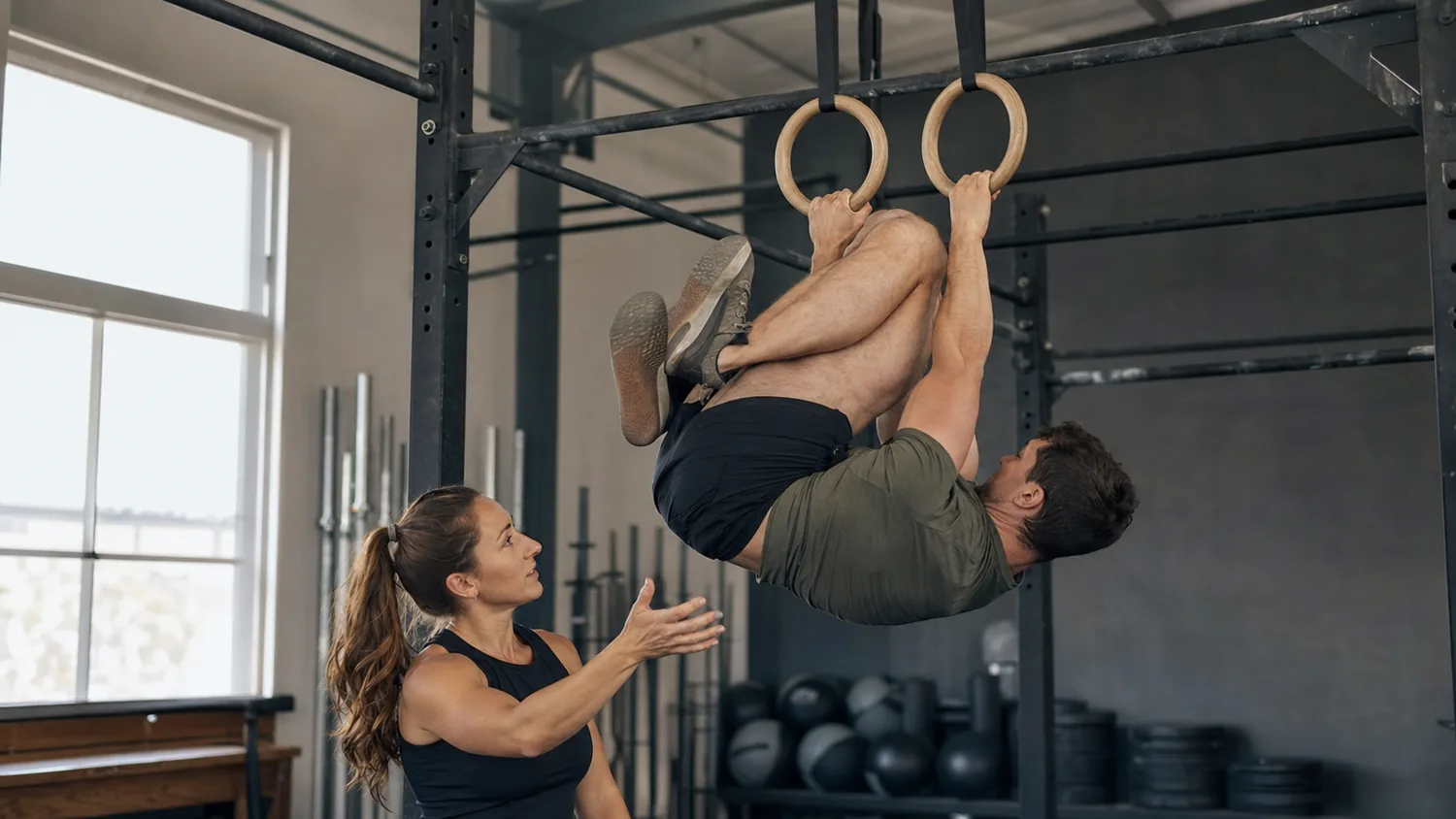
The clean version starts from a hang on the rings. The athlete pulls the knees up, rotates backward between the arms, and lowers into a controlled inverted or tucked back position before returning the same way. The job is to stay active through the shoulders while the body passes through unfamiliar shapes.
That makes it useful for athletes building toward the ring muscle-up transition, better ring dip control, and cleaner inverted body control. It does not replace strength work, but it exposes gaps that normal pulling can hide. If the shoulders dump forward or the elbows soften at the wrong time, the rings tell you immediately.
Set the rings low before you go deep
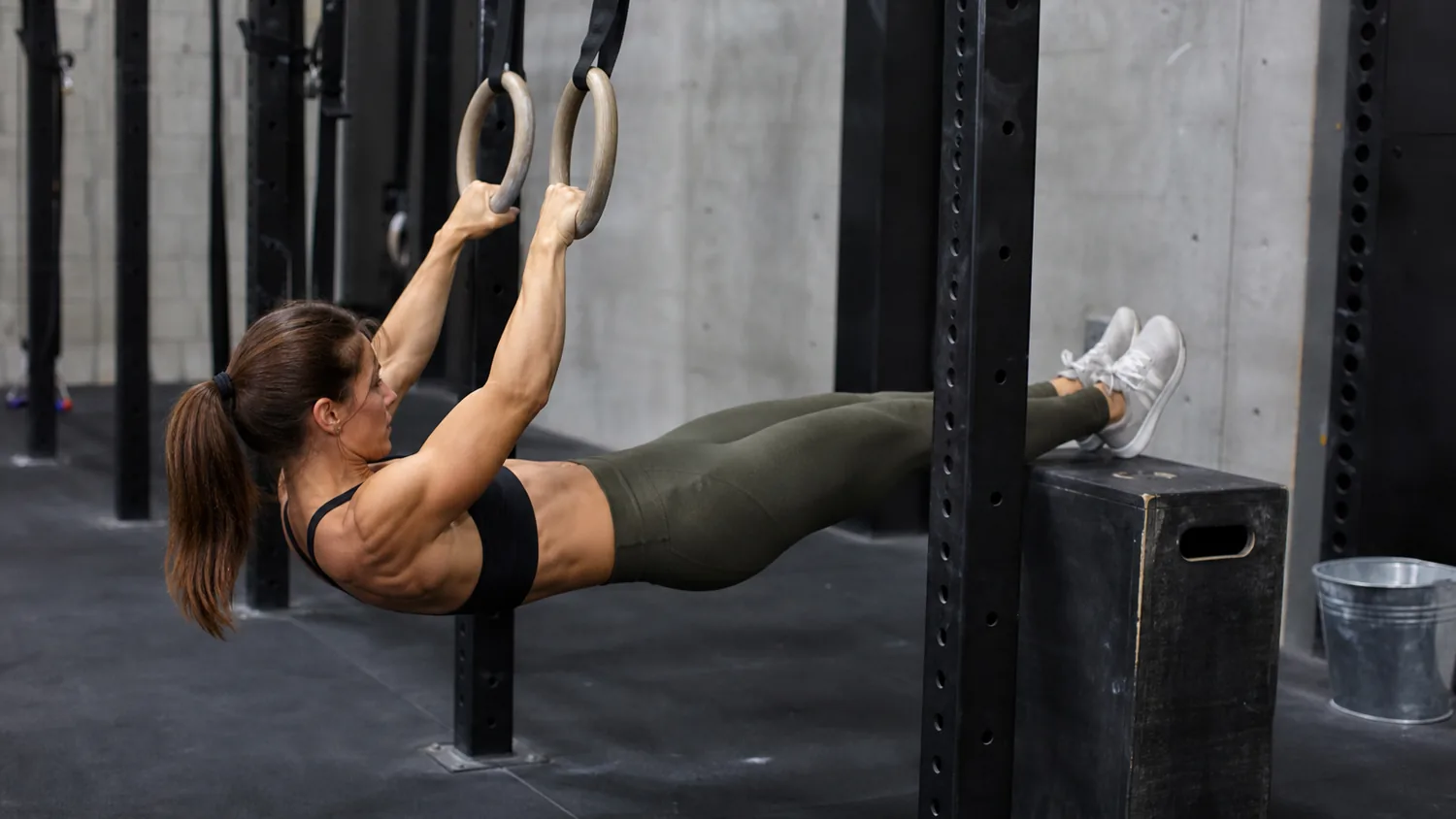
Low rings make the drill coachable. Start with the rings around chest height or slightly lower, then use a box or the floor for assistance. The athlete should be able to step out of the position without panic. That matters more than looking impressive.
Before the first rep, squeeze the rings and set the shoulders. A calm ring support hold helps here because it teaches the athlete to keep pressure into the rings instead of hanging passively from the joints. Then tuck the knees, keep the rings close to the ribs, and rotate only as far as control allows.
The rep should be reversible
A good skin the cat rep has a simple rule: you should be able to stop and come back. If the athlete needs momentum to fall into the bottom or kicks hard to escape it, the range is too large for today.
The tuck position is the best place to learn this. Keep the knees close, ribs quiet, and hands steady. The same body tension you use in hollow body tension and toes-to-bar rhythm shows up here, but the rings add another demand. They move unless the athlete gives them a reason not to.
| Fault | What it looks like | Fix it with |
|---|---|---|
| Passive shoulders | The athlete sinks into the bottom and cannot control the return | Shorten range and keep light pressure into the rings |
| Too much speed | The body falls backward instead of rotating | Use low rings and a box until the rep slows down |
| Rings drifting wide | The shoulders feel exposed and the return gets messy | Keep the rings close to the body through the tuck |
| Chasing the German hang | The athlete goes deep but loses the ability to reverse | Stop before the end range and build time there later |
Where it fits in a training session
Skin the cat belongs early, not after a grip heavy workout when the shoulders are tired and the athlete is already breathing hard. Treat it like skill practice. Two to four small sets of slow reps or holds are usually enough for most classes.
It also pairs well with ring strength days. Practice it before strict pulling, ring rows, or transition work, when the athlete can still feel where the shoulders are. Do not bury it after high volume muscle-ups, heavy carries, or kipping work and expect clean movement.
The demo below is useful because it shows the drill as a controlled ring skill, not a wild backward flip. Watch the shoulders and the speed of the rotation before you worry about range.
Scaling without turning it into nothing
Useful CrossFit scaling keeps the same lesson while lowering the threat. Use a tucked shape, lower the rings, add foot support, or stop the rotation halfway. A partial rep done slowly teaches more than a full rep that the athlete survives by guessing.
For athletes with cranky shoulders, stay conservative. Work on ring supports, tuck holds, assisted hangs, and controlled scapular movement first. If pain shows up, skip the drill and pick a simpler ring strength piece for that day. Skin the cat should feel demanding, not sharp.
What to check before adding range
Film one set from the side. Look for three things: the rings stay close, the athlete controls the bottom, and the return does not need a kick. If all three are there, add a little range next time. If not, keep the drill smaller and make every rep look boring on purpose.