The plan
The GHD hip extension is easy to underestimate. It looks small compared with heavy deadlifts or fast gymnastics, but a bad setup on the GHD can turn a posterior chain drill into a low back guessing game.
In CrossFit, the point is not to swing your torso up and hope the back holds. The point is to learn how to move from the hips while the spine stays quiet. When the pad, feet, and tempo are right, the movement teaches hamstrings and glutes to finish the rep without stealing it from the lumbar spine.
- The hip pad should let the pelvis tip forward and back. If the pad is too high, the rep turns into a back extension.
- Keep the ribs down, move at the hips, and stop before the low back starts doing all the work.
- Use slow reps before adding load or volume. The GHD punishes sloppy fatigue fast.
What the GHD hip extension is supposed to train
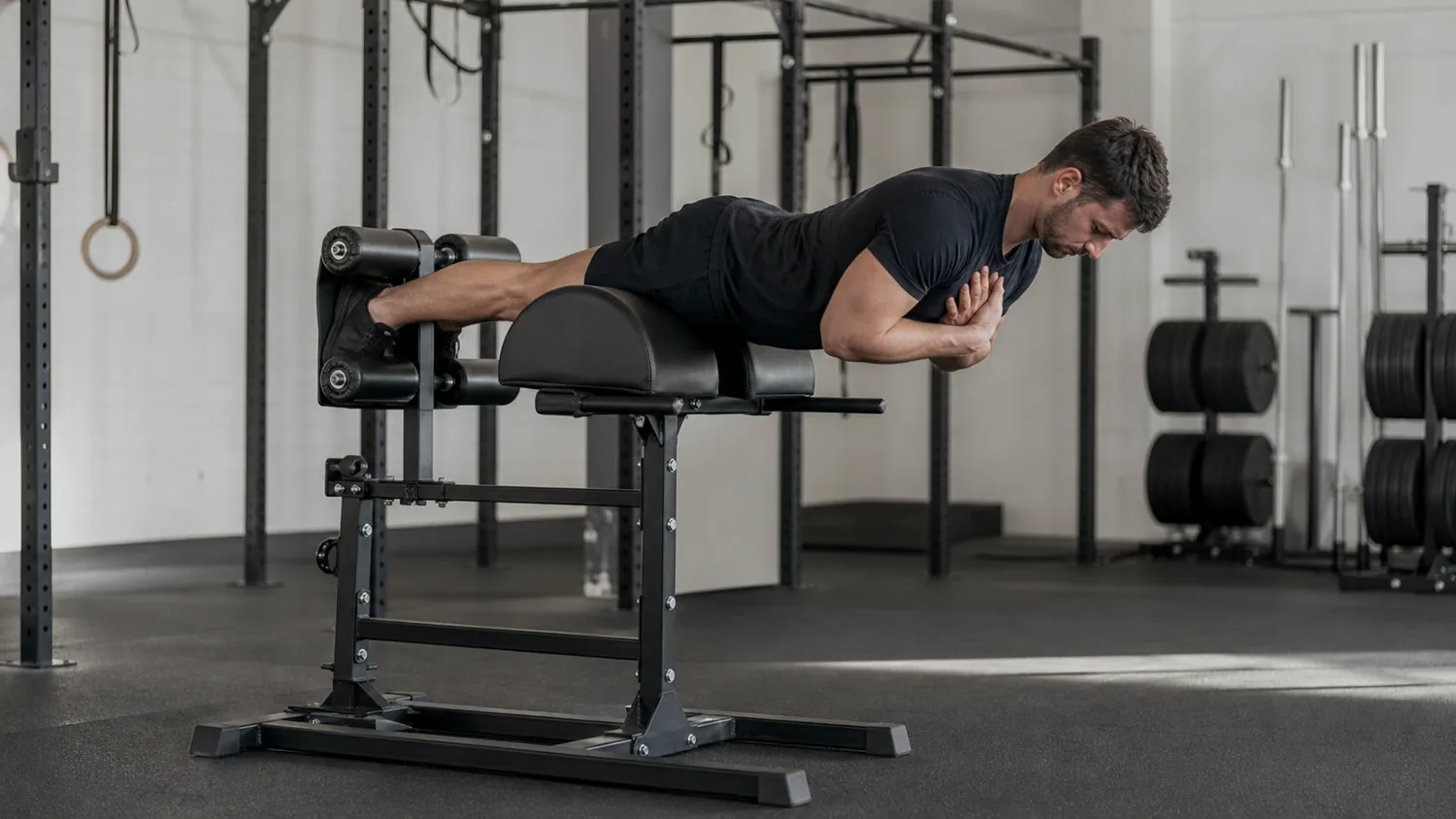
A clean GHD hip extension trains the hinge. The legs stay anchored, the hips fold over the pad, and the athlete comes back to a straight line by squeezing the glutes and hamstrings. The torso moves, but the target is not spinal movement.
That is the difference between this drill and a careless back extension. In a back extension, more motion can come through the spine. In a hip extension, the pelvis should have room to rotate on the pad. If the hip bones are pinned too high, the athlete loses the hinge and starts lifting with the low back.
Set the pad before you chase reps
Setup decides most of the rep before the athlete starts moving. Place the hips so the pad supports the upper thighs while still letting the pelvis move. The feet should be locked in enough that the athlete can stay calm at the bottom without gripping the handles for dear life.
Before the first rep, brace lightly and find a straight body line. Think about the same trunk discipline you would use in hollow body position, but do not turn it into a stiff plank. The hips still need to fold. The ribs just need to stay out of the way.
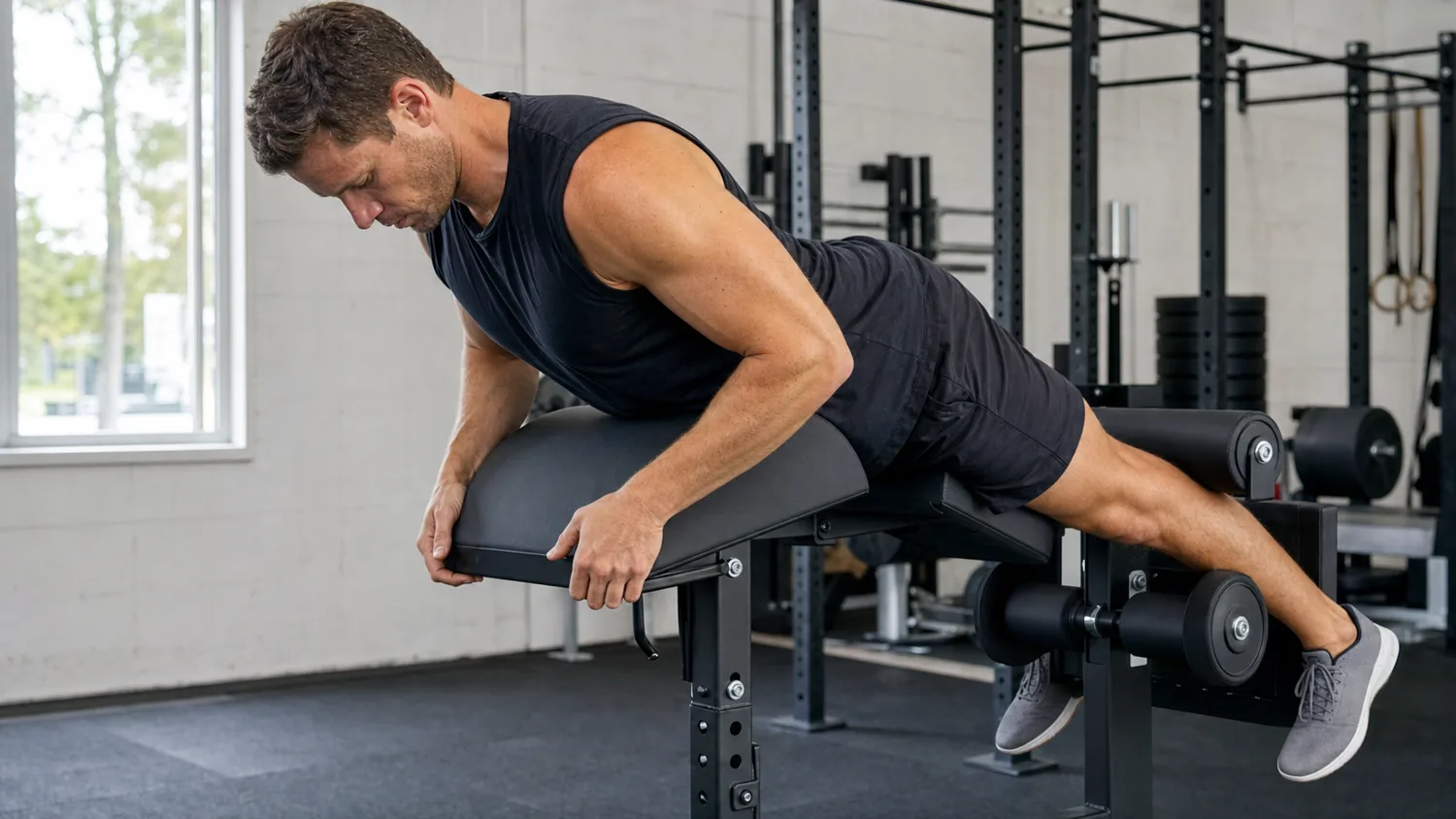
The hinge should look boring
The best GHD hip extension reps are not dramatic. Lower under control until the hamstrings load, then return to parallel with the hips. If the athlete snaps up, over-arches, or throws the head back, the movement is already losing its purpose.
The same lesson shows up in the good morning hinge pattern and Romanian deadlift control. You are not trying to find the biggest range of motion possible. You are trying to keep tension in the right tissue while the spine stays organized. For some athletes, that means a shorter range until they can own the bottom.
| Fault | What it looks like | Better cue |
|---|---|---|
| Pad too high | The pelvis cannot rotate and the low back bends instead | Move the pad lower on the thighs |
| Over-arching at the top | The athlete finishes past neutral with ribs flared | Stop at a straight line and squeeze the glutes |
| Dropping too fast | The bottom feels like a fall, not a hinge | Use a two-count lower before coming up |
| Adding load too early | Technique changes after a few reps | Keep it bodyweight until every rep matches |
How it carries over to CrossFit workouts
The GHD hip extension is not just accessory work for people who like machines. It teaches athletes to feel the posterior chain without a barbell in the hands. That matters for pulling from the floor, cycling odd objects, and protecting position when fatigue starts to blur the hinge.
It pairs well with deadlift setup work because it strips the movement down. There is no bar path to manage, no grip to blame, and no heavy plate to hide behind. Either the hips move cleanly or the back takes over.
The demo below is worth watching for one reason: the athlete folds around the hip pad instead of yanking the chest up with the low back. Pause it at the bottom and look at where the hips sit on the pad.
Programming it without wrecking the next day
Start with low volume. Sets of 8 to 12 slow reps are plenty for many athletes, especially if they are new to the GHD. High-rep work can create a lot of soreness because the hamstrings and glutes spend time under tension at a long length.
In a class setting, this is a better teaching piece than a race. Put it early in the session after a light CrossFit warm-up, or use it after strength work as controlled accessory volume. If the day already includes heavy pulling, sprinting, or lots of hinging, keep the GHD work modest.
Scaling and loading choices
The first scale is range of motion. Shorten the bottom position until the athlete can keep the same spine shape on every rep. The second scale is speed. Slower reps often teach more than faster ones. Load should come last, usually as a light plate held to the chest, and only after bodyweight reps look repeatable.
A smart CrossFit scaling choice should make the hinge clearer. If the athlete cannot control the GHD yet, use hip hinges with a PVC, light good mornings, or unloaded RDL patterns. The goal is not to prove toughness on a machine. The goal is to leave the session with a hinge that transfers to the next barbell or odd-object workout.
What to test next
On your next GHD session, film one set from the side. Check three things: pad position, rib position, and whether the hips are actually moving. If the top of every rep ends in a low back arch, slow down and shorten the range. If the reps look quiet and repeatable, then you can build volume a little at a time.