The plan
Ring fallouts do not look like much on the whiteboard. The athlete stands at an angle, reaches the rings forward, then pulls back to a plank. Simple. Then the ribs flare, the hips drop, and the shoulders start chasing the straps.
That is the value of the drill. Ring fallouts show whether an athlete can keep trunk tension while the hands move away from the body. For CrossFit athletes, that control carries into kipping work, pressing, and any workout where fatigue tries to steal the midline first.
- Start with the rings high enough that the athlete can reach forward without losing the plank.
- Keep the ribs down and glutes tight. If the low back takes over, the set is too hard.
- Use small ranges first, then lower the rings or step the feet back only when the position stays quiet.
What ring fallouts are actually training
A ring fallout is an anti-extension core drill. The athlete holds the rings, leans forward, lets the arms travel away, then pulls the rings back under control. The trunk has to resist the same shape that makes people overextend during gymnastics, overhead lifts, and fast burpees.
It sits near ring push-ups and ring support holds, but the job is different. Ring push-ups ask you to press from unstable handles. Ring fallouts ask you to keep the ribs and pelvis locked together while the shoulders move. That makes the drill sneaky. It feels like abs, but poor shoulder position can ruin it just as quickly.
Set the angle before chasing range
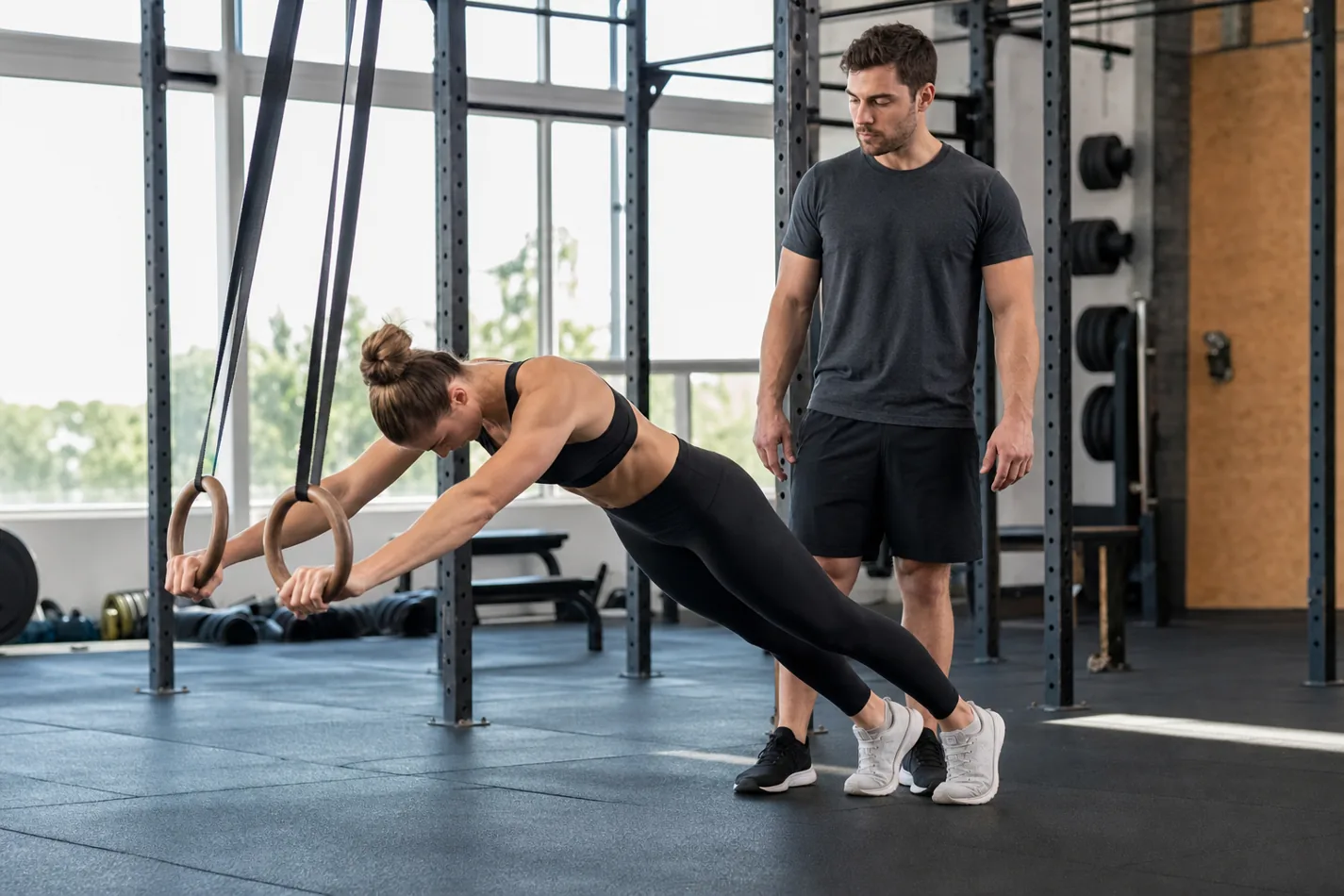
The setup decides whether ring fallouts build control or turn into a sloppy stretch. Put the rings around chest height for newer athletes. Step back until the body forms a straight line from shoulders to ankles. The hands start close to the body, straps vertical, feet planted, eyes down.
From there, reach the rings forward a few inches. Pause before the low back arches. Pull the rings back by tightening the lats and abs, not by bending the hips. If the athlete has to pike hard to return, the range was too big.
The ribs tell you when to scale
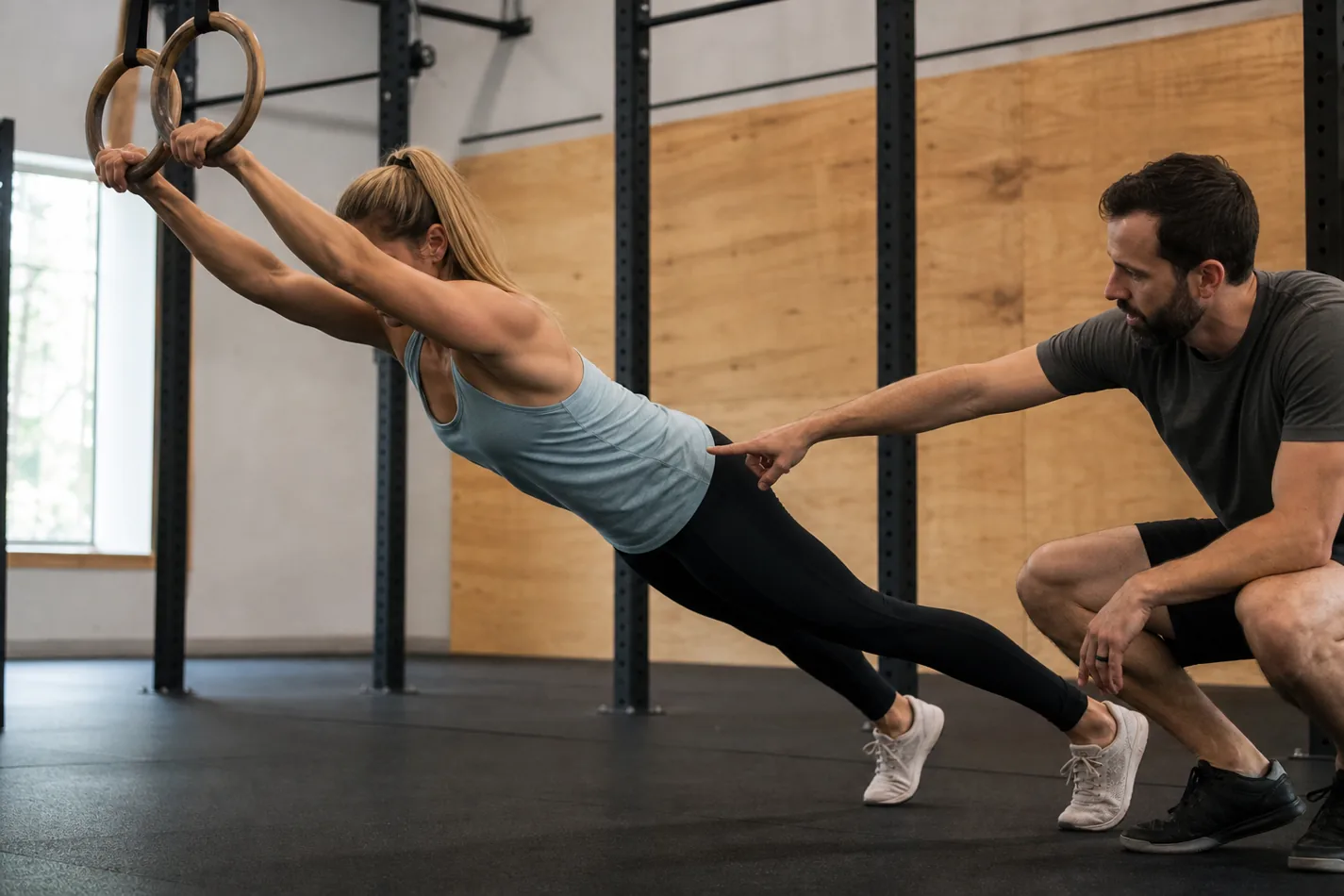
The best coaching cue is not fancy. Look at the ribs. If they flare up as the rings move forward, the athlete has lost the drill. The next rep will usually add a sagging hip, shrugged shoulders, or a rushed pull back to standing.
Better reps are smaller and cleaner. Squeeze the glutes before the first reach. Keep the belt line tucked slightly. Breathe behind the brace instead of holding a panic breath for the whole set. Athletes who already practice hollow body work will recognize the same shape, just with moving hands.
| Fault | What you see | Fix |
|---|---|---|
| Ribs flare | The chest lifts as the hands reach forward | Raise the rings and shorten the reach |
| Hips sag | The athlete finishes in a banana shape | Squeeze glutes before moving and cut the set early |
| Shoulders shrug | The neck disappears as the rings move away | Keep arms long but shoulders packed |
| Pike to return | The hips shoot back before the rings come in | Use less range or step the feet closer |
Where the drill helps in CrossFit
Ring fallouts are useful when athletes struggle to keep a stable shape during gymnastics. They are not a magic fix, but they make the problem obvious. If the midline breaks here, it will probably break during toes to rings, kipping swings, handstand work, or fast cycling under fatigue.
They also pair well with controlled pressing. After floor press work or strict upper-body strength, a few clean sets of fallouts teach the athlete to keep the trunk honest while the shoulders keep moving.
The demo below is useful because the coach keeps the drill simple. Watch the ribs, hips, and ring path before you worry about how far the athlete reaches.
How to scale ring fallouts
Good CrossFit scaling keeps the lesson intact: resist extension while the arms move. The easiest scale is ring height. Higher rings reduce the load. Lower rings make the drill harder. Foot position changes the demand too. Step closer to make the rep easier, farther back to make it more aggressive.
Some athletes should start with a tall plank hold on the rings before adding the reach. Others may do better with a floor body saw, dead bug, or front plank if the shoulders are irritated. The drill should feel demanding through the trunk, not sketchy in the front of the shoulder.
Common programming mistakes
The first mistake is putting ring fallouts into a workout as a rushed station. They lose their value when athletes fling the rings forward for speed. Use them in a CrossFit warm-up, accessory block, or controlled skill piece before the clock turns the drill ugly.
The second mistake is adding too much range because the first few reps feel easy. Ring fallouts get expensive fast. Small technical leaks become bigger on rep eight or ten, especially after pull-ups, dips, or ring transitions like skin the cat.
How to use ring fallouts in training
Start with three sets of six to ten slow reps. Stop each set while the shape still looks good. If the athlete can keep the ribs down, hips tight, and shoulders calm, lower the rings a little next time or add a short pause in the extended position.
If the athlete loses position after two or three reps, that is not failure. It is the drill doing its job. Raise the rings, shrink the range, and build the quiet version first. Ring fallouts reward control more than bravery.