The plan
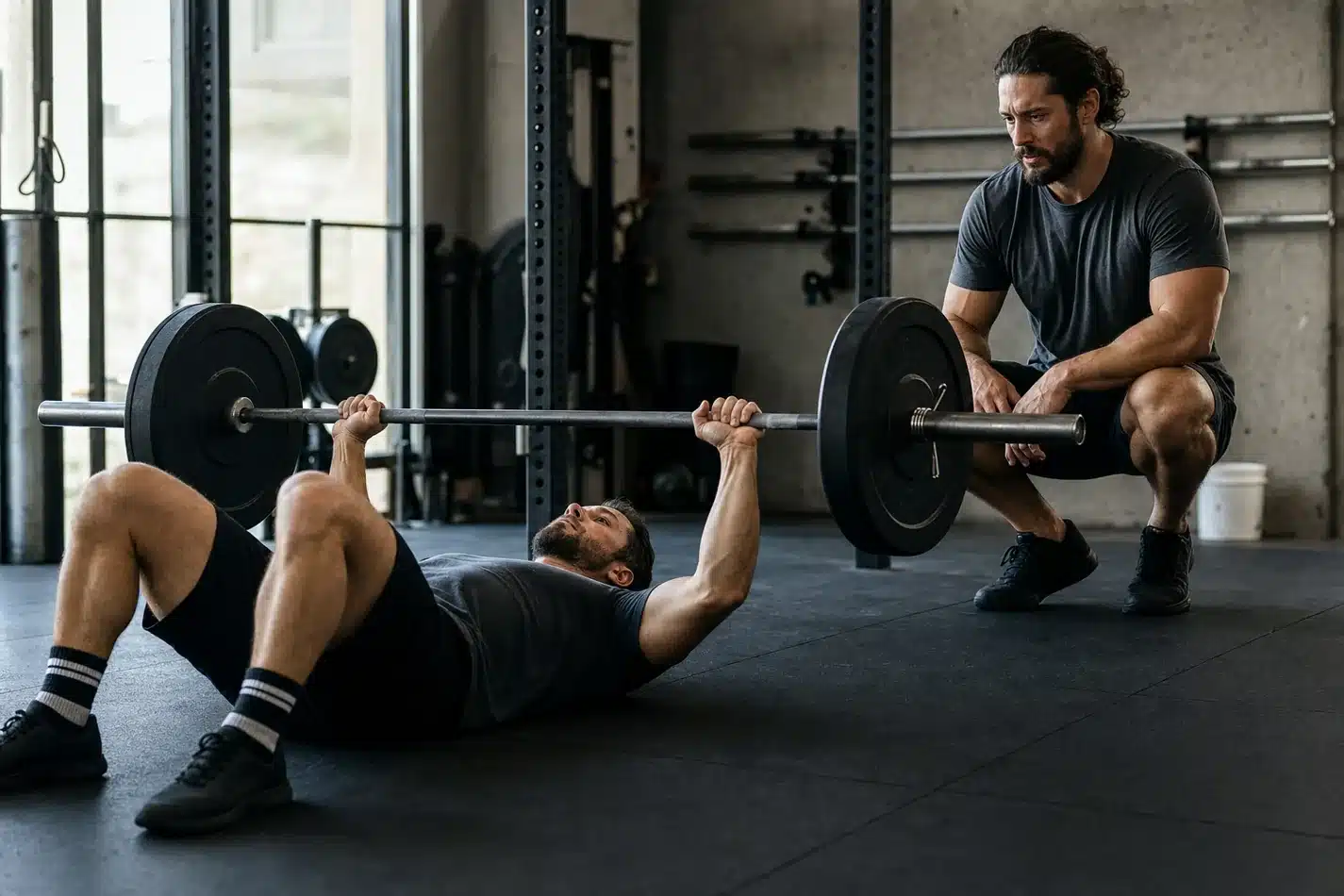
The floor press looks simple because the bench is gone. That is also why it works. The floor stops the range before the shoulder drifts too far, and the athlete has to press from a dead stop instead of bouncing through the bottom.
In CrossFit, the floor press is useful when you want pressing strength without the setup cost of a full bench station. It can build triceps strength, teach a cleaner elbow path, and give newer athletes a safer place to feel where their shoulders should sit under load.
- Start with the shoulders packed and the upper arm resting lightly on the floor.
- Pause before each press. Bouncing the elbows turns the drill into noise.
- Use dumbbells when you need more freedom for the shoulders or less setup time.
What the floor press trains
A good floor press trains pressing from a controlled stop. The athlete lowers until the upper arms touch the floor, keeps the forearms close to vertical, then presses without letting the shoulders shrug forward. The range is shorter than a bench press, but the start of each rep is honest.
If you already care about bench press setup, the floor version teaches a similar idea with less room to hide. You cannot sink deeper to chase stretch. You cannot turn the bottom into a bounce. You have to own the position, press, and reset.
Set the shoulders before you pick up speed
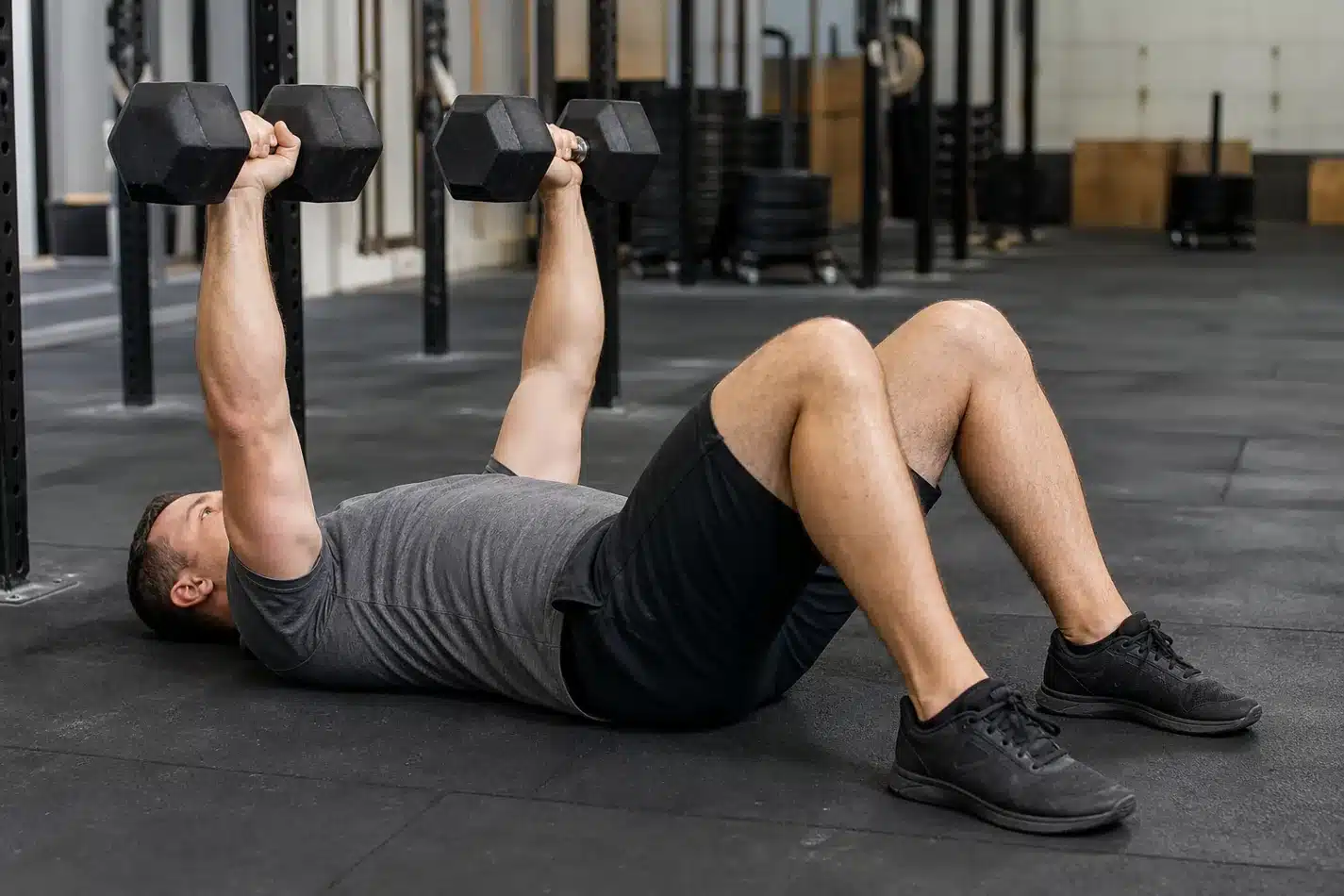
Lie back, bend the knees, and plant the feet. Pull the shoulder blades gently into the floor before the first rep. The goal is not an exaggerated arch. It is a stable upper back, quiet ribs, and a press that finishes over the shoulder rather than drifting toward the face.
Dumbbells are often the friendlier option in class. They let each arm find a more natural path, and they make side-to-side differences obvious. A barbell works well for strength, but it needs safeties, a spotter, or smart loading. Treat the setup with the same care you would bring to strict press strength or heavy pressing work.
| Fault | What it usually means | Fix before adding load |
|---|---|---|
| Elbows crash into the floor | The athlete is using the floor as a rebound | Lower slower and pause before pressing |
| Wrists bend back | The load is not stacked over the forearm | Knuckles up, wrist quiet, elbow under the weight |
| Shoulders roll forward | The upper back has lost position | Reset the shoulder blades and reduce the weight |
| One dumbbell finishes late | Pressing strength or coordination is uneven | Slow the reps and make both arms lock out together |
Barbell floor press or dumbbell floor press?
The barbell floor press is better when the goal is heavier strength work and the setup is safe. It gives both arms one line to press against and makes the rep easy to judge. The downside is simple: if the athlete misses or loses position, the bar has nowhere friendly to go without safeties or a spotter.
The dumbbell floor press is easier to run in a busy class. It also fits athletes who need a little more freedom at the shoulder. For conditioning, dumbbells can pair well with dumbbell push press timing, rows, carries, or burpees because the weights are easy to move in and out of the station.
The demo below is useful because it shows the movement without turning it into a bodybuilding bench variation. Watch the elbow path and the pause on the floor. The rep should stay controlled, not bounce from the triceps or roll through the shoulders.
How to scale it without losing the point
Good CrossFit scaling keeps the press strict and controlled. Lower the load first. Then shorten the set. If the shoulder still feels irritated, use a neutral grip dumbbell floor press, a single-arm version, or a tempo push-up variation that gives the athlete better feedback.
The floor press should not turn into a half-rep race. If the workout asks for high volume, break before the elbows start bouncing or the wrists fold back. Athletes who struggle with hand-release push-up control often learn a lot from slower floor press reps because the floor gives them a clear stop and start.
Where it fits in a CrossFit program
Use the floor press after a CrossFit warm-up, as accessory strength after upper-body work, or inside a mixed piece when the coach wants pressing without overhead fatigue. It can support ring dip support, pressing lockout strength, and better shoulder awareness for shoulder-to-overhead work.
It is not the best choice when the athlete needs full-range chest work, when the gym cannot set up bars safely, or when the workout already has a lot of triceps-heavy movements. In those cases, a lighter dumbbell version or fewer reps usually keeps the stimulus cleaner.
What to test before loading it
Run five slow reps first. If the elbows land quietly, the wrists stay stacked, and the shoulders do not roll forward, add weight with small jumps. If the rep changes as soon as the clock starts, take weight off and keep the pause.
The floor press is supposed to make pressing feel more honest. The floor gives you the stop. Your job is to keep the shoulders organized, press from that dead stop, and avoid turning a useful strength drill into rushed floor bouncing.


