The plan
Hanging knee raises look like a beginner core drill until the bar starts moving. Then they tell the truth quickly. Some athletes lift the knees with control. Others turn every rep into a swing and hope the abs somehow catch up.
In CrossFit, the hanging knee raise is useful because it sits between basic midline work and harder hanging skills. It can build the shape for toes-to-bar, but only if the athlete owns the hang, keeps the ribs under control, and lifts the knees without chasing momentum.
- Start from an active hang, not a loose shoulder position.
- Lift the knees by curling the pelvis slightly, not by kicking the legs forward.
- Use strict reps before kipping versions, toes-to-bar progressions, or high-volume core work.
What a clean hanging knee raise should look like
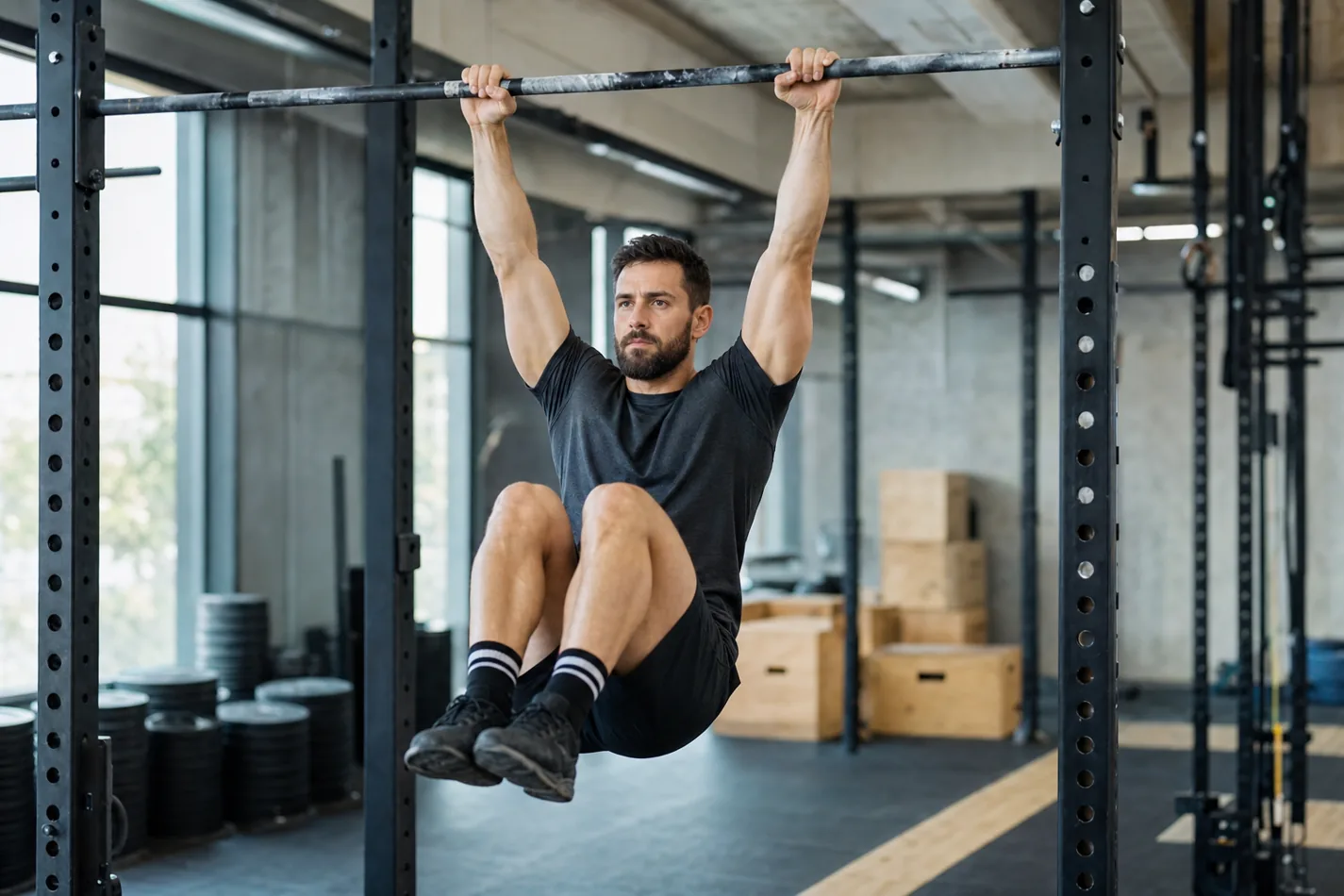
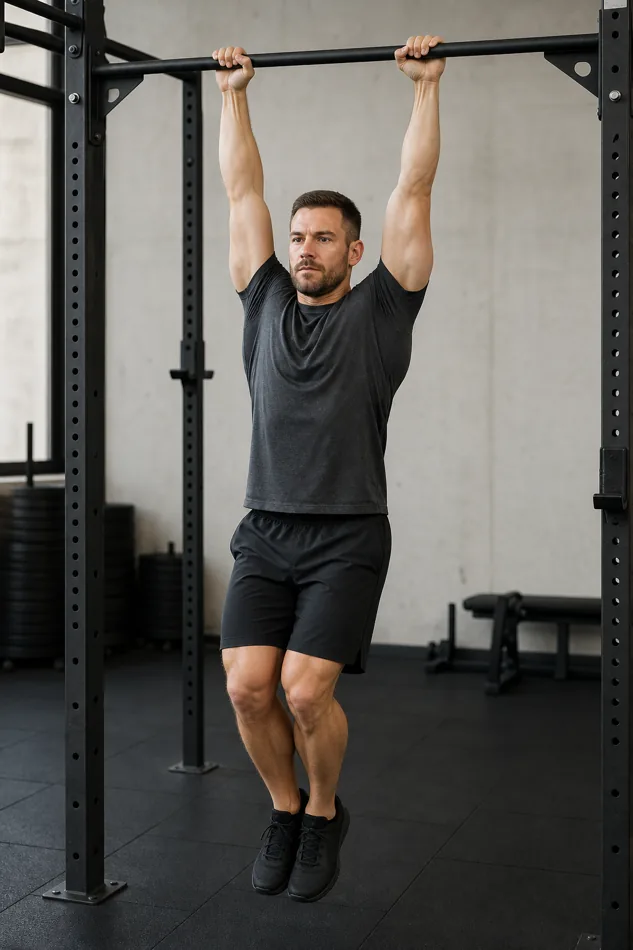
Start on the pull-up bar with a full grip and straight arms. Set the shoulders down away from the ears, keep the legs together, and let the body settle before the first rep. From there, lift the knees toward the chest while keeping the rib cage from flaring open.
The top of the rep does not need to be dramatic. The athlete should feel the lower abs and hip flexors work together while the shoulders stay organized. That setup pairs naturally with scap pull-ups, because both drills ask the athlete to control the hang before doing anything bigger.
The swing is feedback, not the goal
A little body movement is normal. A full swing on every rep is a sign that the athlete is losing the strict shape. The usual pattern is easy to spot: legs kick forward, ribs open, shoulders relax, then the next rep starts from a moving target.
Slow the drill down. Pause in the hang for a beat, lift the knees, lower under control, and let the body settle again. That same patience carries into toes-to-bar timing. If the athlete cannot control the knee raise, harder hanging reps usually become louder and less useful.
| Fault | What you see | Fix |
|---|---|---|
| Loose shoulders | The athlete hangs with the shoulders at the ears | Set an active hang before every set |
| Leg kick | The feet swing forward before the knees bend | Start slower and curl the knees up instead of throwing the legs |
| Ribs flare | The back arches as the knees rise | Keep the belt line tucked and lower the knees sooner |
| Fast drop | The legs fall and pull the body into the next swing | Lower with control and reset before the next rep |
Why it matters before toes-to-bar
Many athletes want to skip from sit-ups straight to toes-to-bar. The hanging knee raise gives coaches a cleaner checkpoint. Can the athlete grip the bar, organize the shoulders, lift the knees, and lower without losing the midline? If not, adding a kip only hides the leak for a few reps.
The drill also connects well with hollow body work and knees-to-elbows. The shape is not identical, but the lesson is close: ribs down, pelvis controlled, shoulders stable, and no panic when the bar starts to feel heavy in the hands.
The demo below is useful because the rep stays simple. Watch the shoulders first, then the knees. If the body swings before the knees move, the drill has already changed.
How to scale hanging knee raises
The easiest scale is range. Lift the knees only as high as the athlete can control, then lower slowly. If hanging from the bar is too much, keep one or both feet lightly on a box and practice the same knee lift with less bodyweight.
Grip can be the limiter before the core is ready. That does not make the drill useless. Shorter sets, planned breaks, and smart CrossFit scaling can keep the purpose clear. If the hands are the only thing anyone feels, reduce the volume before the rep turns into survival.
Where to place them in a workout
Hanging knee raises work well in warm-ups before pull-ups, toes-to-bar, rope climbs, or gymnastics skill sessions. Two or three small sets are enough for most athletes. The goal is to prepare the hang and midline, not to smoke the grip before the scored work starts.
They can also sit after training as accessory work. Pair them with dead bugs, hollow holds, or light grip practice if the athlete needs more control on the bar. Keep the reps strict unless the session is specifically teaching a kip.
How to use hanging knee raises in training
Start with three sets of six to ten strict reps. Each rep should have a clear start, a controlled knee lift, and a quiet return to the hang. If the athlete can do that without swinging, add a small pause at the top or move toward higher knee raises.
If the set turns into a pendulum, stop chasing reps. Reset the shoulders, reduce the range, or move to a supported version for the day. The drill should make hanging skills cleaner. It should not teach the athlete to borrow speed from the bar every time the core gets tired.